
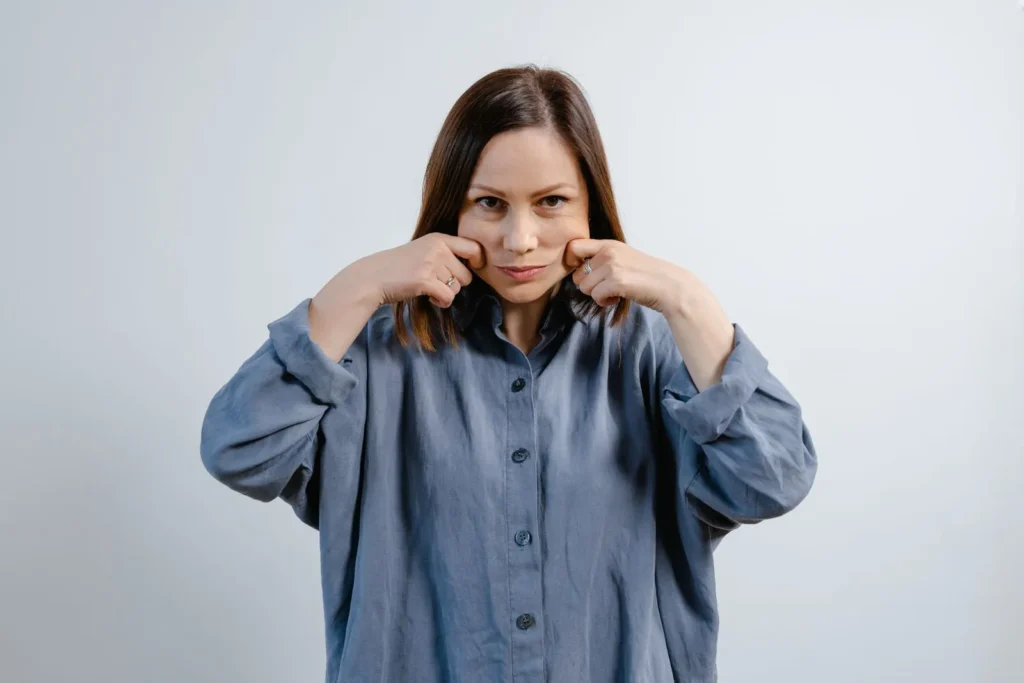
Yoga for eyes is a short set of gentle exercises, palming, slow blinking, focus shifting and steady gazing, that gives tired eyes a break from screens. Done for about 5 to 10 minutes a day, it can ease dryness, heaviness and that end-of-day strain. It does not correct eyesight, cure eye disease or replace glasses. This guide gives you the exercises, a simple desk routine, the safety limits, and the warning signs that mean you should see an eye doctor instead.
What is yoga for eyes, and what can it realistically do?
Yoga for eyes means gentle movements, focusing drills and rest techniques for the muscles around and inside the eyes. Practised for 5 to 10 minutes daily, it can ease screen-related strain, dryness and tiredness. It cannot change the shape of the eyeball, so it does not correct short-sightedness, long-sightedness or astigmatism, and it does not treat eye disease.
Much of the “eye trouble” at the end of a workday is fatigue of the small focusing muscles, plus a tear film that dries because you blink less at a screen. Relaxation and variety can help with exactly that. The practice borrows from trataka, the traditional yogic gazing technique, and from modern habits such as the 20-20-20 rule. Think of it as stretching for your eyes: useful for comfort, not a treatment.
In practice that means relief from screen strain, a dry or gritty feeling, and tension around the brow. It cannot correct your glasses power, treat glaucoma, cataract or retinal problems, or replace a regular eye check-up.
Which eye exercises are worth doing, and how long should each take?
Five exercises cover most needs: palming for 30 to 60 seconds, 10 to 15 slow full blinks, 10 rounds of near-and-far focus shifting, 5 gentle eye circles each way, and figure-eight tracing for 20 to 30 seconds each direction. Together they take under 7 minutes and need no equipment, only clean hands and a relaxed neck.
| Exercise | How to do it | Time or reps | What it eases |
|---|---|---|---|
| Palming | Rub palms until warm, cup them over closed eyes without touching the eyeballs, breathe slowly | 30 to 60 seconds | General tiredness, light sensitivity from screens |
| Slow blinking | Close the lids fully, pause for a moment, open softly | 10 to 15 blinks | Dry, gritty feeling from reduced blinking |
| Focus shifting | Look at your thumb at arm’s length, then at something across the room, and switch | 10 rounds, about 3 seconds each | Near-focus fatigue from phones and laptops |
| Eye circles | Head still, trace a large slow circle with your eyes, then reverse | 5 each way | Stiffness and a locked-in stare |
| Figure-eight tracing | Trace a big sideways 8 on the wall a few feet away, smoothly | 20 to 30 seconds each direction | Fixed-gaze fatigue, wandering attention |
Step-by-step: getting each exercise right
Palming. Wash your hands first. Rest your elbows on a desk, rub your palms together for about 10 seconds, then cup them over closed eyes. The heel of each palm sits on the cheekbone, never on the eyeball. Breathe in for 4 counts and out for 6. Take out contact lenses first or skip this one.
Focus shifting. Look at your thumbnail at arm’s length for 3 seconds, then at something at least 6 metres away, such as a building across the road, for 3 seconds. Keep your head still. If the near object looks doubled or the far one stays blurred, mention it to an eye doctor.
Blinking, circles and figure-eights. Blink fully and softly, without squeezing. Move the eyes slowly, as if tracing a clock face at arm’s length, and stop at the edge of a comfortable range. If you feel dizzy, shorten the circles or skip them.
How long should a daily yoga for eyes routine take?
A full routine takes about 7 minutes: roughly 1 minute of blinking, 2 of focus shifting, 1 of eye circles, 1 of figure-eights and 2 of palming. Do it once mid-morning and once mid-afternoon on screen-heavy days, with 20-second micro-breaks between. Stop at once if you feel dizzy, notice pain, or see worsening blur.
| Step | Move | Time | Form cue |
|---|---|---|---|
| 1 | Slow full blinks | 1 minute | Soft, complete closure; no squeezing |
| 2 | Focus shifting, near to far | 2 minutes | Head still, switch every 3 seconds |
| 3 | Eye circles, both directions | 1 minute | Slow, wide, pain-free range |
| 4 | Figure-eight tracing | 1 minute | Smooth line, relaxed jaw and forehead |
| 5 | Palming with slow breathing | 2 minutes | Elbows supported, no pressure on eyeballs |
Palming and blinking often feel soothing within the same session. Many people find their eyes less tired after 2 to 4 weeks of regular breaks, but results vary and nothing here is guaranteed. To build this into a wider home routine, our yoga at home guide shows how to set up space and time for it.
Can eye exercises replace your glasses?
No. Glasses correct how your eye focuses light, which depends on the shape of the eyeball, cornea and lens. Eye exercises ease strain but do not change that shape, so they cannot replace a prescription. Keep wearing prescribed glasses or lenses and test your eyes about once a year.
Two other myths are worth clearing up:
- “Weak eye muscles cause blur.” Blur from a refractive error is about optics, not muscle weakness.
- “Staring at a candle without blinking for ages improves eyesight.” Long unblinking gazes dry the eye and are not advised for everyone. More on that below.
- “More is better.” Beyond 10 minutes a session you gain little and may irritate your eyes.
For the vision question specifically, see our separate page on yoga for eyesight.
When should you see an eye doctor instead of doing eye yoga?
See an eye doctor promptly, not a yoga video, if you notice sudden vision loss or change, eye pain, flashes of light, a sudden shower of new floaters, a dark curtain across your vision, double vision, or a red painful eye. Check with your eye doctor first if you have glaucoma, a retinal condition, or recent eye surgery.
- Sudden changes, pain or redness: blurring, a new shadow in one eye, a red painful eye, or headache with halos around lights needs same-day attention, not exercises.
- Flashes and floaters: new flashes of light or a sudden burst of floaters can signal a retina problem.
- Glaucoma and retina issues: Skip trataka and any pressure around the eyes, and ask your specialist which movements are acceptable.
- After eye surgery such as cataract or LASIK: wait for your surgeon’s clearance before palming, eye massage or any eye exercises. Even light pressure can be wrong in early healing.
- Diabetes, high blood pressure or a family history of glaucoma: regular dilated eye check-ups matter far more than any exercise routine.
Eye yoga is for comfort. It should never delay a check-up.
What is trataka, and who should skip it?
Trataka is a traditional yogic concentration practice in which you gaze steadily at one point, usually a candle flame, then close your eyes and hold the afterimage. Beginners usually start with 30 to 60 seconds. People with glaucoma, epilepsy, retinal problems or recent eye surgery should skip it unless their doctor agrees.
Trataka is taught for mental steadiness more than for the eyes, so treat it as a concentration practice, not a vision treatment. To try it:
- Sit in a dim, draught-free room with a flame at eye level, an arm’s length away.
- Gaze softly at the tip of the flame for 30 to 60 seconds, blinking if your eyes sting. Do not force a stare.
- Close your eyes, notice any afterimage, then finish with 30 to 60 seconds of palming.
- Build up slowly over weeks, and stop if you feel pain or headache.
The calm, single-pointed focus is why trataka sits so naturally beside yoga for concentration and yoga for memory. If you would rather wind down at night, yoga nidra gives the eyes a long, passive rest with no gazing at all.
Troubleshooting: what if your eyes feel worse after the exercises?
Most problems come from doing too much, pressing on the eyes or practising with an untreated problem. If a symptom lasts beyond a day, repeats every time, or is severe, stop and have your eyes checked.
| What you notice | Likely reason | What to try |
|---|---|---|
| Dizziness during eye circles | Moving too fast or too wide | Slow down, shrink the circles, or skip them for a few days |
| Dull headache after focus shifting | Straining at near or far point, or an uncorrected prescription | Shorten to 5 rounds; get your eyes tested if it repeats |
| Eyes feel more tired after palming | Pressing on the eyeballs or holding tension in the shoulders | Rest your elbows, cup only the sockets, lighten the contact |
| Sudden blur, flashes or pain | Could be a medical problem, not a technique issue | Stop and see an eye doctor promptly |
Who benefits most: students, desk workers and over-40s
Students. Long hours over books and phones tire the near-focus muscles. Add a 20-second look out of the window every 20 minutes and 2 minutes of palming before sleep. If a child squints, sits close to the TV or complains of headaches, book an eye test, not an exercise plan.
Desk workers. Air-conditioned offices dry the eyes. Do the blinking and focus-shifting steps at your seat every hour.
Adults over 40. Needing reading glasses around this age is common and is not caused by lazy eye muscles. Exercises will not remove that need, but they can make long reading sessions more comfortable.
Face yoga around the eyes: what it can and cannot do
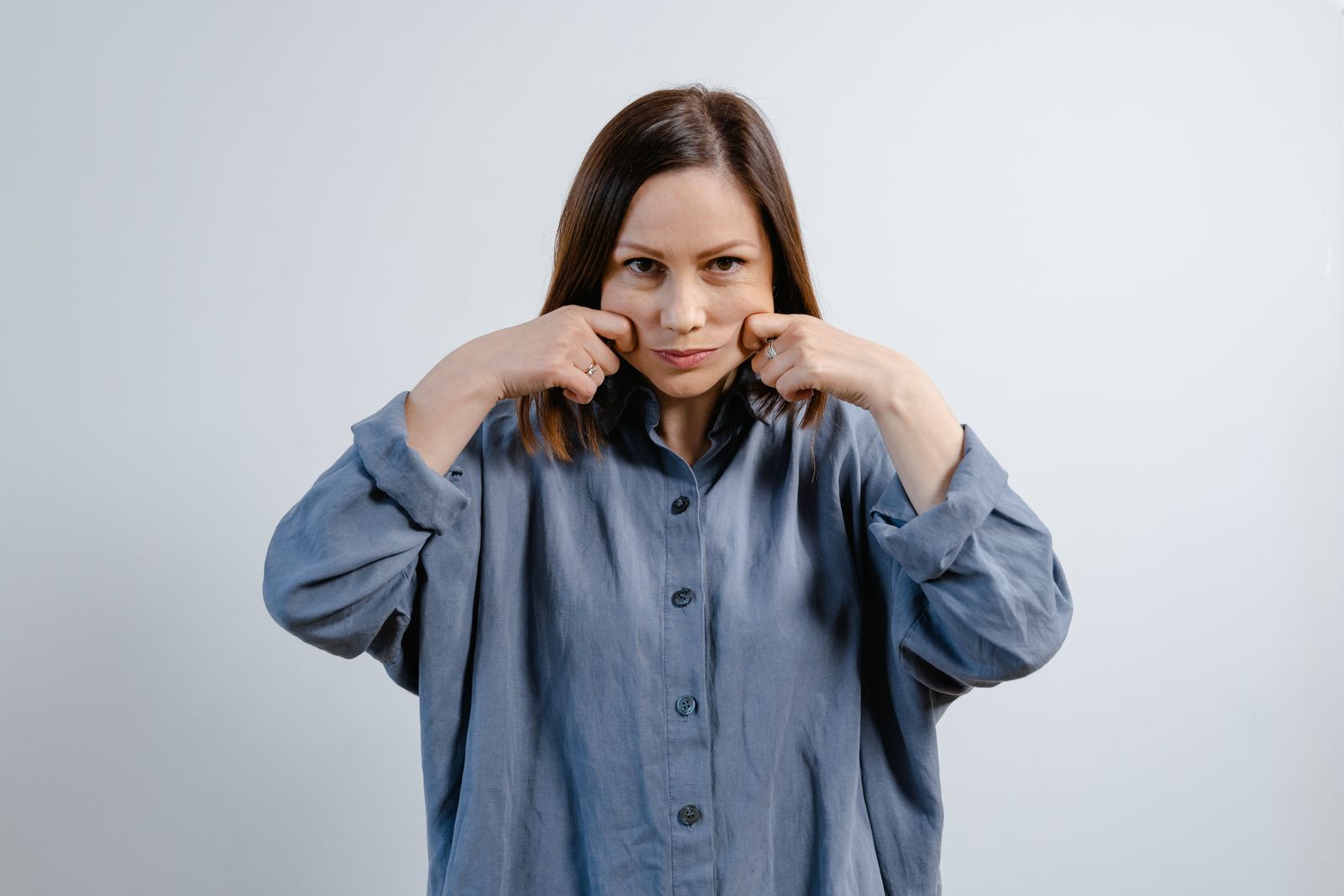
Face yoga for the eye area is mostly cosmetic. Gentle eye squeezes and light tapping along the bone may reduce the puffy look after a short night. They do not change the eyeball and will not remove dark circles that come from genetics, thin skin or pigmentation.
Use light fingertip pressure on the bone only, never on the eyeball, and skip massage after eye surgery or with an infection. For more on circulation and skin, see yoga for face glow and yoga for glowing skin.
Beyond exercises: habits that protect your eyes more
These habits usually matter more than the exercises:
- The 20-20-20 rule: every 20 minutes, look at something about 6 metres away for at least 20 seconds.
- Screen set-up: keep the screen about an arm’s length away, slightly below eye level, and match brightness to the room.
- Sleep and water: aim for 7 to 8 hours of sleep and sip water through the day.
- Food: a balanced Indian plate with leafy greens such as palak and methi, eggs or dal, nuts, and fruit like papaya and oranges supports general eye health. It is not a cure for any eye condition.
- Eye check-ups: test your eyes about once a year, or more often if your eye doctor says so.
Eye breaks fit into a bigger routine too. If you follow yoga for weight loss or yoga for hair growth, add 3 to 5 minutes of palming after the final relaxation.
Questions people ask about yoga for eyes
Can yoga for eyes improve eyesight?
No, not in the sense of correcting your glasses power. Eye exercises can ease strain, dryness and fatigue, which may make your eyes feel more comfortable, but they do not change the shape of the eye or fix short-sightedness, long-sightedness or astigmatism.
How long does yoga for eyes take to work?
Palming and slow blinking can feel soothing within a single session. A steadier reduction in end-of-day tiredness often shows after about 2 to 4 weeks of daily practice combined with screen breaks and enough sleep, but results vary. If your symptoms persist or worsen, get an eye check instead of doing more exercises.
Is it safe to do eye yoga every day?
For most healthy adults, gentle eye yoga for 5 to 10 minutes a day is low-risk when done slowly and without pressing on the eyeballs. Stop if you feel pain, dizziness or worsening blur. People with glaucoma, retinal problems, epilepsy or recent eye surgery should ask their doctor before starting.
Can I do eye yoga with glasses or contact lenses?
Take your glasses off for palming and eye circles, and remove contact lenses before palming or trataka so nothing presses on the eye. Keep your glasses on for focus shifting if you normally need them to see clearly. Wash your hands before touching the eye area.
Who should avoid trataka and eye exercises without medical advice?
Anyone with glaucoma, a retinal condition, epilepsy, an eye infection, or recent eye surgery such as cataract or LASIK should speak to their eye doctor first. Anyone with sudden vision changes, eye pain or flashes of light should see a doctor promptly and not practise.
Next step: pair this 7-minute routine with a guided practice from FitStrot’s online yoga classes, and keep your annual eye test booked.


