
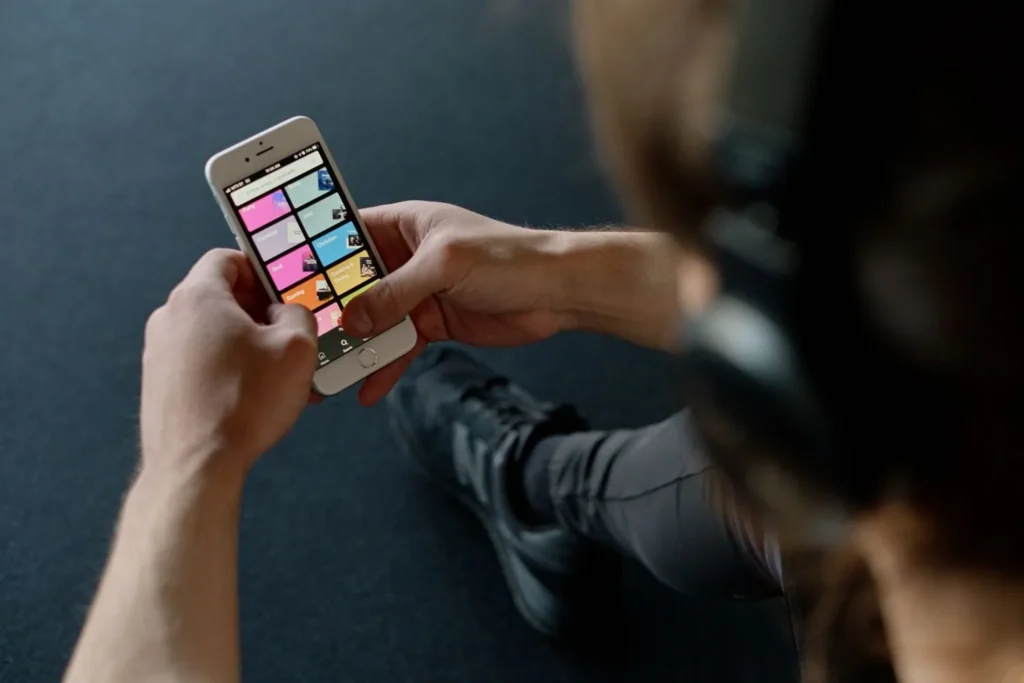
A workout for women app is only worth keeping if it does three things: tells you what to do today, shows you how to do it safely, and records what you did so next week can be slightly harder. Most apps do the first well and the other two badly. This guide covers the features that matter, how the main app types compare with a live coach, what privacy and cost to check, and a three-day test session you can run in any app before you commit to it.
What should a workout for women app actually do?
A good women’s fitness app does three jobs: it sets a plan matched to your level, equipment and time; it shows correct form through video or cues; and it logs sets, reps, load and rest so you can progress. Streaks and badges are extras. Miss one job and you have a video library, not a training tool.
Be careful with the word “women’s” on the label. A squat works the same muscles in every body, so a pink interface is not different programming. What can legitimately differ is the design around you: options for small spaces, short sessions that fit a long workday, and the freedom to swap a hard session for a lighter one on a low-energy day.
Which features matter most when you choose a workout app?
Look for five features: a short intake on your level, goals, injuries and equipment; video demos with form cues; logging for sets, reps, load and rest; plans that adjust when you miss sessions; and clear privacy controls. Leaderboards matter far less than a plan that bends when your week does.
- A real intake. Two or three questions about injuries and equipment is the minimum. Without them, you get the same plan as every other user.
- Visible form guidance. A short clip from the front and side beats a paragraph of text, especially for squats and hip hinges.
- Proper logging. Record weight, reps and how hard the set felt. A tick for “completed” tells you nothing about progress.
- Flexible scheduling. Look for “move this session” or “20-minute version”. Plans that punish a missed day make people quit.
- Offline downloads and clear pacing. Useful on a mid-range phone with patchy Wi-Fi; slow demonstrations and regional-language cues help beginners.
If you mainly want group motivation, a challenge format can work, and we cover that style in our guide to a workout challenge app.
App types versus a live coach: an honest comparison
Most apps fit one of four patterns, each with a clear strength and weak spot. The table also shows where live coaching, in a group class or one-to-one, changes the picture. No prices are quoted because they vary by provider.
| Type | Best for | Main strength | Main weak spot | Form feedback |
|---|---|---|---|---|
| Logging / tracker app | Women who already know how to train | Clear record of loads and reps over months | No teaching; you must design the plan | None |
| Pre-recorded video programme | Beginners who need to see each move | Structure and demonstrations | Same plan for everyone; cannot see you | Generic cues only |
| Challenge / community app | People who need social push | Accountability and routine | Training quality often secondary | Little to none |
| Auto-generated plan app | Time-poor users wanting quick variety | Instant plans based on your inputs | Rules-based; may not notice a stall or discomfort | Generic cues only |
| Live online group class | People who enjoy a set time and an instructor | Energy, schedule, a person watching | Fixed timetable; less individual adjustment | Some, in the moment |
| Live 1-on-1 coaching | Plateaus, injuries, specific goals | Plan changes around your body and week | Needs a booked slot | Direct, on your actual movement |
An app suits a woman who is consistent, injury-free and happy to log her own numbers. A coach earns the cost when the simple version stops working.
Myth check: a long streak means the app is working
A streak counts days you opened the app, not whether your squat got stronger or your sessions were hard enough to matter. Real progress shows up in the log: slightly more weight, one more rep, or the same load with better control.
A second myth is that women should use light weights and very high reps to “tone”. Definition comes from building muscle and, if fat loss is a goal, a sustainable eating pattern. Aim for a weight that makes the last two reps hard with good form. An app that only offers 20-rep sets with a tiny dumbbell is limiting you.
How can you test any app with a three-day starter plan?
Run a simple full-body routine on three non-consecutive days, for example Monday, Wednesday and Friday, for two weeks. Each session takes about 35 to 45 minutes with a five-minute warm-up. Use it to check whether the app lets you log sets, reps, load and rest and shows clear form cues.
Warm up with marching, arm circles, hip circles and a few bodyweight squats, then work through the table. With no dumbbells, use a backpack with books or a filled water can; our guide to home workouts shows more ways to improvise.
| Exercise | Sets x reps | Rest | Form cue |
|---|---|---|---|
| Goblet squat | 3 x 8-12 | 60-90 sec | Chest tall, knees track over toes, heels stay down |
| Dumbbell Romanian deadlift | 3 x 8-10 | 60-90 sec | Push hips back, soft knees, weights slide down your thighs, back flat |
| Incline or wall push-up | 3 x 6-12 | 60 sec | Body in one line, elbows about 45 degrees from the torso |
| One-arm dumbbell row | 3 x 8-12 each side | 60 sec | Flat back, pull the elbow towards your hip, no twisting |
| Dead bug | 2 x 8 each side | 45 sec | Lower back stays flat on the floor, breathe out as you extend |
| Forearm plank | 3 x 20-40 sec | 45 sec | Ribs down, glutes tight, no sagging at the hips |
Score the app after two weeks. Did it record these numbers? Were the cues clear enough to fix a rep without rewinding? Did it suggest when to add weight? If you answer no to two, a notebook plus a video library does the same job. For prebuilt weekly structures, see our workout routine guide.
How should you progress from week to week?
Use double progression: stay at one weight until you reach the top of the rep range on every set with clean form, for example 3 x 12, then add the smallest jump, usually 1 to 2 kg, and restart at the bottom of the range. Rest 60 to 90 seconds between sets.
| Week | Sets x reps | Rest | What to do with the load |
|---|---|---|---|
| 1 | 2 x 10 | 90 sec | Light; learn the movements, about four reps left in reserve |
| 2 | 3 x 10 | 60-90 sec | Same weight as week 1, add the third set |
| 3 | 3 x 10-12 | 60-90 sec | Add a rep per set; if you hit 12 on all sets, raise the weight next session |
| 4 | 2 x 10 | 90 sec | Lighter week at roughly 80 percent of your load, then restart the cycle slightly heavier |
This is a general framework for healthy adults, not a prescription. Cut volume when you are sleeping badly or run down; an app that never allows that is not looking after you.
How private is your data in a workout app?
Treat a workout app like any app that holds body data: it may store your weight, measurements, progress photos, cycle notes and location. Before signing up, check what permissions it asks for, whether you can delete your account and data, whether progress photos stay on your phone, and whether sharing to public feeds is off by default.
- Permissions. A workout app rarely needs your contacts or constant location. Deny what it does not need.
- Photos and cycle notes. Keep these private by default, and log them only if you can export or delete them.
- Lock-screen previews. On a shared phone, switch them off so reminders reveal nothing you do not want shown.
What do workout apps cost, and what are you paying for?
Workout apps usually charge in one of four ways: free with adverts, free with a paid upgrade, a recurring subscription, or a one-time purchase. Coaching is billed per session or per month. Compare what is locked behind payment, how renewal works and how easily you can cancel, rather than the headline number alone.
- Free with adverts or upgrade. Fine for trying the format; check whether logging or custom plans sit behind the paywall.
- Subscription. Look for auto-renewal terms and a visible cancel option, and set a reminder for the renewal date.
- Live coaching. You pay for a person’s attention and adjustment, a different product from a content library.
Troubleshooting: what to do when the app stops working for you
Most problems have a practical fix before you switch apps.
- Stuck at the same weights for three weeks or more. Check sleep and food, then add a rep or a slow three-second lowering phase. If that fails, ask a coach to review your form.
- Knee, back or shoulder discomfort. Stop the movement that causes it. Sharp or lingering pain needs a doctor or physiotherapist, not a different app.
- You missed a week. Do not restart from zero. Resume one step lighter than your last session and rebuild over a week.
Which app style suits beginners, busy mothers or returning exercisers?
Beginners do best with guided video programmes and clear cues. Busy mothers and working women do best with flexible 20 to 30 minute plans. Returning exercisers do best with a tracker and half their old loads for four weeks. Pregnancy or recent childbirth needs a doctor’s clearance before any app.
Beginners. Pick a workout app for beginners that explains the why. Start with two sessions a week for two weeks, then three. A live online yoga class is a gentle way to learn body awareness alongside strength work, and our guide to yoga for women explains what to expect.
Busy mothers and professionals. A workout app for women at home needs short options and the ability to pause mid-set. Three 25-minute sessions a week is realistic. Dance cardio is also an easy habit to keep: see Zumba for women or a live online Zumba class.
Pregnancy and postpartum. A generic app cannot assess your situation. Get your doctor’s clearance first.
When does live coaching make sense?
Consider a live coach when progress has flattened for six to eight weeks despite consistent logging, discomfort keeps returning, or your schedule keeps breaking the plan. A coach watches your movement and changes the session on the day, which a pre-built plan cannot do.
That is the gap Fitstrot’s live online coaching is built to fill. It works well alongside an app too: keep the app for logging and ask your coach to review the numbers. For the programming theory behind any plan, our guides to female workout structure and workouts for women are a useful next read, and if core training is your focus, see stomach workouts for women.
Frequently asked questions
What is a good workout for women app?
A good one asks about your level, goals, injuries and equipment before giving you a plan. It logs weight, reps and rest instead of only streaks, shows clear form cues, and lets you reschedule or shorten sessions. It also keeps your photos and body data private by default.
How do you use a workout for women app?
Enter your level and goals honestly, then follow the programme for at least four weeks before judging it. Log every set with weight, reps and effort. Rest 60 to 90 seconds between sets, check the form cues when a rep feels off, and add weight only when you reach the top of the rep range cleanly.
Are free workout apps good enough for women?
For beginners, often yes. A free workout app can teach basic movements and give you a routine to follow. Limits include missing logging and adverts. If you keep a notebook for your sets and reps, a free app plus that log covers most early needs.
Is a workout app better than a personal trainer?
Neither is better for everyone. An app costs less, runs on your schedule and suits consistent, injury-free users. A personal trainer watches your form and adapts the plan to your body, which matters for plateaus, discomfort or specific goals. Many women start with an app and add coaching later.
How many days a week should I follow a workout app?
Most beginners do well with three strength sessions a week on non-consecutive days, each 30 to 45 minutes, plus easy walking on other days. After a month, you can move to four sessions if recovery, sleep and time allow.
Run the three-day test this week, then take your logged numbers to a Fitstrot coach and ask how 1-on-1 personal training could fix whatever the app missed.


