
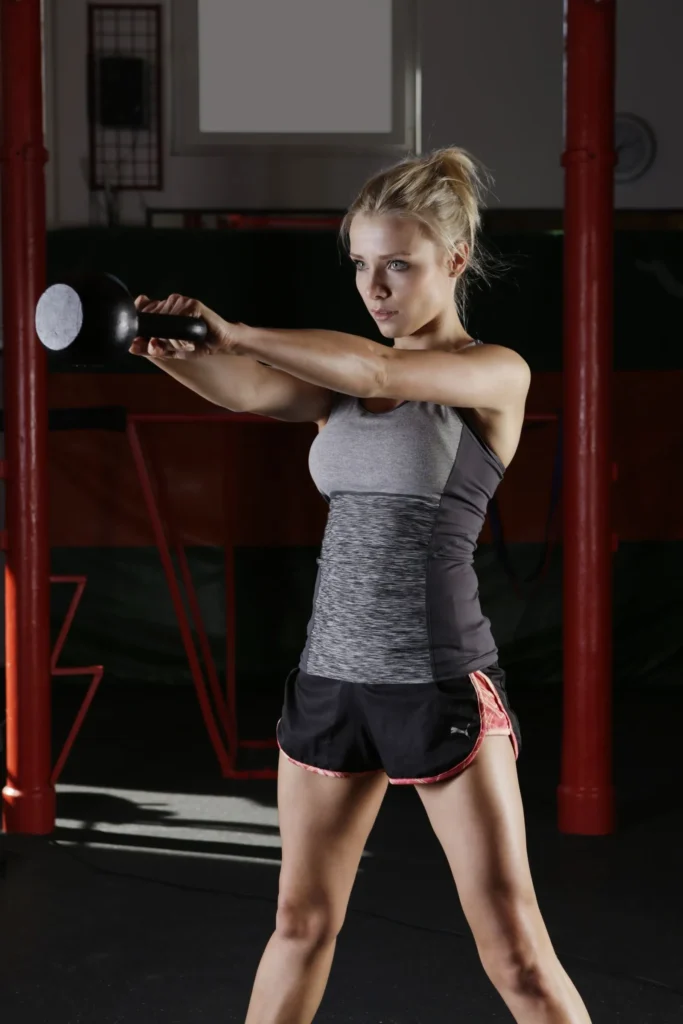
A good female workout is built around three things: lifting weights two to four times a week, moving on most other days, and treating rest as part of the plan. Everything else, from the exact exercises to the playlist, is detail. This guide gives you the weekly plan, the session-level numbers, and straight answers on the two biggest worries women bring to us: getting “bulky” and training around your cycle.
What should a female workout include every week?
A balanced female workout week has two to four strength sessions covering legs, back, chest, shoulders and core, two or three cardio sessions of 20 to 40 minutes, about ten minutes of mobility work after training, and at least one full rest day. Strength comes first because muscle is what changes how your body looks and performs.
Many women have done years of cardio-only routines and wonder why their shape has barely changed. Cardio helps your heart and stamina, but it does not build or protect muscle and bone the way resistance work does.
A practical weekly checklist looks like this:
- Strength: 2 to 4 sessions, 45 to 60 minutes each, with weights, resistance bands or bodyweight.
- Cardio: 2 to 3 sessions, from brisk walking to cycling, swimming or a dance class.
- Mobility: 10 minutes after sessions, focusing on hips, upper back and hamstrings.
- Rest: one full day off, plus one light day if your sleep or stress is poor.
If you want a wider exercise library to pick from, our guide to workouts for women covers exercise selection in more depth. This page is about how the pieces fit together across a week.
Will lifting weights make you bulky?
No. Adding noticeable muscle size takes years of heavy training, a steady calorie surplus and, usually, a hormone profile most women do not have. Women have far less testosterone than men. In practice, consistent lifting makes most women look leaner and firmer, not bigger.
The fear of bulk is the most common worry new clients mention. They ask to keep weights “light”, and a few weeks into progressive loading they are often the ones asking to add more, because they like how strong they feel.
Two related myths are worth clearing up. “Light weights and high reps tone you” is not true: toning is simply muscle plus lower body fat, and very light weights give little stimulus. “Cardio alone will slim me down” is half true, because you lose weight, but often some muscle with it, so you end up smaller yet softer.
The women who do build large muscle are typically competitive bodybuilders or powerlifters who train, eat and track for exactly that outcome, over many years. A beginner following a sensible plan will not drift into it by accident.
What does a weekly female workout plan look like?
A simple female workout plan uses three strength days (lower body, upper body, full body), two cardio-focused days, one active recovery day and one full rest day. You can run it at a gym or at home with dumbbells and a resistance band.
Use this as a starting template and shift days around your work schedule:
| Day | Focus | Example session | Time |
|---|---|---|---|
| Monday | Lower body strength | Squats, hip thrusts, lunges, calf raises | 50 min |
| Tuesday | Cardio and core | Brisk walk or cycling, planks, dead bugs, side planks | 40 min |
| Wednesday | Upper body strength | Rows, push-ups, shoulder press, lat pulldown, arm work | 50 min |
| Thursday | Active recovery | Easy walk, mobility drills, stretching or gentle yoga | 20 to 30 min |
| Friday | Full body strength | Deadlift or hip hinge, goblet squat, pull-down, core circuit | 55 min |
| Saturday | Cardio or a class | Intervals, swimming, Zumba or a sport | 30 to 45 min |
| Sunday | Rest | Full rest or an easy stroll | 0 to 20 min |
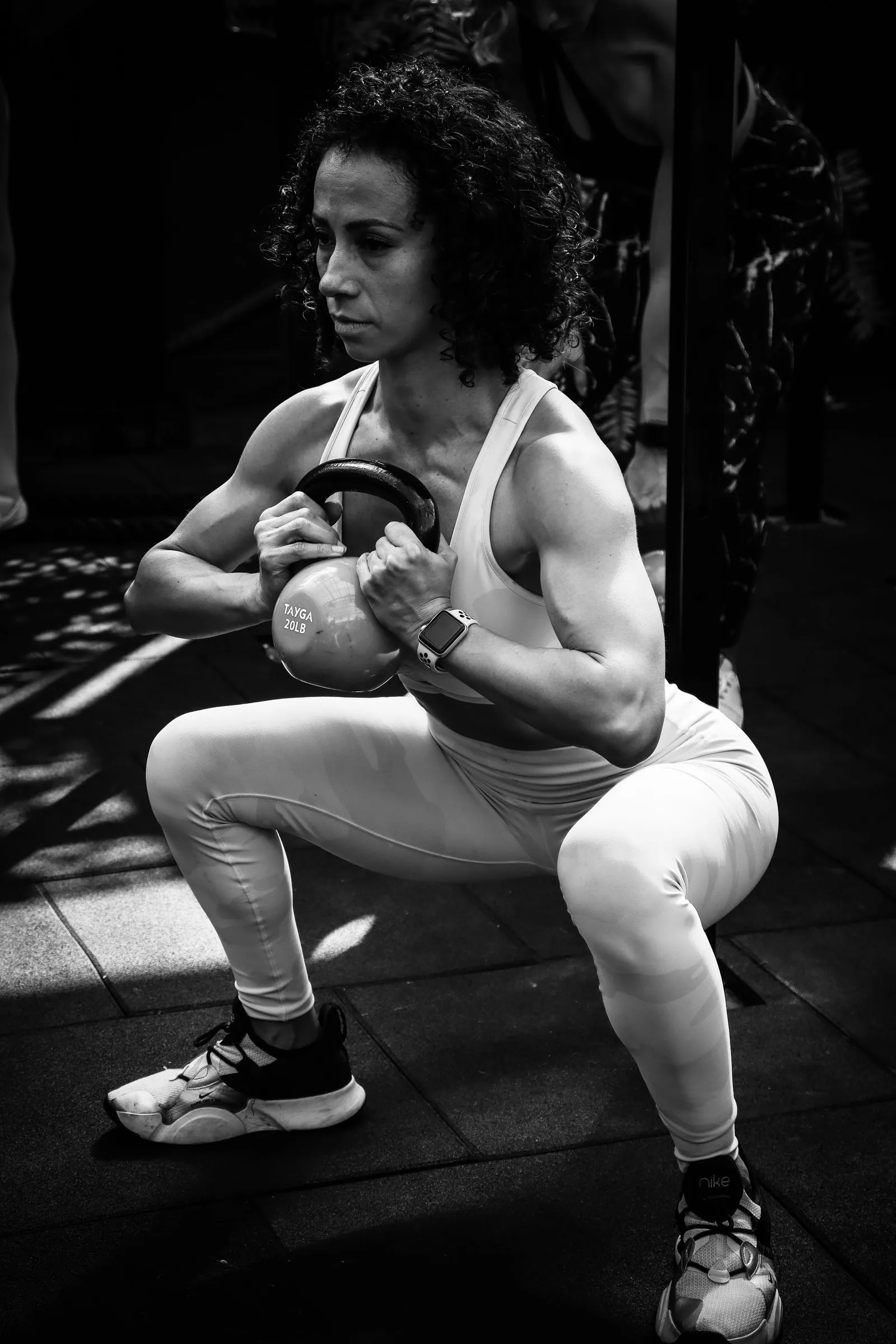
If three strength days feel like too much, begin with two and add the third after four weeks. If you prefer dance for cardio, an online Zumba class fits neatly into the Saturday slot. Fat loss is the main goal for some readers, so our workout plan for weight loss for females shows how to adjust this same structure for a calorie deficit.
How do you run each training day?
Warm up for 5 to 8 minutes, do the heaviest or most technical lift first while you are fresh, then move to accessory exercises, and finish with core work or a short cardio finisher. Keep main lifts at 6 to 10 reps and accessories at 10 to 15 reps, resting 60 to 120 seconds between sets.
Here is a lower body session you can copy on Monday. Choose a weight where the last two reps are hard but form stays clean:
| Exercise | Sets x reps | Rest | Form cue |
|---|---|---|---|
| Goblet squat | 3 x 8 to 10 | 90 sec | Elbows inside knees, chest tall, heels flat |
| Hip thrust | 3 x 10 to 12 | 90 sec | Chin tucked, ribs down, pause at the top for a second |
| Dumbbell Romanian deadlift | 3 x 10 | 90 sec | Push hips back, soft knees, bar close to legs |
| Reverse lunge | 2 x 10 per leg | 60 sec | Step back far enough that the front shin stays upright |
| Standing calf raise | 2 x 15 | 45 sec | Slow lowering, full stretch at the bottom |
| Side plank | 2 x 20 to 30 sec per side | 45 sec | Stack hips, push the floor away |
For a deeper look at legs and glutes in a gym, see our leg workout at the gym for females. For core days, the exercises in stomach workouts for women slot directly into your Tuesday and Friday sessions.
Progress by adding a rep or two each week, or about 2 kg once you finish every set at the top of the rep range.
Should you change your female workout around your menstrual cycle?
You do not have to. Most women can train normally through every phase of the cycle. Energy and recovery vary from person to person, so a sensible approach is to keep your schedule, then lower the intensity or volume by 10 to 20 percent on days when you feel flat, rather than skipping sessions entirely.
The myth is that there is one “correct” way to train in each phase. Women report very different experiences: some feel strongest early in the cycle, some feel fine throughout, and some feel low just before and during bleeding. Track how you feel for two or three cycles and let your own pattern guide you. A rough guide:
| How you feel | Suggested adjustment | Keep the same |
|---|---|---|
| Energetic, sleeping well | Push for an extra rep or a small weight increase | Warm-up and rest days |
| Tired or bloated | Cut one set from accessories, keep main lifts lighter | Session days and mobility |
| Cramping or very low energy | Swap to walking, stretching or gentle yoga | The habit of showing up |
| Feeling steady but unmotivated | Do the first two exercises, then decide whether to continue | Your weekly structure |
A few cautions. Severe pain, unusually heavy bleeding, or periods that become irregular or stop while you are training hard and eating little are reasons to see a doctor, not to push through. If you have a diagnosed condition such as PCOS or thyroid issues, check with your doctor or a registered dietitian about how much training suits you right now. This page is general guidance, not medical advice.
Why is your female workout not showing results?
The usual causes are too little progression, too little protein, short sleep, or inconsistent attendance. Visible change from strength training generally takes about 8 to 12 weeks of regular sessions, and the scale can lag behind. If you have trained consistently for 12 weeks with no change in strength, measurements or energy, look at the causes below.
- The weights never change. If you use the same 3 kg dumbbells for months, your body has no reason to adapt. Log your lifts and aim to beat last week by a rep.
- You are under-eating. Many women eat very little on training days because they associate exercise with “earning” fewer calories. Under-fuelled sessions feel harder and recover slower.
- Protein is low. A vegetarian Indian day can fall well short of your target without planning.
- Sleep is short. Six hours or less makes recovery and appetite harder to manage. Aim for seven or eight.
- You only measure weight. Muscle gain and fat loss can cancel out on the scale. Use waist measurements, monthly photos and gym numbers.
Deload on purpose every four to six weeks by cutting volume by about a third. A planned lighter week prevents the burnout that makes most people quit.
How much should you eat to support a female workout?
Most women training with weights do well on roughly 1.2 to 1.8 grams of protein per kilogram of body weight per day, spread across three or four meals. For a 60 kg woman that is about 72 to 108 grams daily. Total calories should be enough to fuel training, not a crash diet.
Indian foods make this practical. These are approximate protein values:
- 3 whole eggs: about 18 g
- 100 g paneer: about 18 g
- 1 cup (about 200 g) of curd: about 7 to 8 g
- 1 katori of cooked dal (about 150 g): about 7 to 9 g
- 100 g cooked chicken or fish: about 25 to 30 g
- A fistful of roasted chana (30 g): about 6 g
Eat something with carbohydrate and protein one to two hours before training, such as a banana with a handful of nuts or poha with curd. After training, aim for a meal with 20 to 30 g of protein within a few hours. If you have a medical condition, are pregnant or breastfeeding, or have a history of disordered eating, work with a professional rather than copying general numbers. A one-to-one session with an online nutritionist can turn these ranges into a meal plan that fits your kitchen and budget.
Which version of a female workout suits your situation?
Pick the version you will actually repeat. A plan done three times a week at home beats a perfect gym plan you manage once a fortnight.
- Beginner at home: Two 30 to 40 minute sessions with bodyweight, a band and one pair of dumbbells. Our female home workout plan lays this out day by day.
- Busy working woman: Three 40 minute full body sessions, plus 20 minute walks on other days.
- Prefers movement with music: Keep two strength days and use dance or yoga for cardio and recovery. A live online yoga class suits the Thursday slot.
- Returning after a break, pregnancy or injury: Start well below your old levels and get medical clearance first.
An app can log sets and remind you to train, but it cannot judge your deadlift form. Our guide to a workout for women app explains which features matter.
Frequently Asked Questions
What is a good female workout?
A good female workout combines two to four strength sessions a week with two or three cardio sessions and built-in recovery. It covers all major muscle groups, increases weight or reps gradually, and fits your real schedule. The best routine is the one you can repeat for months, not the most intense one.
How many days a week should a woman work out?
Most women do well with four to five active days: three strength sessions, one or two cardio sessions, and one lighter recovery day, with at least one full rest day. Beginners can start with three days a week and add more once sessions feel easy to recover from.
Do women need to lift heavy weights?
Women need to lift weights that challenge them, not necessarily very heavy ones. Choose a load where the last two reps of each set feel hard but form stays clean. Over weeks, increase gradually. This builds strength and bone density without making you bulky.
Can you do a female workout at home without equipment?
Yes. Bodyweight squats, glute bridges, push-ups on knees or toes, reverse lunges, planks and bird dogs build a solid base. Add a resistance band and a pair of dumbbells after a few weeks so you can keep increasing difficulty. Progress by adding reps, slowing the lowering phase, or shortening rests.
How long does it take to see results from a female workout?
Most women notice better strength and energy within three to four weeks, and visible changes in shape and clothing fit after roughly 8 to 12 weeks of consistent training and sensible eating. Results vary with starting point, sleep, nutrition and consistency, so no timeline is guaranteed.
Start your first four weeks with a coach
If you want this plan adjusted to your schedule, your equipment and your cycle, book a trial with FitStrot’s 1-on-1 personal training. Your coach will check your form, set your starting weights and update the plan every week. If fat loss is your main goal, our online weight loss trainer pairs the same strength base with a structured eating plan.


