

Good workouts for women are built on the same few ideas that work for everyone: lift something challenging, move your body regularly, recover well, and add a little more over time. What changes is the mix. A woman chasing strength, one chasing fat loss and one who simply wants energy for a busy week will each choose slightly different sessions. This guide matches workout types to goals, busts the bulky myth, and gives you a sample plan with sets, reps and rest.
What are the best workouts for women, by goal?
Strength training two to four days a week is the best base for most women, because it builds muscle, supports bone health and keeps fat loss steady. Add 20 to 40 minutes of walking, dance or cycling on other days. Yoga and mobility work fill the gaps for flexibility and stress.
Use the table below to pick a starting point, then refine it as your routine settles.
| Your goal | Main workout type | Sessions per week | Starting prescription | Good add-on |
|---|---|---|---|---|
| Build strength and shape | Full-body or upper/lower strength | 3 to 4 | 3 to 4 sets of 6 to 10 reps, 90 to 120 sec rest | 20 min walk on off days |
| Lose body fat steadily | Strength plus moderate cardio | 3 strength + 2 cardio | Strength as above; cardio 30 to 40 min at a pace where you can still talk | Daily walking, roughly 6,000 to 8,000 steps |
| Stronger glutes and legs | Lower-body focus days | 2 lower days in a 3 to 4 day week | 3 to 4 sets of 8 to 12 reps, 90 sec rest | See our glutes workout guide |
| Flatter, stronger midsection | Core work after strength sessions | 2 to 3 | 2 to 3 sets, 10 to 15 reps or 20 to 40 sec holds | See stomach workouts for women |
| Stamina and fun | Dance cardio, cycling, brisk walking | 3 to 4 | 30 to 45 min, easy to moderate effort | Zumba for women |
| Flexibility and calm | Yoga and mobility | 2 to 3 | 20 to 45 min, slow and controlled | Yoga for women |
If you want a wider tour of training styles before you commit, our types of workouts guide compares them side by side.
Do women need a different workout than men?
Not at the core. A squat trains the same muscles whoever does it, and progressive overload, meaning gradually adding weight, reps or sets, drives results in every body. What can differ is emphasis: many women prioritise glutes and legs, and some adjust intensity around their cycle or after pregnancy.
Where the fitness industry goes wrong is selling “women’s workouts” as a lighter category of tiny weights, endless high-rep circuits and cardio. That approach undersells what you can do. If you want to see how a standard program looks for men, workouts for men covers it, and you will notice the structure is almost identical.
Real differences worth planning around:
- Lower-body priority. Hip thrusts, Romanian deadlifts and split squats can take a bigger share of your week if that is your goal. Upper body still gets trained.
- Cycle-aware pacing. Some women feel stronger in the two weeks after a period and flatter just before or during it. Others notice nothing. Track your own pattern for two or three months rather than assuming.
- Life stage. Pregnancy, the months after delivery and the years around menopause each call for sensible adjustments, covered further below.
Myth check: will lifting weights make you bulky?
No. Women typically carry far less testosterone than men, so adding large amounts of muscle is slow and takes years of dedicated training, plenty of food and a calorie surplus. Three or four sessions a week usually make you firmer and stronger, not bigger.
The heavily muscled physiques you see online come from years of specific effort, not from lifting a 10 kg dumbbell a few times a week. The usual first-month experience is that clothes fit differently and carrying groceries or a toddler feels easier. Three more myths worth dropping:
- “Toning” needs different exercises. There is no special toning move. A firmer look comes from building some muscle and, if you carry extra body fat, reducing it slowly. A bicep curl builds the same muscle whoever lifts it.
- You can burn fat from one spot. Crunches strengthen your abs but do not choose where fat leaves. Fat loss happens across the body, in the order your genetics decide.
- Cardio alone is enough. Cardio is useful for stamina and heart fitness, but without resistance work you can lose muscle along with fat, which leaves you lighter without feeling any stronger.
A 3-day full-body plan you can start this week
Run the session below on three non-consecutive days, for example Monday, Wednesday and Friday. It uses dumbbells, so it works at home or in a gym. Warm up for five minutes first with easy marching, arm circles and a few bodyweight squats. The final column gives you the form cue to focus on.
| Exercise | Sets x reps | Rest | Form cue |
|---|---|---|---|
| Goblet squat | 3 x 8 to 12 | 90 sec | Weight held at chest, knees track over toes, sit between your heels |
| Hip thrust or glute bridge | 3 x 10 to 12 | 90 sec | Chin tucked, ribs down, squeeze glutes at the top for one second |
| Dumbbell Romanian deadlift | 3 x 8 to 10 | 90 sec | Push hips back, soft knees, dumbbells slide down your thighs, flat back |
| Push-up (knees or hands on a bench to start) | 3 x 6 to 12 | 60 to 75 sec | Body in one line, elbows about 45 degrees from your sides |
| One-arm dumbbell row | 3 x 10 per arm | 60 to 75 sec | Pull the elbow toward your hip, do not twist your torso |
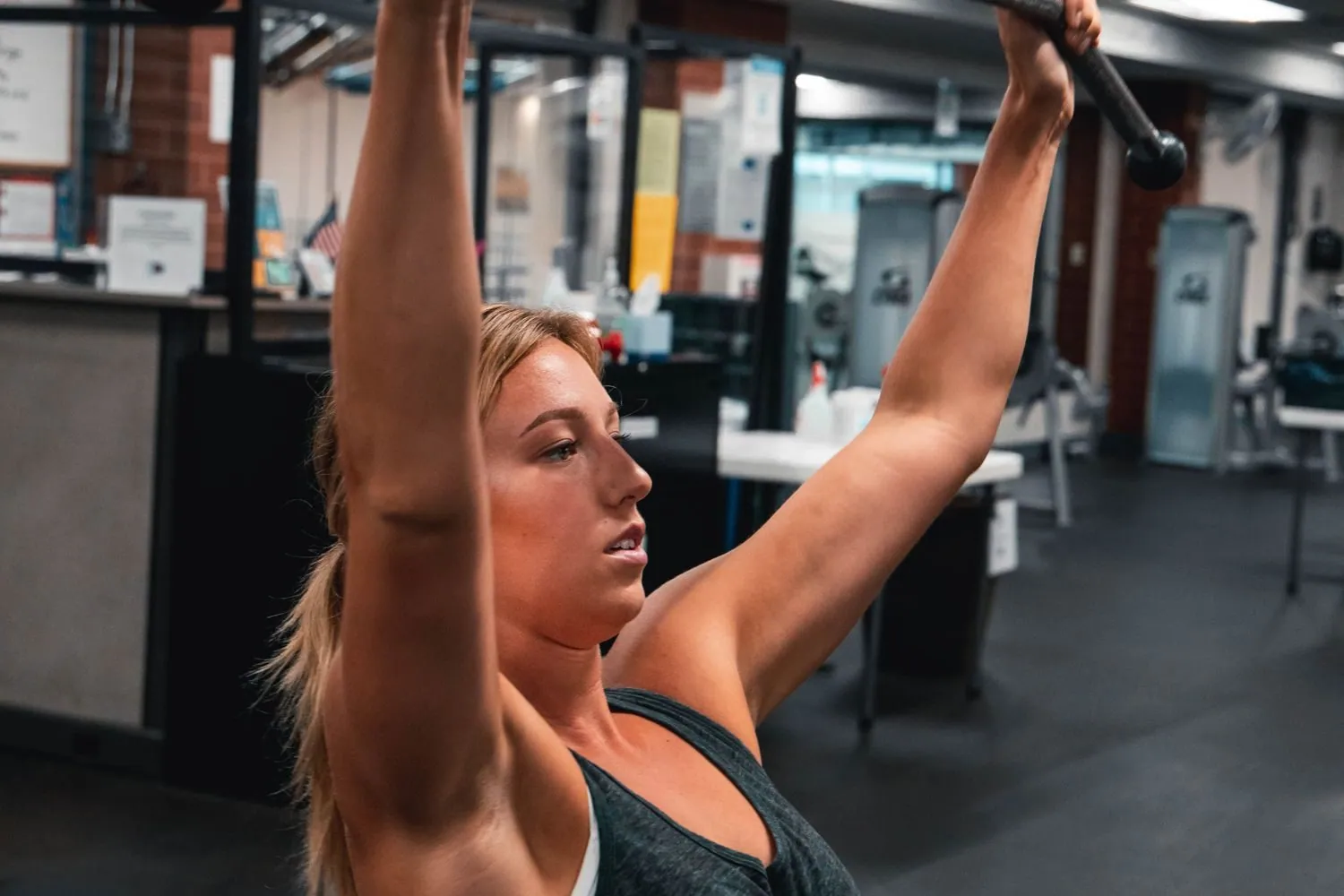
| Dumbbell shoulder press | 3 x 8 to 10 | 75 sec | Brace your core, press straight up without arching your lower back |
| Plank | 3 x 20 to 40 sec | 45 sec | Squeeze glutes, push the floor away, no sagging hips |
How to progress without guessing
Pick a weight that leaves you two or three reps short of failure on the last set. When you hit the top of the rep range on every set with clean form, add the smallest jump available, usually 1 to 2 kg per dumbbell, and drop back to the bottom of the range. If you stall for two or three weeks, check sleep and food before changing the plan. Beginners often notice that exercises feel noticeably smoother within three or four weeks, because coordination improves before muscle does.
How should you arrange your week?
The best week is the one you can repeat for months. Here are three layouts built from the same session types, so you can swap between them as your schedule changes.
| Day | Fat-loss focus | Strength and glutes focus | Busy-week minimum |
|---|---|---|---|
| Monday | Full-body strength | Lower body (glute focus) | Full-body strength |
| Tuesday | 30 to 40 min brisk walk or dance cardio | Upper body | 20 min walk |
| Wednesday | Full-body strength | Rest or easy walk | Rest |
| Thursday | Yoga or mobility, 20 to 30 min | Lower body (hamstrings, single-leg work) | Full-body strength |
| Friday | Full-body strength | Upper body plus core | 20 min walk |
| Saturday | 40 min cardio you enjoy | Yoga or a 30 min walk | Full-body strength |
| Sunday | Rest | Rest | Rest |
Early-morning sessions suit many women before the office commute or the school run, while evening sessions suit others after dinner has been planned. Choose the slot you will actually protect. If you prefer to follow structured sessions on your phone, the workout for women app guide explains what a good one should include.
Why are your workouts not working? A troubleshooting list
If you train regularly but see little change after six to eight weeks, one of five fixes usually applies. Check them in this order before you overhaul the whole routine or buy anything new.
- Weights are too light. If you could do 15 more reps on every set, you are exercising, not training. Move up until the last two reps are hard.
- No progression. Using the same 5 kg dumbbells for three months gives your body no reason to change. Log your weights and reps.
- Protein is low. Many active women do well with roughly 1.2 to 1.6 g of protein per kg of body weight daily. For a 60 kg woman that is about 72 to 96 g. Eggs, paneer, curd, dal, soya chunks, chicken and fish all count. Our women nutrition guide covers the full picture, and an online nutritionist can build the plan around your regional food habits.
- Sleep is short. Regularly sleeping under six hours makes sessions feel harder and hunger harder to manage. Aim for seven to nine hours.
- Consistency is patchy. Two sessions one week and five the next averages out to less than a steady three. A smaller plan done every week beats an ambitious one done in bursts.
Be realistic about fat loss too. A sustainable pace is roughly 0.25 to 0.5 kg a week, and the scale can stall while your waist shrinks and your muscle improves. Anyone promising dramatic results in a few days is selling something. Results vary with food, sleep, starting point and consistency, and nobody can guarantee them.
What changes at different life stages?
The principles stay the same, but your starting point and pacing may not. These are general guidelines, not medical advice, and a doctor who knows your history should have the final word.
- Complete beginners. Spend the first four to six weeks learning squat, hinge, push, pull and carry patterns with light loads. Two or three sessions a week are plenty.
- Pregnancy and after delivery. Speak to your doctor before starting or resuming exercise. After delivery, most women are cleared to build back gradually, beginning with walking, gentle core and pelvic floor work, before returning to heavy loads.
- Periods. You can train through your period if you feel fine. On heavy or painful days, lower the weight, shorten the session, or switch to walking or yoga. Pain that is severe or stops you from your normal day deserves a conversation with your doctor.
- Forties and beyond. Recovery may take a little longer, so many women do well with three strength sessions and a rest day between them. Keep progressing slowly and keep lifting, because strength is a major factor in staying independent and active as you age.
If you have joint pain, a heart or blood pressure condition, diabetes or another medical issue, get your doctor’s go-ahead and consider guided coaching. A live yoga class or an online Zumba class can also be a gentle, social way to add movement while you build confidence.
FAQs about workouts for women
How many days a week should women work out?
Most women do well with three to four workouts a week, with at least two of them being strength sessions. Add walking or other light activity on other days. Two sessions can maintain fitness, while five or six need careful recovery planning. A good target to begin with is three sessions of 40 to 50 minutes.
Can women follow the same workout program as men?
Yes. Progressive overload, compound lifts and enough weekly sets work for everyone. Women may choose different emphasis, such as more glute and leg work, lighter starting weights or adjustments around pregnancy and the menstrual cycle. The structure of sets, reps, rest and progression remains the same for both sexes.
Will strength training make women bulky?
No. Women typically have far lower testosterone than men, so building large muscle takes years of focused training, high food intake and a calorie surplus. With three or four sessions a week and normal eating, most women become firmer, stronger and more defined rather than bulky.
Is cardio or strength training better for women?
Both help, but strength training should be the foundation, with cardio around it. Strength builds and protects muscle, while cardio builds stamina and heart fitness. A balanced week might include three strength sessions plus two cardio sessions of 30 to 40 minutes, or a daily walk if time is short.
Can I do workouts for women at home without a gym?
Yes. A pair of adjustable dumbbells, a resistance band and a mat cover squats, hinges, presses, rows and core work. Progress by adding reps, slowing the lowering phase, using single-leg variations or buying heavier dumbbells later. Home training works well if you follow a written plan and track your progress.
Want sessions built around your schedule, current fitness and goals, with weekly adjustments as you progress? Book a coach through Fitstrot’s 1-on-1 personal training and start with a plan made for you.


