

If you sit at a desk or ride a two-wheeler for hours, your hamstrings and lower back probably feel it. Uttanasana, the standing forward bend, is one of the simplest ways to release them. This guide shows how to do uttanasana step by step, which variation suits your body, what to fix when it hurts, and who should skip the deep version. Think of the hold as a hinge at the hips, not a test of how close your hands get to the floor.
What is uttanasana, and what does the name mean?
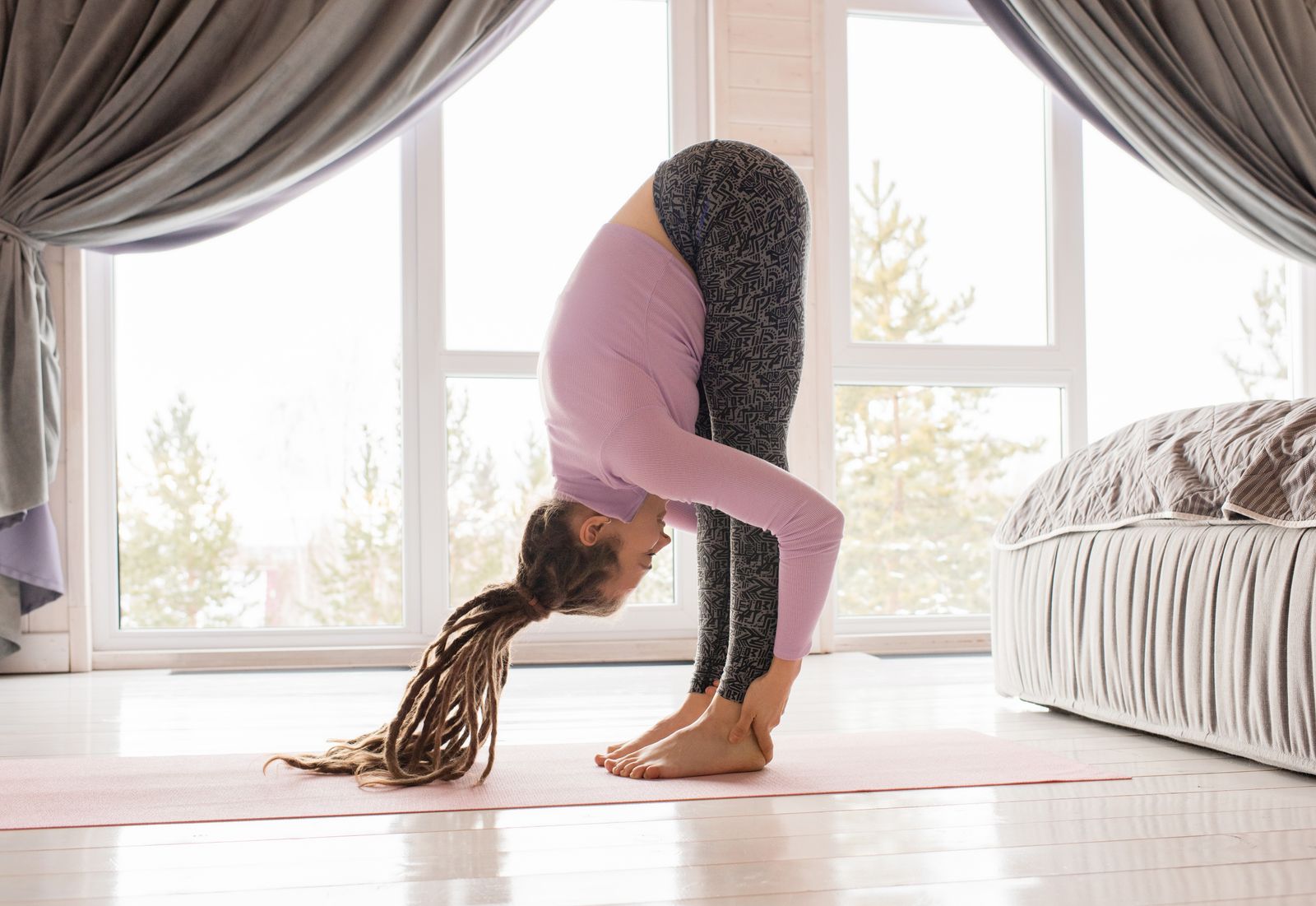
Uttanasana (oot-tan-AH-sana) is the standing forward bend: you fold from the hips over your legs and let the head and neck hang heavy. The name joins “ut” (intense), “tan” (to stretch) and “asana” (pose), so it roughly means “intense stretch pose”. Most people hold it for 5 to 10 breaths, about 30 to 60 seconds.
The pose appears across nearly every style, from the slow, alignment-focused Hatha yoga tradition to flowing Vinyasa classes and the set sequences of Ashtanga. It is also called Standing Forward Fold, and in some Sun Salutation sequences you will hear it called Padahastasana, though in Ashtanga that name is kept for the deeper hands-under-feet version.
How do you do uttanasana step by step?
Stand with feet hip-width apart, inhale to lengthen the spine, then exhale and hinge forward from the hip joints with a long back. Bend the knees as much as you need, let your hands rest on the floor, blocks or shins, and hold 5 to 10 breaths. Roll up slowly, head last.
- Start in Tadasana (Mountain Pose) with feet hip-width apart and weight spread evenly across both feet.
- Inhale and reach the arms overhead, lifting the ribs away from the hips.
- Exhale and fold forward from the hips, leading with the chest and keeping the spine long rather than rounding first.
- Soften the knees. Let the sitting bones lift toward the ceiling and the belly rest on or near the thighs.
- Place your hands on the floor, on blocks or on your shins. Any height that does not strain the back is correct.
- Let the head and neck hang. Take 5 to 10 slow breaths, feeling the ribs widen at the back on each inhale.
- To come out, bend the knees more, place your hands on your hips, engage the lower belly and roll up one vertebra at a time with the head coming up last.
No blocks at home? A stack of sturdy books, a low stool or the seat of a stable chair works just as well.
Alignment cheat sheet: what each part of the body should do
Most discomfort in this pose comes from one or two small alignment errors. Use the table below as a quick check in front of a mirror or while a teacher watches your online class.
| Body part | What to aim for | Common fault | Quick fix |
|---|---|---|---|
| Feet | Hip-width, weight slightly forward over the mid-foot | Weight sinking into the heels | Lift the toes briefly, then spread them back down |
| Knees | Soft, slightly bent, kneecaps pointing forward | Locked or hyperextended knees | Bend until the back of the thighs feel gently stretched, not pulled |
| Hips | Hinge back and up, sitting bones toward the ceiling | Folding from the waist | Start with hands on the hip creases and push them back |
| Spine | Long first, then released | Rounding hard to reach the floor | Use blocks or hold your shins to keep length |
| Quadriceps | Lightly active, lifting the kneecaps | Thighs completely limp | Press gently into the feet and draw the thighs up |
| Head and neck | Heavy and relaxed | Looking forward or tensing the jaw | Let the chin soften toward the chest and nod gently |
| Shoulders | Away from the ears | Hunched, arms gripping | Hold opposite elbows and sway slowly |
Which uttanasana variation suits your body?
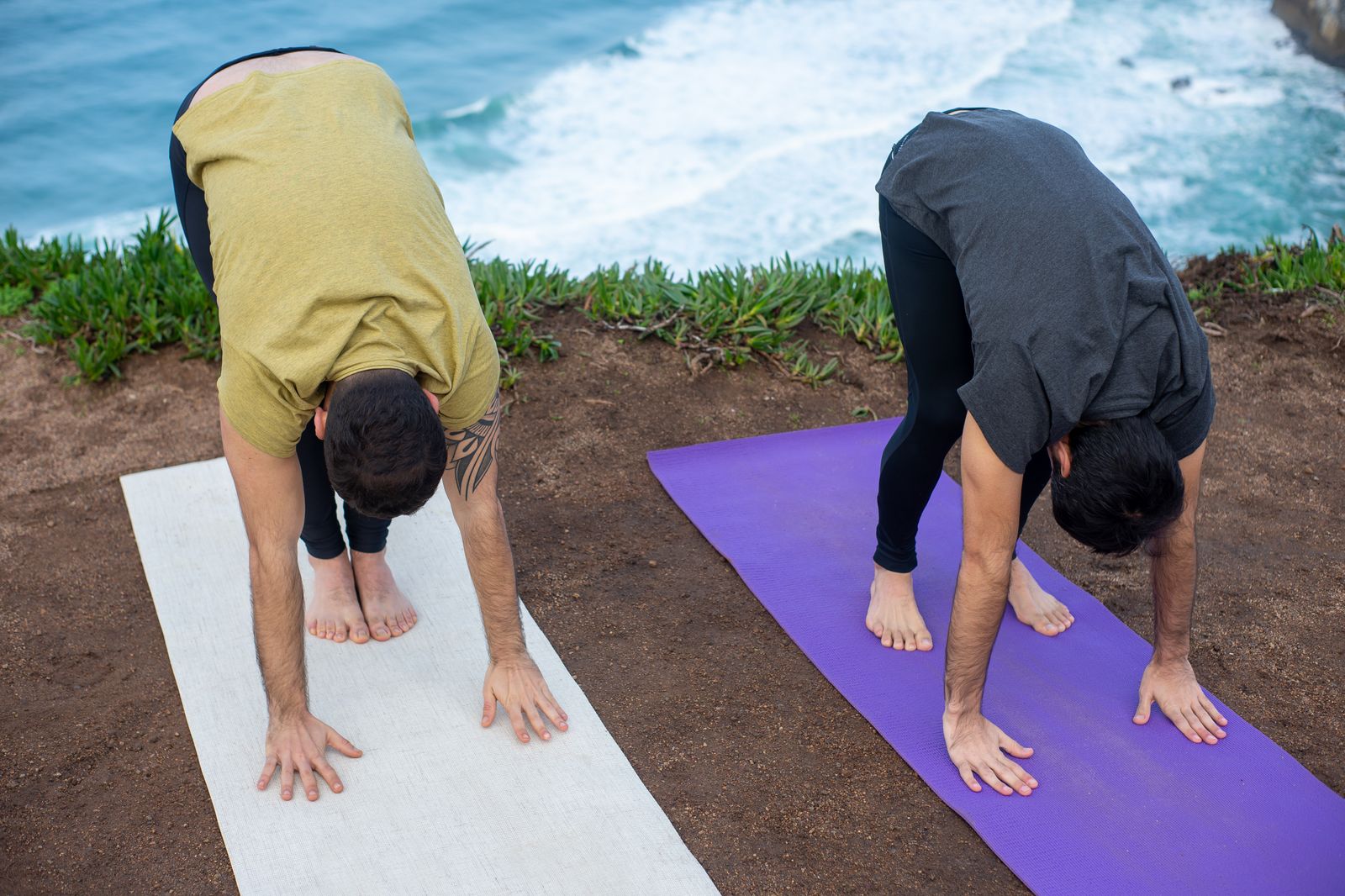
Choose the variation that lets you keep a long spine and breathe evenly. Beginners and tight hamstrings do best with bent knees and hands on blocks or shins. Deeper folds like Padahastasana suit people who already fold comfortably, and a wide-legged fold is a gentler alternative if the standard pose compresses your belly or hamstrings.
| Variation | Best for | What changes | Typical hold |
|---|---|---|---|
| Ardha Uttanasana (half forward bend) | Warming up, sensitive lower backs | Flat back, hands on shins or blocks, gaze slightly forward | 1 to 3 breaths |
| Bent-knee fold | Beginners, tight hamstrings, desk workers | Knees soften so the belly rests on the thighs | 5 to 10 breaths |
| Hands on blocks, books or a chair | Anyone who rounds to reach the floor | Floor rises to meet you, spine stays long | 5 to 10 breaths |
| Ragdoll sway | Releasing neck and shoulder tension | Elbows held, gentle side-to-side sway | 30 to 60 seconds |
| Padahastasana (hands under feet) | People who fold with ease | Palms slide under the feet, toes on the fingers | 5 breaths |
| Prasarita Padottanasana (wide-legged fold) | Inner thighs, pregnancy, tight hamstrings | Feet about a leg-length apart, less hamstring load | 5 to 10 breaths |
Myth check: three things people get wrong about the forward fold
Myth 1: you must touch the floor. You do not. How far your hands travel depends on hamstring length, pelvis shape and the proportions of your torso and legs. A long spine with bent knees is a better fold than a rounded back with hands flat on the ground.
Myth 2: straight legs mean a better stretch. Locking the knees often shifts the pull to the back of the knee joint and the lower back. Soft knees let the pelvis tilt forward so the hamstrings, not the joints, take the stretch.
Myth 3: one pose detoxifies or fixes your digestion. No single asana cleanses the body. Value the pose for what it reliably gives: hamstring and back-body length, hip-hinge practice and a few minutes of slow breathing.
Why does uttanasana hurt my lower back, hamstrings or knees?
Pain in this pose usually means the spine is rounding to compensate for tight hamstrings, the knees are locked, or you folded too fast on cold muscles. Bend the knees, hinge from the hips, raise your hands onto blocks and fold only as far as breathing stays smooth. Sharp, shooting or tingling pain means stop.
- Dull pull behind the thighs: expected. Ease off until it is a 3 or 4 out of 10 and keep breathing.
- Ache across the lower back: bend the knees more, lift your hands higher or come halfway up into Ardha Uttanasana.
- Sharp pain just behind the knee: unlock the joint and shorten the fold.
- Pain near the sitting bone: the hamstring attachment is overstretched. Reduce depth and avoid bouncing.
- Head rush when you stand: hold a breath or two with the knees bent before rising, then roll up slowly, head last.
Folding right after a heavy meal is uncomfortable for most people. Roughly 2 to 3 hours after a full meal is a sensible gap.
Who should modify or avoid uttanasana?
Most healthy adults can practise uttanasana with bent knees, but some people should modify it or skip the deep fold: those with a herniated disc, sciatica, uncontrolled high blood pressure, glaucoma, vertigo, osteoporosis, or a recent back or hamstring injury. If any of these apply, check with your doctor before folding with the head below the heart.
- Disc problems, sciatica or acute back pain: use Ardha Uttanasana with hands on a wall or chair, and avoid deep, unsupported folds. Our guide to yoga for back pain covers gentler options.
- High blood pressure or glaucoma: keep the head at or above heart level by folding only halfway, and ask your doctor what is safe for you.
- Pregnancy: especially in the second and third trimesters, choose a wide-legged stance with hands on a chair or blocks so the belly has room.
- Osteoporosis: avoid deep, rounded spinal flexion. Keep the back long and fold only halfway.
- Dizziness or vertigo: skip the head-down hold and use the half fold.
See your doctor or physiotherapist if you have numbness, pain that travels down a leg, or a diagnosed spine, eye or heart condition. A qualified teacher can adapt the pose to you, and our guide to online yoga classes explains how to choose one who watches your form.
How long should you hold uttanasana?
Hold uttanasana for 1 to 2 breaths inside a flowing sequence, 5 to 10 breaths (30 to 60 seconds) as a standalone stretch, and up to about 2 minutes once you are comfortable. Supported, passive versions in slower practice can run 3 to 5 minutes. If the pose causes pain or numbness, shorten the hold.
| Context | Hold | Intensity | Notes |
|---|---|---|---|
| Inside Surya Namaskar | 1 to 2 breaths | Light | Move with the breath, soft knees |
| Desk-break stretch | 5 breaths | Light to moderate | Bent knees, hands on a table or chair |
| Standalone hamstring release | 30 to 60 seconds | Moderate | Repeat 2 to 3 times with a pause between |
| Cool-down after exercise | 1 to 2 minutes | Gentle | Fold only once the heart rate has settled |
| Slow, supported practice | 3 to 5 minutes | Passive | Props under the hands, never forced. See Yin yoga |
How does uttanasana fit into a Sun Salutation and your wider practice?
In the classic 12-step Surya Namaskar, you fold forward twice per round, at the third and tenth positions. The first fold follows the overhead backbend, the second returns you toward standing. That repetition makes the Sun Salutation one of the most efficient ways to get comfortable with the hip hinge.
Uttanasana also pairs well with other standing poses. Tadasana teaches upright alignment, while the fold teaches release. Vrksasana (Tree Pose) adds single-leg balance, and the Warrior poses build leg strength that makes folds feel more stable. For a wider map of postures, browse our yoga poses library.
Here is a simple 10-minute routine to build your fold over a few weeks:
- Tadasana: 5 slow breaths to settle.
- Bent-knee uttanasana with hands on blocks: 8 breaths.
- Ardha Uttanasana: 3 breaths, then fold again. Repeat the pair 3 times.
- Ragdoll sway (30 seconds), then three easy Sun Salutation rounds.
- One last fold: 10 breaths, then roll up slowly.
What are the real benefits of uttanasana?
The solid, reliable benefits of uttanasana are lengthening of the hamstrings, calves and back muscles, better practice of the hip-hinge movement, and a calming effect from slow breathing with the head relaxed. Flexibility gains usually take several weeks of regular practice, about 3 to 5 sessions a week, and vary from person to person.
- Hamstring and calf length: eases the tightness that long sitting builds up.
- Hip-hinge control: carries over to picking things off the floor and to lifting with a safer back position.
- Relaxation: many people feel calmer after a few slow breaths in the fold, mainly because of the breathing and the relaxed head and neck.
- A mild back-body stretch: useful for general stiffness, though not a treatment for structural back problems.
It will not melt belly fat, cure headaches or replace medical care. Used steadily, it is one small, sensible part of a mobility routine alongside walking, strength work and good sleep.
Frequently asked questions about uttanasana
Is uttanasana good for beginners?
Yes. It is among the most beginner-friendly standing poses because you can bend the knees, use blocks and keep the hold short. Beginners should aim for a long spine, not touching the floor, and fold only as far as breathing stays easy.
Why can’t I touch my toes in uttanasana?
Tight hamstrings, a stiff lower back, and your own bone and limb proportions can all limit the fold. It is common and does not reduce the value of the pose. Keep the knees bent, practise regularly for several weeks, and measure progress by a longer spine, not by floor contact.
How is uttanasana different from Padahastasana?
In uttanasana your hands can rest anywhere comfortable, on the floor, blocks or shins. In Padahastasana the palms slide under the feet with the toes resting on the fingers, which asks for more hamstring flexibility. Build comfort in standard uttanasana first.
Should I do uttanasana before or after a workout?
Both work. Before a workout, a gentle bent-knee version with short holds warms up the hamstrings and hips. After a workout, a longer 1 to 2 minute hold helps you cool down. Avoid a deep, forced fold on cold muscles, because that is when strains are most likely.
Is it normal to feel dizzy in uttanasana?
Mild lightheadedness can happen, especially when you stand up too fast, because blood has moved toward the head during the fold. Roll up slowly with the head last and keep the knees bent. If dizziness is strong or keeps returning, stop practising and speak to your doctor.
Practise uttanasana with feedback
A fold looks simple until your hips, hamstrings and breath all need to cooperate. Book a live session in our online yoga classes and get your alignment corrected in real time.


