

A good triceps workout gym session does one thing the average arm day skips: it trains all three heads of the muscle, not just the pushdown-friendly outer one. That means one heavy press, one overhead movement and two or three pushdown variations, roughly 12 to 14 hard sets in about 45 minutes. Below is the full session with sets, reps, rest times and form cues, plus fixes for the problems that stall most lifters.
How Many Sets and Reps Does a Triceps Workout Gym Session Need?
Most lifters grow well on roughly 8 to 14 direct triceps sets per week, using 6 to 8 reps on heavy presses and 10 to 15 reps on isolation work. Rest 60 to 120 seconds between sets. Spread over one or two sessions, that is enough, because pressing days for chest and shoulders add indirect triceps work on top.
Here is a complete session you can run once a week as a dedicated triceps day, or split across two days using the plan further down.
| Exercise | Sets | Reps | Rest | Key form cue | Main target |
|---|---|---|---|---|---|
| Close-grip bench press | 3 | 6-8 | 2 min | Hands just inside shoulder width, elbows tucked at roughly 45 degrees | Lateral and medial heads, strength |
| Parallel-bar dips (upright torso) | 3 | 8-10 | 90 sec | Lean slightly forward only, lower until upper arms are about parallel to the floor | Lateral head, load |
| Overhead cable rope extension | 3 | 10-12 | 75 sec | Keep elbows pointing forward, lower the rope behind your head slowly | Long head |
| Rope pushdown | 2 | 12-15 | 60 sec | Elbows pinned to your sides, split the rope at the bottom | Lateral head, pump |
| Reverse-grip pushdown | 2 | 12-15 | 60 sec | Use a lighter weight, keep wrists straight | Medial head |
The order matters. Heavy compound lifts go first, while you are fresh enough to load them properly. Extensions and pushdowns come later, where lighter weights and controlled reps finish off each head. If you only have 30 minutes, keep the first three exercises and you still have a complete session.
Why Pushdowns Alone Leave Your Triceps Half-Trained
Here is the myth: “If I do enough pushdowns, my whole triceps will grow.” The truth is that pushdowns, with the arm at your side, mostly load the lateral head. The long head, the biggest of the three, crosses the shoulder joint, so it works hardest when your arm is overhead and the muscle is stretched.
A quick anatomy map explains why variety matters:
- Long head: the largest portion, running down the back of the arm. It responds best to overhead extensions and skull crushers.
- Lateral head: the outer part that creates the horseshoe shape when you flex. It is loaded by presses, dips and pushdowns.
- Medial head: sits underneath the other two and works in almost every elbow-extension movement, so it gets plenty of work from the rest of your session.
This is the most common gap we see when a client brings us an arm routine that has not changed in years. The fix is rarely more sets. It is swapping one pushdown variation for an overhead movement and moving the heavy press to the start of the session.
Walkthrough: How to Perform the Three Lifts That Matter Most
If you master just three movements, you cover most of the muscle. Take each one slowly the first few weeks and keep the weight light enough that your form never breaks.
Close-grip bench press
Lie on a flat bench with your feet planted and your shoulder blades pulled together. Grip the bar just inside shoulder width. Going much narrower strains the wrists without adding much triceps work. Lower the bar to your lower chest with elbows at roughly 45 degrees from your torso, then press up and slightly back until your arms are straight. Use a spotter or the safety pins in the rack, because the bar travels over your face and throat.
Parallel-bar dips
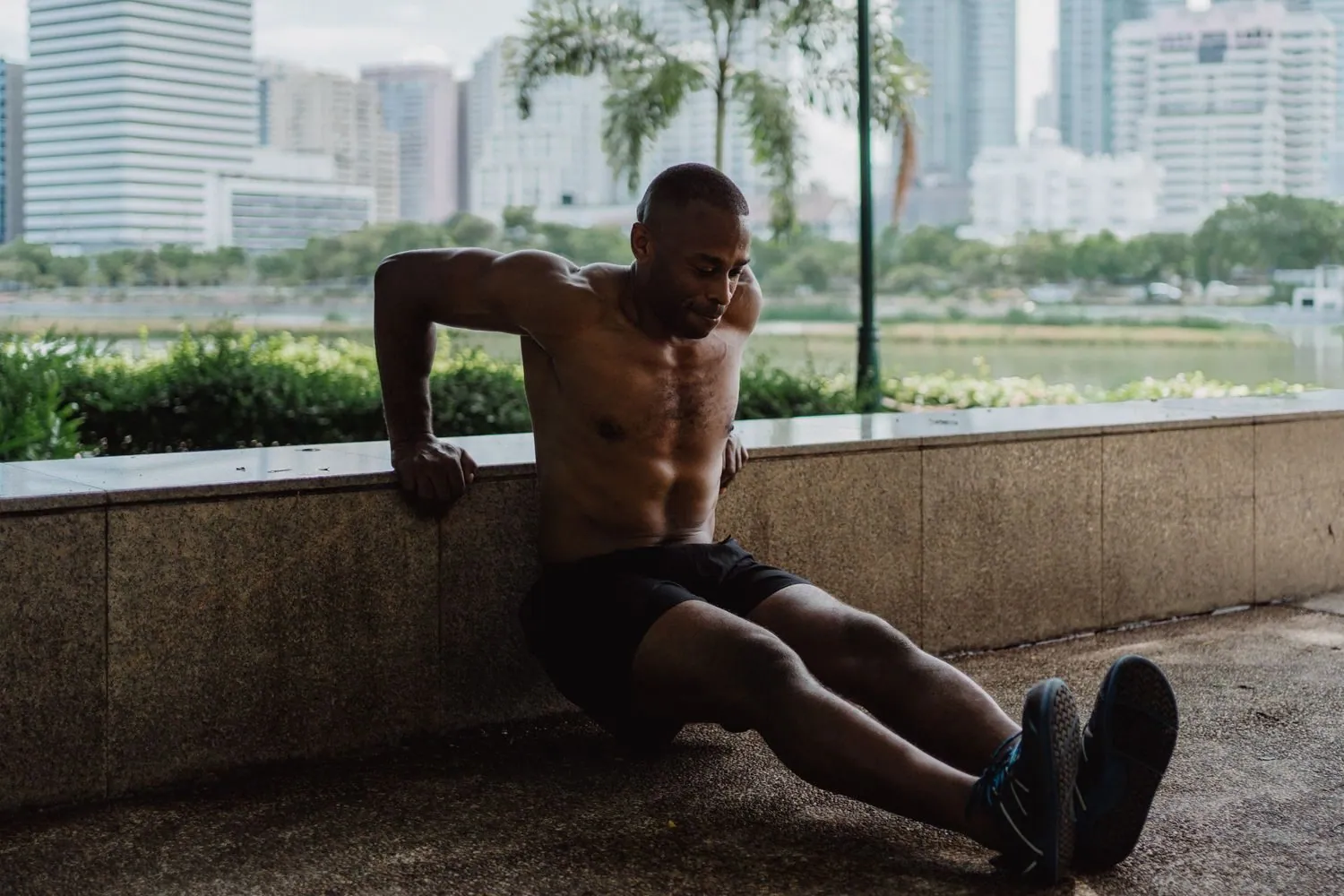
Support yourself on the bars with straight arms and a slight forward lean. Bend your elbows, keeping them close to your body rather than flared, and lower until your upper arms are about parallel to the floor. Press back up without shrugging your shoulders to your ears. If you cannot manage 6 clean reps, use the assisted dip machine or do bench dips first. Going deeper than comfortable loads the front of the shoulder, which is where most dip-related niggles start.
Overhead cable rope extension
Set the pulley at the lowest position, face away from the stack and hold the rope behind your head with elbows pointing forward and close to your ears. Keep your ribs down and your upper arms still. Straighten your elbows until your hands go overhead, pause for a second, then lower slowly until you feel a deep stretch. Moderate weight beats heavy weight here, because swinging the torso takes the load off the muscle you came to train.
Common Triceps Form Mistakes and Quick Fixes
Most triceps stalls come from a handful of repeatable errors. Use this table as a checklist when a set feels wrong.
| Mistake | What it looks like | Fix |
|---|---|---|
| Elbows flaring on pushdowns | Elbows drift out and forward, shoulders take over | Pin elbows to your ribs and drop the weight by about 20 percent |
| Leaning over the stack | Torso bobs to push the weight down | Stand upright, one foot slightly forward, and keep your chest still |
| Half reps on extensions | Elbows never fully bend or straighten | Use the full range, with a one-second pause at the stretch |
| Too narrow a grip on bench | Hands almost touching, wrists bend back | Hands just inside shoulder width |
| Ego loading skull crushers | Bar drifts toward the face, elbows flare | Switch to an EZ bar or dumbbells and lower behind the head |
Troubleshooting: Sore Elbows, Flat Triceps and Stalled Lifts
Elbow ache after sessions. Triceps tendons are fussy when load jumps too quickly. Add weight in small steps, keep isolation reps controlled and avoid grinding out the last two reps on skull crushers. A dull ache that fades within a day is common. Sharp pain at the elbow, pain that lasts more than a week or two, or numbness and tingling in your fingers are signs to stop.
Triceps that look flat despite regular training. Check whether you train an overhead movement at all. Also look at your total effort. If every set ends with plenty of reps left in the tank, the muscle is not being asked to adapt. Finish most working sets with about one or two reps in reserve.
Close-grip bench stuck for weeks. Add one rep per set before adding weight, and make sure you are not fatiguing your triceps with pushdowns first. Many people also stall because they sleep poorly or eat too little protein.
See your doctor first if… you have a past elbow, shoulder or wrist injury, ongoing joint pain, a diagnosed tendon problem or any condition that affects your joints or heart. A doctor or physiotherapist can clear you for pressing and dipping movements, and a trainer can then adjust the exercise list around the problem area.
How Often Should You Train Triceps in a Week?
Twice a week works for most people, with 48 to 72 hours between direct sessions. Heavy chest and shoulder days already load your triceps, so count that work in. Training triceps three times weekly is rarely needed and tends to irritate the elbows without adding much extra size.
This table shows how to scale the same session to your experience.
| Level | Sessions per week | Direct sets per week | Suggested structure |
|---|---|---|---|
| Beginner (first 3 months) | 1 to 2 | About 6-9 | Close-grip bench or machine press, rope pushdown, one overhead extension |
| Intermediate (6 months to 2 years) | 2 | About 9-12 | Day A: close-grip bench plus overhead extension. Day B: dips plus pushdowns |
| Advanced (2+ years) | 2 | About 12-16 | Heavy day plus a lighter volume day, with skull crushers or single-arm work added |
Beginners, Women and Busy Professionals: Adjusting the Session
If you are new to the gym, start with a machine chest press or an assisted dip machine, one cable movement and 2 sets of each. Learn the movement before you chase load. Our gym workout plan shows how to fit this into a full week.
If you are a woman training for toned arms, the same exercises and rep ranges apply. Lifting for triceps will not make your arms bulky, because building large muscle takes years of heavy training and surplus eating. You can use lighter dumbbells and cable weights, and the 12 to 15 rep range works well.
If you are short on time, do the first three exercises in the table above, twice a week, and attach them to an existing push day. If you lift on a fixed schedule, our gym workout schedule and gym workout routine guides show where triceps work slots in without overloading the week.
If you cannot get to a gym this week, diamond push-ups and bench dips keep your triceps working. Our push-up workout at home guide gives you a progression you can follow with no equipment.
Where Triceps Fit in Your Weekly Plan
Triceps rarely train alone. If you want biceps and triceps in the same session, our gym arm workout shows how to balance both so neither muscle is fatigued before the other. If you pair arms with delts on an upper-body day, the shoulder and bicep workout covers that combination. As a rule, keep your hardest triceps session at least a day away from your heaviest chest or overhead pressing day.
Eating and Recovery for Stronger Triceps
You build muscle between sessions, not during them. People lifting regularly usually aim for roughly 1.6 to 2 grams of protein per kg of body weight daily, which is about 110 to 140 g for a 70 kg person. In Indian meals that can come from eggs (about 6 g each), paneer (about 18 g per 100 g), dal, curd, chicken, fish or soya chunks spread across the day. Sleep for 7 to 8 hours and keep your calories steady if your goal is strength. If you are unsure how to structure this around a vegetarian diet or a medical condition, an online nutritionist consultation can map it out for you.
Build Your Triceps Program With a Coach
Generic templates ignore your joint history, your equipment and your recovery. With FitStrot’s 1-on-1 personal training, a coach builds your triceps and arm sessions around your actual gym and adjusts them as you progress. Book a session and bring the table above to your first call.
Frequently Asked Questions
How many triceps exercises should I do per session?
Four to five exercises is enough for most people: one heavy press, one overhead extension and two or three pushdown or extension variations. More than that usually adds fatigue without extra growth. If you are a beginner, three exercises of 2 to 3 sets each is a perfectly good start.
Is it better to train triceps with heavy weight or high reps?
Use both. Heavy compound lifts in the 6 to 8 rep range build strength and overall size, while lighter isolation work in the 10 to 15 rep range adds volume with less joint stress. Mixing the two in one session, as in the table above, covers both needs.
Can I train triceps and chest on the same day?
Yes. Chest pressing already works the triceps, so do your chest exercises first and follow with 6 to 8 direct triceps sets. Skip heavy close-grip bench on that day, since your triceps will be tired, and use pushdowns and overhead extensions instead.
Why do my triceps not grow even though I do pushdowns?
Usually the long head is missing from your routine. Add an overhead extension or skull crusher, push sets close to failure with 1 to 2 reps in reserve, and increase the weight or reps gradually every couple of weeks. Check your protein intake and sleep as well.
Can I build triceps without a gym?
Yes, up to a point. Diamond push-ups, bench dips and slow-tempo push-ups build real triceps strength, especially for beginners. Progression gets harder without added resistance, so a gym with cables and free weights helps once bodyweight work feels easy.


