
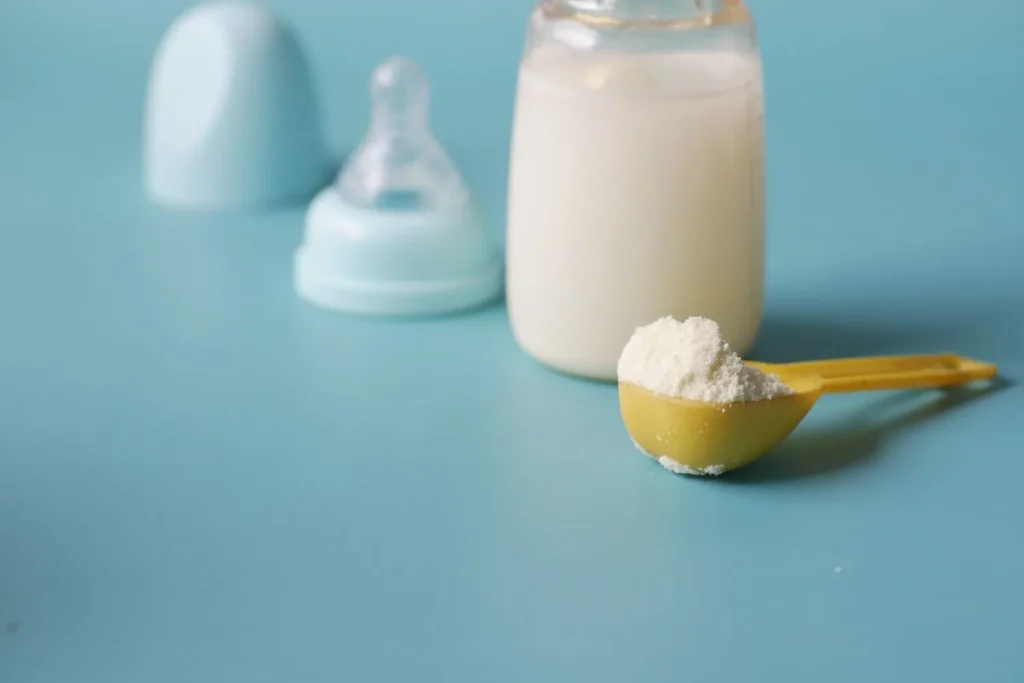
The nutritional needs for infants look simple on paper: milk first, then slowly add food. For the first six months, breast milk or infant formula covers almost everything a healthy baby needs. From about six months, small portions of home-cooked food join the milk. This guide covers what each stage needs, how to prepare formula safely, how to handle allergens and choking risks, and when to call your doctor.
Fitstrot is a fitness and nutrition platform, not a paediatric clinic. Treat this as general guidance; your baby’s paediatrician decides the specifics, especially for premature babies or anything involving vitamin drops.
What are the nutritional needs for infants in the first six months?
For about the first six months, a healthy baby needs only milk: breast milk, infant formula, or a mix of both. No water, juice, honey, gripe water or solid food is needed. Milk supplies roughly 65 to 70 kcal per 100 mL plus protein, fat and lactose. Vitamin D and iron are the points to discuss with your doctor.
Both WHO and India’s national infant feeding guidance recommend exclusive breastfeeding for about six months where possible, then continued breastfeeding alongside food into the second year. Supply problems, medical conditions or returning to work mean many babies get formula or a mix, and a correctly fed formula baby grows well. For a month-by-month reference, see our infant nutritional requirements guide.
Breast milk vs formula: what is actually different?
Breast milk and formula match closely on energy, fat and lactose. Formula is fortified with iron and vitamin D, while breast milk is low in both. What formula cannot copy is breast milk’s living part: antibodies, enzymes and immune cells that change with your baby’s exposure to germs.
| Feature | Mature breast milk | Standard infant formula |
|---|---|---|
| Energy | about 65-70 kcal per 100 mL | about 65-70 kcal per 100 mL |
| Protein | about 1 g per 100 mL, mostly whey | about 1.3-1.5 g per 100 mL |
| Fat | about 3.5-4 g per 100 mL, rises during a feed | about 3.5 g per 100 mL, from a blend of oils |
| Carbohydrate | about 7 g per 100 mL, mostly lactose | about 7 g per 100 mL, mostly lactose |
| Iron | low, but absorbed well | added to every feed |
| Vitamin D | low, whatever the mother eats | added to every feed |
| Antibodies and live cells | present, and adapt to the baby | none |
| Preparation | none, always at body temperature | clean water, correct measuring, sterilised bottles |
Neither is “incomplete” when used properly. For the mother’s own diet, see our guide to nutrition during pregnancy and lactation.
How much milk does a baby need at each age?
Most newborns feed 8 to 12 times in 24 hours. By three to six months, many take roughly 600 to 900 mL of formula a day, or five to seven breastfeeds. These are averages; feed on cues and judge adequacy by weight gain, wet nappies and contentment.
| Age | Milk feeds in 24 hours (approx.) | Solid food | Note |
|---|---|---|---|
| 0-1 month | 8-12 breastfeeds, or about 8 formula feeds | None | 6+ wet nappies a day from about day 5 |
| 1-3 months | 7-9 feeds | None | Growth spurts mean frequent feeds |
| 3-6 months | 5-7 feeds; formula roughly 600-900 mL a day | None | Milk only; no water or honey |
| 6-8 months | 4-6 feeds | 1-2 small mashed meals | Iron-rich foods first |
| 9-11 months | 3-5 feeds | 3 meals plus 1-2 snacks, soft lumps | Finger foods begin |
| 12 months and above | 2-3 milk feeds | Family foods, cut small and soft | Cow’s milk as a drink is now acceptable |
Evening cluster feeding is normal and does not mean your milk is “not enough”. Steady weight gain on your baby’s own growth curve, checked at vaccination visits, is the better answer; our guide to baby nutrition and growth explains what to track.
Do breastfed babies need vitamin D and iron?
Breast milk is naturally low in vitamin D and iron, so paediatricians commonly advise vitamin D drops for breastfed babies from the first weeks, and may suggest iron around six months if food intake is thin. The product and amount are your doctor’s decision. Never start or adjust drops on your own.
Low vitamin D is common in India even in sunny cities, and young infants should not be placed in strong direct sun to make up for it. Formula-fed babies usually get both through fortified formula, but combination-fed babies may fall in between, so ask rather than assume.
A full-term baby’s iron stores start running low around six months, which is why first foods lean iron-rich. Our guide to nutritional anemia explains why iron shortage needs a doctor’s test, not guesswork.
How do you prepare infant formula safely, step by step?
Wash your hands, use sterilised bottles, mix powder with boiled water that has cooled for no more than about 30 minutes, and measure exactly as the tin instructs. Never add extra scoops or water. Cool the bottle, check the temperature on your wrist, and throw away leftovers after the feed.
- Clean first. Wash bottles and teats in hot soapy water, then sterilise them as your paediatrician or the product leaflet suggests.
- Boil fresh water. Boil it once, then let it cool for no more than about 30 minutes.
- Water first, then powder. Pour the water in, then add level scoops exactly as printed on the tin. Heaped scoops over-concentrate the feed; extra water dilutes it.
- Mix and cool. Swirl, cool under running water, and test a few drops on your wrist; it should feel warm, not hot.
- Use within about an hour. Discard whatever your baby leaves. Do not rewarm or save it for the next feed.

Expressed breast milk has its own storage rules; ask your paediatrician or lactation consultant, especially in hot weather or with power cuts.
Myth check: three things Indian families often hear
“Give water in summer.” Under six months, milk already supplies the fluid. Extra water can crowd out milk and add contamination risk. Ask your doctor if the weather is extreme.
“A little honey or gutti helps.” Honey must be avoided until 12 months because of a rare but serious botulism risk. Herbal drops add nothing a baby needs.
“Formula makes babies weak.” Properly prepared formula supports normal growth.
When and how should you start solid foods?
Most babies can start solids at about six months, when they sit with support, hold their head steady, show interest in your food and no longer push food out with the tongue. Begin with one or two spoonfuls of a soft, iron-rich food once a day, while milk remains the main food until about 12 months.
Offer food when your baby is calm, not exhausted, and let them touch and mess about. Our 0-12 month infant nutrition timeline goes deeper on progression, and the table below lists common Indian first foods.
| Food | How to serve at about 6-8 months | Why it helps | Watch for |
|---|---|---|---|
| Ragi (nachni) porridge | Cooked in water or your baby’s usual milk, thin and smooth | Iron and calcium | No sugar, salt or jaggery |
| Dal and rice khichdi | Soft, mashed or blended, a little ghee | Protein, iron, energy | Cook well; no whole grains or skins |
| Mashed banana or ripe papaya | Fork-mashed, no cooking needed | Easy energy and fibre | Use fully ripe fruit |
| Sweet potato, pumpkin or carrot | Steamed until very soft, then mashed | Vitamin A and energy | Cool before serving |
| Boiled egg | Mashed yolk and white, if the family eats eggs | Protein and iron | Common allergen, so try a small taste first |
| Plain home-set curd | A few small spoonfuls as food | Protein and calcium | Not as a drink; no sweetened or flavoured curd |
| Chicken or fish | Finely mashed or shredded, fully cooked | Iron and zinc | Check carefully for bones |
Vegetarian families can meet iron needs with dal, ragi and leafy greens. If the mother follows a strict vegetarian or vegan diet, ask your doctor about vitamin B12, since it comes almost only from animal foods and fortified products. For more first-food ideas, browse our baby food nutrition guide.
Keep salt and added sugar out of your baby’s food for the first year. Skip packaged “health drinks” and fruit juices.
How do you introduce allergens and prevent choking?
Common allergens such as egg, peanut, dairy, wheat and fish are usually introduced from about six months in tiny tastes, one new food at a time, with a few days between them. Hold back whole nuts, whole grapes and popcorn until children are much older, because they are choking hazards.
Peanut is best offered as smooth peanut paste thinned with warm water or mixed into porridge, never whole nuts or lumpy spoonfuls. If your baby has severe eczema, or a parent or sibling has a food allergy, speak to your paediatrician before offering egg or peanut. Offer new foods early in the day so you can watch for reactions.
Signs of an allergic reaction include hives, swelling of the lips or face, repeated vomiting, or wheezing. Breathing difficulty, a limp baby or facial swelling is an emergency: stop feeding and get help immediately.
For choking safety:
- Seat your baby upright and stay within arm’s reach for every meal. Never feed a baby lying back, in a moving vehicle, or while walking around with a phone.
- Gagging is noisy and normal. Choking is silent: no cough, no sound, a baby who cannot breathe.
- Avoid whole nuts, whole grapes, hard raw carrot or apple, popcorn, sticky chikki or laddoo, boiled sweets and fish with bones. Cut grapes and cherry tomatoes lengthwise and mash or grate hard fruit.
Troubleshooting: refusal, constipation and spit-up
My baby refuses solids. Very common. Babies often need 10 or more exposures to accept a new taste, so keep offering without pressure and try a different texture or time of day.
Constipation after starting solids. Offer mashed ripe papaya or pear and small sips of water with meals. See your doctor if stools are hard, painful, or contain blood.
Frequent spit-up. Small spit-ups in a happy, growing baby are common. Keep your baby upright after feeds and burp midway. Call your doctor if it is forceful, green, or comes with poor weight gain.
I worry my milk is not enough. Count wet nappies and check weight at the clinic. Speak to your doctor or a lactation consultant before adding formula or water.
When your baby is a toddler, the picture changes again; our nutritional needs for children guide picks up from there.
When to see your doctor or a registered dietitian
See your paediatrician promptly if your baby shows any of the signs below. A registered dietitian can help with your own diet while breastfeeding and meal planning once a doctor has diagnosed any allergy. This article cannot replace an examination.
- Fewer wet nappies than usual, dark urine, a sunken soft spot, or no tears when crying.
- Weight loss, no weight gain, or a baby who falls off their growth curve.
- Fever in a baby under three months. This needs same-day medical attention.
- Repeated or forceful vomiting, green vomit, or blood in stool.
- Rash, swelling or breathing trouble after a new food.
- A baby who refuses most feeds, is hard to wake, or looks increasingly yellow.
- Premature birth, low birth weight or a medical condition, which usually calls for a feeding plan made specifically for your baby.
Please do not change any prescribed medicine or supplement without your doctor’s advice.
Frequently asked questions
Is formula nutritionally inferior to breast milk?
Not for measurable nutrients. Standard formula is built to match breast milk’s energy, protein, fat and lactose, and it adds iron and vitamin D. What formula cannot copy are the live antibodies and immune cells in breast milk. Both feed a baby well when used correctly.
When can a baby start eating solid food?
At about six months, when the baby sits with support, holds the head steady and shows interest in food. Starting solids before about four months is not advised. Begin with small spoonfuls of soft, mashed food.
Can babies drink water or cow’s milk?
Not before six months, because milk already supplies the fluid. From about six months, small sips of water with meals are fine. Cow’s milk is not a main drink until 12 months, but it can be used in cooking or curd in small amounts.
What first foods are best for Indian babies?
Good first foods include ragi porridge, dal-rice khichdi, mashed banana, steamed sweet potato or pumpkin, mashed egg and plain home-set curd. Choose iron-rich foods first and leave out salt, sugar and honey for the first year.
How do I know my baby is getting enough nutrition?
Look for steady weight gain along your baby’s own growth curve, regular wet nappies, alertness between feeds and a settled baby after feeding. Missing any of these is a reason to call your paediatrician.
Your own nutrition shapes your energy and, if you are breastfeeding, your milk supply. If you would like a personalised eating plan for yourself while feeding your baby, book an online nutritionist consultation, and keep your baby’s feeding questions for the paediatrician.


