
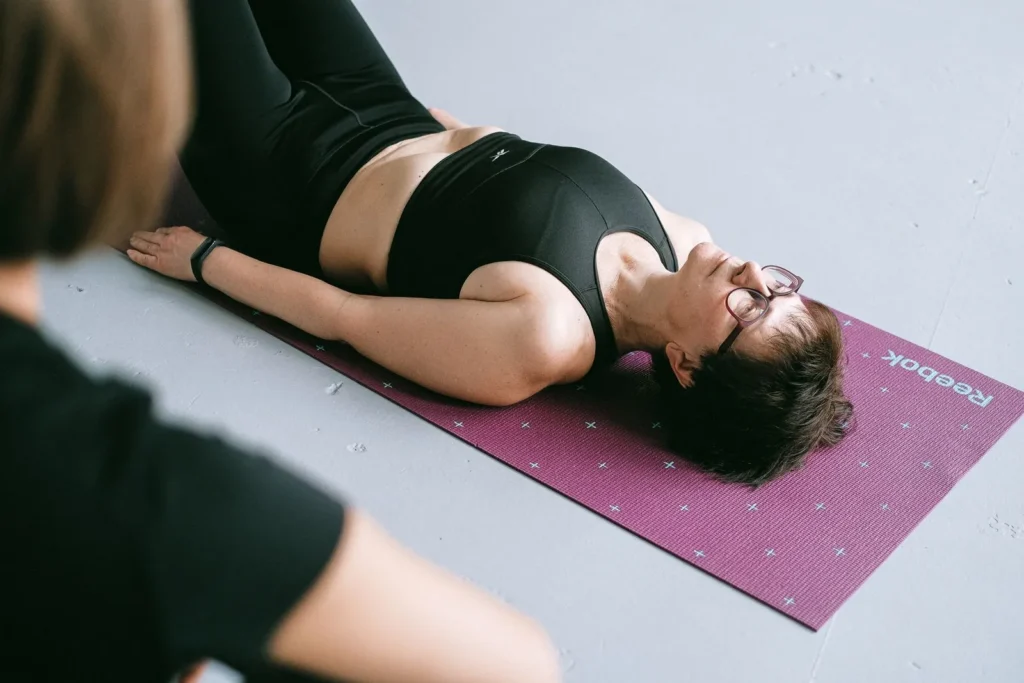
Makarasana, or crocodile pose, is a face-down rest posture: you lie on your belly, stack your forearms under your forehead, and let the floor carry your whole weight while you breathe slowly. Nothing stretches and nothing strengthens, and that is the point. Done well, makarasana is a two-to-five-minute reset for a tired lower back, a busy mind and shallow chest breathing. This guide covers the exact set-up, an alignment table, fixes for common problems, variations, who should skip it, and where it fits in a practice.
What is makarasana, and what does the name mean?
Makarasana (crocodile pose) is a prone relaxation posture. The name joins the Sanskrit makara, meaning crocodile, with asana, meaning posture or seat. You lie face-down with your head resting on stacked forearms and your legs loose, usually for two to five minutes, breathing into the belly against the floor.
The image is a crocodile resting low at the water’s edge: almost motionless, using very little energy, yet fully awake. That mix of physical stillness and quiet awareness is what the pose trains. Classical hatha texts mention a crocodile-style prone pose, but modern classes use it as a restorative rest.
How do you do makarasana, step by step?
Lie face-down, set your feet hip-width apart or wider with the toes turned out, stack your forearms and rest your forehead on them, let your belly and ribs sink, and breathe slowly through the nose for two to five minutes. Feel the belly press into the mat on every inhale and soften on every exhale.
- Lie down. Come onto your belly on a mat with your legs extended behind you.
- Open the feet. Take them about hip-width or slightly wider and let the heels fall outward so the toes point out. This frees the lower back.
- Stack the arms. Bend your elbows, place one forearm over the other and rest your forehead on them.
- Drop the shoulders. Let them slide away from your ears and let the collarbones widen.
- Soften the body. Let the chest, ribs, belly and thighs get heavy.
- Breathe. Inhale through the nose for about four seconds and feel the lower belly push gently into the floor. Exhale for about five or six seconds and let it melt back.
- Exit slowly. To leave, press your forearms into the floor, roll to one side and rest there for a few breaths before sitting up.
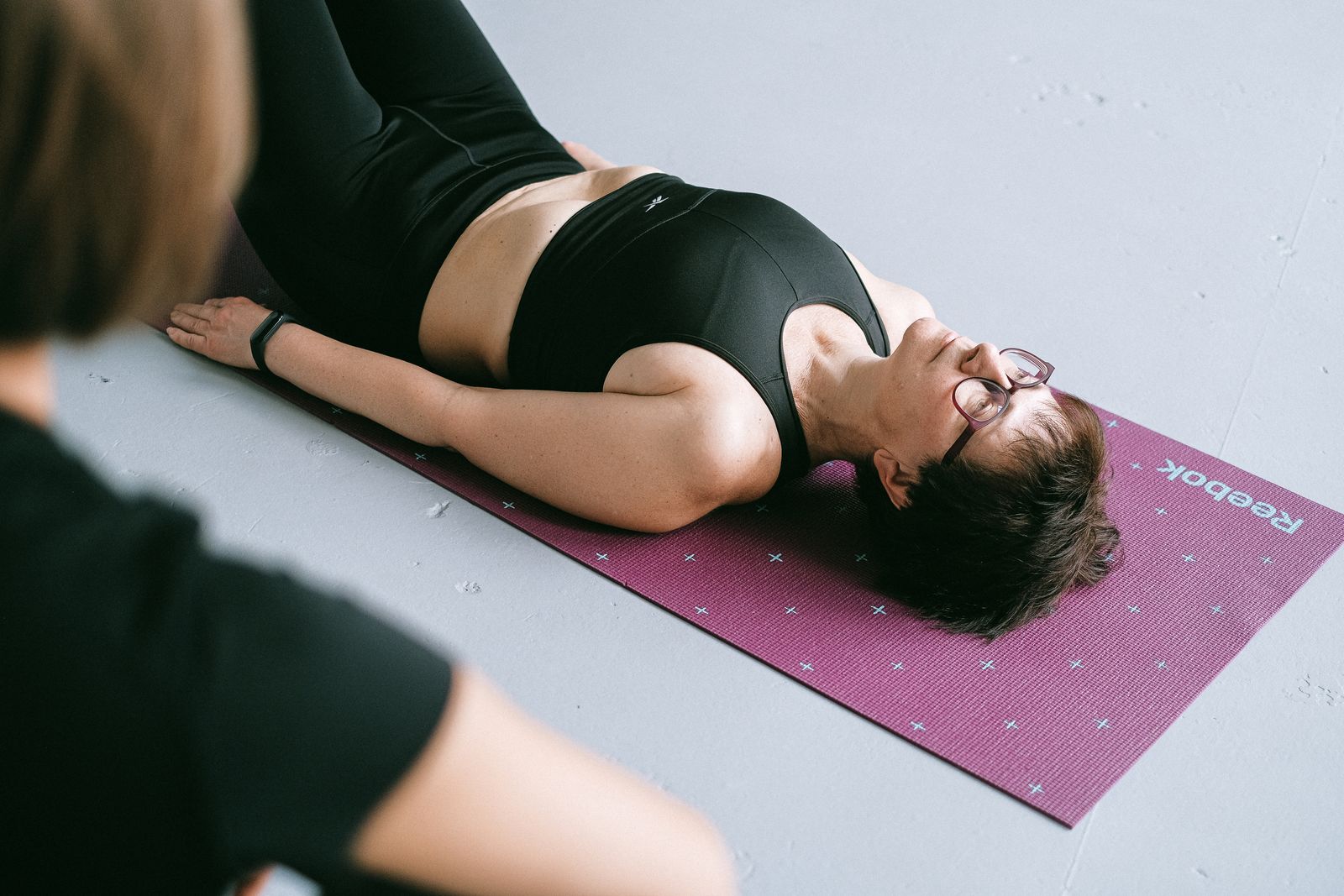
Makarasana alignment cheat sheet
Use this table as a quick body scan before you settle in.
| Body part | Good set-up | Common error | Quick fix |
|---|---|---|---|
| Feet and legs | Hip-width or wider, heels out, toes turned out | Legs pressed together, which tilts the pelvis and pinches the lower back | Let the feet fall open until the thighs feel heavy |
| Arms | Forearms stacked, elbows near shoulder line | Elbows too far forward, shoulders hiking up | Walk the elbows back a few centimetres |
| Forehead and neck | Forehead on forearms, neck long | Chin jutting, neck cranked back | Add height under the arms or turn the head to one side |
| Shoulders | Soft, away from the ears | Held up near the ears | Exhale and imagine the shoulder blades sliding down the back |
| Ribs and belly | Resting on the mat, free to expand | Breath stuck high in the chest | Soften the belly so it can press into the floor on each inhale |
Makarasana benefits: what does it actually do?
The makarasana benefits are mostly about rest and breath. The pose lets the back muscles stop working, makes diaphragmatic breathing easy to feel, and gives the neck and shoulders a break. Many people notice a calmer, slower breath within two to three minutes. It is a relaxation tool, not a fat-burning or spine-fixing exercise.
- Back muscles switch off. The erector spinae muscles along your spine work all day to keep you upright. Lying prone lets them release.
- Neck and shoulders unload. The upper trapezius is often tight from desk and phone use. With the head resting on your forearms, it no longer has to hold the head up.
- Breathing becomes visible. The diaphragm is the one muscle working a little harder, because your belly presses against the floor on every inhale. Teachers use it to introduce belly breathing before seated pranayama.
- Calmer state. Slow breathing in a fully supported position tends to help the body settle out of a stress response. It is a wind-down tool, not a treatment for anxiety.
- Body awareness. Attention shifts to breath and floor contact. For the wider picture of a regular practice, see the benefits of yoga.
Makarasana vs savasana: which one should you pick?
Pick makarasana when you want breathing feedback or when lying on your back bothers your lower back. Pick savasana for the final, most passive rest of a class. Makarasana is prone and works the belly breath; savasana is supine and offers full-body release. Many teachers use both in one session, a few minutes apart.
| Feature | Makarasana (crocodile) | Savasana (corpse) | Balasana (child’s pose) |
|---|---|---|---|
| Position | Face-down, forehead on forearms | Face-up, arms and legs loose | Kneeling, torso folded over thighs |
| Belly contact | Belly presses into the floor | None | Belly rests on the thighs |
| Best for | Learning belly breathing, resetting after backbends | Final relaxation and integration | Gentle back stretch and quiet |
| Skip or adapt if | Pregnant beyond the first trimester, belly pain or recent abdominal surgery | Late pregnancy (use a side-lying rest), breathlessness lying flat | Knee pain or limited hip and ankle flexion |
Troubleshooting: when makarasana does not feel relaxing
If crocodile pose feels awkward, the cause is usually a set-up detail. Work through these common problems.
- Neck strain. You are holding the head up. Raise your forearms a little with a folded towel, or turn your head to one side and switch sides every minute or two.
- Pressure on ribs or hip bones. Fold a thin blanket and place it under the lower ribs and pelvis. A mat that is too thin is a very common culprit.
- Lower back pinching. The back is arching. Widen the feet, turn the toes out, and place a folded blanket under the pelvis to reduce the arch.
- Breath will not drop into the belly. Do not force it. Soften the abdomen on the exhale and let the inhale arrive on its own.
- Tingling in the hands. The forearm stack is pressing on a nerve. Shift the elbows or rest your cheek on your forearm. If numbness stays after you leave the pose, see a doctor.
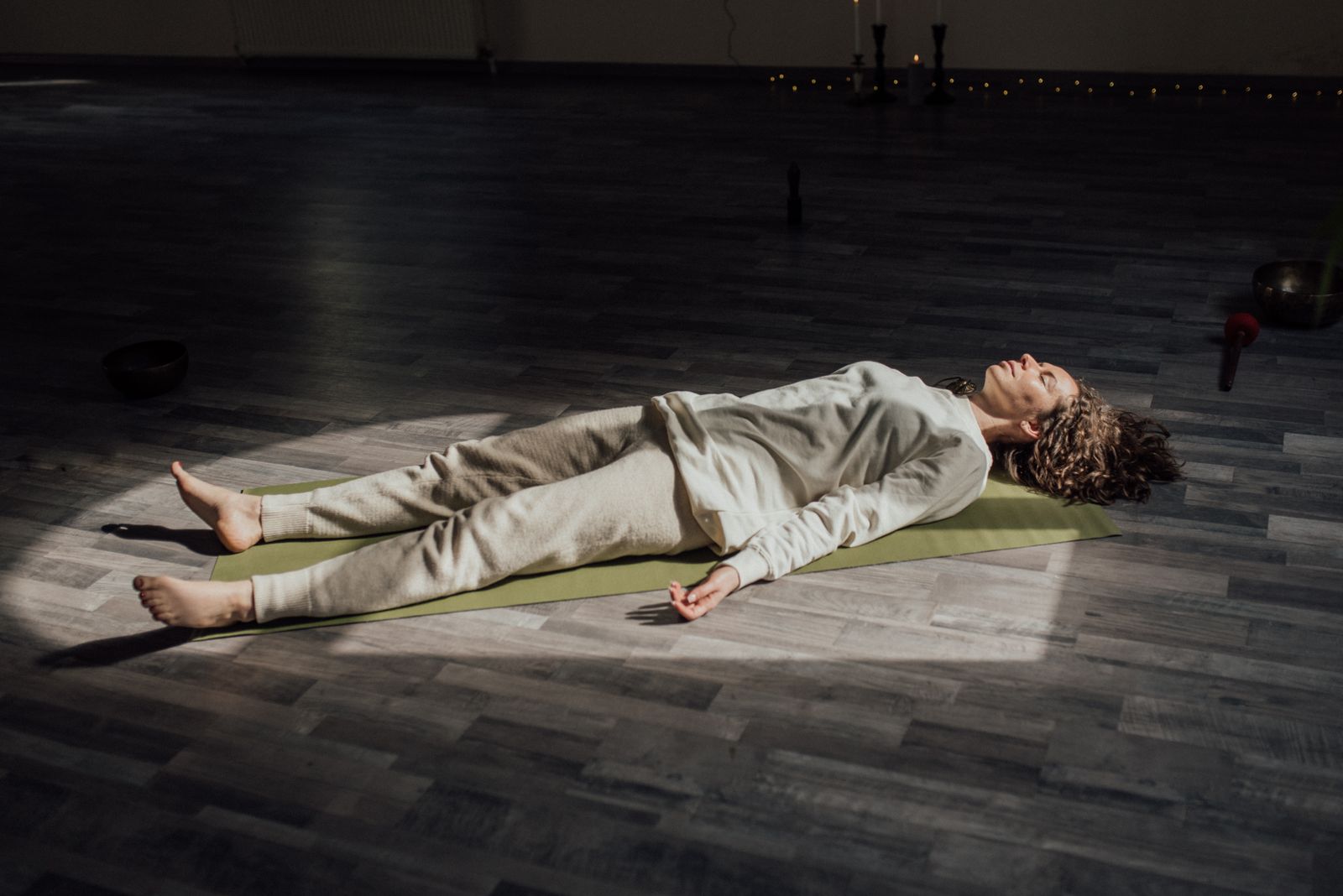
Which makarasana variation suits your body?
The classical version suits most people. If it does not, choose a variation that keeps the core idea of supported stillness and slow belly breathing.
| Variation | How to set it up | Who it suits |
|---|---|---|
| Classical stacked forearms | Forearms stacked, forehead resting on them | Most beginners and general practice |
| Head turned to one side | One cheek on the stacked hands, switch sides every 1 to 2 minutes | Anyone whose neck feels strained in the classical shape |
| Bolster or blanket under chest | Support under the chest and forehead for extra height | Larger chest, reflux, mild breathlessness, tight shoulders |
| Blanket under the pelvis | Folded blanket under the hip bones and lower belly | Anyone whose lower back arches or pinches in the pose |
| Wider legs | Feet placed wider than hip-width, heels out, toes turned out | Extra lower-back comfort after long sitting |
Who should skip or modify makarasana?
Skip makarasana, or choose a side-lying rest instead, if you are pregnant beyond the first trimester, have acute abdominal pain, recent abdominal surgery, or a hernia that pressure aggravates. Modify with a bolster if you have reflux, breathing difficulty, or neck or shoulder pain. Stop at once if you feel sharp pain, numbness or breathlessness.
- Pregnancy. Use a side-lying or supported seated rest instead, and follow your doctor’s guidance.
- After eating. Leave roughly two to three hours after a main meal.
- Spine conditions. Lying flat on the belly puts the lower back into mild extension. For some people with disc or canal problems this eases pain, for others it aggravates it. If leg pain, tingling or weakness appears, come out of the pose.
See your doctor or physiotherapist before adding crocodile pose if you have a diagnosed spinal condition, recent surgery, a hernia, or any condition that makes lying on the belly uncomfortable.
Can makarasana help with back pain?
Makarasana can feel soothing for general lower-back tension because the floor supports the spine and the back muscles can release. It is not a treatment for a diagnosed disc or nerve problem. Try two to five minutes with a blanket under the pelvis, and stop if pain or tingling spreads into the legs.
For persistent or severe pain, get a diagnosis first. Once you are cleared to move, our guide to yoga for back pain lays out more gentle options.
Myth check: two things people get wrong about crocodile pose
- “It burns belly fat.” It does not. Makarasana uses almost no energy, and pressing on the belly does not remove fat from it. Fat loss comes from overall food intake and activity. If that is your goal, pick more active yoga poses and pair them with sensible eating.
- “It cures back pain.” It can ease tension and give the back a rest. It does not repair a disc or fix an injury.
How long should you hold makarasana, and where does it fit in a class?
Hold makarasana for two to five minutes as a mid-practice reset and up to about ten minutes as a closing rest. Place it after prone backbends such as bhujangasana to neutralise the spine, or just before final relaxation. Leave about two to three hours after a full meal.
- At the start: one to two minutes to settle the breath before active work.
- In the middle: two to three minutes after cobra or locust to let the spine rest. This is the most common place in a hatha yoga class.
- Between flows: in a vinyasa yoga session, a short makarasana resets the breath before the next round, and it pairs well after rounds of surya namaskar.
- At the end: three to ten minutes in place of, or before, savasana, especially if lying on your back is uncomfortable.
Standing poses and balances such as vrksasana build effort and focus, while makarasana builds the opposite skill of letting go while staying awake. Different types of yoga use it differently, but the principle holds.
Makarasana for desk workers and beginners
If you sit most of the day, try this on a mat or firm carpet, on an empty or light stomach: take ten slow breaths in tadasana, then lie down for about five minutes in makarasana with a folded towel under the pelvis if your back arches. Count a four-second inhale and a five-second exhale, and roll to one side before sitting up. Add it to a regular programme instead of treating it as the whole workout.
Questions people ask about makarasana
Is makarasana easy for beginners?
Yes. Makarasana needs no strength, flexibility or balance, so it is one of the easiest poses in yoga. The real challenge is mental: learning to let go and breathe slowly instead of holding tension out of habit. Use a folded blanket under the ribs or pelvis if the floor feels hard.
How long should you hold crocodile pose?
Hold crocodile pose for two to five minutes as a mid-practice reset and up to about ten minutes as a closing rest. Even one minute of conscious belly breathing helps a beginner. Stay at least two minutes if you can, because the body needs a little time to settle.
Can I do makarasana on a full stomach?
It is better not to. Lying face-down puts pressure on the abdomen, which is uncomfortable after a heavy meal. Leave roughly two to three hours after a main meal and about an hour after a light snack. If you have reflux, use a bolster under the chest or practise on an empty stomach.
Is makarasana safe during pregnancy?
Not beyond the first trimester. As the abdomen grows, lying on the belly becomes uncomfortable and is generally advised against. Choose a side-lying or supported seated rest instead, and check with your doctor or a prenatal yoga teacher about what suits your stage of pregnancy.
Can makarasana help with stress?
It can help you wind down. A fully supported position with slow, deep breathing tends to calm the body, and many people feel more settled after two to five minutes. It is a useful relaxation tool, not a substitute for professional help if you live with ongoing anxiety or low mood.
Practise makarasana with a teacher
If you want someone to check your set-up and breathing in real time, join a live session with FitStrot’s online yoga classes and ask your instructor to build makarasana into your practice. You can also browse our guide to online yoga classes to pick a format that fits your week.


