
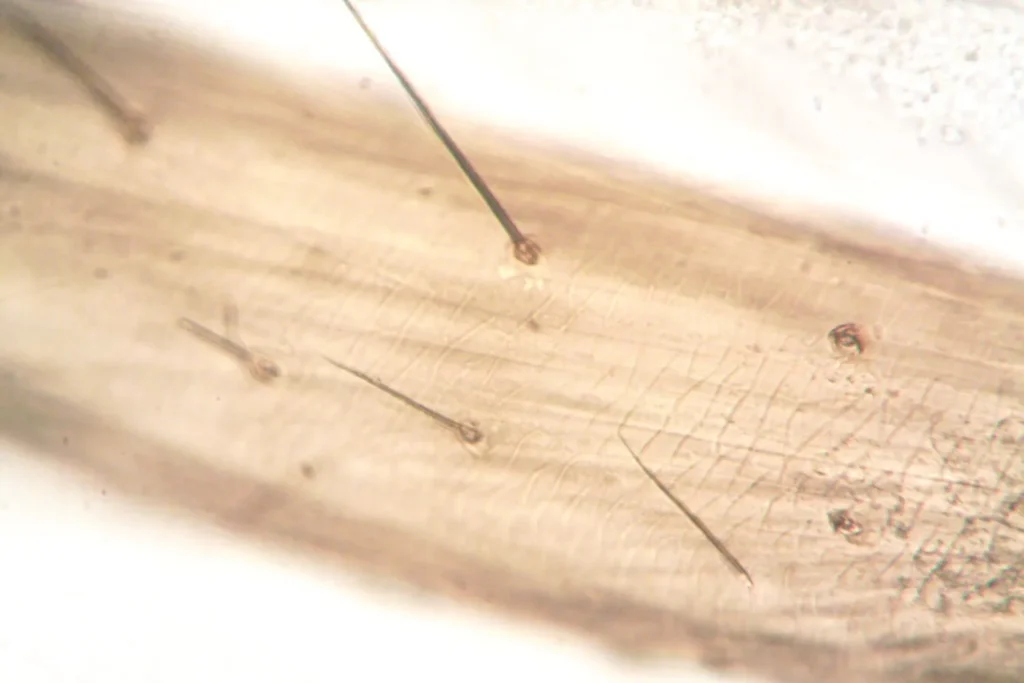
A keratin nutrition treatment hair mask can make hair look smoother, shinier and easier to comb after a single wash. What it cannot do is change the hair your scalp has not grown yet. The mask works on the outside of strands that already exist, while the quality of your next inch of hair depends on the protein and nutrients reaching your follicles from your plate.
This guide separates the two jobs: what keratin products do, what food does, how to use both safely, and when a hair concern belongs with a doctor. It covers the diet side only and is general information, not medical advice. Start with the basics on hair nutrition if you want the wider picture.
What does a keratin hair mask actually do to your hair?
A keratin hair mask deposits small protein fragments (hydrolysed keratin) onto the outer layer of the hair shaft. This fills rough, chipped spots in the cuticle, reduces frizz and adds shine for a few washes. It does not enter the follicle, so it cannot change how thick, strong or fast-growing new hair is.
Think of the cuticle as roof tiles. Heat styling, colouring, sun and rough towel-drying lift them, and a keratin product lays a thin protein film over the gaps so strands glide instead of snagging. That is a genuine cosmetic benefit, especially for hair that sees daily sun, pollution and monsoon humidity.
Once that treated length is trimmed or grows out, the effect leaves with it. The part of the hair you see above the scalp is a dead fibre, so nothing you apply to it can feed it. This is the single most useful idea in the whole topic.
Keratin treatments compared: mask, salon smoothing and shampoo
Not every product sold as a keratin treatment is the same. The table below compares the three common formats. The durations are rough ranges, because results depend on your hair type, how often you wash and which product you buy.
| Format | How it is used | Roughly how long it lasts | Best for | Main caution |
|---|---|---|---|---|
| At-home keratin hair mask | Applied after shampoo, left on for the time printed on the label, then rinsed | A few washes | Occasional frizz control, dull or heat-styled hair | Patch test first; protein overload can leave hair stiff |
| Salon keratin smoothing | Applied by a stylist, usually sealed with a flat iron | Several weeks to a few months | Long-lasting smoothness on frizzy hair | Check the formula and ventilation; some smoothing products can release irritating fumes |
| Keratin shampoo or conditioner | Used in your normal wash routine | Hours to a day or two | Light everyday smoothing | Mild effect; does not replace a mask |
None of the three rows says “grows hair”. All are about how hair looks and handles. If the roots are fine but the lengths are frizzy, these suit you. If hair is shedding or growing in thin, the question moves to your body.
Myth: a keratin mask feeds your hair
The word “nutrition” on a jar suggests feeding, but hair above the scalp is not living tissue. It has no blood supply, so it cannot take nourishment from a mask. What the jar calls nutrition is really conditioning.
Two related beliefs are worth correcting:
- “More protein on the hair means stronger hair.” Too much protein conditioner can make hair feel dry, rough and brittle. If your hair snaps easily after a mask, use it less often and add a plain moisturising conditioner.
- “Eating keratin supplements gives you keratin hair.” Any protein you swallow is broken down into amino acids first. Your body then builds hair keratin from those amino acids, no matter which food or powder they came from.
How does the protein you eat become the keratin in your hair?
Digestion breaks dietary protein into amino acids, which travel in the blood to the follicle. There, living cells at the base of each hair assemble them into keratin, then harden and push out the strand. Sulfur-containing amino acids, mainly cysteine and methionine, help build the bonds that give hair its strength.
Hair grows about 1 cm a month, roughly 12 to 15 cm a year, and every centimetre is assembled from what you ate in the weeks before. Your body also decides where protein goes first. Vital organs and muscle come before hair, so when intake is low, hair is one of the first places it shows.
Some amino acids cannot be made by the body and must come from food; see this guide to essential amino acids. For daily targets, see protein and nutrition.
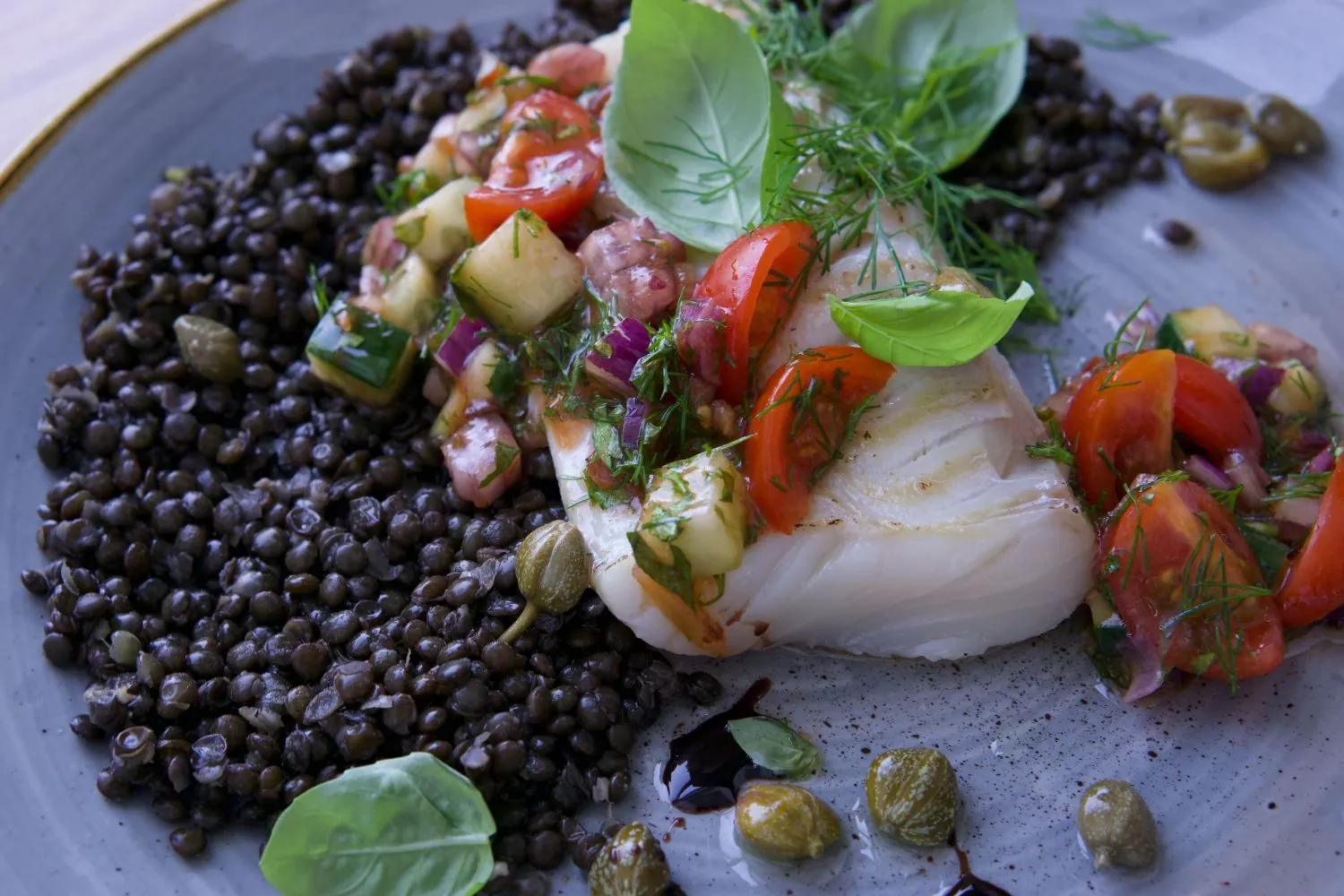
How much protein do you need for healthy hair?
The standard minimum for healthy adults is about 0.8 g of protein per kg of body weight a day. Many dietitians suggest aiming for roughly 1.0 to 1.2 g per kg if you are active or eating less overall. At 60 kg, that is about 48 g at the minimum and about 60 to 72 g on the higher range.
These are general ranges, not a prescription. Needs change with age, pregnancy, kidney health and activity, so anyone with a medical condition should confirm a target with a doctor or registered dietitian. Spread protein across the day.
Indian foods and their protein, in grams
Approximate protein per common Indian serving. Values vary by brand and recipe, so treat them as rough.
| Food | Serving | Protein (about) | Why it helps hair |
|---|---|---|---|
| Egg, boiled | 1 large | 6 g | Whole protein with cysteine and methionine |
| Paneer | 100 g | 18 g | Dense vegetarian protein |
| Curd (dahi) | 1 katori, about 200 g | 6 to 7 g | Easy to add to every lunch |
| Milk | 1 glass, 250 ml | 8 g | Simple daily top-up |
| Cooked dal (moong, masoor, toor) | 1 katori, about 150 g | 7 to 9 g | Plant protein; pair with rice or roti |
| Chana, boiled | 100 g | 8 to 9 g | Fibre plus protein for snacks |
| Soya chunks, dry weight | 25 g | 12 to 13 g | Budget-friendly vegetarian option |
| Peanuts | 30 g, a small handful | 7 to 8 g | Protein plus minerals |
| Chicken, cooked | 100 g | 25 to 27 g | Complete protein, lean |
| Fish, cooked | 100 g | 20 to 22 g | Complete protein |
You do not need every item. A vegetarian can reach a useful total with dal, curd, paneer, milk and a handful of nuts. For more food ideas, see food sources that support hair growth.
A walkthrough: one Indian day of eating around 60 g of protein
This sample day is an illustration, not a plan for everyone. Adjust portions to your appetite and any advice from your doctor or dietitian.
- Breakfast: two-egg omelette with a roti, or moong dal chilla with a glass of milk. Roughly 14 to 18 g.
- Mid-morning: a small handful of roasted chana or peanuts. Roughly 6 to 8 g.
- Lunch: a katori of dal, a katori of curd, two rotis and a sabzi. Roughly 18 to 20 g.
- Evening: a glass of milk or a bowl of sprouts. Roughly 8 g.
- Dinner: 100 g paneer or chicken with vegetables and one or two rotis. Roughly 20 to 25 g.
That lands between roughly 66 and 79 g, and you can drop an item if you need less. The point is the pattern: some protein at every meal, not one heavy dinner.
Is it the mask or the meals? A symptom check
Use this as a rough guide, not a diagnosis; symptoms overlap.
| What you notice | More likely a surface issue | More likely worth a diet or health check | Sensible next step |
|---|---|---|---|
| Frizz, rough ends, tangles after colouring or heat | Yes | Rarely | Gentler styling, trims, an occasional mask |
| Dull, straw-like lengths but healthy roots | Yes | Sometimes | Conditioner, less heat, check overall diet |
| Hair snapping mid-length | Often | Sometimes | Reduce protein masks, add moisture, trim |
| Hair coming out from the root, more than usual for 2 to 3 months | No | Yes | Review protein and iron intake; see a doctor |
| New growth looks thinner or weaker | No | Yes | Review diet; ask a dietitian or doctor |
| Visible patches, itchy or painful scalp | No | Needs medical attention | See a doctor or dermatologist |
If the root-level rows describe you, the answer is not a better mask. Our guides on nutritional deficiencies and hair loss and nutrition and hair loss explain the diet side in more detail.

How do you patch test and use a keratin mask safely?
Patch test any new hair product before the full application: dab a small amount on the inner elbow or behind the ear, leave it for the time the label states (often 24 to 48 hours), and stop if you notice redness, itching, swelling or burning. Always follow the product’s own instructions.
A few more safety habits:
- For salon smoothing, ask the stylist which formula is used, work in a well-ventilated space, and mention any asthma, skin sensitivity or earlier reactions.
- If you are pregnant or breastfeeding, ask your doctor before any chemical smoothing treatment.
- Stop and rinse immediately if your scalp stings or burns.
When should you see a doctor instead?
See a doctor or registered dietitian if shedding lasts longer than about three months, comes on suddenly, or happens in patches. The same applies if your scalp is painful, scaly or inflamed, if you feel unusually tired, or if hair changes arrive with irregular periods, weight changes, a recent illness, surgery or heavy stress.
Hair changes can have causes that food and masks cannot fix, including thyroid conditions, iron deficiency, hormonal shifts and skin conditions. Please do not start high-dose supplements on your own. If you already take any supplement, including biotin, tell your doctor before blood tests, because some can affect lab results. Never change or stop prescribed medication because of anything you read about hair. Crash diets are also a red flag, because very low protein intake is a common trigger for later shedding.
Different situations, different priorities
Vegetarians and vegans. Dal, chana, rajma, soya, curd, milk, paneer and nuts can cover your needs if you plan for them. Pair pulses with rice or roti, since cereals and pulses complement each other’s amino acids. Vegans should plan more carefully, ideally with a dietitian.
Women. Iron needs are higher before menopause, and heavy periods or crash dieting can strain hair. See women’s nutrition for the broader picture.
Men. Skipping breakfast for tea and biscuits is a common pattern. Pattern thinning is largely inherited and is not fixed by diet or masks; see hair nutrition for men and speak to a doctor if worried.
Anyone eating less to lose weight. Keep protein steady even when calories fall, and read about zinc in food, a mineral that supports normal hair and skin.
How long before diet changes show up in your hair?
Expect roughly three to six months. Hair grows about 1 cm a month, so a correction made today shows as new growth only after a few weeks, and the effect on shedding is gradual. A mask changes how hair looks the same day, while food changes what grows next.
Photograph your parting and hairline under the same light once a month rather than checking daily. Keep the mask for finish and the meals for foundation.
If you would like your actual intake checked, an online nutritionist consultation with Fitstrot can map your meals against protein and iron gaps and suggest Indian food swaps that suit your budget. Book one, and bring a three-day food diary.
Frequently Asked Questions
Does a keratin hair mask make hair grow faster?
No. A keratin mask coats the existing strand to smooth the cuticle and add shine. It does not reach the follicle, where new hair is made. Growth rate and strength depend on follicle activity, genetics, hormones and nutrition, especially protein intake.
Can eating keratin supplements improve my hair?
Not directly. Your body digests any protein into amino acids and rebuilds keratin itself, so a keratin supplement is not delivered to hair as keratin. A balanced diet with enough total protein is more useful, and you should speak to a doctor before starting any supplement.
How often can I use a keratin hair mask?
Follow the label. Many people use a protein mask about once every one to two weeks, then alternate with a moisturising conditioner. If hair turns stiff, dry or snaps easily, use it less often. Patch test first, and stop if your skin reacts.
How long does low protein intake take to affect hair?
Changes usually appear after about two to three months of consistently low intake, because hair has to move through its growth cycle first. Shedding can then continue for a few months. Recovery is gradual once intake improves, and other causes should be ruled out by a doctor.
Do vegetarians get enough protein for healthy hair?
Often yes, if planned well. Dal, chana, rajma, soya, curd, milk, paneer and nuts can all contribute. Eating a mix of pulses and cereals across the day improves the amino acid balance, and a dietitian can check whether your total is adequate.


