

If you have typed “healthy ramadan diet plan” into a search bar, you probably want one thing: steady energy through the month, without the afternoon crash and the Iftar overeating that follows. A healthy Ramadan diet plan comes down to three habits: a Suhoor of slow-digesting carbs and protein, an Iftar that opens with dates and water before the main meal, and fluids spread across the whole night. In India the fast usually runs about 12 to 15 hours depending on season and city, and it includes water, so it is tougher than the eating-window approach in our guide to intermittent fasting for beginners. Below you get a full day on a plate, Suhoor combinations with rough numbers, a hydration schedule, fixes for common problems, and clear points where your doctor should be involved.
What does a healthy Ramadan diet plan look like across one day?
A healthy Ramadan diet plan splits your usual daily food across three slots: a slow-digesting Suhoor, an Iftar that opens with 2 to 3 dates and water, and a lighter late-evening snack. Aim for about 20 g of protein at each main meal, vegetables at both, and about 2 to 2.5 litres of fluid between sunset and dawn.
| Slot | Roughly when | What to eat (Indian examples) | Why it works |
|---|---|---|---|
| Opening the fast | At the call to prayer | 2 to 3 dates, 1 to 2 glasses of water | Gentle sugar and fluid restart digestion |
| Light starter | 5 to 15 minutes later | Clear vegetable soup, fruit chaat, or a small bowl of boiled chana chaat | Fibre and water take the edge off hunger before the main meal |
| Main Iftar meal | After the prayer pause, about 20 minutes in | 1 to 2 rotis or a small cup of rice, 1 katori dal, 1 katori sabzi, a palm-sized portion of chicken, fish, paneer or egg, salad | Protein, slow carbs and vegetables rebuild energy without a heavy crash |
| Late evening | 1 to 2 hours after Taraweeh or before bed | A bowl of curd with fruit, or a glass of milk with a few soaked almonds | Protein and fluid for the night, light enough not to disturb sleep |
| Suhoor | As close to dawn as you can manage | Oats, dalia, besan chilla, or eggs with roti, plus curd, a fruit and water | Slow-release energy for the next 12 to 15 hours |
Treat this as a template rather than a prescription. Portions scale with body size and activity, and the aim is to eat about what you normally eat, just rearranged. To find your baseline, see our guide to daily calorie and nutrition requirements is a good starting point.
What should you eat at Suhoor to stay full until Iftar?
Build Suhoor from a slow carbohydrate, a protein and some fibre: oats with milk and banana, besan chilla with curd, or egg bhurji with two rotis. Aim for about 15 to 20 g of protein and roughly 350 to 450 kcal, and eat close to dawn rather than at midnight so digestion runs through the morning.
| Suhoor plate | What is on it | About protein | About kcal |
|---|---|---|---|
| Oats and banana bowl | 40 g oats cooked in 200 ml milk, 1 banana, 6 almonds | 15 g | 420 |
| Besan chilla and curd | 2 chillas from about 60 g besan with grated vegetables, 100 g curd, cucumber | 17 g | 340 |
| Egg bhurji and roti | 2 eggs with onion and tomato, 2 small whole wheat rotis | 18 g | 380 |
| Moong dalia khichdi | 1 cup dalia and moong dal khichdi with vegetables, 100 g curd | 13 g | 360 |
| Paneer bhurji and roti | 60 g paneer with capsicum, 2 small rotis, a fruit | 17 g | 360 |
All of these are rough figures; oil, portion size and the exact ingredients change them. If you need more calories, add a second fruit or a few extra almonds rather than extra fried items. Our guide on what to eat during fasting goes deeper on the food-quality logic behind these plates.
Myth check: three beliefs that quietly spoil the fast
Myth: fried food at Suhoor keeps you full longer. Fat does slow digestion, but a paratha dripping in ghee or a plate of pakoras mostly leaves you heavy and thirsty. Salt in pickles, papad and namkeen pulls fluid out of the body and makes the afternoon harder.
Myth: drink as much water as possible right before dawn. Two or three large glasses at Suhoor is sensible, but a litre in ten minutes is mostly passed out within a couple of hours.
Myth: sweet sharbat and refined carbs give the fastest “energy”. Sweetened drinks, white bread and sugary cereals spike blood sugar and then drop it, which can leave you shaky and irritable. Choosing slower carbs matters even more for anyone with blood sugar concerns, and our diabetes nutrition guide explains how to pick them.
How should you break your fast at Iftar?
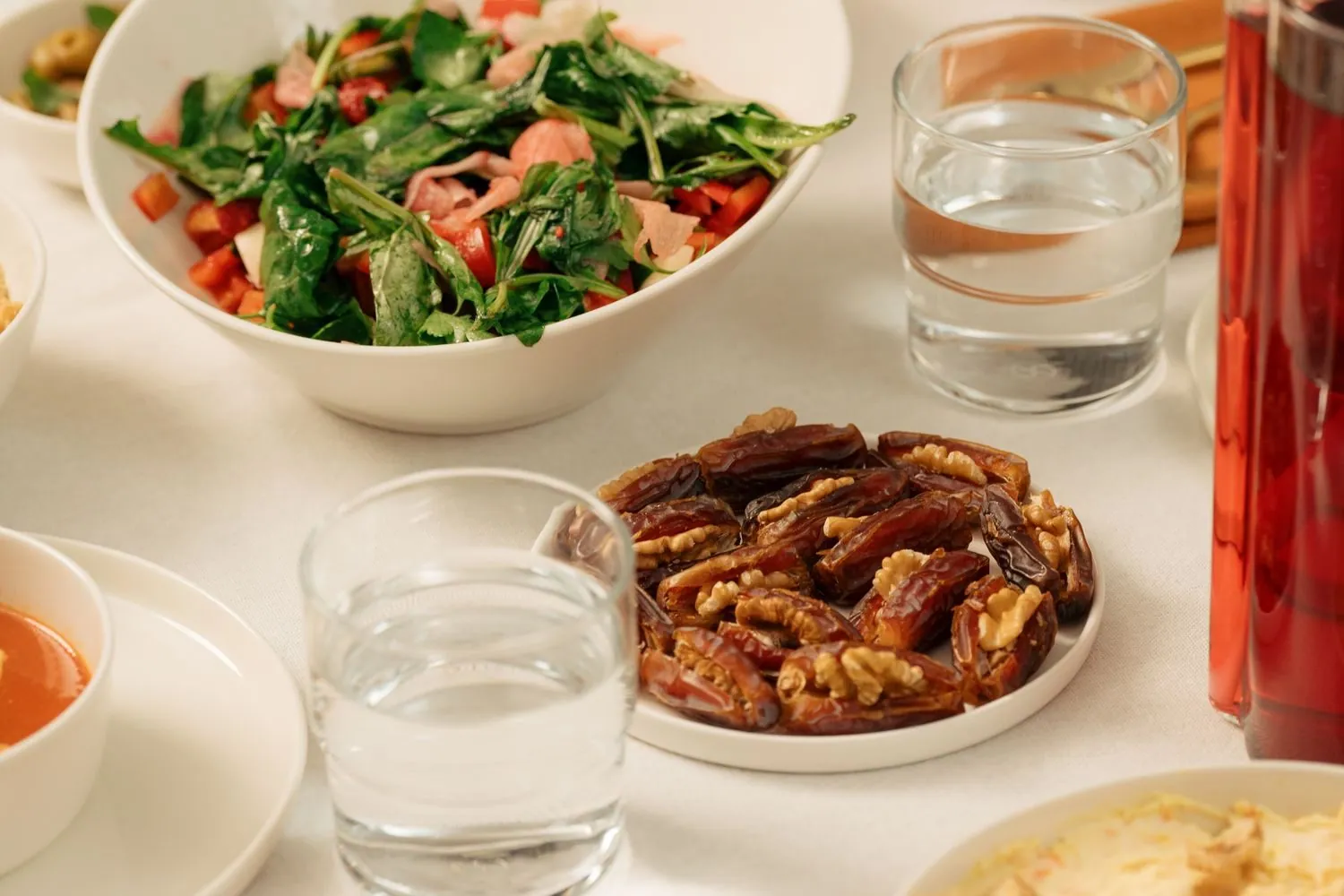
Break your fast with 2 to 3 dates and a glass or two of water, then wait 10 to 20 minutes before the main meal. This gives blood sugar a gentle lift, starts rehydration, and lets fullness signals catch up so you eat a normal portion instead of a very large one.
- Dates and water first. Dates give quick natural sugar, a little fibre and potassium. If dates are not available, a piece of fruit works the same way.
- Something warm and light. A small bowl of vegetable soup, or a few spoonfuls of fruit chaat, settles the stomach before the heavier food arrives.
- Pause for prayer. For many families the Maghrib prayer falls here, and that 15 to 20 minute gap works in your favour because you will be less rushed and less ravenous.
- Eat the main meal slowly. Fill half the plate with vegetables or salad, a quarter with protein and a quarter with roti or rice.
- Keep fried items to the side. Take one samosa or a few pakoras, not a heap, and eat them after the protein and vegetables.
How much water do you need between Iftar and Suhoor?
Most healthy adults do well with about 2 to 2.5 litres of fluid, roughly 8 to 10 glasses, spread between Iftar and Suhoor. Sip steadily instead of gulping it at once. Needs rise in hot weather or after exercise, and people with heart or kidney conditions should follow the fluid limit their doctor has set.
| When | Fluid | About ml |
|---|---|---|
| Opening the fast | 1 to 2 glasses of water, with the dates | 250 to 500 |
| With the main meal | 1 glass of water, or buttermilk (chaas) | 250 |
| Between Iftar and bedtime | 3 to 4 glasses, sipped, including coconut water or lightly sweetened nimbu pani if you like | 750 to 1,000 |
| Before sleep | 1 glass of water | 250 |
| At Suhoor | 2 glasses of water, or 1 water and 1 milk or lassi | 500 |
| Total | Plus water-rich foods such as cucumber, watermelon, oranges and tomatoes | about 2,000 to 2,500 |
Tea and coffee are mildly dehydrating in large amounts, so keep them to one or two cups and drink extra water alongside.
Fixing common Ramadan problems
Most complaints in the first week or two have simple causes and simple fixes.
- Afternoon headache: often a sign of too little fluid overnight, a skipped Suhoor, or a sudden drop in caffeine. Taper tea and coffee in the week before Ramadan, drink steadily through the evening, and keep Suhoor protein-rich.
- Acidity and bloating: usually from a very large, fast, oily Iftar. Follow the staged approach above, keep the main meal moderate, and walk gently for 10 to 15 minutes afterwards.
- Constipation: low fibre plus low fluid. Add oats, dalia, fruit with skin, vegetables, and drink the full fluid target.
- Sleepiness after Iftar: a heavy plate of refined carbs and fried food. Shift towards dal, vegetables and protein, and trim the sweet items.
- Dizziness or weakness: check whether Suhoor was too light or salty. If you feel faint, confused or have a racing heartbeat, break the fast and seek medical help. Health comes first, and Islamic teaching allows for this.
Can you still enjoy samosa, haleem and sheer khurma?
Yes. Festive foods can stay on the table if portions are modest: one samosa instead of three, a small katori of haleem or sheer khurma instead of a bowl, and vegetables or protein on the same plate. Eating them occasionally, rather than every night for 30 days, keeps the tradition and avoids heavy calorie and sodium loads.

A few practical swaps help. Bake or air-fry samosas and kebabs instead of deep-frying. Use less sugar in sheer khurma and add extra nuts and milk. Choose grilled chicken or fish and a vegetable sabzi alongside haleem. Serve fruit chaat for dessert on most nights and keep the syrupy sweets for weekends or gatherings.
Many people gain weight in Ramadan because dense Iftar spreads are eaten quickly, which outweighs the hours spent fasting. If fat loss is your goal, our dedicated Ramadan diet plan for weight loss covers calorie targets and a meal-by-meal structure. If you also watch blood pressure or cholesterol, the principles in our heart healthy diet plan fit well here, especially cutting back on salt and fried food. The same pacing ideas appear in our Navratri diet plan, another festival period built around changed meal timing.
Adjusting the plan if you work out or are over 60
If you train: keep it light to moderate and time it either 30 to 60 minutes before Iftar (for short, easy sessions) or 1 to 2 hours after eating. A short walk, easy yoga or a mobility session is enough for most people during the month. Our online yoga classes offer gentle options that suit a fasting schedule, and the structure in our workout and diet plan guide helps you balance training against food. If you want personal help setting loads and timing, a 1-on-1 personal training session can keep you consistent without overreaching.
If you are over 60: appetite and thirst signals are weaker, so be deliberate with fluids and protein, and keep portions steady rather than skipping meals. Check in with your doctor beforehand.
Who should speak to a doctor before fasting?
Speak to your doctor or registered dietitian before fasting if you have diabetes, are pregnant or breastfeeding, take regular medication, or live with heart, kidney or liver disease. Do not change medicine doses or timings on your own. Islamic teaching allows exemptions when fasting may harm health, so asking for advice supports your observance rather than weakening it.
Ideally have that conversation a few weeks before Ramadan, so there is time to plan meals, medicine timing and monitoring. The same applies to anyone with a history of eating disorders, low blood pressure or frequent dizziness. Nothing in this article replaces personal medical advice, and the portions and numbers here are general ranges for healthy adults. If you are unwell during the fast, or a reading your doctor has told you to watch becomes unsafe, break the fast and get medical help.
Frequently asked questions
Do I have to break my fast with dates?
No. Dates are a tradition with sound nutrition behind them, since they give quick natural sugar, some fibre and potassium. If you do not like them or cannot eat them, a piece of fruit with water works in a similar way. Keep the portion small and then pause before the main meal.
What can I drink at Suhoor besides water?
Milk, plain lassi, buttermilk and coconut water all add fluid along with some protein or electrolytes. Limit sweetened sharbat, packaged juices and strong tea or coffee, because they work against steady hydration through the long fasting hours.
Is it safe to exercise while fasting in Ramadan?
Light to moderate activity is fine for most healthy adults. Walking, yoga or a short home workout works best after Iftar, once you have eaten and had fluids. Avoid hard training in the heat while fasting, and stop if you feel dizzy or unwell.
Why do I feel tired by the afternoon during Ramadan?
Common reasons are a Suhoor that was too light, too sugary or skipped, too little fluid the night before, poor sleep, and a sudden drop in caffeine. Add protein and slow carbs at Suhoor, drink steadily through the evening and protect your sleep where you can.
Can I follow a healthy Ramadan diet plan if I have diabetes?
Only with your doctor’s guidance. A long fast followed by a large carbohydrate-heavy Iftar can cause sharp blood sugar swings, and medicines may need planning. Ask your doctor or dietitian about portions, dates, monitoring and whether fasting is safe for you, and never adjust medication on your own.
The aim of Ramadan eating is not extra restriction, but making the hours you can eat and drink count. If you would like a Suhoor and Iftar plan built around your work hours, health history and goals, book an online nutritionist consultation with Fitstrot and start planning before the month begins.


