
A ramadan diet plan for weight loss works best when you stop thinking of it as a crash diet and start treating it as 30 days of structured eating that already exist in your calendar. You eat twice, at suhoor and iftar, and the fast in between does part of the work. What undoes it is the Indian iftar spread: pakoras, samosas, sherbet, haleem and a second dinner after taraweeh. This guide gives you a realistic target, who should not fast, an Indian suhoor and iftar plan, a hydration schedule, exercise timing and a week-by-week approach you can start with the first roza.
Fasting is an act of worship first; nothing here asks you to change how you observe it, only what goes on the plate.
Can you actually lose weight during Ramadan?
Yes, but the average loss is small and often temporary. A 2020 meta-analysis of 85 studies and 4,176 healthy adults found Ramadan fasting reduced body weight by about 1.02 kg on average. A 2019 review found most of that weight returned within 2–5 weeks after Eid unless eating habits changed.
That first figure comes from Jahrami and colleagues, whose 2020 meta-analysis in the European Journal of Nutrition also found that longer daily fasting time predicted greater weight change, while age and sex did not. In India, with Ramadan in February–March, the fast runs roughly 13 hours, so an Indian ramadan diet plan can’t rely on the fast alone.
The 2019 Nutrients meta-analysis by Fernando et al. pooled 70 publications and 2,947 participants. People with overweight or obesity lost about 1.46 percentage points of body fat, while those of normal weight showed no significant change. Some lean mass was lost too, and within 2–5 weeks after Ramadan measurements drifted back towards baseline.
With a planned diet and some activity, 2–3 kg over the month is realistic for many people carrying extra weight. Promises of 10 kg are neither realistic nor safe. For a wider view of safe monthly targets, see our guide on how much weight you can lose in a month.
Who should not fast, and who needs a doctor’s go-ahead first
Read this before any diet advice. Islamic practice already exempts people for whom fasting could cause harm, and medical guidance agrees on who is most at risk.
Ramadan diet plan for diabetes: talk to your doctor before the first roza
People with diabetes need an individual plan from their doctor before Ramadan, not a generic diet. The IDF-DAR 2021 guidelines class type 1 diabetes as high or very high risk and call for a pre-Ramadan medical review and blood-glucose monitoring. People on insulin are usually advised they are exempt from fasting.
The IDF-DAR Diabetes and Ramadan Practical Guidelines 2021 from the International Diabetes Federation and Diabetes and Ramadan International Alliance classify type 1 diabetes as high or very high risk and warn that iftar often turns into a feast of high-sugar foods. NHS England’s 2025 Ramadan advice adds that people using insulin, or with eye, kidney or nerve complications, are usually exempt. If you have a hypo while fasting, you should break the fast and treat it straight away.
Never change medicine doses or timings yourself; shifting meal times changes the risk of low blood sugar. If you have insulin resistance or prediabetes, our article on insulin resistance and weight loss explains why the iftar plate matters so much for you.
Pregnancy, breastfeeding and other groups
Islamic teaching allows pregnant women to be excused from fasting, yet many still choose to fast. A 2025 Nutrients meta-analysis covering more than 1.3 million pregnancies linked fasting to babies weighing about 94 g less at birth, with no rise in low-birth-weight risk. The evidence is observational, and pregnancy is not the time to aim for weight loss. Speak to your obstetrician first, and to your doctor if you are breastfeeding, have kidney or heart disease, a history of an eating disorder, or take medicines that must be taken with food.
Ramadan diet plan (Indian): how to build suhoor and iftar
A good Indian ramadan diet plan has two fixed meals plus one small snack. Suhoor should be slow-digesting: whole grains, protein and fibre that keep you full until afternoon. Iftar should happen in stages so you don’t eat 1,200 kcal in the first 20 minutes. A small snack after taraweeh covers the gap.
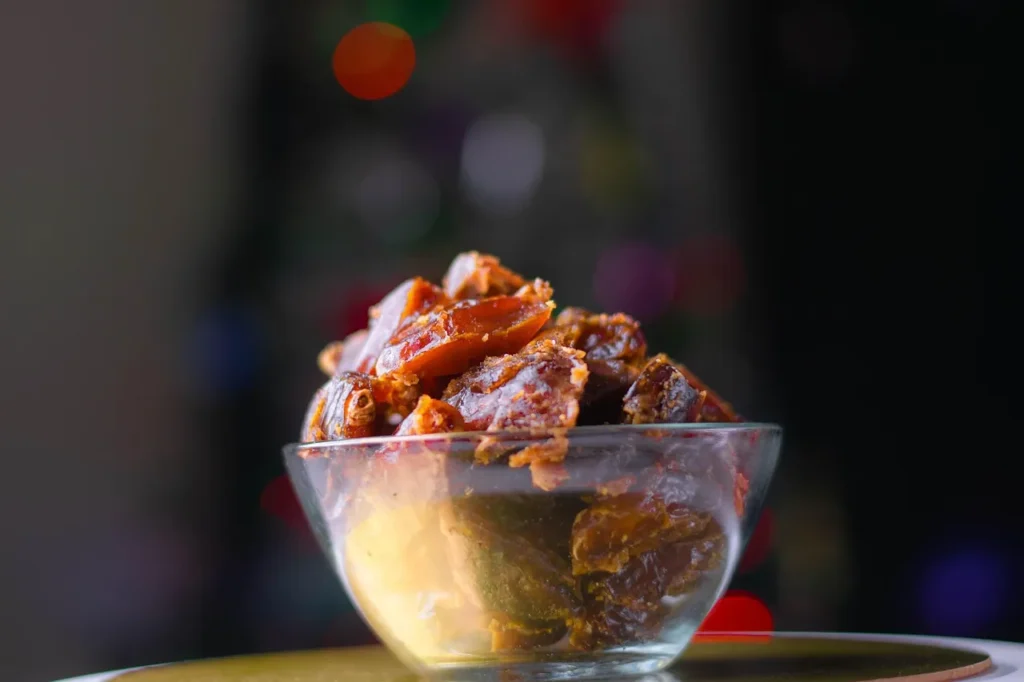
Cleveland Clinic Abu Dhabi’s dietitians recommend complex carbohydrates, beans and lentils at suhoor, three dates to open the fast, and grilled rather than fried protein, along with eating slowly. In an Indian kitchen: daliya or oats, eggs or paneer, dahi and multigrain roti at suhoor; dates, fruit chaat, soup and a normal home dinner at iftar.
Calorie figures below are approximate for home-style portions and vary with oil and sugar.
| Typical choice | Approx. kcal | Lighter swap | Approx. kcal | Why it helps |
|---|---|---|---|---|
| 4 onion pakoras, deep-fried | 280–320 | 4 air-fried or appe-pan moong dal pakoras | 130–160 | Half the oil, more protein |
| 1 large samosa | 250–300 | Baked chana chaat, 1 katori | 150–180 | Fibre and protein instead of maida |
| Glass of rose sherbet with sugar (250 ml) | 120–160 | Nimbu pani with a pinch of salt, no sugar | 10–20 | Rehydrates without liquid sugar |
| Fruit chaat with cream and sugar | 250–300 | Fruit chaat with chaat masala and lemon | 100–130 | Keeps the fibre, drops the added fat |
| Mutton haleem, 1 large bowl (350 g) | 450–550 | Chicken haleem, half bowl with salad | 220–280 | Less fat, same flavour, better portion |
| Paratha with butter at suhoor | 300–350 | 2 multigrain rotis with egg bhurji | 300–340 | Similar kcal but ~15 g more protein |
| Sheer khurma or phirni, 1 bowl | 300–400 | 3 dates with a small bowl of dahi | 150–180 | Sweet craving met with a quarter of the sugar |
Two swaps matter more than any others. The first is the sherbet. The ICMR-NIN Dietary Guidelines for Indians (2024) advise adults to avoid added sugar or keep it to 20–25 g a day, and a single sweetened sherbet can use most of that. The second is frying oil: the same guidelines advise against reusing heated oil, which is exactly what a month-long kadhai of pakora oil does, and note that air frying cuts oil absorption.
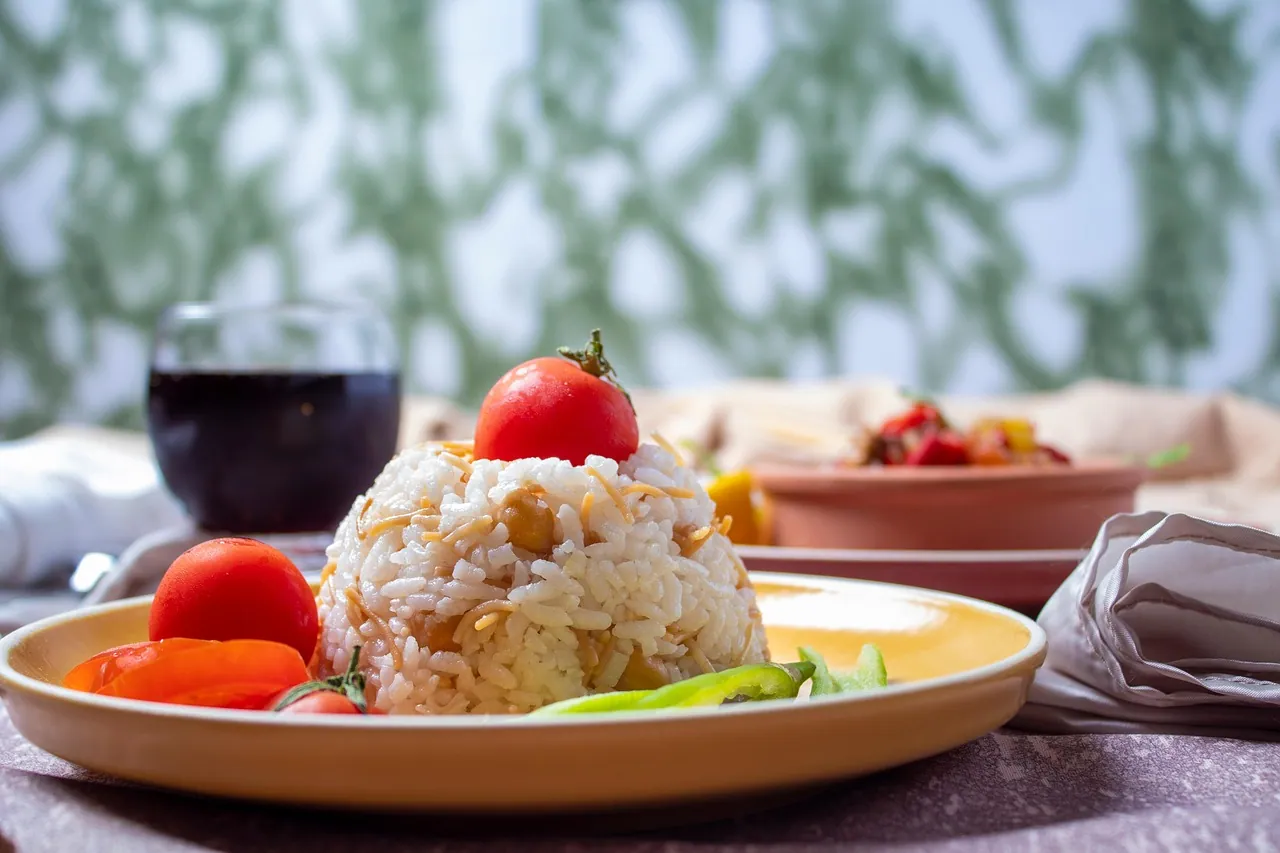
Healthy iftar in three stages
Stage 1, at the adhan (0–5 minutes): 2–3 dates and a glass of water. This raises blood sugar gently and gets fluid in first.
Stage 2, before or after Maghrib prayer (10–20 minutes): a bowl of fruit chaat or clear soup such as tomato shorba, mutton or chicken yakhni with fat skimmed, or dal soup. Add one fried item at most if you want the tradition on the table.
Stage 3, the main meal (30–45 minutes after opening): a normal Indian dinner plate: half vegetables or salad, a quarter protein (chicken, fish, eggs, paneer, dal or chana) and a quarter roti or rice. By now the edge of hunger has gone, so portions naturally come down.

A ramadan diet plan to lose weight: how many calories and how much protein?
Most adults lose weight steadily on a daily deficit of about 300–500 kcal. For many Indian women that means roughly 1,400–1,600 kcal a day, and for men about 1,700–2,000 kcal, split between suhoor and iftar. Aim for at least 0.83 g of protein per kg of body weight, the ICMR-NIN requirement.
These ranges are starting points; your number depends on size, age and activity, and drops if you sleep through the afternoon. ICMR-NIN also notes that protein above about 1.6 g/kg adds nothing further to strength-training gains. For a 70 kg person that means at least 58 g a day, and many dietitians aim for 70–90 g during fat loss to protect muscle.
A practical split: 25–30 g at suhoor (2 eggs plus a glass of milk, or a paneer bhurji roti roll), 35–45 g at iftar (a palm-sized piece of chicken or fish plus dal, or chana plus dahi), and 8–10 g after taraweeh (a bowl of dahi or a glass of chaas).
7 day ramadan diet plan (Indian, ~1,500–1,700 kcal)
Portions suit an average woman aiming to lose weight; men can add one roti at iftar and a handful of nuts at suhoor. Repeat the week with small changes.
| Day | Suhoor (pre-dawn) | Iftar opener | Iftar main meal | After taraweeh |
|---|---|---|---|---|
| 1 | Vegetable daliya with milk + 2 boiled eggs | 3 dates, water, fruit chaat | 2 rotis, chicken curry (100 g), cucumber raita | Chaas + 5 almonds |
| 2 | 2 moong dal chillas with paneer stuffing + curd | 3 dates, water, tomato shorba | 1 katori brown rice, rajma, salad | 1 small banana |
| 3 | Overnight oats with milk, chia and apple | 3 dates, water, baked chana chaat | 2 rotis, fish curry, lauki sabzi | Dahi, 1 katori |
| 4 | 2 multigrain rotis + egg bhurji + dahi | 3 dates, water, chicken yakhni soup | Half bowl chicken haleem + large salad | Warm haldi milk, low sugar |
| 5 | Poha with peanuts and sprouts + glass of milk | 3 dates, water, fruit chaat | 2 rotis, palak paneer, masoor dal | Guava or orange |
| 6 | Besan chilla + paneer bhurji + curd | 3 dates, water, 3 air-fried moong pakoras | Chicken or soya pulao (1 katori) + raita + salad | Chaas + roasted chana |
| 7 | Upma with vegetables + 2 boiled eggs | 3 dates, water, dal soup | 2 rotis, keema matar (lean), mixed vegetables | Dahi with a few walnuts |
Vegetarians can replace chicken, fish and keema with paneer, soya chunks, tofu or an extra katori of dal plus curd. For everyday meals beyond Ramadan, see our Indian diet for weight loss guide covers everyday meals.

Hydration schedule: getting 2+ litres between iftar and suhoor
Most healthy adults need about 2 litres of fluid a day, and more in heat or when active. ICMR-NIN says to drink about eight glasses. During Ramadan all of that has to fit into roughly 11 hours, so spread it out. Drinking a litre at suhoor mostly leaves as urine within a few hours.
The ICMR-NIN 2024 guidelines put a normal adult’s need at about eight glasses or two litres, including other beverages, and more during hot weather or vigorous activity. Cleveland Clinic Abu Dhabi suggests at least 10 glasses between iftar and suhoor. Aim for 8–10 using a schedule like this:
| Time window | What to drink | Amount |
|---|---|---|
| Iftar opening (6:30 pm) | Plain water with dates | 1 glass (250 ml) |
| With soup / fruit chaat (6:45 pm) | Soup counts; add nimbu pani without sugar if you like | 1 glass |
| After the main meal (7:30–8:00 pm) | Water, sipped slowly | 1–2 glasses |
| Before and after taraweeh (8:30–10:30 pm) | Water or chaas | 2 glasses |
| Before sleep (11:00 pm) | Water | 1 glass |
| Suhoor (4:30–5:00 am) | Water plus milk or chaas with the meal | 2 glasses |
| Total | 8–9 glasses (2–2.25 L) |
Keep tea and coffee to one cup. Pickle, papad and namkeen at suhoor make afternoon thirst worse; ICMR-NIN’s 5 g daily salt limit (one teaspoon) is a useful ceiling.
Exercise during Ramadan: when to train and how hard
The best time for most people is 60–90 minutes after iftar, or a short, easy session in the last hour before iftar if you can refuel straight away. Training hard in the early afternoon while fasting and dehydrated feels worse and reduces performance, so keep sessions moderate and shorter than usual.
A 2026 review in Sports Medicine – Open of 10 Ramadan training studies found that exercising while fasted makes each session feel harder and lowers performance on the day. Over the month, fitness was generally preserved when load, recovery, food and fluids were managed, though the evidence is limited.
- After iftar (8:00–9:00 pm): best for strength training or a brisk 30–40 minute walk.
- Before iftar (last 30–45 minutes): light walking, mobility or gentle yoga only.
- Taraweeh: standing, bowing and prostrating is real low-intensity movement. Count it.
- Avoid: high-intensity intervals, hot yoga or long runs in the afternoon heat while fasting.
Two or three 25-minute strength sessions a week help keep the lean mass Ramadan can cost. For a live instructor at a time that fits around taraweeh, Fitstrot’s online yoga classes offer gentle and moderate sessions you can join from home.

Three Ramadan eating myths worth dropping
Myth: skipping suhoor helps you lose more weight
Skipping suhoor stretches the fast to 18–20 hours from the last evening snack, which usually means a bigger iftar, more cravings and more afternoon headaches. A 350–450 kcal suhoor with 25 g of protein usually means eating less over the day.
Myth: dates are too sugary for a weight-loss diet
Two or three small dates add around 60–70 kcal plus fibre and potassium. The problem is a whole box through the evening, not 2–3 at iftar.
Myth: you fasted all day, so iftar calories don’t count
This is the main reason some people gain weight in Ramadan. An iftar of pakoras, samosa, sherbet, a big haleem bowl and dessert can easily reach 1,800–2,200 kcal, which is a full day’s energy for many women. Fasting creates a window, not a free pass.
How to lose weight in Ramadan: diet plan week by week
A 30 day ramadan diet plan for weight loss works best in four phases: adjust first, lose steadily in the middle, and protect progress in the Eid-shopping last week.
| Week | Main focus | Food targets | Movement | Realistic change |
|---|---|---|---|---|
| Week 1 (days 1–7) | Adjust sleep and meal timing | Never skip suhoor; staged iftar; one fried item max | Walk 20–30 min after iftar | 1–1.5 kg on the scale, mostly water |
| Week 2 (days 8–15) | Protein and portions | 25–30 g protein at suhoor; half-plate vegetables at iftar | Add 2 strength sessions | 0.3–0.5 kg |
| Week 3 (days 16–22) | Tighten the evening snack | No second dinner after taraweeh; chaas, dahi or fruit only | 3 strength or yoga sessions | 0.3–0.5 kg |
| Week 4 (days 23–30) | Protect progress before Eid | Plan Eid sweets; keep sherbet unsweetened; sleep 6–7 hours | Keep walks daily | 0.3–0.5 kg |
That adds up to about 2–3 kg, perhaps 1–1.5 kg of it fat. Weigh yourself weekly at the same time; daily weights swing with water and salt.
Troubleshooting: when the scale, energy or stomach isn’t cooperating
“My weight went up in the first two weeks”
Check fried items at iftar, a second dinner after taraweeh, and liquid calories like sherbet, sweet lassi and falooda. One is almost always the cause. One high reading after a salty night is water, not fat.
Afternoon headaches and low energy
Usually dehydration, caffeine withdrawal or a skipped suhoor. Taper tea and coffee the week before Ramadan. With diabetes, dizziness or shakiness may be low blood sugar: check it, don’t ride it out.
Constipation
Add a katori of sabzi and a fruit to both meals, choose whole-wheat roti over paratha and sheermal, and keep fluids up.
Bingeing on sweets at night
This is usually a sign that suhoor or iftar had too little protein. Adding 10–15 g of protein to each meal curbs cravings more reliably than willpower. Short sleep also raises next-day hunger, so sleep soon after taraweeh.

After Eid: keeping the weight off
Weight drifted back within 2–5 weeks in the Fernando meta-analysis once people returned to usual eating. For the month after Eid keep three habits: a protein-rich breakfast, a 12-hour overnight gap, and no fried tea-time snacks on weekdays. Enjoy the Eid feast; one or two celebration days won’t undo a month’s work.
Frequently asked questions
How much weight can I lose in Ramadan?
Research shows an average loss of about 1 kg in healthy adults who fast without changing their diet. With a planned diet of roughly 300–500 kcal below maintenance plus regular walking, 2–3 kg over the month is realistic for people carrying extra weight. Part of the early drop is water.
Is it OK to exercise while fasting in Ramadan?
Yes, for most healthy adults. Light activity such as walking or gentle yoga works well in the last 30–45 minutes before iftar, and strength training or brisk walking is best 60–90 minutes after iftar. Avoid intense workouts in the afternoon heat while fasted.
What should I eat at suhoor to stay full longer?
Combine a whole grain with protein and some fat: for example, vegetable daliya with 2 eggs, moong dal chillas with paneer, or overnight oats with milk and chia. Aim for 25–30 g of protein and add curd or fruit for fibre and fluid.
Can people with diabetes follow a Ramadan diet plan for weight loss?
Only with their doctor’s approval and an individual plan. Type 1 diabetes and insulin use are considered high risk, and many people in these groups are advised not to fast. Never change medicines yourself, and break the fast if blood sugar goes low.
How much water should I drink between iftar and suhoor?
Aim for about 8–10 glasses (2–2.5 litres), spread from iftar to suhoor rather than drunk all at once. Water, soups, chaas and watery fruits all count. Keep tea and coffee to one cup, and go easy on salty pickles and papad at suhoor.
Why do some people gain weight during Ramadan?
The most common reasons are fried iftar snacks, sugary sherbets, a second full dinner after taraweeh, and less daytime activity with more afternoon sleep. An iftar of fried snacks, sherbet, haleem and dessert can match a whole day’s calories.
Want a Ramadan plan built around your own suhoor and iftar times? Book a session with a Fitstrot online nutritionist before the first roza and start the month with a plan that fits your family’s table.


