

A gym workout diet plan works when your sessions and your plates are planned together. Lift on random meals and the bar moves slowly. Eat well without a training structure and the food has nothing to build on. This guide gives you rules of thumb for protein and calories (every figure is “about”, not exact), an Indian-food protein table, a sample week you can copy, and the lifts to run it with. Treat each number as a starting point and adjust from your own bodyweight and gym log.
How do a gym plan and a diet plan fit together?
They share one goal. Training sends the signal to build or keep muscle, and food supplies the energy and protein to act on it. In practice that means about 1.6 to 2 g of protein per kg of bodyweight daily, calories set slightly above maintenance to gain or below it to lose fat, and carbohydrates placed around your sessions.
That is the whole framework; meal timing and supplements are small adjustments on top. If you are still choosing exercises, our gym workout guide covers the movements, and the broader workout and diet plan post covers the same idea for people training anywhere.
How much protein and how many calories do you need?
For most gym-goers, about 1.6 to 2 g of protein per kg of bodyweight a day is a sound target, so roughly 112 to 140 g at 70 kg. For calories, muscle gain sits about 250 to 400 kcal above maintenance, and fat loss about 300 to 500 kcal below it.
To estimate maintenance, multiply your bodyweight in kg by roughly 30 to 33 for a moderately active adult. At 70 kg that is about 2,100 to 2,300 kcal. It is a guess, so judge it by what your weekly average bodyweight does over two to three weeks, not by a calculator. Set fat at about 0.8 to 1 g per kg and let carbohydrates fill the rest. Two worked examples for a 70 kg person:
- Lean muscle gain: about 2,400 kcal, 130 to 140 g protein, 60 to 70 g fat, and roughly 300 g carbs.
- Fat loss: about 1,800 kcal, 130 to 140 g protein, 50 to 60 g fat, and roughly 190 g carbs.
Scale these to your own bodyweight. Keep the fat-loss pace to roughly 0.25 to 0.75 kg a week; faster cuts cost muscle and strength, and no plan can promise a specific result. If your goal is mainly fat loss, the online weight loss trainer service builds the deficit around your schedule instead of a formula.
Which Indian foods give you the protein?
Eggs, paneer, chicken, dal, curd, milk and soya chunks cover most of it. One egg gives about 6 g, 100 g paneer about 18 g, 100 g cooked chicken breast about 30 g, and 30 g dry soya chunks about 15 g. Four to five protein-led meals a day make 120 to 140 g realistic.
| Food | Portion | Protein (about) | Energy (about) |
|---|---|---|---|
| Whole egg | 1 large | 6 g | 70 kcal |
| Paneer (full fat) | 100 g | 18 g | 280 kcal |
| Chicken breast, cooked | 100 g | 30 g | 165 kcal |
| Soya chunks, dry | 30 g | 15 g | 100 kcal |
| Dal, cooked | 1 katori (150 g) | 7 g | 130 kcal |
| Rajma or chole, cooked | 1 katori (150 g) | 10 g | 170 kcal |
| Curd | 1 katori (150 g) | 5 g | 90 kcal |
| Milk | 1 glass (250 ml) | 8 g | 150 kcal |
| Roasted chana | 30 g | 6 g | 110 kcal |
| Peanuts | 30 g | 8 g | 170 kcal |
| Wheat roti | 1 medium | 3 g | 100 kcal |
| Cooked rice | 1 katori (150 g) | 4 g | 195 kcal |
Values shift with recipe, oil and brand, so use the table for planning, not precision. Whey is optional convenience; a scoop typically gives around 20 to 25 g of protein, but check your label. If meals reach your target, you do not need it.
A sample week: gym days and meals side by side
This is a 4-day upper/lower week for a 70 kg person aiming at lean muscle gain. Protein stays about the same every day, including rest days. Only carbohydrates and total calories move, so the heaviest leg day gets the biggest plate.
| Day | Gym session | Eating focus | Target (about) |
|---|---|---|---|
| Monday | Upper A (press, row, shoulders) | Carb-and-protein meal 1.5 to 2 hours before; protein meal after | 2,400 kcal, 135 g protein |
| Tuesday | Lower A (squat, hinge, calves) | Biggest carb meal of the week around the session | 2,500 kcal, 135 g protein |
| Wednesday | Rest, 30 to 40 min walk | Same protein, one roti or half a katori of rice less | 2,250 kcal, 135 g protein |
| Thursday | Upper B (pulldown, incline press, arms) | Same pattern as Monday | 2,400 kcal, 135 g protein |
| Friday | Lower B (leg press, curls, lunges) | Large carb meal before, protein after | 2,500 kcal, 135 g protein |
| Saturday | Optional light cardio, yoga or a dance class | Normal meals, no extra food needed | 2,300 kcal, 135 g protein |
| Sunday | Rest | Batch-cook dal, chicken or paneer for the week | 2,250 kcal, 135 g protein |
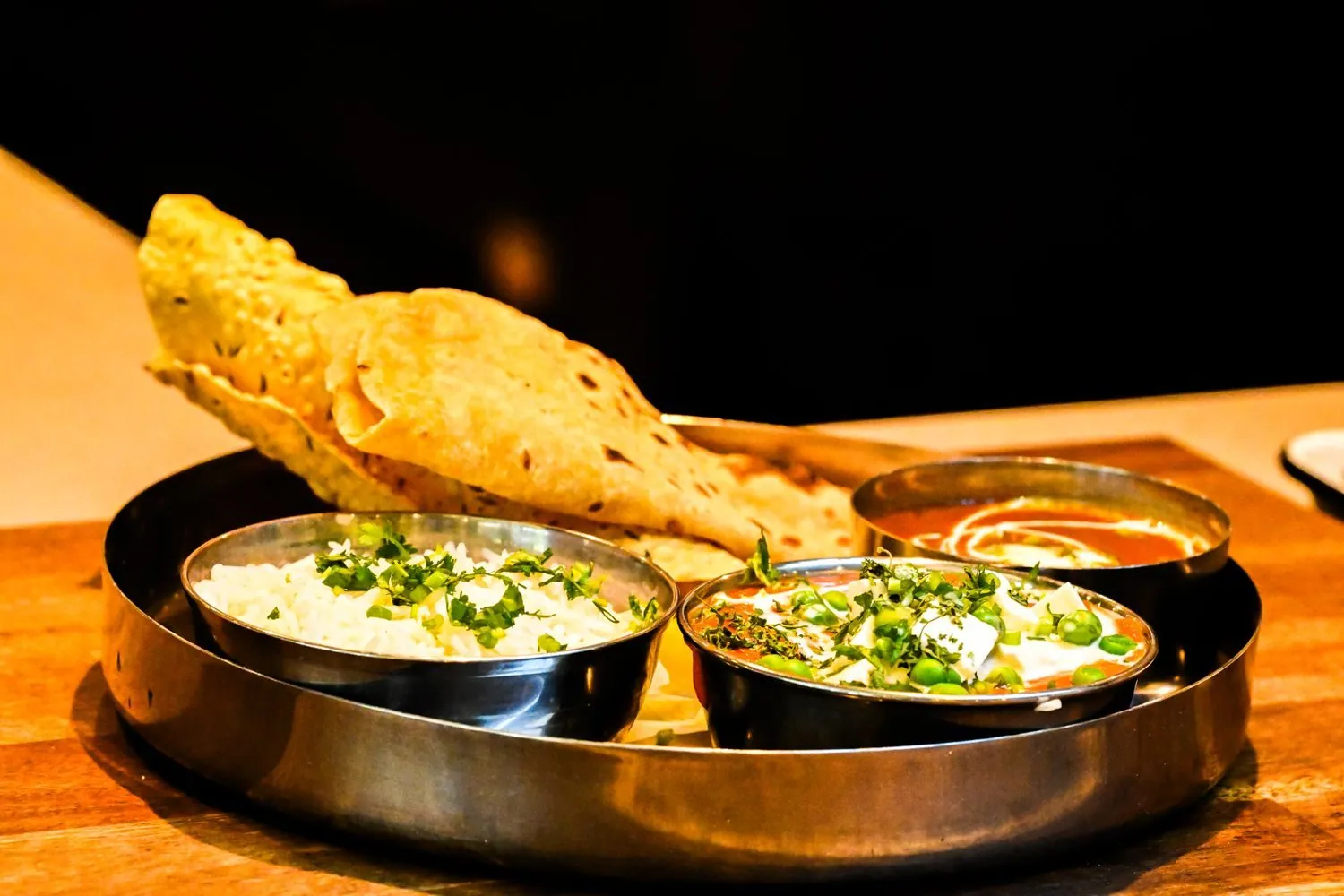
Here is one training day (Monday) added up, using the table above:
- Breakfast: 3-egg bhurji, 2 roti, 1 katori curd. About 29 g protein, 545 kcal.
- Mid-morning: 30 g roasted chana and a banana. About 7 g protein, 210 kcal.
- Lunch: 1 katori rice, 1 katori dal, 100 g paneer, salad. About 31 g protein, 685 kcal.
- Pre-workout: a banana and a glass of milk. About 9 g protein, 250 kcal.
- Post-workout: 1 scoop whey in water, or 3 boiled eggs. About 20 g protein, 120 to 210 kcal.
- Dinner: 100 g chicken, 2 roti, sabzi, salad. About 39 g protein, 485 kcal.
That lands near 135 g protein and about 2,300 kcal. Add peanuts or an extra roti to reach 2,400. Vegetarian? Swap chicken for 30 g soya chunks or a second paneer portion. The weekly structure above also stretches into a 6-day gym workout schedule if you can train more often, and a printable gym workout chart is handy for your phone or gym bag.
What should each gym session look like?
Plan four sessions a week of 50 to 70 minutes: two upper, two lower. Do 3 to 4 working sets of 6 to 10 reps on the big lifts with 2 to 3 minutes of rest, then 3 sets of 8 to 15 reps on smaller moves. Stop each set about 1 to 2 reps short of failure.
| Exercise | Sets x reps | Rest | Form cue |
|---|---|---|---|
| Barbell or dumbbell bench press | 3-4 x 6-10 | 2-3 min | Shoulder blades pulled back, feet planted, lower to mid-chest under control |
| Lat pulldown | 3 x 8-12 | 90-120 sec | Drive elbows down to your ribs; do not swing the torso |
| Seated shoulder press | 3 x 8-10 | 90-120 sec | Ribs down, press straight up, avoid arching the lower back |
| Seated cable row | 3 x 10-12 | 90 sec | Chest tall, squeeze shoulder blades together, pause for a second |
| Barbell squat or leg press | 3-4 x 6-10 | 2-3 min | Brace your core, knees follow the toes, use a depth you control |
| Romanian deadlift | 3 x 8-10 | 2 min | Push hips back, bar close to the legs, back flat, soft knees |
| Leg curl | 3 x 10-12 | 60-90 sec | Hips pinned to the pad, take about 2 seconds to lower |
| Standing calf raise | 3 x 12-15 | 60 sec | Full stretch at the bottom, brief pause at the top |
Progress with double progression. Stay at one weight until you hit the top of the rep range on every set with good form, then add the smallest jump available, usually 2 to 2.5 kg on a barbell or one pin on a machine, and start again at the bottom of the range. If you stall for two or three sessions, repeat the weight before changing anything else.
Every 6 to 8 weeks, or sooner if you feel run down, take an easier week with about half the sets. For splits chosen by experience level, see our gym workout plan and weekly gym workout plan posts.
Myth check: three beliefs that sink gym diets
Myth 1: you must drink protein within 30 minutes of training. Total protein across the day matters far more than a narrow window. Having a protein-rich meal within a couple of hours either side of your session is plenty.
Myth 2: carbs make you fat, so drop roti and rice. Carbohydrates fuel heavy sets, and cutting them too hard makes lifts drop and sessions feel flat. Trim portions on rest days if you need to, but keep a real carb meal around training.
Myth 3: you can add several kilos of muscle in a month. Lean mass comes slowly, often roughly half a kilo to a kilo a month for a beginner and less as you progress. Faster scale gains are mostly fat and water. Supplements do not shortcut this, and crash diets or extreme bulking are not safe versions of the goal.
Troubleshooting: what to change when the plan stalls
- Weight has not moved in 2 to 3 weeks: compare weekly averages, not single mornings. If you are gaining, add about 150 to 200 kcal, mostly from carbs. If you are cutting, remove about the same, mostly from fats and extras, and keep protein untouched.
- Gaining faster than about 0.5 kg a week: you are probably adding fat. Trim 150 to 200 kcal.
- Lifts are stuck: check you are eating enough, sleeping 7 to 8 hours, and actually adding load or reps. Then try the easier week described above.
- Always hungry on a cut: build meals around dal, sabzi, curd and salad for volume, and keep protein at the top of your range.
- Low energy in sessions: move a carb meal to 1.5 to 2 hours before, or add a banana 30 to 45 minutes before. Our gym cardio workout plan explains how to fit cardio without draining lifting days.
Adjusting the plan for women, vegetarians and busy weeks
Women: the principles are identical. Protein per kg is the same, calorie targets scale to bodyweight, and the sample week works as written with lighter loads. Our gym workout plan for women covers exercise choices in more depth.
Vegetarians: reaching 120 to 140 g is workable with paneer, curd, milk, soya chunks, rajma, chole, dal and peanuts, and eggs if you eat them. It takes more planning, so put a protein source in every meal rather than only at dinner.
Busy weeks: a 3-day full-body routine with the same food rules beats skipping the gym. On other days, a walk or an online yoga class keeps you moving.
If you have a medical condition, are pregnant or postpartum, or are recovering from an injury, check with your doctor or a registered dietitian before changing your diet or training.
Build it yourself or get a coach?
The plan above is a solid generic start, but it does not know your current lifts, food preferences, a sore knee or a travel-heavy job. With FitStrot’s 1-on-1 personal training, a coach adjusts your sessions as you get stronger, and an online nutritionist consultation turns the calorie and protein numbers into Indian meals you will actually eat. To start, book a 1-on-1 personal training session and bring a week of your food log.
FAQ
What should a gym workout diet plan include?
It should include a training split you can repeat each week, a daily protein target of about 1.6 to 2 g per kg of bodyweight, a calorie level matched to your goal, and meals timed so a carbohydrate and protein meal falls around each session. Add a weekly review so you can adjust.
How much protein do I need per day for the gym?
Most people do well on about 1.6 to 2 g of protein per kg of bodyweight a day. At 60 kg that is roughly 96 to 120 g, and at 80 kg roughly 128 to 160 g. Spread it over four to five meals instead of eating most of it at dinner.
Should I eat differently on rest days?
Keep protein the same, because recovery continues on rest days. Calories can sit about 150 to 250 kcal lower, mostly by trimming carbohydrates such as one roti or half a katori of rice. Do not eat so little that you feel flat on the next training day.
Can vegetarians follow a gym diet plan in India?
Yes. Build meals around paneer, curd, milk, soya chunks, dal, rajma, chole and peanuts, and add eggs if you eat them. About 120 to 140 g of protein a day is achievable, but each meal needs a deliberate protein source, and portions are often larger than a non-vegetarian plate.
How long before a gym workout diet plan shows results?
Expect strength and energy changes within about 2 to 4 weeks, and visible changes in the mirror after roughly 8 to 12 weeks of consistent training and eating. Judge by weekly average weight, gym log numbers and how clothes fit, not by single days. Results vary by person.


