

A gym workout is one training session with a fixed order: warm-up, one or two heavy compound lifts, a few accessory exercises, and a cool-down. Most good sessions take 45 to 75 minutes. The exercises change from day to day, but the order stays the same, and that order is what stops a gym visit turning into random machine-hopping.
This guide covers the fundamentals in one place: what goes into a session, how to pick a weekly split, the form cues that keep your joints safe, and what to fix when progress stalls. It is written for Indian gym-goers who train after office hours, share crowded floors, and want a simple system rather than ten conflicting reels.
What does a gym workout session include?
A complete gym workout has four parts: a 5 to 10 minute warm-up, 15 to 25 minutes on one or two compound lifts such as squats or bench press, 20 to 30 minutes of accessory work for smaller muscles, and a 5 to 10 minute cool-down. Together they usually fit inside 45 to 75 minutes.
- Warm-up: raises body temperature and rehearses the movement patterns you are about to load.
- Main lift: the hardest exercise of the day, done while you are fresh, with the heaviest weight you can control.
- Accessory work: lighter, higher-rep exercises that cover what the main lift missed, such as rows, lunges, curls and core.
- Cool-down: an easy walk plus stretches that bring your heart rate down and let you notice any sore spots.
If this is your first month in a gym, start with our beginner gym workout guide for a week-by-week ramp-up, then return here to understand why each part of the session exists.
How do you warm up before a gym workout?
Spend 5 to 8 minutes on a bike, rower or brisk treadmill walk until you feel slightly warm, then do dynamic moves such as leg swings, arm circles and bodyweight squats. Before your first heavy lift, add 2 or 3 lighter ramp-up sets so the working weight does not feel like a shock.
Here is a simple walkthrough you can repeat every session:
- Minutes 0 to 5: easy cardio. You should be able to talk, but you should feel warmer by the end.
- Minutes 5 to 8: ten leg swings per side, ten arm circles each way, ten bodyweight squats, ten hip bridges.
- Ramp-up sets: if your working squat is 60 kg, do the empty bar for 10 reps, then about 30 kg for 5, then about 45 kg for 3. Stop well short of fatigue.
Save long static stretches, where you hold a position for 30 seconds, for after the session. Holding them before a heavy set can make the muscle feel loose and weak at the moment you want it firm.
Which weekly split suits your gym workout?
The right split is the one you can attend consistently. Three days a week suits most beginners with full-body sessions. Four days works well with an upper and lower split. Five or six days only makes sense if your sleep, food and schedule can support that much training.
A split is simply how you divide muscle groups across the week. Here is how the common options compare:
| Split option | Days per week | How a week looks | Best for | Main trade-off |
|---|---|---|---|---|
| Full body | 3 | Mon, Wed, Fri: whole body each time | Beginners, busy professionals | Sessions run long if you add too many exercises |
| Upper / lower | 4 | Upper, lower, rest, upper, lower | Early intermediates | Needs four fixed days in your week |
| Push / pull / legs | 3 or 6 | Chest-shoulders-triceps, back-biceps, legs | Lifters who like variety | Missing one day unbalances the week |
| Body-part split | 5 | One muscle group per day | Experienced lifters chasing volume | Each muscle is trained only once a week |
If you want the week laid out day by day, our gym workout plan shows how sessions fit together, and the 6-day gym workout schedule is the one to read if you genuinely have six days to spare. A plan you follow three days a week beats one you abandon in week two.
What form cues keep your main lifts safe?
Good form means a braced trunk, a neutral spine, controlled lowering and a full range you can own. Keep the bar close to your body, move at a steady pace, and stop a set when your technique changes. Lighter weight with clean form builds more than heavy weight with a collapsing back.
The table below gives sets, reps, rest and one cue per lift.
| Exercise | Sets x reps | Rest | Form cue to remember |
|---|---|---|---|
| Barbell back squat | 4 x 6 | 2-3 min | Brace your belly, push knees out over toes, sit between your hips |
| Flat bench press | 4 x 8 | 2 min | Shoulder blades pinched back, feet planted, bar touches mid-chest |
| Deadlift | 3 x 5 | 2-3 min | Push the floor away, keep the bar dragging along your shins |
| Seated cable row | 3 x 12 | 60-90 sec | Pull elbows back, chest tall, no swinging from the lower back |
| Dumbbell shoulder press | 3 x 10 | 60-90 sec | Ribs down, glutes tight, press straight up not forward |
| Walking lunges | 3 x 12 per leg | 60-90 sec | Long stride, front knee tracks over the middle toes |
| Plank | 3 x 30-45 sec | 45 sec | Squeeze glutes, ribs tucked, no sagging hips |
Two habits protect you more than any single cue. First, film one set from the side every few weeks and compare it with what you think you are doing. Second, add weight only when you can finish every set with the same technique as your first rep.
How many reps, sets and rest minutes should you use?
For strength, use roughly 3 to 6 reps with 2 to 4 minutes of rest. For muscle size, 6 to 12 reps with 1.5 to 2.5 minutes works well. For lighter accessory work, 10 to 15 reps with 45 to 90 seconds of rest is usual. Finish each set with about 1 to 3 reps left in reserve.
That last part, “reps left in reserve”, is the simplest way to judge effort. If you could have done five more reps, the weight is too light to drive change. If your form broke on rep two, it is too heavy. Aim for a set that feels hard in the final two reps but still looks tidy.
Most people do well with 10 to 20 working sets per muscle group per week, spread across the days you train it. A beginner on three full-body days can sit near the low end of that range and still improve steadily.
Is “more exercises means a better gym workout” true?
No. A session with 12 exercises is usually a session with diluted effort. Four to six well-chosen exercises, done with full rest and honest effort, give most people better results than a long list rushed between phone checks. Quality and progression matter more than variety for its own sake.
Other myths worth dropping:
- “Sore means it worked.” Soreness is common when you start or change exercises, but a lack of it does not mean the session failed. Track whether your weights and reps rise over weeks instead.
- “Lifting makes women bulky.” Building large muscles takes years of heavy training and a calorie surplus. A normal gym workout builds a firmer, stronger body.
- “Cardio first, always.” Long cardio before lifting drains the energy you need for your main lift. Keep it short as a warm-up, or do it after the weights.
Why does your gym workout feel stuck? Troubleshooting guide
Stalled progress usually comes from one of five causes: too little sleep, too little protein, no progression, too many exercises, or rest periods that are too short or too long. Fix one at a time, give it three or four weeks, and log your sessions.
| What you notice | Likely cause | What to try |
|---|---|---|
| Same weights for a month | No planned progression | Add 1 rep per set each week, then raise weight by the smallest plate once you hit the top of your rep range |
| Always tired by the main lift | Accessories done first, or a skipped meal | Lift heavy right after the warm-up and eat a banana or roasted chana 60 to 90 minutes before |
| Lower back aches after squats or deadlifts | Weak bracing, bar drifting forward | Drop the weight about 20 percent, film from the side, and fix the hinge before adding load |
| Sessions take two hours | Long rests, too many exercises | Cut to 5 exercises and use a timer for rest |
| No visible change after 8 weeks | Low protein or inconsistent attendance | Check you are training at least 3 days a week and eating protein at every meal |
On food: most active adults do well with roughly 1.2 to 2 grams of protein per kilogram of body weight per day. Vegetarians can build that from dal, paneer, curd, soya chunks, sprouts and milk, and egg-eaters have an easy extra source. If your goal is fat loss or you are unsure what your numbers should be, a plan from an online nutritionist removes the guesswork.
How should different people adapt a gym workout?
The structure stays the same for everyone, but the dose changes. Beginners need fewer exercises and lighter loads, desk workers need extra hip and upper-back work, and people returning after a break should restart at about half their old weights. Anyone with pain, an injury or a medical condition should get clearance first.
Complete beginners
Train three non-consecutive days with full-body sessions of five exercises. Learn the squat, hinge, push, pull and carry patterns with light weights for the first four weeks. Do not chase heavy numbers before your technique is repeatable.
Office workers with long sitting hours
Add hip bridges, rows and face pulls to your warm-up. Hours in a chair tighten the hips and round the shoulders, so pulling and glute work deserve extra sets compared with pressing.
Women starting strength training
Follow the same structure and the same progression. Start with goblet squats, dumbbell presses and cable rows, and use the weights that make the last two reps hard. Our gym workout chart gives a quick visual of sets and rest if you prefer a one-glance reference on your phone.
Crowded evening gyms
Between 6 and 9 pm, benches and racks fill up. Keep a backup exercise for each slot, such as dumbbell press instead of barbell bench, so you do not lose 20 minutes waiting.
How do you cool down after a gym workout?
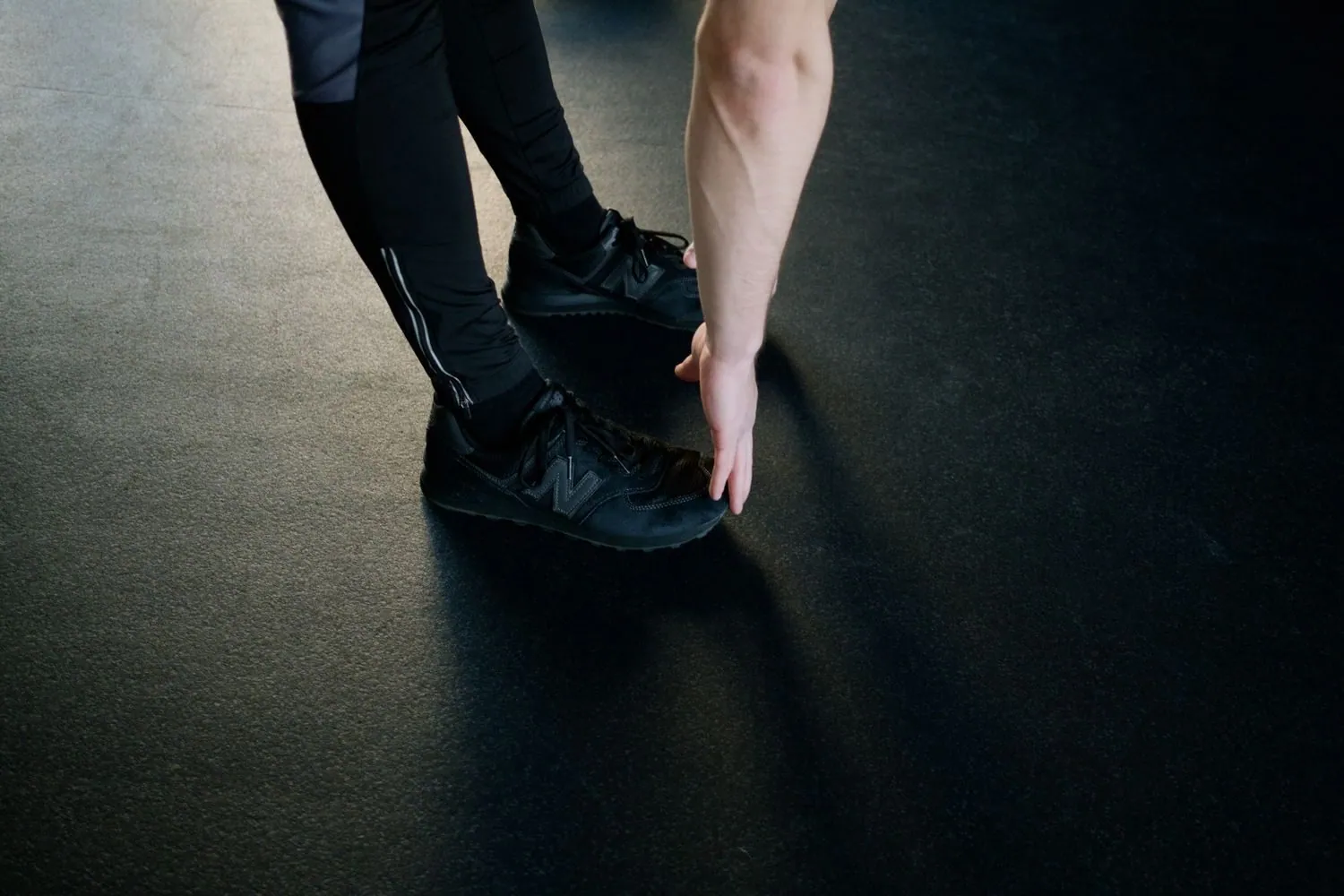
Walk or cycle easily for 3 to 5 minutes, then stretch the muscles you trained for 20 to 30 seconds each. Breathe slowly and let your heart rate settle before you leave. The cool-down is also the time to note any joint that felt off so you can adjust next session.
A good finish also includes food. Within a couple of hours of training, eat a balanced meal with protein, such as dal, rice and curd, eggs with roti, or paneer with vegetables, and drink water through the evening.
FAQs
What is a gym workout?
A gym workout is a structured training session that combines a warm-up, one or two compound lifts, targeted accessory exercises and a cool-down. It uses barbells, dumbbells, cables or machines and usually lasts 45 to 75 minutes. The aim is to build strength, muscle or general fitness through gradually harder resistance training.
How many days a week should I do a gym workout?
Most people do well with three to four days a week. Beginners can start with three full-body sessions on alternate days, while experienced lifters may train five or six days with a split. Consistency over many weeks matters more than hitting a specific number of days.
How long should a gym workout last?
Aim for 45 to 75 minutes, including the warm-up and cool-down. Much shorter sessions often rush rest periods, and much longer ones usually include long breaks or too many exercises. If you only have 30 minutes, do a warm-up and three or four focused exercises instead of skipping the day.
Should I do cardio before or after a gym workout?
Do 5 to 8 minutes of light cardio before lifting as a warm-up, and keep longer cardio for after your weights or on separate days. Hard cardio before a heavy lift drains energy and can reduce the quality of your main sets.
Do I need a trainer for my gym workout?
You do not strictly need one, but a coach speeds up progress by correcting form, adjusting weights and keeping you accountable. If you keep hitting plateaus, feel unsure about exercise choice or have a past injury, personal guidance saves months of trial and error.
If you would rather skip the trial and error, book a 1-on-1 personal training session with Fitstrot and get a gym workout built around your schedule, goal and current strength.


