
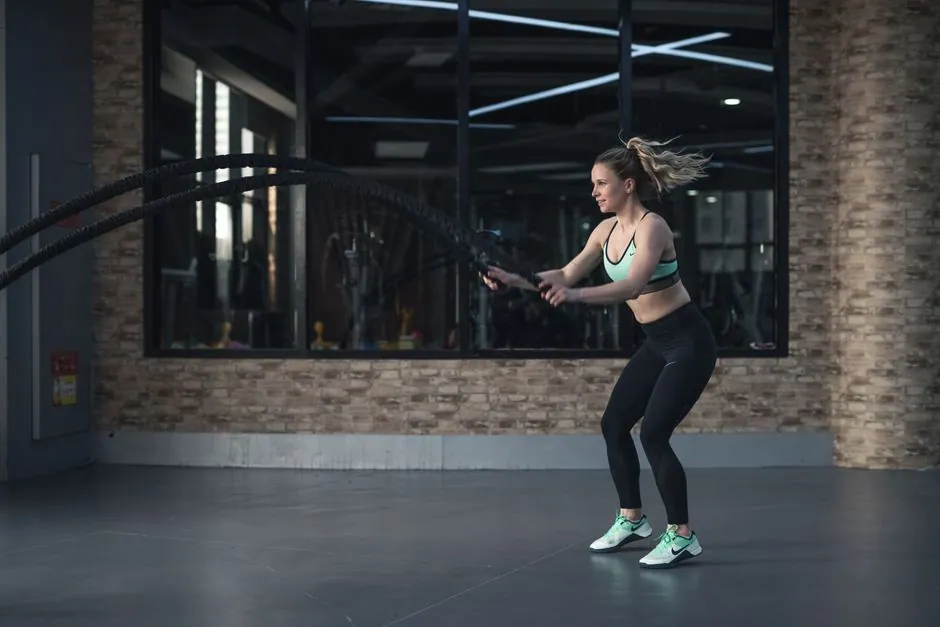
Most women who join a gym in India are handed the same photocopied sheet: treadmill, crunches, a few pink dumbbells, repeat. It does almost nothing. A gym workout plan for women that actually changes how you look, lift and feel needs three things the photocopy never has — a fixed weekly structure, a written load progression, and enough recovery between sessions. This guide gives you both templates worth running (a 3-day full-body and a 4-day split), the exact sets, reps, rest and form cues for each, and the numbers behind them from WHO, CDC, ACSM and Mayo Clinic. No bulky-muscle myths, no 30-day miracles.
What separates a real plan from a random gym workout for women
A real plan names the exercise, the sets, the reps, the rest and the load you will add next week. The CDC recommends adults get 150 minutes of moderate aerobic activity plus at least 2 days of muscle-strengthening activity covering all major muscle groups each week. Two structured gym sessions already clear that bar; three or four clear it comfortably.
The four things every template below is built on:
- Compound-first ordering. Squat, hinge, push, pull and carry come before curls and side raises, because you are strongest at the start of a session.
- A load you can actually measure. Write the kilos down. If it is not written, it is not progressing.
- 48 hours between hitting the same muscle. Mayo Clinic advises you rest one full day between training a specific muscle group.
- A stop rule. Two reps in reserve on most sets, not grinding to failure every time.
What a plan does not need is exercise variety for its own sake. Changing the routine every fortnight because it got boring is the single most common reason women train for a year and lift the same weights in month twelve as in month one. The exercises should stay stable for eight to twelve weeks; the loads on them should not.
The 3-day full body gym workout for women (start here)
A 3-day full-body routine is the best beginner gym workout for women because every major muscle group gets trained three times a week instead of once. The ACSM position stand on resistance training recommends novices train 2–3 days per week using loads in the 8–12 repetition maximum range. Run this for eight to twelve weeks before you even consider a split.
Train on Monday, Wednesday and Friday — or any three non-consecutive days. Each session takes 50–60 minutes including a 6-minute warm-up.
| Day | Exercise | Sets × Reps | Rest | Form cue |
|---|---|---|---|---|
| Day 1 | Goblet squat | 3 × 10 | 90 s | Elbows inside knees, heels flat |
| Lat pulldown | 3 × 10 | 90 s | Pull to collarbone, not behind neck | |
| Dumbbell bench press | 3 × 10 | 90 s | Wrists stacked over elbows | |
| Romanian deadlift (dumbbell) | 2 × 12 | 75 s | Bar close to thigh, soft knees | |
| Dead bug | 2 × 10/side | 45 s | Lower back pinned to floor | |
| Day 2 | Leg press | 3 × 12 | 90 s | Knees track over second toe |
| Seated cable row | 3 × 12 | 90 s | Chest tall, no torso swing | |
| Dumbbell shoulder press | 3 × 10 | 75 s | Ribs down, no back arch | |
| Glute bridge / hip thrust | 3 × 12 | 75 s | Chin tucked, squeeze at top | |
| Side plank | 2 × 20 s/side | 45 s | Hip stacked, do not sag | |
| Day 3 | Barbell or dumbbell back squat | 3 × 8 | 2 min | Brace before you descend |
| Assisted pull-up / inverted row | 3 × 8 | 90 s | Shoulder blades down first | |
| Incline dumbbell press | 3 × 10 | 90 s | 30-degree bench, not 45 | |
| Walking lunge | 2 × 10/leg | 75 s | Torso upright, step long | |
| Farmer carry | 3 × 30 m | 60 s | Shoulders back, breathe |
Finish two of the three days with 10–12 minutes of incline walking or cycling. That, plus daily steps, covers most of the 150-minute aerobic target in the WHO physical activity guidance for adults. If you prefer dancing to treadmills, a 30-minute dance-cardio session counts just as well.
Moving to a 4-day upper lower split workout
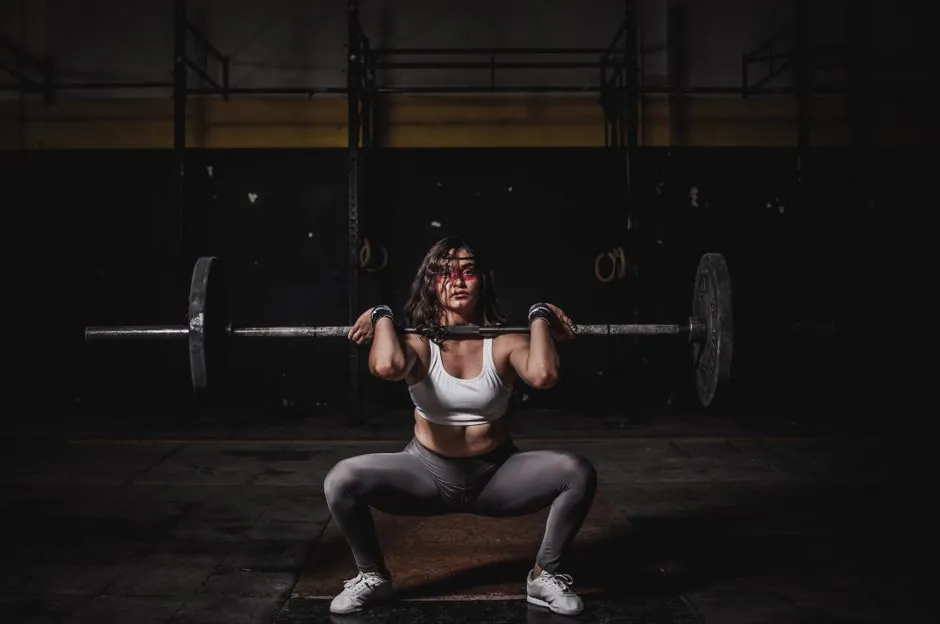
An upper lower split workout gives each half of the body two focused sessions a week, which lets you add exercises without making any single session 90 minutes long. Make the switch only when you have run the full-body plan for at least eight weeks and can squat and hinge with confident technique. Train Monday, Tuesday, Thursday, Friday.
| Session | Main lifts | Sets × Reps | Accessories | Rest on mains |
|---|---|---|---|---|
| Lower A (strength) | Back squat, Romanian deadlift | 4 × 6 | Leg curl 3×12, calf raise 3×15 | 2–3 min |
| Upper A (strength) | Bench press, barbell row | 4 × 6 | Lateral raise 3×15, face pull 3×15 | 2–3 min |
| Lower B (volume) | Hip thrust, leg press | 3 × 12 | Bulgarian split squat 3×10/leg, hanging knee raise 3×12 | 90 s |
| Upper B (volume) | Incline dumbbell press, lat pulldown | 3 × 12 | Cable curl 3×12, triceps pushdown 3×12 | 90 s |
Warm up each session with five minutes of easy cycling plus two ramp-up sets of the first main lift at roughly 40% and 70% of your working load. Skip the static stretching before lifting — save it for the end, when it actually helps you unwind.
Notice the A/B pattern: heavy sets of six early in the week, lighter sets of twelve later. That is the simplest way to get both strength and muscle out of four sessions without inventing a complicated periodisation scheme. For a printable version of either template to stick on your gym bag, our gym workout chart lays the same structure out week by week.
Myth check: lifting heavy will not make you bulky
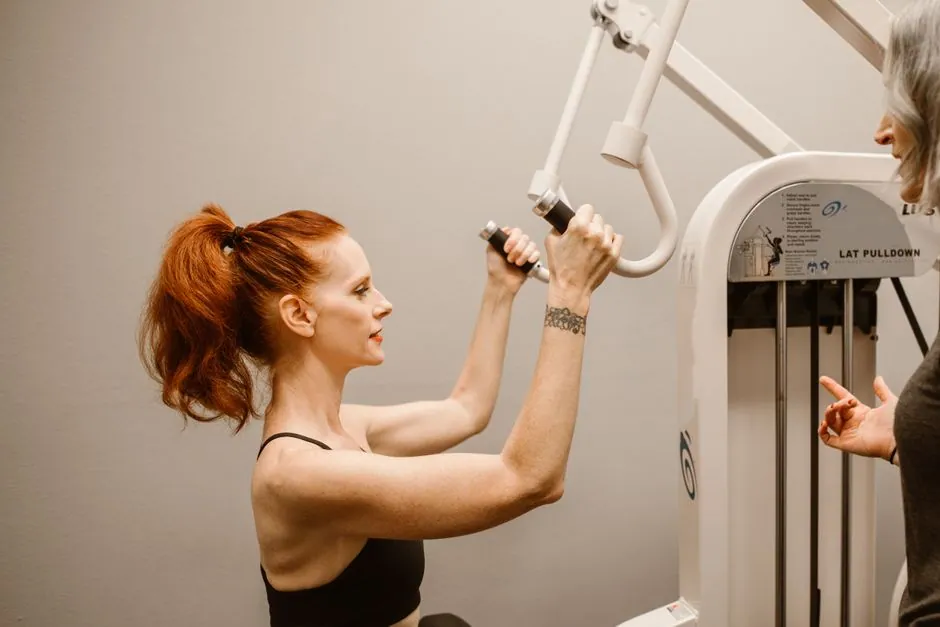
Lifting heavy will not make a woman bulky. Cleveland Clinic puts typical adult female testosterone at 15 to 46 ng/dL, against roughly 409 to 558 ng/dL for men aged 20–24 — a difference of ten to twenty times. That hormonal gap is why women following the same programme gain strength and shape, not size, over a normal training year.
What women who lift consistently do get is denser bone. Harvard Health notes that resistance work stresses the hip, spine and wrist — the three sites that fracture most — and that strength training can slow bone loss and even build bone. For Indian women, who tend to hit peak bone mass earlier and lose it faster after menopause, that is arguably the most valuable return on a gym membership.
The “toned” look people ask for is simply muscle you already have, made visible by a modest reduction in body fat. It is a kitchen outcome as much as a gym one.
Progressive overload: the rule that makes a female gym workout plan work
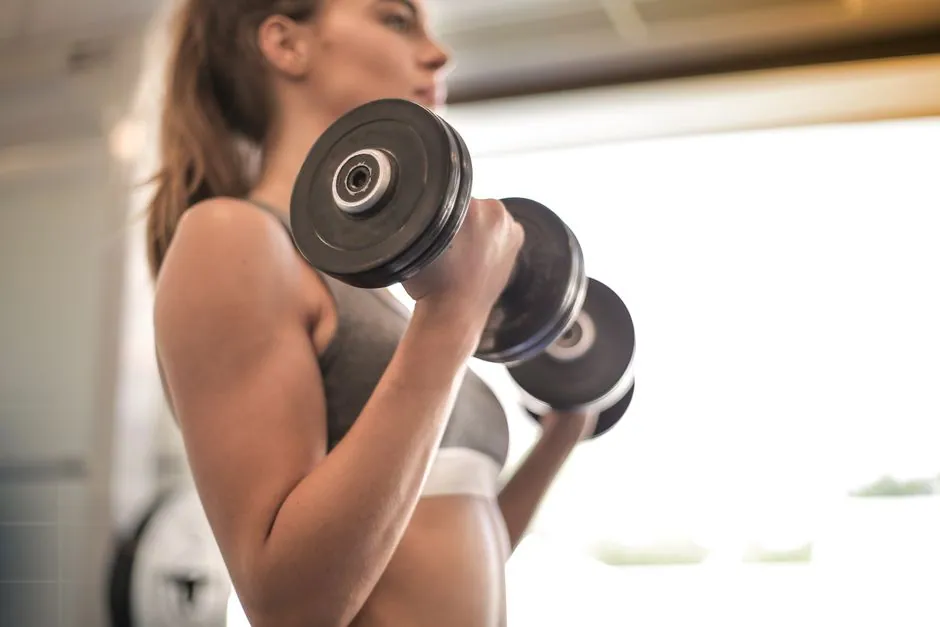
Progressive overload means the demand on the muscle goes up over time. The ACSM position stand is specific: when you can perform your current load for one or two reps beyond the target, increase the load by 2–10%. On a 20 kg squat that is 0.5–2 kg — which is exactly why 1.25 kg micro-plates are the best ₹1,500 most women spend on their training.
You have four levers, and you only pull one at a time:
| Weeks | Target reps | What changes | How you know to move on |
|---|---|---|---|
| 1–2 | 3 × 8 | Technique only; keep load light | All reps look identical on video |
| 3–4 | 3 × 10 | Add reps at the same load | Last set finishes with 2 reps left in you |
| 5–6 | 3 × 12 | Add reps again | 12 clean reps on all three sets |
| 7 | 3 × 8 | Add 2–10% load, drop back to 8 reps | Load felt heavy but controlled |
| 8 | 2 × 8 (deload) | Cut volume, keep load | Joints and sleep feel fresh again |
Deload weeks are not optional padding. Cutting volume roughly every eighth week is what lets connective tissue catch up with muscle, and it is the difference between a plan you run for a year and one that ends in a sore shoulder in week ten.
Then repeat the ladder from the new, heavier starting load. Adding reps before adding kilos is what keeps a beginner progressing for months rather than stalling in week three. If you want the reasoning behind set counts in more depth, read our breakdown of how many sets per workout actually produce results.
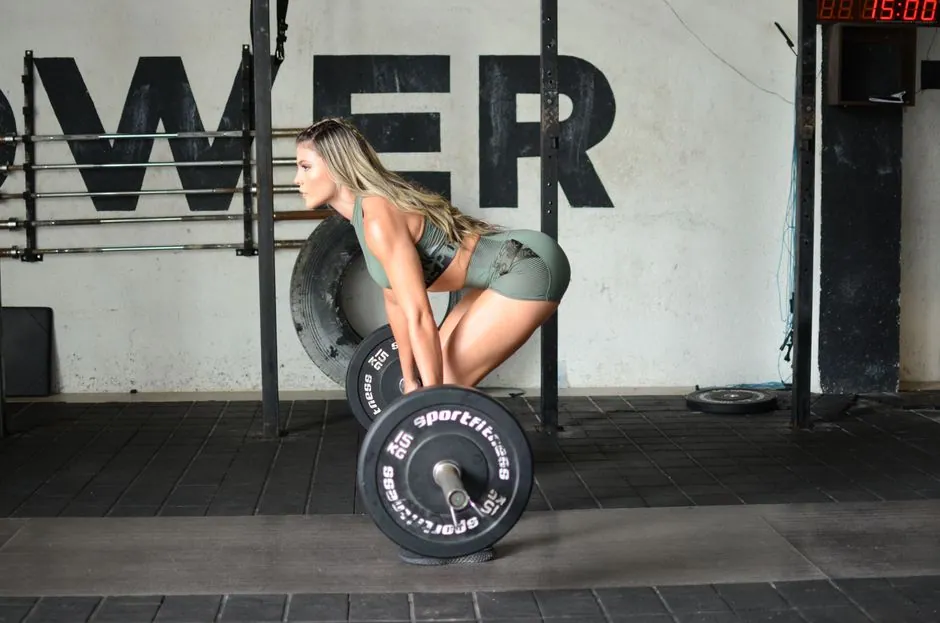
Gym equipment for beginners female lifters should learn first
Machines are not a lesser option. They fix the movement path, which means you can push reasonably hard in week one without a spotter. Learn these six, in this order, and you can run the entire 3-day plan without touching a barbell:
- Leg press — set the seat so knees reach 90 degrees without your lower back rounding off the pad.
- Lat pulldown — grip just outside shoulder width; pin the thigh pad down before your first rep.
- Seated cable row — chest stays tall; the elbows do the work, not the lower back.
- Chest press machine — handles should line up with mid-chest, not your throat.
- Seated leg curl — ankle pad on the Achilles, not the calf.
- Cable column — the most versatile station in any Indian gym; curls, pushdowns, face pulls and woodchops all live here.
Free weights come next, not first. Once the machine version of a movement feels easy, move to its dumbbell equivalent — chest press machine to dumbbell bench press, leg press to goblet squat — and only then to a barbell. Each step gives you more range of motion and more balance demand, which is where the real strength is built. Most Indian gyms have all six of these stations even in a small neighbourhood setup, so the plan travels well if you switch gyms.
Two rules that save weeks of frustration: photograph the seat and pin settings on your phone the first time you get them right, and never change more than one setting per session.
Cycle, iron and joints: what women’s programming has to account for
Training across the menstrual cycle matters less than the internet suggests. A 2020 meta-analysis in Sports Medicine pooling 78 studies found performance in the early follicular phase was only trivially reduced (effect size −0.06) compared with all other phases, and the authors concluded no general guideline can be drawn — an individual approach is what works. In practice: keep the session, drop the load 10% on days you feel flat, and log it.
Iron is the bigger issue in India. Analysis of NFHS-4 and NFHS-5 data published in BMC Public Health in 2024 found anaemia among Indian women aged 15–49 rose from 53% to 57% between 2015–16 and 2019–21. Anaemia shows up in the gym as breathlessness on the second set and a heart rate that will not settle. If that describes you, get a haemoglobin and ferritin test before you blame your programme — and take any supplement only on your doctor’s advice. Never start, stop or change prescribed medication because of a workout plan.
Protein supports the whole thing. A 2018 British Journal of Sports Medicine meta-analysis of 49 trials found gains in fat-free mass plateaued at total intakes of about 1.62 g per kg of body mass per day — roughly 97 g for a 60 kg woman, spread across dal, curd, paneer, eggs, soya and chana rather than crammed into one shake. Our high protein Indian diet plan shows what that looks like on a normal thali, and a consultation with an online nutritionist will adjust it to your numbers.
Troubleshooting a womens workout plan that has stopped working
Almost every stall has one of five causes. Find yours in the table before you change the whole programme.
| What you notice | Most likely cause | The fix |
|---|---|---|
| Same weights for six weeks | No written log, so no overload | Log every set; add 2–10% load the session after you beat the rep target |
| Lower back aches after leg day | Hinging with a rounded spine or too much load | Drop 20%, film one set from the side, brace before descending |
| Constantly exhausted, poor sleep | Four to five sessions on under-eating | Cut to three sessions, add a deload week, review daily calories |
| Scale has not moved in three weeks | Weekend intake undoing the deficit | Track seven days, not five; use waist measurement alongside weight |
| Shoulder pinches on presses | Bench too upright or grip too wide | Move to a 30-degree incline, narrow the grip, add face pulls |
A weight loss gym workout plan for women is not a different set of exercises — it is this same plan run alongside a modest calorie deficit. Strength work protects the muscle you already have while the deficit does the fat loss; cutting weights and adding cardio does the opposite.
When this plan is not the right one for you
Be honest about where you are starting. These templates assume you are a generally healthy adult with no acute injury and clearance to exercise.
- Postpartum, especially after a caesarean: wait for your obstetrician’s clearance — usually six to twelve weeks — and rebuild core and pelvic floor before loading a squat.
- Known hypertension, cardiac history or uncontrolled diabetes: get medical clearance first, and expect your coach to cap heavy straining sets.
- Existing knee, shoulder or disc injury: a physiotherapist should set the exercise substitutions, not a generic article.
- Over 55 or long-term sedentary: the 3-day plan is still right, but start with machines and two sets, not three.
Nobody can promise you a fixed number of kilos in a fixed number of weeks, and any plan that does is selling something. What is reasonable in twelve weeks of consistent training is a noticeably stronger squat and deadlift, better-fitting clothes, and measurably better stamina.
Frequently asked questions
Is a 3-day gym workout plan enough for women?
Yes. Three full-body sessions a week train every major muscle group three times and exceed the CDC’s minimum of two muscle-strengthening days. Most women make faster progress on three well-executed sessions than on five rushed ones, because recovery — not gym time — is what limits beginners.
How much weight should a woman start with?
Start with a load you can lift for 12 clean reps while still having two reps left in reserve, then work within the 8–12 rep range ACSM recommends for novices. For most beginners that is a 6–10 kg goblet squat and the lightest plate on the lat pulldown.
Should I do cardio before or after weights?
After. Cardio before lifting reduces the load you can handle on squats and presses. Keep a 6-minute general warm-up before weights, and put the 10–12 minute conditioning finisher at the end of the session, or on a separate day.
Can I train during my period?
Yes, unless pain or heavy bleeding makes it unsafe for you. Pooled research found only a trivial performance drop in the early follicular phase. Reduce the load about 10% on the days you feel flat, keep the session, and speak to your doctor if symptoms are severe.
How long before I see results?
Strength improves within two to four weeks, mostly from neural adaptation. Visible changes in shape typically take eight to twelve weeks of consistent training and adequate protein. Take waist, hip and thigh measurements on day one — they move before the scale does.
Do I need supplements to follow this plan?
No. Protein powder is convenience, not magic: gains in fat-free mass plateau around 1.62 g of total protein per kg of body mass per day, from any source. Fix food first, and test for iron deficiency before adding supplements.
Can I run this plan at home instead?
Partly. Dumbbell versions of the squat, hinge, press and row transfer well, but the leg press, lat pulldown and cable work do not. If a gym is not practical right now, follow a structured home workout plan and add resistance bands for the pulling movements.
Next step: pick the 3-day template, write your starting loads into a notes app, and book a 1-on-1 personal training session to get your squat and hinge checked before week one.


