

A full shoulder workout chart has two jobs: split your work across the three deltoid heads (front, side and rear) and tell you how much to do at your current level. Most charts online only list exercises. This one gives you both as tables you can screenshot: a chart by delt head, a beginner-to-advanced level chart, and a four-week progression for the two lifts that stall most people. It is written for Indian gym floors, where you usually have dumbbells, a cable stack and a pec deck, with a home version near the end.
If you want the reasoning behind each movement, our shoulder workout guide goes deeper, and the shoulder workout routine post gives a single plug-and-play session. This page is the reference sheet: sets, reps, rest and form cues in one place.
What should a full shoulder workout chart include?
A full shoulder workout chart should give every delt head at least one exercise, list sets, reps and rest for each row, and set weekly volume to your level. Roughly 8-12 hard sets a week suits a beginner, while an advanced lifter may handle 16-22 across two or three sessions.
The shoulder is not one muscle. The front delt works in every press, including bench press and push-ups, so it needs the least direct work. The side delt creates width and usually needs the most. The rear delt sits at the back, is hard to see in a mirror, and is the head most people skip. Traps and the small rotator cuff muscles round out the joint, so the chart below adds a couple of rows for them too.
Front, side and rear delt workout chart
Use this table as a menu. Pick one or two rows per head for a session, or follow the level chart further down to see how many to pick.
| Delt head | Exercise | Sets x reps | Rest | Form cue |
|---|---|---|---|---|
| Front | Barbell overhead press | 4 x 6-8 | 2-3 min | Ribs down, glutes tight, press to a full lockout without leaning back. |
| Front | Seated dumbbell press | 3 x 8-10 | 2 min | Forearms vertical, lower to about ear level, no bounce at the bottom. |
| Front | Dumbbell front raise (optional) | 2 x 12-15 | 60-90 sec | Stop at eye level, no swinging. Skip it if you press and bench often. |
| Side | Dumbbell lateral raise | 4 x 12-15 | 60-90 sec | Lead with the elbows, stop at shoulder height, slight forward lean. |
| Side | Cable lateral raise | 3 x 15-20 | 60 sec | One arm at a time, constant tension, control the lowering for 2-3 seconds. |
| Side | Wide-grip upright row | 3 x 10-12 | 90 sec | Pull to lower-chest height only, elbows no higher than the shoulders. |
| Rear | Reverse pec deck fly | 4 x 12-15 | 60-90 sec | Chest on the pad, lead with the elbows, pause one second at the back. |
| Rear | Rope face pull | 3 x 15-20 | 60 sec | Rope at upper-chest height, pull toward the forehead, hands apart at the end. |
| Rear | Bent-over dumbbell reverse fly | 3 x 12-15 | 60-90 sec | Hinge at the hips, flat back, light weight, no body momentum. |
| Rear | Band pull-apart | 2-3 x 15-25 | 45-60 sec | Arms straight, pull the band to your chest line. Good warm-up or finisher. |
| Traps | Dumbbell shrug | 3 x 10-15 | 60-90 sec | Straight up and down, hold the top for one second, no rolling. |
| Rotator cuff | Cable or band external rotation | 2-3 x 12-15 | 60 sec | Elbow tucked to your side, light load, slow in both directions. |
Notice the rep ranges. Presses sit lower (6-10) because big compound lifts suit heavy loading. Side and rear delt work sits higher (12-20) because lighter weights keep momentum out of these small muscles. For a dedicated rear delt session, see our rear delt workout article.
Which level of shoulder workout chart should you follow?
Follow the beginner chart if you have trained shoulders for under six months, the intermediate chart for six months to about two years, and the advanced chart after that. Beginners need 4 exercises and roughly 8-12 sets a week. Advanced lifters may use 5-7 exercises and 16-22 weekly sets.
A shoulder workout chart for beginners should be short on purpose. Four well-done exercises beat ten rushed ones, and your joints need time to adapt to overhead loading. The numbers below are starting points: if your shoulders feel fresh by your next session, add a set; if still sore, trim one.
| Level | Shoulder sessions per week | Exercises per session | Direct sets per week | Reps and rest | Sample picks |
|---|---|---|---|---|---|
| Beginner (0-6 months) | 1-2 | 4 | 8-12 | 10-15 reps, 60-120 sec rest | Seated dumbbell press, lateral raise, reverse pec deck, face pull |
| Intermediate (6 months to 2 years) | 2 | 5-6 | 12-18 | 6-15 reps, 60-180 sec rest | Overhead press, lateral raise, cable lateral raise, reverse pec deck, face pull, shrug |
| Advanced (2+ years) | 2-3 | 5-7 | 16-22 | 5-20 reps depending on the lift, 60-180 sec rest | Press variations, two side delt moves, two rear delt moves, cuff work |
Splitting the week works well from intermediate onward. Session A leans on pressing and side delts, session B leans on rear delts, traps and cuff work with one lighter press. If you pair shoulders with arms on the same day, the shoulder and bicep workout post shows how to fit both without wrecking either.
How do you run one session from the chart, step by step?
Run a session in this order: warm up for 5 minutes, do your heaviest press first, then side delts, then rear delts, then a trap or cuff finisher. A complete session with 5-6 exercises takes roughly 45-55 minutes, including rest between sets.
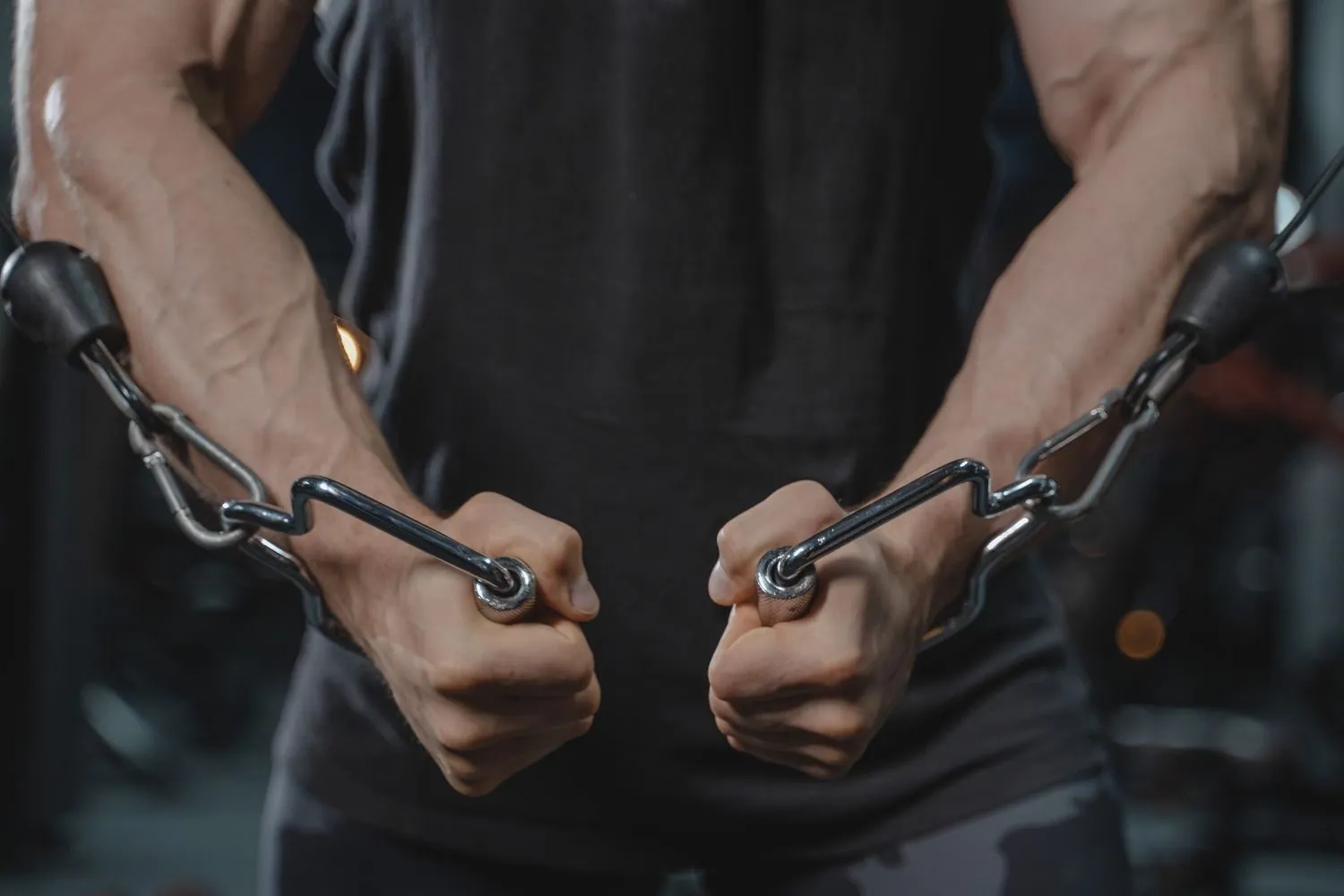
- Warm up (about 5 minutes). Two sets of 15 band pull-aparts, one light set of 15 external rotations, then one or two press sets at roughly half your working weight.
- Heavy press first. Do 3-4 sets of 6-10 while you are fresh. Rest 2-3 minutes. Stop each set with about two clean reps left in the tank.
- Side delts next. Pick one dumbbell move and one cable move. Keep the weight light enough to pause for a beat at shoulder height.
- Rear delts. One machine or cable move plus one free-weight or band move. Think about pulling your elbows back, not squeezing the weight up.
- Finish with traps or cuff. Shrugs or external rotations when the joint is warm but not wrecked by heavy pressing.
- Write it down. Log weight, sets and reps. The next section only works if you can see last week’s numbers.
If you are building a full week around this, the gym workout chart shows where a shoulder day fits next to chest, back and legs.
How do you add weight without stalling?
Use double progression: choose a rep range such as 12-15, stay at one weight until you hit the top of the range on every set with clean form, then add the smallest jump available and drop back to the bottom of the range. Most lifters can repeat this cycle every 2-4 weeks.
The table below is an illustration, not a prediction. Your loads will differ, but the pattern holds: reps climb first, then weight goes up, then reps reset. Lateral raises move in tiny steps, so use 1 kg plates, a cable stack with small pins, or slower lowering if your gym only offers big dumbbell jumps.
| Week | Overhead press (4 sets, 6-8 reps) | Lateral raise (4 sets, 12-15 reps) | What to do |
|---|---|---|---|
| 1 | 30 kg: 6, 6, 6, 6 | 5 kg: 12, 12, 12, 12 | Leave two reps in the tank on every set. |
| 2 | 30 kg: 7, 7, 6, 6 | 5 kg: 13, 13, 12, 12 | Same weights, add reps only if form stays clean. |
| 3 | 30 kg: 8, 8, 8, 7 | 5 kg: 15, 14, 14, 13 | Push the last set closer to failure, never sloppy. |
| 4 | 32.5 kg: 6, 6, 6, 6 | 6 kg: 12, 12, 12, 12 | Add load, reset reps, repeat the climb. |
After 5-8 weeks of steady loading, take one easier week with about a third fewer sets. If your press or raises have gone backwards for two weeks in a row, that is usually a recovery, sleep or food issue before it is an exercise issue. A Fitstrot online nutritionist consultation can help you check whether your protein and calories support the training you are doing.
Myth: do heavy overhead presses alone build big shoulders?
No. Overhead presses mostly train the front delt and triceps, and the front delt already gets plenty of work from chest pressing. Width comes from the side delt, and a balanced look needs the rear delt, so heavy pressing on its own leaves two of the three heads undertrained.
Two related myths cause the same problem. The first is that heavier lateral raises build wider shoulders. In practice, heavy weight turns the raise into a swinging shrug. Drop the load and slow the lowering phase, and the side delt works harder. The second myth is that shoulders need training five days a week. They also work during bench press, push-ups, rows and pull-ups, so two to three focused sessions a week is plenty for most people.
Troubleshooting: when the chart is not working
- Pinching at the top of overhead presses. Try a seated dumbbell press with palms turned slightly inward, lower the weight, and stop just short of locking out harshly. If pain is sharp, lasts more than a week or two, wakes you at night, or comes with numbness or tingling in the arm, stop pressing and see a doctor or physiotherapist rather than pushing through.
- Side delts will not grow. Check your range and tempo first. Raise only to shoulder height, take 2-3 seconds to lower, and try 15-20 reps on cables before adding weight.
- Traps take over on raises. Think of pushing your hands out to the sides rather than lifting them up, and keep your shoulders away from your ears.
- You cannot feel your rear delts. Lower the weight, rest your chest on a pad, and pull with the elbows rather than the hands. Pause one second at the back of every rep.
Home, desk-job and women’s versions of the chart
You can run this chart at home with a pair of adjustable dumbbells and a resistance band. Swap barbell overhead press for single or double dumbbell press, use dumbbell lateral raises with a slow 3-second lowering phase, and replace face pulls with band pull-aparts. The shoulder workout at home post has a full no-gym version.
Women can follow the same chart with lighter starting loads, often 2-4 kg dumbbells for lateral raises, and the same 12-20 rep ranges. Desk workers whose shoulders sit rounded forward often benefit from a slight tilt toward the back: add one extra rear delt exercise and a few more band pull-aparts on non-gym days. A short online yoga class on a rest day is a gentle way to keep the area moving.
Full shoulder workout chart: FAQ
How many exercises should a full shoulder workout have?
Aim for 4-6 exercises per session: one heavy press, one or two side delt moves, one or two rear delt moves, and optionally a trap or rotator cuff finisher. Beginners can stay at four. More than seven in one session usually means the final sets are done with tired, sloppy form.
How many sets should you do for shoulders per week?
Roughly 8-12 direct sets a week suits beginners, 12-18 suits intermediate lifters, and 16-22 suits advanced lifters spread over two or three sessions. Bench press, push-ups and rows add indirect shoulder work too.
Can I use a shoulder workout with dumbbells only?
Yes. Dumbbells cover every head: seated or standing press for the front delt, lateral raises for the side delt, and bent-over reverse flys for the rear delt. Add a resistance band for pull-aparts and external rotations. Use slower lowering phases to make light dumbbells feel harder.
Should I train shoulders on chest day or on a separate day?
Either works. If you train shoulders after chest, keep the pressing short because your front delts are already tired, and spend more time on side and rear delts. A separate shoulder day lets you press heavier and is usually the better choice if shoulders are a priority.
How long should a shoulder workout take?
Plan on 45-55 minutes for a full session of five or six exercises, including a 5-minute warm-up. If you are short on time, cut the front raise and the shrugs first and keep one press, one side delt move and one rear delt move.
A chart organizes your training but cannot watch your press break down on rep six or notice a shoulder that is starting to complain. If you want a coach to adjust sets, loads and form week to week, Fitstrot’s 1-on-1 personal training is built for exactly that.


