

A rear delt workout trains the back head of your shoulder, the small muscle that pulls your arm backwards and out to the side. It is also the head most lifters neglect, because bench presses, push-ups and overhead presses all favour the front. If your shoulders look flat from the side, or your upper arms roll forward when you stand relaxed, this page gives you the exercises, sets, reps and form cues to fix it, whether you train at a gym or at home.
What do rear delts do, and why do they lag behind?
The rear deltoid is the back third of the shoulder. It pulls the arm backwards, rotates it outwards and helps keep the shoulder blade stable. It lags because pressing-heavy routines overwork the front delt, and because bigger back muscles take over rowing movements, leaving this small muscle with very little direct work.
The deltoid has three heads, front, side and rear, which we compare in our deltoid workouts guide. Most training weeks in an Indian gym look the same: chest on Monday, shoulders on Wednesday, a few pushdowns on Friday. All of that is pushing. The rear head only fires hard when you pull your elbows back or move your arm out and behind your body, so it quietly falls behind.
Strong rear delts do two jobs. They add depth to the shoulder when someone looks at you from the side, and they help hold the shoulder joint centred while you press. When they are weak compared with the front, the shoulder can drift forward, and many people feel that as a pinch at the top of a bench press or overhead press. Training them directly is cheap insurance, not a vanity project.
Which rear delt exercises work best?
The best rear delt exercises are face pulls, reverse pec deck flyes, chest-supported reverse flyes, cable reverse flyes and bent-over dumbbell reverse flyes. All of them move your arm backwards or outwards against resistance. Pick two or three per session, use 12 to 20 reps, and keep the weight light enough that the shoulder blades barely move.
The table below is the version most people screenshot. Sets and reps are starting points, not rules, and rest is in seconds.
| Exercise | Equipment | Sets x reps | Rest | Form cue |
|---|---|---|---|---|
| Face pull | Cable, rope | 3-4 x 15-20 | 45-60 | Pull to forehead, elbows high, hands finish wider than elbows |
| Reverse pec deck fly | Pec deck machine | 3 x 12-15 | 60 | Lead with the elbows, do not squeeze the shoulder blades hard |
| Chest-supported reverse fly | Incline bench, dumbbells | 3 x 12-15 | 60 | Chest glued to the pad, soft elbows, pause for one second at the top |
| Single-arm cable reverse fly | Cable, handle | 3 x 15 each side | 45 | Cross the cable low to high, stop when your arm is in line with your back |
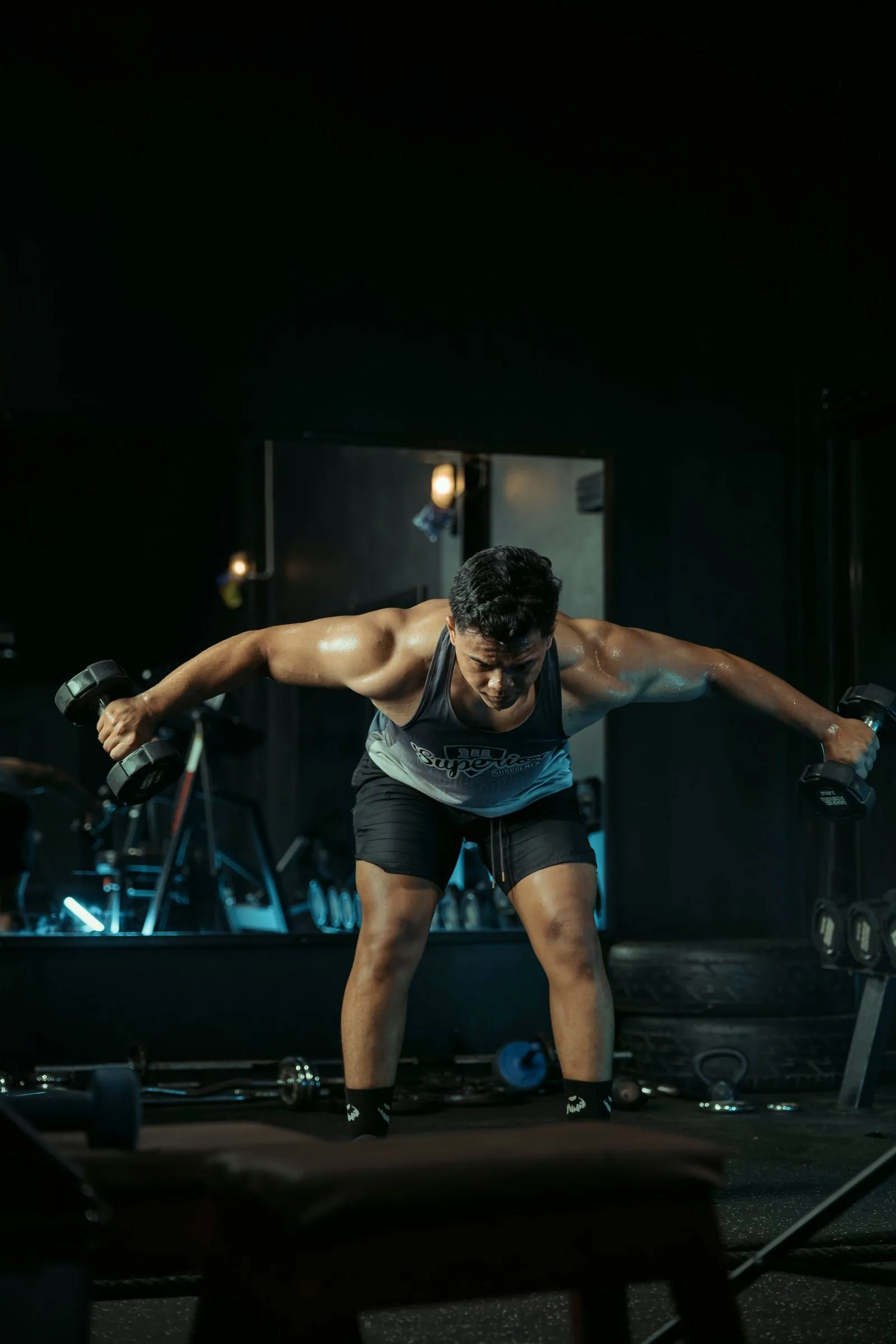
| Bent-over dumbbell reverse fly | Dumbbells | 3 x 15-20 | 45-60 | Hinge at the hips, flat back, raise the elbows not the hands |
| Wide-grip row, elbows out | Barbell or cable | 3 x 10-12 | 60-90 | Pull to the upper chest, keep the elbows at about 90 degrees from the torso |
If you only pick one, make it the face pull. It trains the rear delt together with the small rotator cuff muscles and the middle back, which overlaps with what we cover in the traps muscle workout guide.
How do you do a bent-over reverse fly properly?
Hold a pair of light dumbbells, hinge forward at the hips until your torso is roughly parallel to the floor, and raise both arms out to the sides with soft elbows until they reach shoulder height. Lower for about three seconds. Start with 2 to 5 kg in each hand, because the weight is meant to feel too light.
- Stand with feet hip-width apart, knees slightly bent, and push your hips back until your back is flat and your chest is pointing at the floor.
- Let the dumbbells hang under your shoulders with palms facing each other. Keep your neck long and your eyes on the floor a little ahead of you.
- Raise your arms out and slightly back, leading with the elbows. Imagine spreading a wide pair of wings rather than lifting weights.
- Stop when your upper arms are level with your back. Going higher usually means the trapezius is taking over.
- Lower slowly for about three seconds. The lowering phase is where most of the muscle-building tension is.
If your lower back tires before your shoulders do, switch to the chest-supported version on an incline bench set at roughly 30 to 45 degrees. That one change removes the balance problem entirely.
Myths about rear delt training worth dropping
Myth: rows and pulldowns already cover the rear delts. They hit them a little, but the lats do most of the work in those movements, so direct isolation work still pays off.
Myth: heavier dumbbells mean bigger rear delts. A 12 kg reverse fly usually turns into a shrug and a swing. A 4 kg fly done slowly with a pause will leave the muscle burning far sooner.
Myth: you need a gym. Resistance bands, a pair of light dumbbells or even a filled water bottle in each hand are enough, as long as you stay near the point of fatigue.
Myth: rear delts only matter for bodybuilders. Anyone who sits at a desk for eight hours or spends the day on a phone benefits from a stronger upper back, and it takes only about 10 minutes of work.
How often should you train rear delts each week?
Train rear delts two to three times a week, with roughly 8 to 16 hard sets in total, spread across sessions. They are small and recover quickly from light work, so frequent short doses beat one long marathon. Beginners can start with 6 to 8 sets a week and build up over a few weeks.
Here is a simple split for someone training four days a week at a gym. It slots into any push-pull structure, and you can swap it into your own workout plan without adding extra days.
| Day | Main focus | Rear delt work | Time added |
|---|---|---|---|
| Monday | Chest and triceps | Face pulls, 3 x 15-20 | About 8 min |
| Tuesday | Back and biceps | Chest-supported reverse fly, 3 x 12-15, then wide-grip row 3 x 10-12 | About 12 min |
| Thursday | Legs | None, rest the shoulders | 0 min |
| Friday | Shoulders and arms | Reverse pec deck fly 3 x 12-15, single-arm cable fly 3 x 15 each side | About 12 min |
Do the rear delt exercises early in the session once a week, when you are fresh, and at the end on the other days. Our shoulder workout routine shows where this fits next to your pressing and lateral raise volume.
Add weight only when you can finish every set with the same tidy form. A good rule is that when you hit the top of the rep range on all sets, you move up by the smallest jump available, usually 1 to 2 kg, and drop back to the bottom of the rep range.
Rear delt workout at home with dumbbells or bands
A home rear delt workout needs only light dumbbells or a loop resistance band. Do 3 sets of 15 to 20 reps of three movements, such as band pull-aparts, bent-over reverse flyes and prone Y raises, two or three times a week. It takes about 15 minutes and needs very little equipment.
| Gym exercise | Home swap | Sets x reps | Tip |
|---|---|---|---|
| Face pull | Band pull-apart at chest height | 3 x 20 | Hold a band with hands shoulder-width apart and pull it apart until it touches the chest |
| Reverse pec deck fly | Dumbbell reverse fly lying face down on a bed or bench | 3 x 15 | Keep your forehead off the surface and the neck relaxed |
| Cable reverse fly | Single-arm band reverse fly anchored to a door | 3 x 15 each | Anchor at hip height and sweep the band across the body |
| Wide-grip row | Bent-over row with a backpack or two dumbbells | 3 x 10-12 | Flare the elbows to about 45 to 90 degrees |
For a longer plan built around what you already own, see our home workout guide.
Troubleshooting: why do you feel it in your traps or lower back?
If you feel reverse flyes mainly in your traps, the weight is too heavy, your elbows are rising too high, or your shoulders are shrugging. Drop the weight by about 30 to 40 percent, keep your shoulders away from your ears, stop at shoulder height and slow the lowering phase.
- Feeling it in the lower back: switch to a chest-supported version, or do the exercise seated at the edge of a bench with your chest on your thighs.
- Feeling it in the front of the shoulder: your arms are probably going too far forward at the bottom or your palms face up. Keep the palms facing in or slightly down.
- Feeling nothing at all: lighter weight, a one-second pause at the top, and picture pushing your elbows apart. Many people only feel it in the second or third week.
- Neck tension: look at a spot on the floor, keep the chin slightly tucked, and avoid jutting your head forward.
- Weights swinging: reduce the load and use a three-second lowering count. Momentum is a sign that the muscle has left the work.
Adjusting a rear delt workout for desk workers, beginners and sore shoulders
Desk workers can add a short daily dose: 2 sets of 20 band pull-aparts in the morning and after lunch. It takes under 3 minutes each time, and pairing it with chest and upper back stretches helps counter hours of rounded sitting. Gentle yoga for the upper back also helps, and our online yoga classes include sessions that open the chest and teach better shoulder positioning.
Beginners should start with only two exercises, face pulls on a light stack and a chest-supported reverse fly, for 2 sets each and twice a week. Add a third set after two to three weeks, once the movements feel easy to control.
Lifters with a history of shoulder pain need extra care. A mild, pumpy burn in the back of the shoulder is normal. Sharp or pinching pain, pain that travels down the arm, numbness or pain at night is not. Stop that exercise and have a doctor or physiotherapist assess the shoulder before you continue. These exercises are not a treatment for an injury, and no routine can promise a specific change in size or posture, because results depend on your training history, sleep, food and consistency.
Want a rear delt workout built around your shoulders?
Book a session with a Fitstrot coach through 1-on-1 personal training, and we will check your posture on video, pick the rear delt exercises that suit your equipment and set your sets, reps and progression for the next four weeks.
Frequently asked questions
What is the best rear delt exercise?
For most people it is the face pull, because it trains the rear delt, the rotator cuff and the middle back in one movement, and the cable keeps tension throughout the range. If you do not have a cable machine, the reverse pec deck fly or a chest-supported dumbbell reverse fly are close second choices.
How many sets of rear delts per week do I need?
Roughly 8 to 16 hard sets per week works for most lifters, split over two or three sessions. Beginners can start with 6 to 8 sets a week. If your shoulders feel sore or your form slips, cut the volume back before you add more.
Can I train rear delts at home without a gym?
Yes. Light dumbbells of 2 to 8 kg, a loop resistance band and a bench or bed are enough for band pull-aparts, bent-over reverse flyes and prone raises. Do 3 sets of 15 to 20 reps, two to three times a week, and add reps before adding weight.
Why do I feel reverse flyes in my traps instead of my rear delts?
This usually means the weight is too heavy or your shoulders are shrugging toward your ears. Reduce the load by 30 to 40 percent, lift the elbows only to shoulder height, and slow the lowering phase to about three seconds. A chest-supported setup also makes it easier to isolate the rear delt.
Should I do rear delts on shoulder day or back day?
Either works. Put them at the start of a back day if you want them to be fresh, or at the end of a shoulder or push day if your front delts need the energy for pressing. What matters more is that you train them at least twice a week.


