
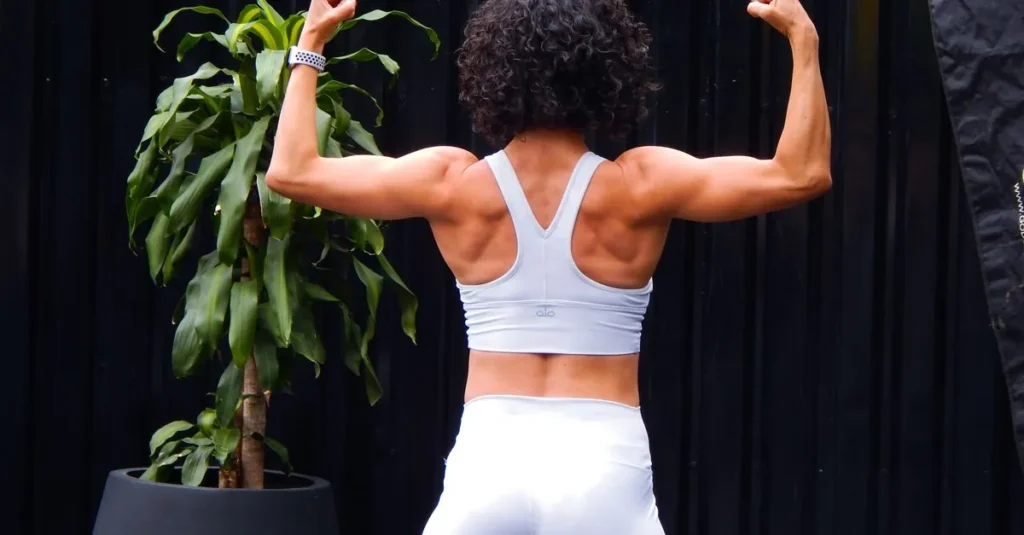
The fat to fit girl in a viral transformation reel did not get there in 30 days. For most women, a believable change takes roughly 4 to 9 months of steady eating, strength training and sleep, and the dramatic “after” photos online usually hide the real timeline, the lighting, or both. This guide lays out the phases, habits and honest ranges so you can judge your own pace fairly. For the wider picture across ages and genders, see our before and after weight loss guide.
What does a fat to fit girl journey actually look like?
A realistic fat to fit transformation for a woman takes about 4 to 9 months. You lose body fat at roughly 0.25 to 0.75 kg a week, eat enough protein to protect muscle, and lift weights 2 to 4 times weekly. “Fit” means stronger, more energetic and better conditioned, not just a smaller number on the scale.
Notice the two halves of the phrase. “Fat loss” is the first half and it is mostly about food. “Fit” is the second half and it comes from training, recovery and time. Women who only diet often end up lighter but soft and tired. You need both food and training, for months, not weeks.
The phase-by-phase timeline (with honest ranges)
Progress is not a straight line. It arrives in phases, and each phase has a different job. The table below gives typical ranges, not promises. Bodies differ with age, sleep, stress, hormones and consistency.
| Phase | Timeframe | What usually happens | Your main job |
|---|---|---|---|
| 1. Settling in | Weeks 1-4 | Faster early drop of about 1-3 kg, partly water and less bloating. Energy may dip for a few days. | Build routine: 3 workouts, 7,000+ steps, protein at every meal. |
| 2. Steady fat loss | Months 2-3 | Slower, genuine loss of about 0.25-0.75 kg per week. Clothes may fit better before the scale moves much. | Stay consistent when it feels boring. Add weight or reps gradually. |
| 3. Shape change | Months 4-6 | Waist, arms and legs look firmer as muscle holds and fat comes down. Strength numbers clearly improve. | Progress your training, review portions, protect sleep. |
| 4. Maintenance practice | Months 6-9 | Loss slows further. Many women pause the deficit for 2-4 weeks to eat at maintenance. | Learn to hold your weight. This is where results become permanent. |
Most people quit in phase 2, when the early drop is over and the mirror has not caught up. Knowing this beforehand makes a slow week feel normal. Our fat to fit guide covers the broader journey.
Myth check: “I can go from fat to fit in 30 days”
You cannot build a fit body in a month, and chasing that promise is how women end up with crash diets, rebound weight and a damaged relationship with food. A safe 30-day goal is a habit goal: three workouts a week, a protein target and a regular sleep time. Visible change comes later.
Three myths we hear most often:
- “Cut to 1,000 kcal and I will be slim by the wedding.” Very low intake usually means muscle loss, hair shedding, missed periods, dizziness and a rebound. It also makes you less “fit”, not more.
- “Weights will make me bulky.” Women do not gain large muscle by accident. Beginners add small amounts over months, which reads as a firmer shape while fat comes down.
- “Cardio alone will tone me.” Cardio helps your heart, stamina and calorie burn. But without strength work you lose muscle along with fat, which is the “skinny-fat” outcome many women fear.
How much should you eat to go from fat to fit?
Aim for a moderate deficit of about 300 to 500 kcal below your maintenance intake, with protein around 1.2 to 1.6 grams per kg of body weight. For a 65 kg woman that is roughly 78 to 104 grams of protein daily. Going lower than your doctor or dietitian advises tends to backfire.
Maintenance calories vary a lot. Many active adult women sit around 1,800 to 2,200 kcal, but your figure depends on height, weight, age and activity. A deficit of 300 to 500 kcal usually lands most women between about 1,400 and 1,900 kcal. If you feel weak, sleep badly or your cycle changes, you are probably eating too little.
A simple Indian plate for a fat-loss day looks like this: half the plate vegetables (sabzi, salad, sambar veg), a quarter protein (dal, paneer, eggs, curd, chicken, tofu or soya), and a quarter carbohydrate (1 to 2 rotis or about 1 katori cooked rice). For meal-by-meal ideas, our high protein diet for weight loss guide goes deeper, and nutrition and fat loss explains the principles behind it.
Protein cheat sheet for the Indian kitchen
Most women who stall are eating far less protein than they think. A typical dal-chawal-sabzi lunch with curd can land at only 15 to 20 grams. The table gives approximate values so you can plan around real portions. Values vary by brand and cooking method.
| Food | Portion | Protein (about) | Easy way to use it |
|---|---|---|---|
| Egg | 1 large | 6 g | Boiled, bhurji or omelette at breakfast |
| Paneer | 100 g | 18 g | Tikka, bhurji or in sabzi instead of extra oil |
| Cooked dal | 1 katori (150 g) | 7-9 g | Pair with curd or sprouts for a fuller meal |
| Curd (dahi) | 1 katori (150 g) | 5-6 g | With lunch, or as a snack with roasted jeera |
| Soya chunks | 25 g dry | 12-13 g | Soak, squeeze, add to pulao or curry |
| Roasted chana | 30 g | 6 g | Office-drawer snack in place of biscuits |
| Chicken breast, cooked | 100 g | 25-30 g | Grilled or in a light curry |
| Milk | 1 glass (250 ml) | 8 g | Evening chai or a post-workout glass |
If you are vegetarian, you can still reach 70 to 90 grams a day by combining paneer, curd, dal, soya, milk and sprouts across 3 meals and 1 to 2 snacks. It simply takes planning. A nutritionist consultation can turn this table into a personal weekly menu that matches your budget and your family’s cooking.
How do you train to look fit, not just smaller?
Train with weights 3 days a week, using full-body sessions of 40 to 50 minutes. Do 2 to 3 sets of 8 to 12 reps for squats, hip hinges, presses, rows and planks, resting 60 to 90 seconds. Add 7,000 to 10,000 steps daily and one or two light cardio or dance sessions weekly.
Start with bodyweight or light dumbbells. When you finish all sets with 2 reps left in reserve for two sessions in a row, add a little weight or a rep. That small progression builds a “fit” shape. Our gym workout for weight loss guide has exercise detail, and our 1-on-1 personal training sessions help if you want form checks in real time.
| Day | Session | Time | What to do |
|---|---|---|---|
| Monday | Full-body strength A | 45 min | Squats, push-ups (incline if needed), dumbbell rows, glute bridges, plank |
| Tuesday | Walk or Zumba | 30-40 min | Brisk walk, or an online Zumba class for fun cardio |
| Wednesday | Full-body strength B | 45 min | Romanian deadlifts, shoulder press, lat pulldown or band pull, lunges, dead bug |
| Thursday | Yoga and mobility | 30-45 min | Hips, back and shoulders, easy breathing practice |
| Friday | Full-body strength C | 45 min | Goblet squats, bench or floor press, seated row, step-ups, side plank |
| Saturday | Active fun | 45-60 min | Cycling, swimming, dance, a long walk with family |
| Sunday | Rest | – | Sleep in, prepare protein for the week |
On non-strength days, calm sessions such as online yoga classes support recovery and sleep. Targeted work for stubborn areas is covered in our yoga for belly fat and Zumba for belly fat posts, though no exercise removes fat from one spot alone.
Why does your progress stall (and what to check first)?
Progress usually stalls because of under-eaten protein, too little sleep, unchanged training, or tracking errors, not because your metabolism is “broken”. Check four things for two weeks: average protein, weekly steps, hours slept, and whether your weights have increased. Fix the weakest one before cutting calories further.
Quick troubleshooting:
- Scale stuck for 2 to 3 weeks, but waist is smaller: normal. Measure waist, hips and thighs fortnightly.
- Scale jumps 1 to 2 kg overnight: water, salt, a late meal or your menstrual cycle. Judge trends over 2 to 4 weeks, not single mornings.
- Always tired and weak in workouts: check food quantity and sleep first. If it continues, ask a doctor about a blood test, because low iron is common among Indian women, particularly vegetarians and those with heavy periods. Do not start iron or other supplements on your own.
- Cravings and binge episodes: usually a sign the deficit is too aggressive or meals are too small. Add protein and fibre, and eat on a regular schedule.
- Same workout for 8 weeks: your body has adapted. Add one rep per set, a heavier dumbbell, or a slower lowering phase.
Fat to fit for college girls, working women and joint-family homes
Your plan has to fit your life or it will not last. A hostel student, an office professional and a woman living with in-laws face very different constraints.
- College or hostel: mess food is limited. Build protein with eggs, curd, milk, roasted chana and peanuts, and use the mess for rotis and sabzi. Keep workouts at 30 to 40 minutes, three times a week.
- Working women: sit less. Take a 5-minute walk every hour, carry a protein snack, and book workouts like meetings. Even 3 short sessions of 30 minutes count.
- Joint-family kitchens: do not eat separate “diet food”. Eat the family meal with smaller rice, one or two rotis, extra dal and sabzi, and a measured spoon of ghee. Talk to whoever cooks, share your goal as a health plan, and ask for small swaps.
Compare this month to your own first week, not to a stranger’s edited month twelve.
When should you see a doctor or dietitian first?
See a doctor or registered dietitian before starting if you have PCOS, thyroid issues, diabetes, anaemia, a history of eating disorders, are pregnant or breastfeeding, take regular medication, or have irregular periods. They can tailor targets safely. Never change medication to lose weight without your doctor’s advice.
Stop and seek medical advice if you notice dizziness, fainting, palpitations, chest pain, hair loss that suddenly worsens, missed periods for more than 2 to 3 months, or if food and exercise start to feel like an obsession. These are signs your plan is too aggressive. Fat loss that costs you your health is not fitness. This article is general education and cannot diagnose or treat any condition.
Frequently asked questions
How long does a fat to fit transformation take for a girl?
Most women need roughly 4 to 9 months to see a clear change in both fat and muscle tone, depending on starting weight, consistency, sleep and health. The first month shows the fastest scale change, but the visible shape change usually arrives between months 4 and 6. Results are never guaranteed.
Should a girl lift weights or just do cardio to get fit?
Do both, but prioritise strength training. Lifting 3 days a week helps protect muscle while you lose fat, which gives a firmer, more defined look. Cardio, walking, Zumba or yoga add stamina, heart health and extra calorie burn. Beginners can start with bodyweight and light dumbbells.
How much weight can a girl safely lose per week?
For most adult women, about 0.25 to 0.75 kg per week is a safe, sustainable range, or roughly 0.5 to 1 percent of body weight. Faster loss in the first 2 to 4 weeks is common because of water. If you have a medical condition, ask your doctor for a personal target.
Why has my progress stopped after the first month?
The quick early drop is mostly water and bloating, so it slows after weeks 3 to 4. Real fat loss continues more gradually. Check your protein, sleep, steps and strength progression before cutting calories. If you feel unusually tired or your periods change, speak to a doctor.
Do I need supplements to go from fat to fit?
No, most women do not need supplements to start. Focus first on enough protein from food, vegetables, sleep and regular training. If you suspect a deficiency such as low iron or vitamin D, get a blood test and follow your doctor’s advice rather than self-prescribing.
If you want a plan built around your body, food habits and schedule, our coaches can set your calorie target, protein goals and weekly training split with you. Book an online weight loss trainer consultation and start with a realistic 4-week habit plan.


