
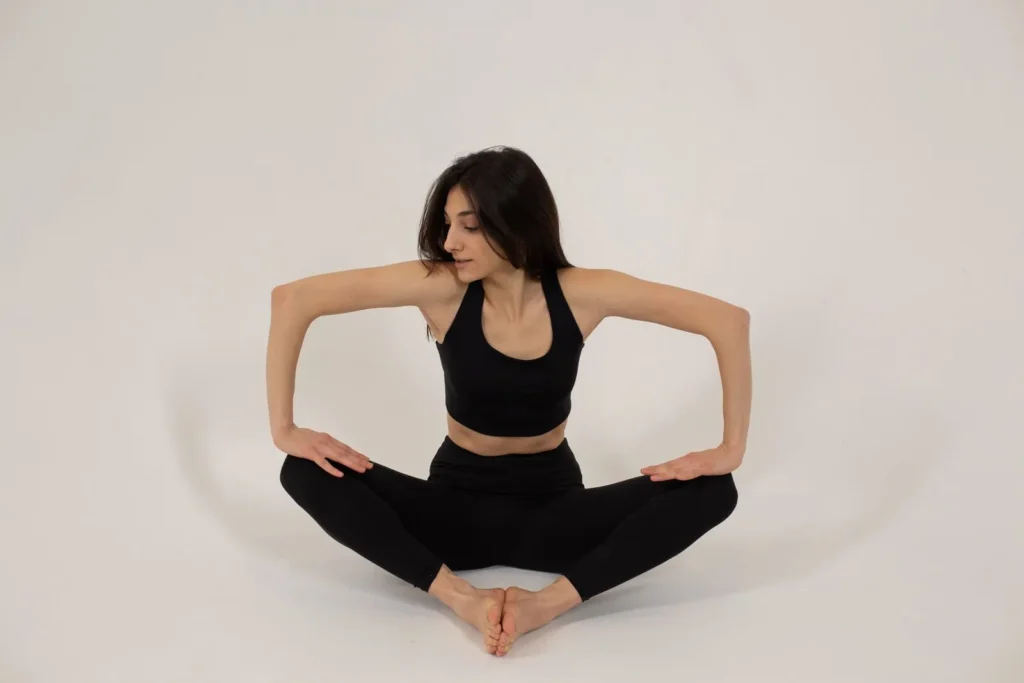
The best easy yoga poses are gentle, low-impact shapes that need no flexibility, strength or experience, and most can be held for 5 to 8 slow breaths. If you are a first-timer, you can start with just a handful: Mountain, Cat-Cow, Child’s Pose, an easy seated pose and Bridge. This guide gives clear steps, simple modifications and safety rules so your first week feels calm, not painful.
What makes a yoga pose “easy”?
A yoga pose is easy when it needs no deep flexibility, little strength and no balance skill, and you can modify it with a cushion, wall or chair. Easy poses are usually held for 15 to 60 seconds, or 5 to 8 breaths, and feel like a stretch or a rest, never like pain.
Easy does not mean pointless. These shapes teach the basics everything else is built on: how to stand tall, how to move the spine, how to breathe steadily, and how to tell a useful stretch from a warning sign. Slower styles such as hatha yoga and yin yoga are built largely from gentle poses like these, so they are a complete practice in their own right, not only a stepping stone.
Easy yoga poses for beginners: a cheat sheet
This table is a quick reference you can screenshot. Hold times are guides, so count breaths instead of watching a clock. Each pose has an easier version for stiff bodies.
| Pose | How to do it | Hold | Easier version | Watch out for |
|---|---|---|---|---|
| Mountain (Tadasana) | Stand with feet hip-width apart, weight even, arms by your sides, crown of the head lifting | 5 to 8 breaths | Stand with your back against a wall | Locking the knees or arching the lower back |
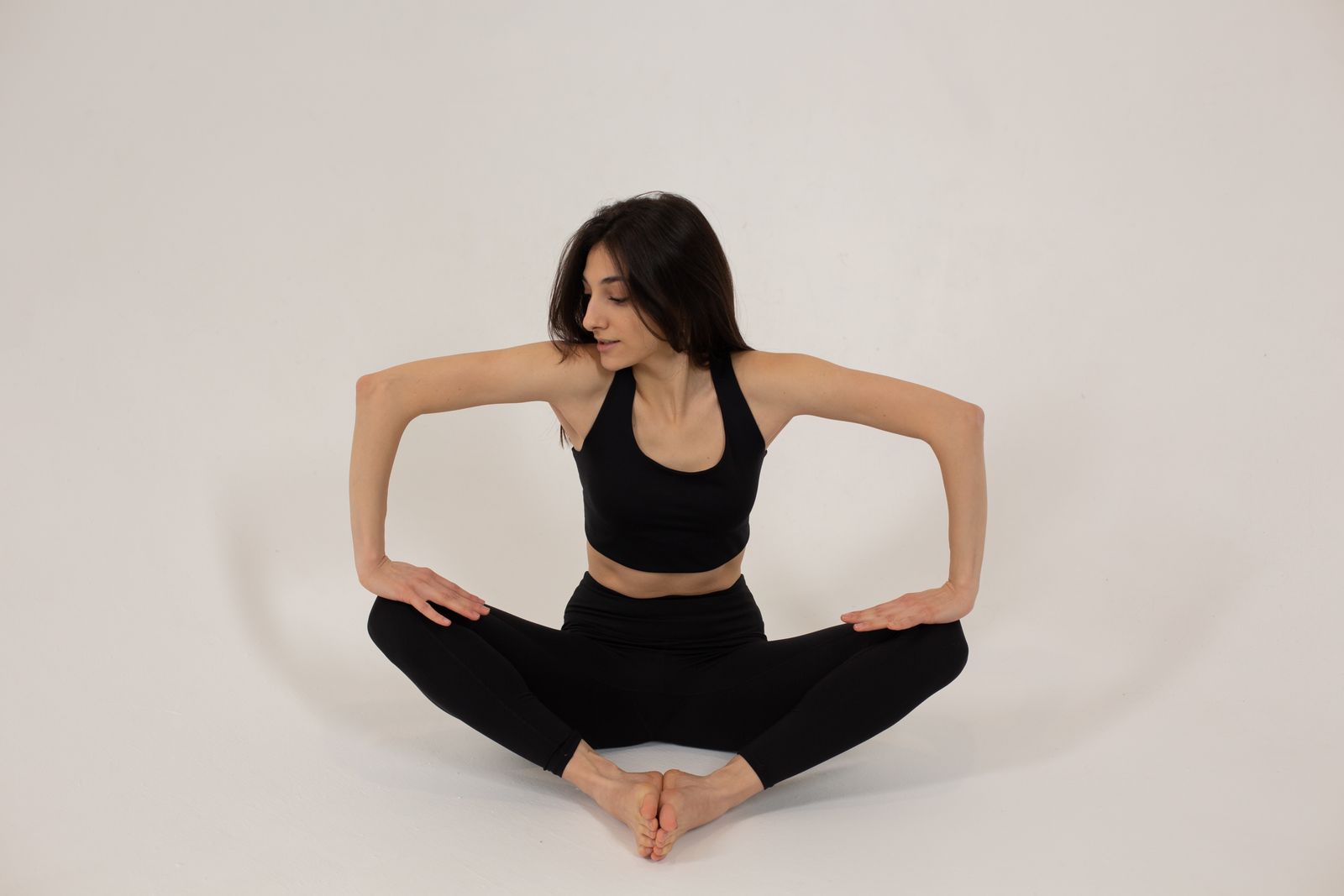
| Easy seat (Sukhasana) | Sit cross-legged, shins loosely crossed, spine tall, hands on knees | 1 to 3 minutes | Sit on a folded blanket or cushion | Knees sitting far above the hips |
| Cat-Cow | On hands and knees, inhale to dip the belly and lift the chest, exhale to round the spine | 8 to 10 breaths | Fold a towel under the knees | Rushing, or straining the neck |
| Child’s Pose (Balasana) | Kneel, sit the hips back toward the heels, fold forward, rest the forehead down | 5 to 10 breaths | Place a pillow between thighs and calves | Knee pain; skip it or use support |
| Standing forward bend | From standing, hinge at the hips and let the head and arms hang, knees soft | 5 breaths | Bend the knees or rest hands on a chair | Rounding hard from the lower back |
| Downward-facing dog | From hands and knees, lift the hips up and back into an upside-down V | 3 to 5 breaths | Keep knees bent, or use hands on a wall | Wrist pain, shoulders hunching |
| Bridge (Setu Bandhasana) | Lie on your back, knees bent, feet flat, lift the hips slowly | 3 to 5 breaths | Lift only a few centimetres | Pressing on the neck, flaring knees |
| Corpse (Shavasana) | Lie flat, arms and legs relaxed, eyes closed, breathe naturally | 3 to 5 minutes | Pillow under knees or head | Falling asleep is fine, rushing is not |
How to do four easy poses step by step
These four cover standing, seated, floor and spinal movement, which is a good mix for a first session.
Mountain pose
- Stand with your feet about hip-width apart and your weight even across both feet.
- Soften your knees slightly and let your arms hang with palms facing forward.
- Lengthen the spine as if a string lifts the top of your head, and relax your shoulders away from your ears.
- Breathe slowly for 5 to 8 breaths.
Cat-Cow
- Come onto hands and knees, wrists under shoulders and knees under hips.
- Inhale: let the belly drop, lift the chest and tailbone gently.
- Exhale: round the spine toward the ceiling and tuck the chin.
- Move with your breath for 8 to 10 rounds. If your wrists complain, rest on your forearms or make fists.
Child’s pose
- Kneel with your big toes touching and knees about hip-width or wider.
- Sit your hips back toward your heels and fold forward.
- Rest your forehead on the mat or on stacked fists, with arms forward or beside your body.
- Breathe into your back for 5 to 10 breaths. Use a cushion under the hips if they do not reach your heels.
Bridge pose
- Lie on your back with knees bent, feet flat, hip-width apart and close to your hips.
- Press into your feet and lift your hips a little, keeping your neck relaxed.
- Keep your knees pointing forward, not falling out.
- Hold for 3 to 5 breaths, then lower slowly, one vertebra at a time.
Safety rules before you start
Easy poses are low-risk, but your body is individual. Follow these rules and adjust to your situation:
| If you have… | Try this | Check first with… |
|---|---|---|
| Stiff knees or knee pain | Sit on a cushion, avoid deep kneeling, use padding | A doctor if pain is sharp or ongoing |
| Wrist discomfort | Use fists, forearms or a wall instead of hands on the floor | A doctor if it persists |
| Lower back pain | Choose Cat-Cow, Child’s Pose and Bridge with small ranges; avoid forcing forward bends | A doctor or physiotherapist first. See our guide to yoga for back pain |
| High blood pressure, eye pressure or dizziness | Avoid long head-down poses; keep movements slow | Your doctor before starting |
| Pregnancy or a recent surgery | Do not practise on your own from a generic list | Your doctor and a qualified teacher |
| Neck problems | Keep the head neutral in Bridge and similar poses | A doctor or physiotherapist |
Three universal rules apply to everyone. Never push into sharp or pinching pain. Breathe through the nose, smoothly and without holding. Come out of any pose slowly. Mild stretching sensation or muscle fatigue is normal. Pain, numbness, tingling or dizziness means stop and rest.
Myths about easy yoga poses
Myth: “I am not flexible enough”
Flexibility is a result, not a requirement. Every pose here can be adapted with a cushion, blanket, wall or chair.
Myth: “If it does not hurt, it is not working”
Pain is a signal, not a sign of progress. The right edge is a mild stretch you can breathe through.
Myth: “Easy poses do nothing”
Easy poses build body awareness, mobility and calm. They do burn fewer calories than cardio, so if weight loss is your aim, treat yoga as one part of a wider routine.
Myth: “Props are cheating”
Props are tools. A modified pose is not a lesser pose, it is a pose that fits your body today.
Troubleshooting common problems
- My knees hurt in the seated pose. Raise your hips on a folded blanket or sit on a chair. Place cushions under the knees if they float.
- My hands are numb in Cat-Cow. Spread your fingers, press through the whole palm, or switch to forearms.
- I cannot touch my toes. You do not need to. Bend the knees, rest your hands on your shins or a chair, and focus on a long spine.
- I feel wobbly in standing poses. Stand near a wall, widen your feet and keep your gaze on one fixed point.
- I forget to breathe. Count breaths in fives. If you cannot breathe smoothly, ease off the pose.
- I feel awkward and slow. That is normal in the first week. Keep your sessions short and regular.
A simple 15-minute routine for your first week
These easy yoga poses at home need only a mat, a carpet or a folded blanket. Aim for three or four days a week, with rest days in between, and treat it as a gentle practice, not a workout.
| Order | Pose | Time | Focus |
|---|---|---|---|
| 1 | Easy seat with slow breathing | 2 minutes | Settle in, breathe through the nose |
| 2 | Cat-Cow | 2 minutes | Move with the breath |
| 3 | Child’s Pose | 1 to 2 minutes | Relax the back |
| 4 | Mountain pose | 1 minute | Posture and weight even |
| 5 | Standing forward bend | 1 minute | Soft knees, long spine |
| 6 | Downward-facing dog (optional) | 1 minute total | Bend knees, rest when needed |
| 7 | Bridge | 2 minutes in short rounds | Gentle lift, relaxed neck |
| 8 | Corpse pose | 3 to 5 minutes | Full rest and slow breathing |
Keep the pace unhurried. Move into each pose on an exhale, stay for the breaths listed, and come out slowly. If a day feels heavy, do only the first three poses and the final rest, which is still a complete session. Finishing on a calm note matters more than fitting in every pose, and regular short sessions teach your body more than one long, tiring effort.
After two or three weeks, when this feels steady, you can add variety from our broader guides to yoga poses, yoga asanas and yoga poses names, which list Sanskrit and English names side by side.
Easy yoga poses for different people
Desk workers
Sitting for long hours tightens hips and shoulders. Cat-Cow, Mountain and a standing forward bend, done for two minutes between tasks, can help you feel looser. Even a few slow breaths at your desk count.
Older adults
Keep a sturdy chair or wall close, favour seated and supported versions, and avoid getting up too fast from lying or head-down poses. Check with your doctor before starting if you have any health conditions.
Children
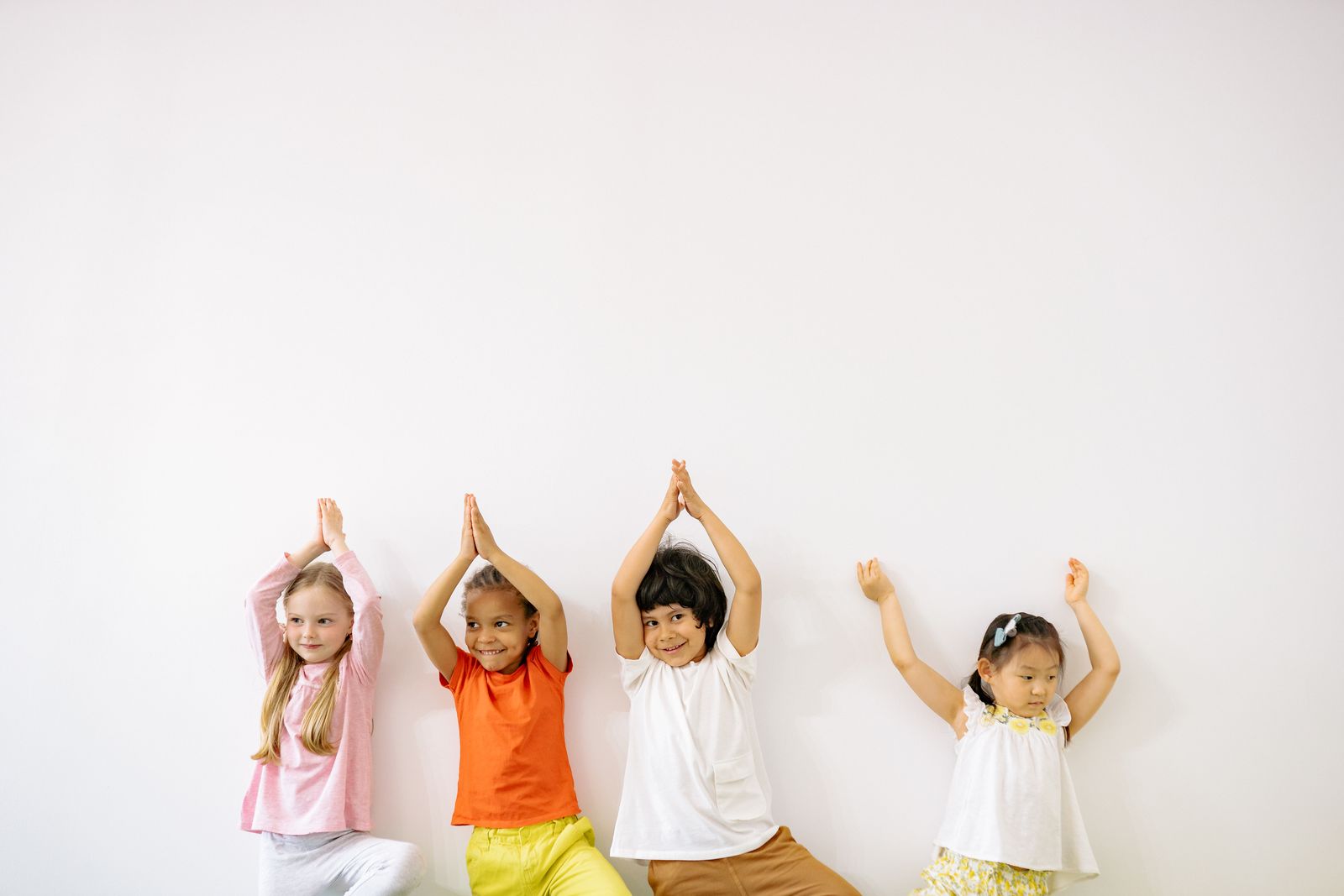
Kids enjoy easy poses presented as animals and stories, with short holds of a few breaths. Cat-Cow can be an angry cat and a happy cow, and Child’s Pose a sleeping turtle. Our yoga for kids guide has more playful ideas.
People who want more challenge
Once you can hold every pose above for 5 to 8 calm breaths, you can move toward our guide to advanced yoga poses, or choose a faster style such as vinyasa yoga. Our overview of the types of yoga can help you pick a direction.
Learning with a teacher
A written guide cannot see your knees collapse inward or your shoulders creep up. If you want that feedback, try a live session or one of our online yoga classes where a teacher can adapt poses to your body. Book a trial session of Fitstrot’s online yoga classes this week and start with a beginner level.
Frequently asked questions
What is the easiest yoga pose to start with?
The easy seat and Mountain pose are the simplest places to start, because they need no flexibility and you can use a cushion or a wall for support. Child’s Pose is also gentle and restful for most beginners.
How many easy yoga poses should a beginner learn first?
Five to eight is enough at the start. Learning a small set well, with steady breathing and good alignment, builds a better foundation than memorising a long list.
Can easy yoga poses be done every day?
Yes, for most healthy adults gentle poses can be practised daily for 10 to 15 minutes. Listen to your body, rest if you feel sore, and speak to a doctor if you have any health conditions or injuries.
How long should I hold easy yoga poses?
Hold most poses for 5 to 8 slow breaths, roughly 15 to 60 seconds. Restful poses such as Child’s Pose or the seated pose can be held for 1 to 3 minutes if you feel comfortable.
Do I need to be flexible to do easy yoga poses?
No. Easy yoga poses are designed for people who are stiff or new. Flexibility develops gradually with regular practice, and props let you modify any pose to suit your body.


