
Your nutritional needs are not fixed. A baby needs roughly 80 to 100 kcal per kg of body weight each day, a sedentary adult only about 25 to 30 kcal per kg, and a teenager needs more calcium than at any other age. This guide maps nutritional needs from infancy to 60-plus using Indian foods, and points you to the right Fitstrot guide for your stage. Every figure here is rounded and approximate, because individual needs vary with size, activity and health.
Why do nutritional needs change so much across life?
Nutritional needs change because the body’s job changes. Infants and children build tissue, teenagers lay down bone, adults maintain it, and older adults work to hold on to muscle and bone. Energy per kg falls from about 80 to 100 kcal in infancy to about 25 to 30 kcal in sedentary adulthood, while protein, calcium and vitamin D stay important throughout.
The big transitions are starting solids, puberty, pregnancy and breastfeeding, and the years after 60. At each one, the same plate stops fitting, which is why a family thali needs small adjustments by age rather than one fixed menu.
Nutritional needs at a glance, by life stage
Use this table as a starting map, not a prescription. Energy figures assume average build and activity.
| Life stage | Energy (about) | Protein (about) | Nutrients to watch | Indian foods that help |
|---|---|---|---|---|
| Infant, 0-12 months | 80-100 kcal per kg | 1.2-1.5 g per kg | Iron, zinc, healthy fat | Breast milk, then mashed dal, ragi porridge, khichdi with ghee |
| Child, 1-9 years | 1,000-1,800 kcal | 1-1.2 g per kg | Calcium, iron, vitamin D | Milk, curd, dal-rice, egg, ragi, banana |
| Teen, 10-18 years | 1,900-2,800 kcal | 0.9-1 g per kg | Calcium (1,000-1,300 mg), iron, energy | Paneer, curd, til, rajma, chana, palak |
| Adult, 19-50 years | 1,600-2,100 kcal sedentary; 2,100-2,700 active | 0.8-1 g per kg | Fibre, iron (women), B12, vitamin D | Dal, roti with sabzi, sprouts, curd |
| Pregnancy and breastfeeding | Adult need plus 300-350 kcal late in pregnancy; 400-600 kcal while breastfeeding | Extra 10-25 g a day in later pregnancy | Folate, iron, calcium, iodine | Dal, palak, curd, egg, seasonal fruit |
| Older adult, 60+ | 1,500-2,000 kcal, often lower | 1-1.2 g per kg | Protein, calcium, vitamin D, B12, fluids | Dal soup, egg, paneer, curd, soaked nuts, ragi |
What do infants and toddlers need nutritionally?
Infants need about 80 to 100 kcal per kg a day and get nearly all of it from breast milk or formula for the first six months. From around six months, iron-rich complementary foods such as mashed dal, ragi porridge and well-cooked egg must be added, because milk alone stops covering iron and zinc needs.
Toddlers (1 to 3 years) still need proportionally more fat per kg than adults, so full-fat milk, curd and ghee should not be cut the way an adult watching cholesterol might. Keep salt and added sugar out of the first year, and avoid honey before 12 months. Feeding schedules, textures and portion sizes by month are in our infant nutrition guide.
How do a child’s nutritional needs differ from an adult’s?
Children need more nutrients per kg than adults because they are building bone, muscle and brain on a small stomach. A child aged 4 to 9 needs about 1,300 to 1,800 kcal and roughly 1 to 1.2 g protein per kg daily, with calcium and iron as the priorities. Small, frequent, nutrient-dense meals work better than three big ones.
Middle childhood is when calcium and vitamin D intake quietly sets the starting point for peak bone mass later. Iron matters just as much, since low iron shows up as tiredness, poor focus and frequent illness. Fussy eaters usually do better with a steady routine of milk or curd, a dal or egg, and one fruit a day than with forced plates. Age-wise portions and tiffin ideas are in our child nutrition and nutrition for kids guides.
Why do teenagers need more calcium and iron?
Teenagers need more calcium and iron because puberty packs a large share of lifetime bone growth into a few years, and girls begin losing iron through periods. Calcium targets run about 1,000 to 1,300 mg a day depending on the guideline, roughly three to four servings of milk, curd, paneer or ragi daily.
Bone built in these years is hard to catch up on later, so skipped breakfasts and a diet of chips and cold drinks cost more than they seem to. Boys need extra energy and protein for the growth spurt, and active teens playing sport need more again. Girls with heavy periods, constant tiredness or paleness should get haemoglobin checked rather than guess.
What changes in adult nutritional needs, and how is pregnancy different?
Healthy adults mostly need steady maintenance: about 0.8 to 1 g protein per kg, enough fibre and a balanced thali, with energy set by activity, roughly 1,600 to 2,100 kcal when sedentary and 2,100 to 2,700 when moderately active, depending on sex and size. Pregnancy adds extra protein, iron, folate and calcium, so it deserves its own guide.
Men generally need more calories and protein because of higher average lean mass, while women of reproductive age need noticeably more iron, often quoted at one and a half to two times a man’s. Our daily nutrition requirement for male guide and women’s nutrition guide break these baselines down.
In pregnancy, extra energy is needed only in the second and third trimesters, about 300 to 350 kcal, roughly a glass of milk plus a small bowl of dal-rice. “Eating for two” is a myth. Folate and iron needs rise sharply, and supplements should be taken only as your doctor prescribes. Full detail is in pregnancy nutrition and nutrition for pregnant women.
How do nutritional needs shift in older age?
After 60, total calories often fall, but protein, calcium, vitamin D and B12 needs stay the same or rise. Many guidelines suggest about 1 to 1.2 g protein per kg a day, roughly 60 to 72 g for a 60 kg person, with calcium around 1,000 to 1,200 mg. Eating less overall can be fine; eating less protein is not.
Stomach acid declines with age, which can reduce B12 absorption. Appetite and thirst signals weaken, so dehydration creeps in even when fluid needs have not changed. Spreading protein across all three meals, for example dal at lunch, curd at dinner and an egg or paneer at breakfast, works better than one heavy serving. Gentle movement protects the muscle you are feeding, and online yoga classes can be a low-impact start. Our geriatric nutrition guide covers meal ideas for a smaller appetite.
Five myths that skew family meal plans
- “Children should eat like small adults.” Per kg, they need more energy, protein and calcium than adults, and toddlers need the fat that adults often cut.
- “A pregnant woman must eat for two.” The extra need is about 300 to 350 kcal in later pregnancy, not double portions.
- “Older people need less of everything.” Calories fall, but protein, calcium, vitamin D and B12 needs hold or rise.
- “Teens can stop milk once they stop growing taller.” Bone density keeps building into the twenties, so calcium still counts.
- “A multivitamin covers every gap.” It does not replace protein, fibre or calcium-rich food, and supplement choices belong with your doctor.
How to build one family thali that flexes by age
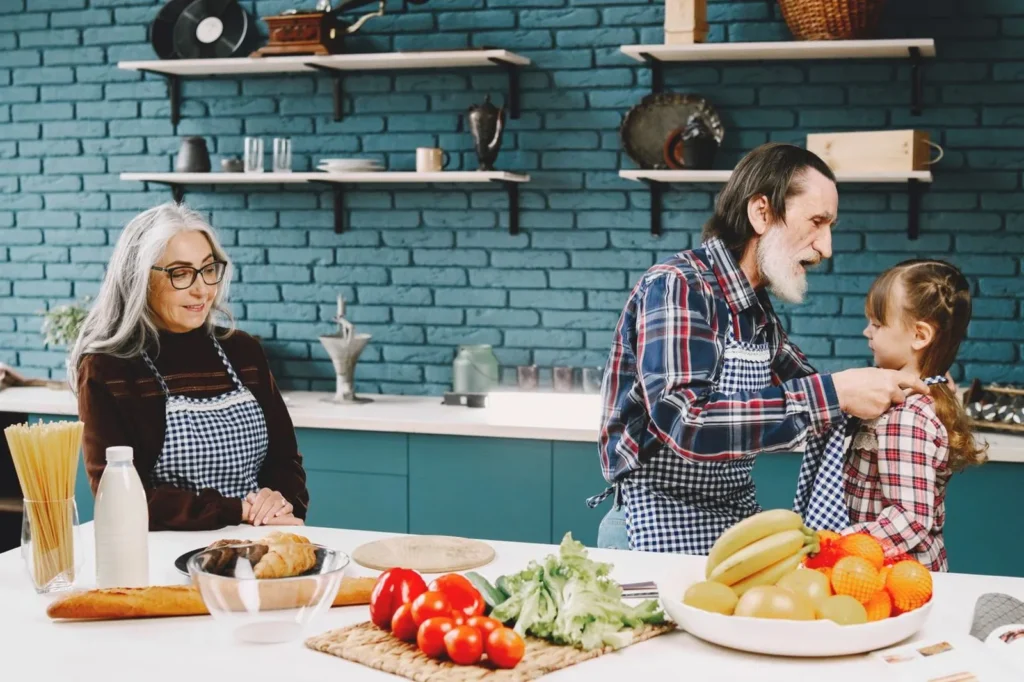
You do not need separate menus. Start with one base plate and adjust portions and add-ons.
- Set the base: half the plate vegetables and fruit, a quarter whole grain (roti, millet or rice), a quarter protein such as dal, paneer or egg, plus milk or curd daily.
- Flex the portion: toddlers get small servings with ghee, teens get extra roti and a calcium food at every meal, older adults get an extra spoon of dal or a second protein.
- Add a stage booster: a til ladoo or ragi roti for teens, folate-rich palak for pregnancy, soft egg bhurji or dal soup for low appetite.
Use this table to size the protein and calcium side of the plate.
| Food | Serving | Key nutrients (about) |
|---|---|---|
| Toned milk | 250 ml glass | 8 g protein, 300 mg calcium |
| Curd | 1 katori (100 g) | 3-4 g protein, 80-120 mg calcium |
| Paneer | 50 g | 9 g protein, 100-200 mg calcium |
| Cooked dal | 1 katori (150 g) | 6-9 g protein, 1-2 mg iron |
| Egg | 1 large | 6 g protein |
| Ragi flour | 50 g (2 rotis) | 3-4 g protein, 150-180 mg calcium |
| Roasted chana | 30 g handful | 6 g protein, 1.5-2 mg iron |
| Soya chunks (dry) | 30 g | 15 g protein |
| Til (sesame) | 1 tablespoon (10 g) | 100-140 mg calcium |
Troubleshooting: common gaps and simple fixes
Most family nutrition problems are small and fixable. Here is what usually causes them.
| What you notice | Likely cause | Practical fix |
|---|---|---|
| Child refuses milk and curd | Taste or texture | Swap in paneer, ragi, til or raita; calcium can come from three sources, not only milk |
| Teen girl tired, pale, dizzy | Iron loss from periods, skipped meals | Rajma, chana and palak with lemon; get haemoglobin checked |
| Vegetarian adult tired, tingling hands | Low B12 | Include milk, curd, paneer; ask your doctor about a B12 test before taking supplements |
| Older parent eating little | Low appetite, dental trouble | Five or six small meals; soft proteins like egg bhurji, dal soup, curd |
| Frequent colds, slow recovery | Low protein or iron intake | Add one protein food at every meal and review the plate |
If a gap persists, our guides to nutritional deficiency and nutritional anemia explain the signs in more depth.
Vegetarian and vegan households: three gaps to plan for
Plant-based diets can meet nutritional needs at every stage, but three gaps need attention. Vitamin B12 is found reliably only in animal foods, so vegans especially need a doctor-guided plan. Iron from plants absorbs better with vitamin C, so add lemon, amla or tomato to dal and greens. Protein quality improves when you pair dal with rice or roti, and add curd, paneer or soya where your diet allows.
When to see a doctor or registered dietitian
This guide is general education, not personal medical advice. See your doctor or a registered dietitian if a child is not gaining weight or height as expected, if you have unexplained weight loss, long-lasting tiredness, or are pregnant or planning pregnancy. Also seek advice if you have diabetes, kidney disease or another condition that changes protein, fluid or mineral limits, or take regular medication. Do not start high-dose supplements on your own.
Which guide should you read first?
Start with your current stage, then add any overlap. A pregnant teenager has adolescent and pregnancy needs together, and an active 65-year-old recovering from surgery needs more protein than a sedentary one. If you are feeding a household that spans toddlers to grandparents, a personalised assessment is often faster than piecing together several generic charts.
Frequently Asked Questions
What are the main life stages used in nutrition planning?
Nutrition planning usually uses infancy (0 to 1 year), childhood (1 to 9 years), adolescence (10 to 18 years), adulthood (19 to 50 years) and older adulthood (60 and above), with pregnancy and breastfeeding treated as an extra layer on adulthood.
How much protein do I need at different ages?
Roughly 1.2 to 1.5 g per kg in infancy, 1 to 1.2 g per kg in childhood, 0.9 to 1 g per kg in the teens, 0.8 to 1 g per kg in adulthood, and 1 to 1.2 g per kg after 60. Pregnancy adds about 10 to 25 g a day later on.
How much extra food does pregnancy need?
Very little early on. In the second and third trimesters, energy needs rise by about 300 to 350 kcal a day, with higher protein, iron, folate and calcium targets. Your doctor decides which supplements you take.
Can one diet plan work for a whole family?
Yes, a shared base thali works. Adjust portions and add-ons by age: toddlers need fat, teens need extra calcium and iron, and older adults need more protein at lower total calories.
When should nutritional needs be reassessed?
Reassess at major transitions: starting solids, puberty, pregnancy or breastfeeding, and around 60, or whenever illness, medication, weight change or low appetite affects eating.
If your household spans a toddler to a grandparent, or you want your own needs worked out for your age, weight and activity, book an online nutritionist consultation with Fitstrot and get a plan built around your plate.


