

Free online yoga classes are a genuinely good way to start, and for many people they are enough for the first three to six months. The catch is that “free” and “good for you” are not the same thing. A free class costs nothing to join, but it cannot watch you, correct your alignment or notice when you are pushing through pain. This guide shows what free classes do well, where they fall short, how to use them safely, and the point at which a guided class starts to pay for itself.
What is the real difference between free and paid online yoga classes?
Free online yoga classes teach a pose by demonstration, so they work well for building habit, flexibility and relaxation. Paid classes add what video cannot: an instructor who watches you, corrects your alignment, adapts the session to your body and tracks your progress. For most beginners, free is enough for roughly the first 8-12 weeks.
| Feature | Free classes (YouTube, app free tiers) | Paid recorded courses | Paid live or 1-on-1 classes |
|---|---|---|---|
| Cost | Rs 0 (ads or upsell prompts) | Subscription or one-time fee | Highest per session |
| Instructor sees you | No | No | Yes, in real time |
| Form correction | None, you self-check | None | Spoken cues and adjustments |
| Structure and progression | Patchy unless you follow one channel | Planned week by week | Planned around your level |
| Fits injuries or health conditions | Generic, not personal | Generic | Can be adapted |
| Accountability | Only your own discipline | Streaks and reminders | Fixed time, a person expecting you |
| Best for | Trying yoga, building a habit | Self-driven learners | Plateaus, injuries, goals |
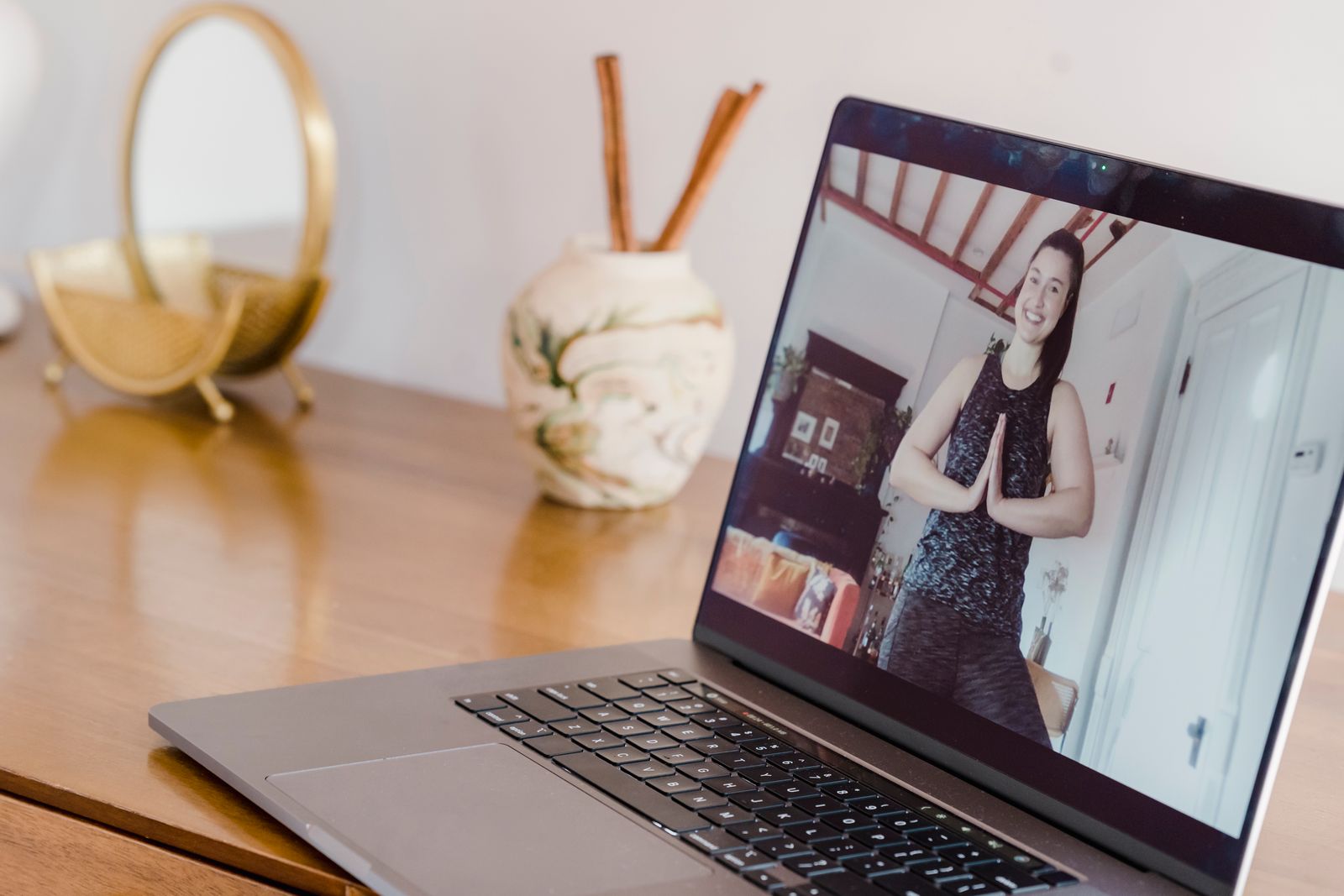
Where can you find free online yoga classes in India?
There are four reliable places: YouTube channels run by certified instructors, the free tiers of yoga apps, donation-based live streams from studios, and public yoga material published around International Day of Yoga each June. YouTube has the deepest free libraries, while app free tiers usually cap you at a few short sessions.
YouTube works best if you commit to one channel at a time. Many Indian instructors teach in Hindi and English, label Sanskrit names alongside English ones and publish full 45-60 minute classes. App free tiers suit a quick 10-15 minute habit but tend to lock their best programmes behind a subscription; our yoga apps roundup sorts the useful free tiers from the ones that exist to funnel you into paying. Donation-based live streams are the closest free option to a studio class, because you can sometimes ask a question. If you want a local or hybrid option, see online yoga classes near me.
How do you tell whether a free yoga class is safe to follow?
Check five things in under two minutes: a named instructor with a visible credential, a clear level in the title, full-body camera framing, on-screen modifications and a calm pace with breath cues. If a class misses two or more, skip it. Poor framing and vague titles are the usual signs of unsafe alignment advice.
- Credential. A 200-hour or 500-hour teacher certification mentioned in the bio or description is a good sign. It is not a guarantee, but its absence is worth noticing.
- Level in the title. Look for the word “beginner” itself. “Gentle” and “easy” are used loosely.
- Framing. You should see feet and hands. If only the torso is visible, you cannot check your placement.
- Modifications. A block, strap or wall version shown beside the full pose means the teacher expects mixed levels.
- Language of effort. Avoid classes that tell you to “push through”, “force” a stretch or “go deeper” without options. Yoga should never involve sharp pain.
A good free beginner class spends its first couple of minutes on basics: how to stack hips over knees in a lunge, or how to spread weight evenly in downward dog. Our guide on how to start yoga gives you the vocabulary teachers assume you already know.
Myth check: three things people get wrong about free yoga
Myth 1: the most-viewed video is the best one. Views reward a catchy title, not careful teaching. A video with millions of views and a title like “yoga for weight loss in 10 days” may skip the warm-up entirely. Judge by the five checks above.
Myth 2: you can get a free yoga teacher certification online. Recognised 200-hour certifications involve supervised teaching, anatomy and philosophy, and they cost real money. What is free is introductory content that helps you decide whether to pursue training. Treat any offer of a full “free certificate” with suspicion, and verify the accreditation directly with the awarding body before paying anyone.
Myth 3: free classes cannot get you results. They can build flexibility, ease stiffness and lower everyday stress when you practise regularly. What they cannot do is personalise. Goals such as advanced inversions, recovering from an injury or managing a medical condition need a person watching you.
What do free classes cover well, and what do they miss?
| Your goal | Are free classes enough? | What to add |
|---|---|---|
| Trying yoga for the first time | Yes | A mat and one consistent channel |
| Building a 3-4 day weekly habit | Yes | A fixed time slot |
| Loosening a stiff desk-job body | Mostly | A weekly check of pose alignment on camera |
| Learning the correct form of poses | Partly | One live class a month for feedback |
| Intermediate flows and arm balances | Partly | A live teacher for transitions |
| Back, knee or neck problems | No | Talk to your doctor, then a guided class |
| Pregnancy or postnatal practice | No | A specialist teacher |
How do you set up a free class at home so it is safe?
You need a non-slip mat, a phone or laptop on a stable surface, and a clear floor of roughly six by four feet. Two blocks (or thick books) and a strap or long dupatta cover most modifications. Practise on an empty or light stomach, about two to three hours after a full meal.
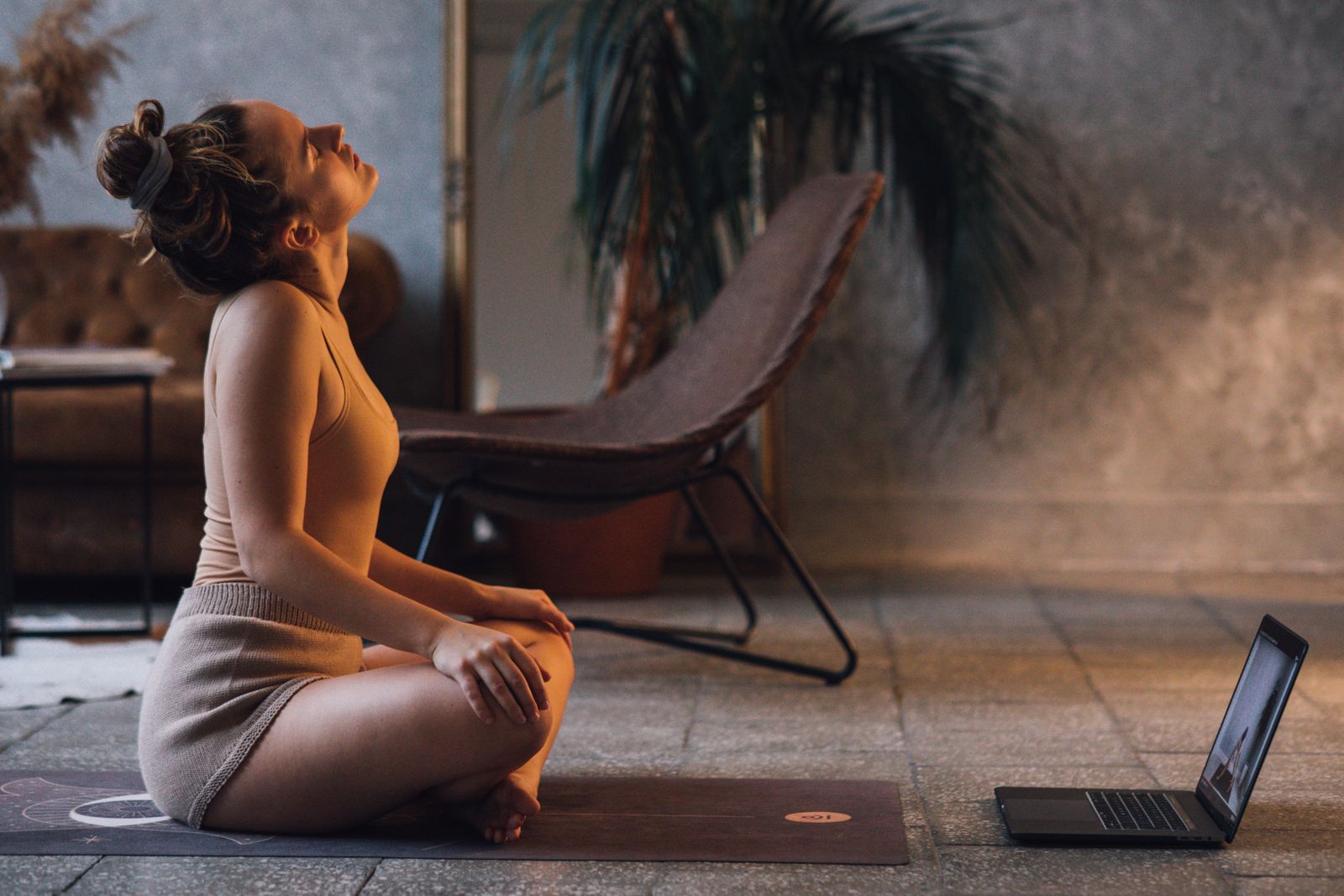
Place the screen where you can see it without twisting your neck, ideally at floor level or eye level at a distance. Join from the start so you do not miss the warm-up; cold muscles strain most easily in early standing poses. Pause the video whenever you need to. If a cue is unclear, replay it rather than guessing. For more on space, props and what to prioritise, our yoga at home guide goes through it step by step.
One safety rule matters above all: stop at sharp, pinching or radiating pain, and ease off at wobbling or breath-holding. Mild stretch sensation is fine; pain is not. Ignore any on-screen “a little more” if your body says no.
What does a 4-week plan with only free classes look like?
Aim for three to four sessions a week from one channel. Start with two 15-20 minute weekday classes and one 45-minute weekend class, then add a fourth session in week 3. Consistency over the four weeks matters more than class length.
| Week | Sessions | Class length | Focus |
|---|---|---|---|
| Week 1 | 3 | 15-20 minutes | Breathing, basic standing poses, learning names |
| Week 2 | 3 | 20-30 minutes | Hip and hamstring openers, simple balance |
| Week 3 | 4 | 20-45 minutes | Linking poses in a short flow, holding poses longer |
| Week 4 | 4 | 30-45 minutes | Repeat your best class, note what still feels wrong |
At the end of week 4, write down two poses that felt wrong or painful. Those are your cue to seek feedback. For a weekly template, our yoga routine guide helps you build around your schedule, and the morning yoga and evening yoga guides cover timing, while power yoga is a more energetic style once you are comfortable.
Troubleshooting: when free classes stop working for you
- You keep skipping sessions. Anchor yoga to an existing habit, such as straight after you log off work. Free content has no fixed time, so you must create one.
- You bounce between random videos. Pick one channel and stay for four weeks. Progress needs repetition and sequence.
- One pose always feels wrong. Film yourself and compare, but if it still hurts, you need a teacher. Common yoga mistakes to avoid include forcing depth, locking knees and holding the breath.
- Nothing feels new. After four to six weeks without progress, you have outgrown the content or the level. Try a faster style such as vinyasa yoga, or move to feedback.
- You feel dizzy or breathless. Slow down, drink water, and stop. If it recurs, check with your doctor before continuing.
Who should avoid learning only from free videos?
Free videos are generic by design. If you are pregnant, recovering from surgery, have a spine, knee or heart condition, high blood pressure, or are over 60 and new to exercise, speak to your doctor first and prefer a teacher who can adapt poses. For pregnancy, a specialist prenatal yoga class is safer than a general video. Free generic content cannot know your limits, and that is the biggest gap between free and guided practice.
When should you move from free to guided online yoga classes?
Consider guided classes when you have plateaued for 4-6 weeks, one pose keeps hurting, you want a structured programme, or you need accountability. Live classes with a teacher who sees you on camera usually make the biggest difference to form and consistency within the first month.
You do not have to abandon free videos. A common mix is two free sessions a week plus one live class for correction. When you compare options, our guide to the best online yoga classes lays out free, group and one-on-one formats side by side.
Are free online yoga classes safe for beginners?
Yes, if the teacher is credentialed, the class is labelled beginner and you can see the full body on camera. Start with slow styles like Hatha, use modifications and stop at any sharp pain. See your doctor first if you have a medical condition.
Can you really learn yoga with free online classes?
You can learn the basics, build a habit and improve flexibility. Following one channel for 8-12 weeks is a realistic start. Fine-tuning alignment, advanced poses and injury-friendly adjustments need feedback from a live teacher.
What is the best free online yoga for beginners?
The best option is a series of 15-30 minute classes from one certified teacher, labelled beginner, with modifications shown. Consistency with one channel beats hopping between many. Judge by the five safety checks, not view counts.
Are there free online yoga courses with a certificate?
Short introductory courses may give a participation certificate, but recognised teacher certifications, such as a 200-hour programme, are not free. Verify the accreditation directly before paying for or relying on any certificate.
How many free yoga classes should I do a week?
Three to four sessions a week is a sustainable start: two short weekday classes of 15-20 minutes and one longer weekend class of 45 minutes. Add a rest day between harder sessions, and increase gradually.
If you have been practising with free videos and want feedback, explore Fitstrot’s online yoga classes and pick the level that matches where you are now.


