

If you keep typing online yoga classes near me into Google, you probably want two things at once: a real teacher who can see you, and a class that fits your day without a long commute. Distance matters less online than people expect. What matters is time zone, batch size, teacher training and how much feedback you get. This guide shows how to compare any class in ten minutes, how much time online practice saves, what your first week should look like, and the warning signs that mean you should walk away. It names no studios, so it works from any city in India.
Why do online yoga classes often beat a studio near you?
For most working adults, the biggest barrier to yoga is travel time, not interest. A class that needs a 30-minute trip each way turns a one-hour session into two. Online classes remove that cost, so you can practise three or four times a week instead of dropping out after the first fortnight.
“Near me” also matters for one practical reason online: time zone. If you live in India, an evening batch at 7 pm IST is easy to join, while someone studying or working abroad needs to check timings carefully before booking. Ask for batch times in IST and confirm them in writing.
The arithmetic is simple. If you attend three classes a week for 52 weeks, that is 156 sessions. Multiply by the round-trip travel time and the hours add up quickly, before you count parking, fuel, auto fares or changing clothes.
| Round-trip travel per class | Extra time per week (3 classes) | Extra time per year (156 classes) |
|---|---|---|
| 30 minutes | 1.5 hours | 78 hours |
| 60 minutes | 3 hours | 156 hours |
| 90 minutes (big-city traffic) | 4.5 hours | 234 hours |
A studio still has real strengths: in-person energy, hands-on adjustments and a community. If one is a short walk from home, use it. For everyone else, online practice is the more consistent option, and consistency is what changes how you move and feel. Many people mix the two, with one studio visit a week and online classes for the rest.
How do you check if an online yoga class is good before paying?
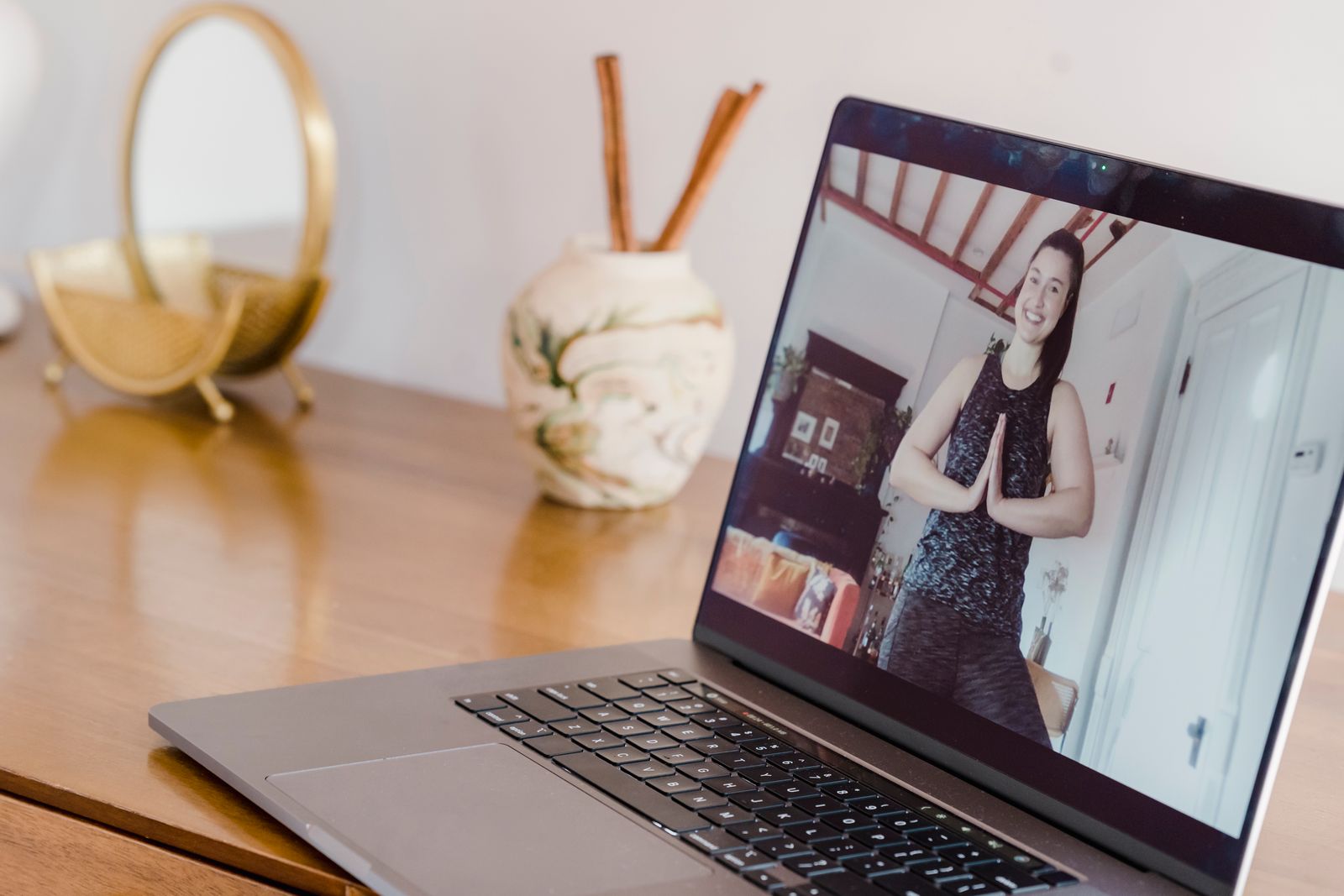
Check six things: teacher training, batch size, whether the teacher watches and corrects you on camera, level labelling, how injuries are handled, and what the cancellation or missed-class policy is. A good class answers all six clearly, and lets you attend a trial session before you commit to a month.
| What to check | What good looks like | Red flag |
|---|---|---|
| Teacher training | A recognised teacher certificate (a 200-hour course is the usual minimum) and real teaching experience | No bio, or only a gym-instructor badge |
| Batch size | Small enough that the teacher can name and correct individuals, roughly 8 to 12 on camera | Dozens of silent, camera-off participants |
| Feedback | Verbal corrections by name, plus modifications for easier and harder versions | Teacher only demonstrates and never looks at your screen |
| Level label | Clear “beginner”, “all levels” or “intermediate” labels and slower pacing for beginners | One generic flow for everyone |
| Health intake | A short form or chat about injuries, pregnancy, blood pressure or surgery | No questions asked at all |
| Policies | Clear rules on rescheduling, missed classes and trial sessions | Pressure to pay for months upfront |
Price comparisons are only fair when you compare like with like. Ask how many classes a month are included, whether missed live classes can be rescheduled, and whether you pay per session or monthly. A cheaper plan with 40 people on screen is not the same product as a small batch where the teacher knows your name. Never pay for several months before you have attended at least one class.
Take the trial seriously. Notice whether the teacher greets you, asks about your level, cues breath and alignment in plain words, and offers a version for tight hips or sore knees. You should finish feeling worked but not strained.
Myth check: “A teacher on a screen cannot correct my form”
This is partly true and mostly overstated. A teacher cannot move your hips with a hand, but they can see you, name the problem and describe the fix. In a small live batch, that is enough for most beginner and intermediate poses, provided your camera shows your whole body.
Set the camera at floor level, two to three metres away, at an angle that shows your full length on the mat. A phone propped on a shelf or a laptop on a low stool works. Keep the room lit from the front, not behind you. Wear fitted clothes so the teacher can see knee, hip and shoulder lines.
The real limits are different. Recorded classes cannot watch you at all, and large live batches cannot either. Be honest about this: if you have a recent injury, high blood pressure, are pregnant, or are recovering from surgery, choose a smaller batch or a one-to-one class and speak to your doctor first.
Live batch, recording or one-to-one: which should you choose?
Choose a live small batch if you want accountability and corrections at a reasonable cost, one-to-one if you have an injury or a specific goal, and recordings only as a supplement. A common pattern is two live sessions a week plus short home practice from a recording.
| Format | Best for | Feedback | Flexibility | Main drawback |
|---|---|---|---|---|
| Live group batch | Beginners, routine builders | Good in a small group | Fixed timings | Poor fit if your schedule shifts |
| One-to-one live | Injuries, specific goals, privacy | Best, fully personalised | You choose timings | Higher cost per session |
| Recorded or app-based | Practised students, travel weeks | None | Any time | Easy to skip, no one watching form |
If you are comparing providers, our guide to the best online yoga classes sets out what to weigh, and the overview of online yoga classes explains how the formats work. For recordings and self-guided practice, see yoga apps.
What should your first week of online yoga look like?
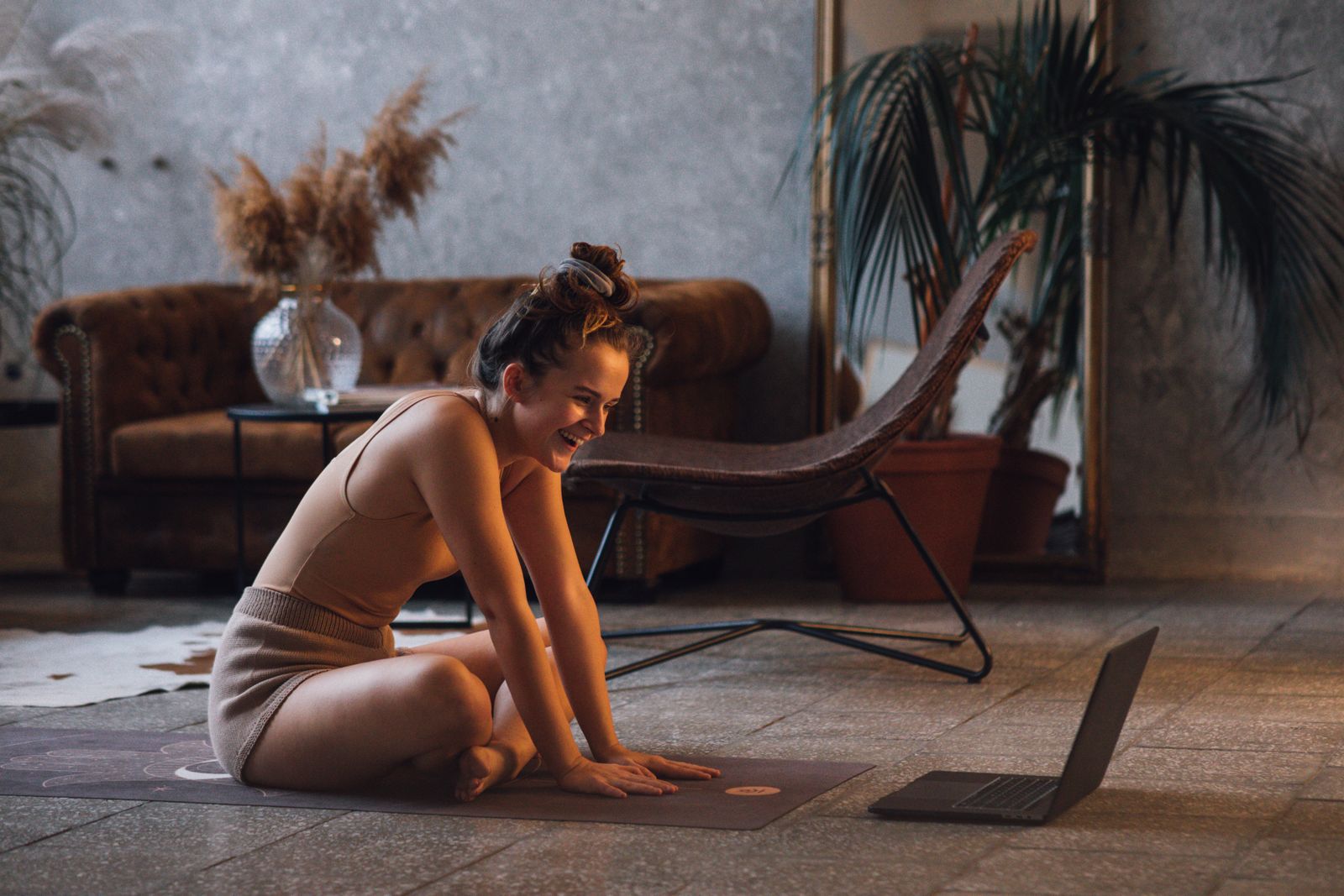
Keep week one small: three live classes of 45 to 60 minutes on fixed days, an empty stomach or a light snack two hours before, and a setup you do not need to rebuild each time. The goal is to finish the week still wanting a second one.
- Day 1, set up. Clear a mat-sized space with about two metres of room on each side. Test sound, camera angle and internet. Keep a phone hotspot as backup.
- Day 2, first class. Join five minutes early, tell the teacher your level and any pain or condition, and keep the camera on.
- Day 3, rest or walk. Mild soreness in hips and hamstrings is normal. Sharp or joint pain is not.
- Day 4, second class. Ask one question about a pose that felt unclear.
- Day 5 and 6, light practice. Ten minutes of the poses you were taught, nothing new.
- Day 7, third class and review. Ask yourself whether the timing, pace and teacher suit you. If not, switch batches rather than quitting yoga.
Keep a bottle of water nearby, but avoid heavy meals before class. Practising at the same time each day, such as 6 am or 7 pm, builds the habit faster than shifting around.
Which yoga style should you try first?
Beginners usually do best starting with slow, alignment-focused hatha yoga. If you want a more active, flowing class, try vinyasa yoga once you can hold basic standing poses. For evenings and recovery, restorative yoga and yin yoga use long holds and props. Our guide to the types of yoga compares them side by side.
If a particular goal drives you, look for a class designed around it rather than a general flow. Useful starting points are yoga for back pain for desk workers, yoga for anxiety for slow breath-led practice, and yoga for weight loss, which is best paired with sensible eating and regular walking. Be wary of any class that promises fixed weight loss in a few days. Yoga can support fat loss, but results depend on food, sleep and how often you practise.
Troubleshooting: when online classes are not working
- The video lags or freezes. Move closer to the router, close other apps and ask the teacher whether audio-only fallback is possible. Keep mobile data as a backup.
- You keep skipping classes. Move to a time you will not negotiate with yourself, usually early morning or straight after work. Tell one person your schedule.
- The teacher never corrects you. Your batch may be too big or your camera angle too far. Ask for feedback on one pose at the start of class.
- You feel pain, not stretch. Stop, back off the pose and tell the teacher. Pain in a joint, tingling or numbness is a reason to pause and see a doctor.
- Home distractions break your focus. Put the phone on do-not-disturb, tell family the class time, and keep the mat out so setup takes seconds.
- The level is wrong. Switch to a beginner batch. Struggling in a class above your level is the quickest way to lose interest.
Who should see a doctor or choose one-to-one first?
Most healthy adults can start with a beginner group class. Talk to a doctor before starting if you are pregnant, have high blood pressure, heart disease, a disc problem, glaucoma, recent surgery or a long-standing injury. Tell the teacher everything, because poses and breathing can be adapted but not guessed.
One-to-one classes suit people with limited mobility, older adults, shy beginners and anyone returning after an injury. Group classes suit people who are generally well and enjoy company. Neither replaces medical care.
Online yoga classes near me: FAQ
Are online yoga classes as good as studio classes?
For most beginner and intermediate students, yes, if the class is live and the batch is small enough for the teacher to see you. Hands-on adjustments are missing online, so the teacher must explain corrections clearly, and you must keep your camera on.
How do I find a good online yoga class near me?
Ignore distance and compare teacher training, batch size, level labels and trial policy. Join one trial class, keep the camera on and notice whether the teacher corrects you by name. Choose timings you can keep every week.
Do I need equipment for online yoga?
A mat, a phone or laptop with a camera, a stable internet connection and about two metres of clear floor space are enough. A block, strap and folded blanket help with modifications, but you can begin with a thick towel and a belt.
Can beginners join live online yoga classes?
Yes, provided the class is labelled for beginners. Slower pacing and clear verbal cues matter more than any poses you already know. Avoid starting in an all-levels or advanced batch, because keeping up can push you into poor form.
Is live yoga better than recorded videos?
Live classes are better for beginners and anyone needing corrections, because someone is watching you. Recordings suit practised students and busy weeks. Many people combine two live classes with one or two short recorded sessions a week.
Next step: tell us your level, goal and preferred timing, and we will suggest a live batch at Fitstrot online yoga classes.


