
Searching for yoga to increase height usually starts with one hope: that a few stretches can make you taller. Here is the honest version. Yoga cannot lengthen bones once your growth plates have closed, and no pose, hanging routine or supplement changes that. What yoga can do is help you stand at your full natural height by undoing slouching, tight hips and a compressed spine, which is often worth about 1 to 2 centimetres. This guide shows what is realistic at each age, a 25-minute routine, and when to see a doctor.
Can Yoga Really Increase Height?
Yoga cannot increase your bone length after growth plates close, which is roughly the mid-to-late teens for most people. It can add about 1 to 2 centimetres of standing height by correcting slouching and decompressing the spine, and in growing children it supports sleep, posture and stress, the conditions in which natural growth works best.
Two different things get mixed up online. Skeletal height is the length of your bones, set by genes, nutrition and health during childhood and puberty. Postural height is how much of that skeletal height you actually show when you stand. Rounded shoulders, a forward head, a tilted pelvis and weak back muscles quietly take centimetres off the second number. Yoga works only on the second number, and that is a real, measurable gain for many desk workers and students.
Growth Plates by Age: What Yoga Can and Cannot Do
Growth plates are soft cartilage zones near the ends of long bones. While they are open, bones lengthen; once they fuse, that is final. The ages below are rough, because puberty timing varies a lot between individuals.
| Stage | What the body is doing | What yoga can do | Realistic expectation |
|---|---|---|---|
| Childhood (before puberty) | Steady growth, plates wide open | Playful movement, better posture habits, calmer bedtime routine | Supports growth conditions; no extra height from poses |
| Puberty (about 10 to 15) | Growth spurt, fastest height gain | Posture work, stress relief, sleep support | Helps the spurt run smoothly; cannot push it beyond genes |
| Late teens (about 15 to 18) | Plates closing, earlier in girls, later in boys | Spine alignment, core strength | Posture gain of roughly 1 to 2 cm; bone growth is nearly done |
| Early twenties | Most people have fully fused plates | Undoing school and desk slouch | About 1 to 2 cm of postural height at best |
| 25 and above | Plates fused; discs slowly lose water with age | Spinal decompression, hip and chest opening | Stand taller and feel less compressed; no new bone |
That is why a question like “does yoga increase height after 18?” or “after 21?” has a split answer. For bone length, no. For posture, yes, within limits. If you are an adult chasing true growth, reset the goal to standing tall, moving well and keeping your spine healthy for decades.
Myths About Yoga for Height Growth That Waste Your Time
Height is heavily marketed, so it helps to know which claims fall apart.
- “Hanging or headstands make you grow.” They can decompress the spine for a short while, much like lying down does. They do not lengthen bone, and headstands add neck risk, so they are not part of this routine.
- “Seven days to 3 inches.” Bone does not grow like that at any age. A week of practice can improve how you stand, but you will not gain inches.
- “Height supplements and syrups work with yoga.” No powder or syrup reopens closed growth plates. Spend that money on a balanced diet instead.
- “Swimming or basketball makes you taller.” Taller people tend to be picked for these sports. The sport itself is good exercise, not a growth trigger.
How Much Taller Can Posture Make You, and How Fast?
Better posture usually adds about 1 to 2 centimetres, occasionally up to 3 for people with a pronounced slouch. A visible change in how you stand can show within 1 to 2 weeks of daily practice, while stable alignment typically takes 8 to 12 weeks. None of this is new bone; it is height you already own.
Your spine also changes length through the day. The discs between vertebrae soak up water overnight and lose some under gravity, so most people measure roughly 1 cm taller in the morning than at night. Spinal-lengthening yoga helps you hold more of that morning height through the day, which is why consistency beats intensity.
A 25-Minute Spine-Lengthening Routine, Pose by Pose
This sequence suits healthy adults and teenagers. Move slowly and stop any pose that causes sharp pain, tingling or dizziness. If you are new to practice, our guide to yoga at home covers space, mat and setup, and the yoga routine article shows how to build the habit.
| Step | Pose | Hold or reps | Form cue | What it does |
|---|---|---|---|---|
| 1 | Cat-Cow | 8 to 10 slow rounds | Move one vertebra at a time, shoulders away from ears | Warms up the whole spine |
| 2 | Tadasana (Mountain Pose) | 5 to 8 breaths | Feet hip-width, ribs down, crown of head reaching up | Trains neutral spine and even weight |
| 3 | Urdhva Hastasana (Upward Salute) | 5 breaths, 2 rounds | Reach up without arching the lower back | Traction through the spine and sides |
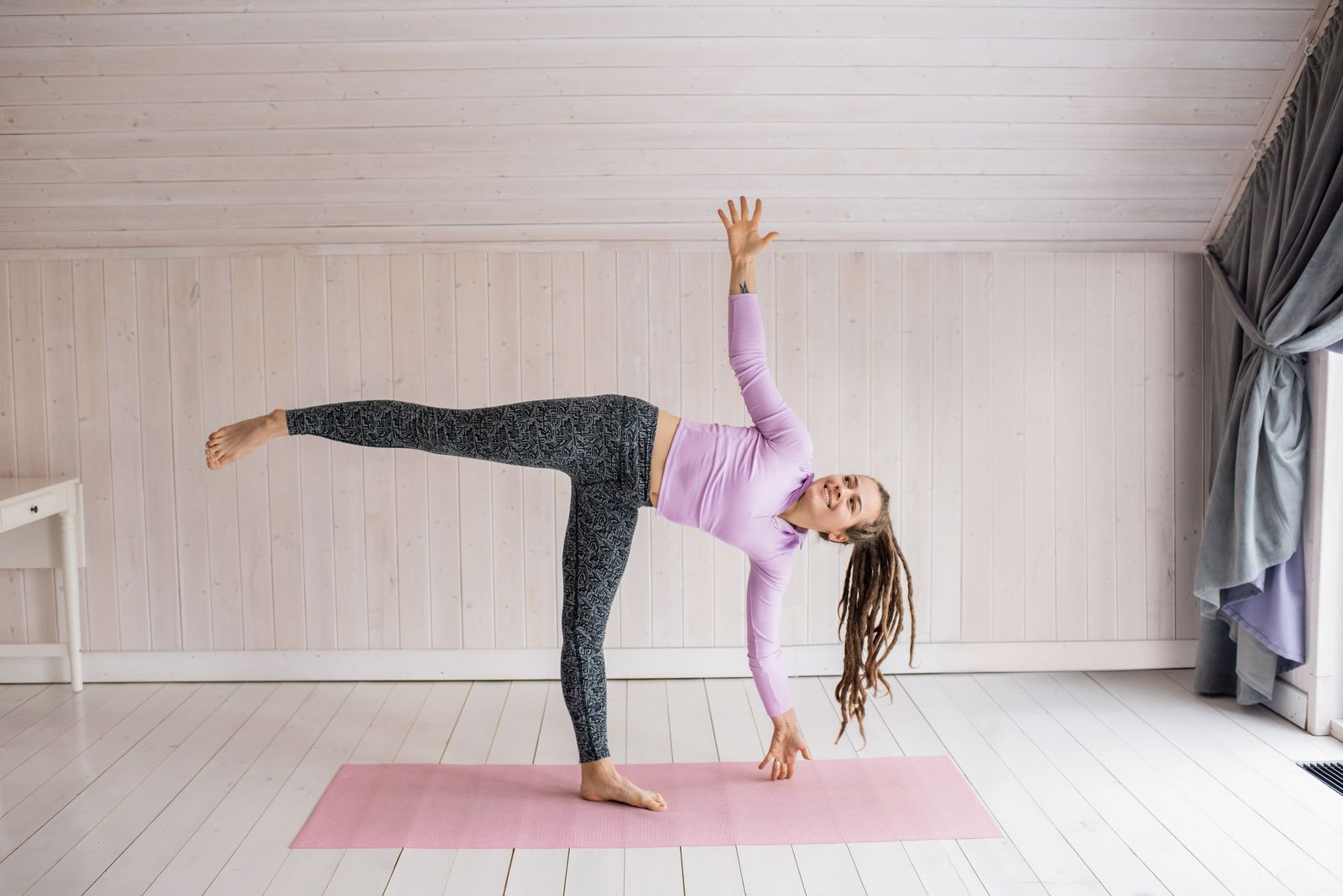
| 4 | Trikonasana (Triangle Pose) | 5 breaths each side | Lengthen forward first, then tilt sideways | Opens hips and side body |
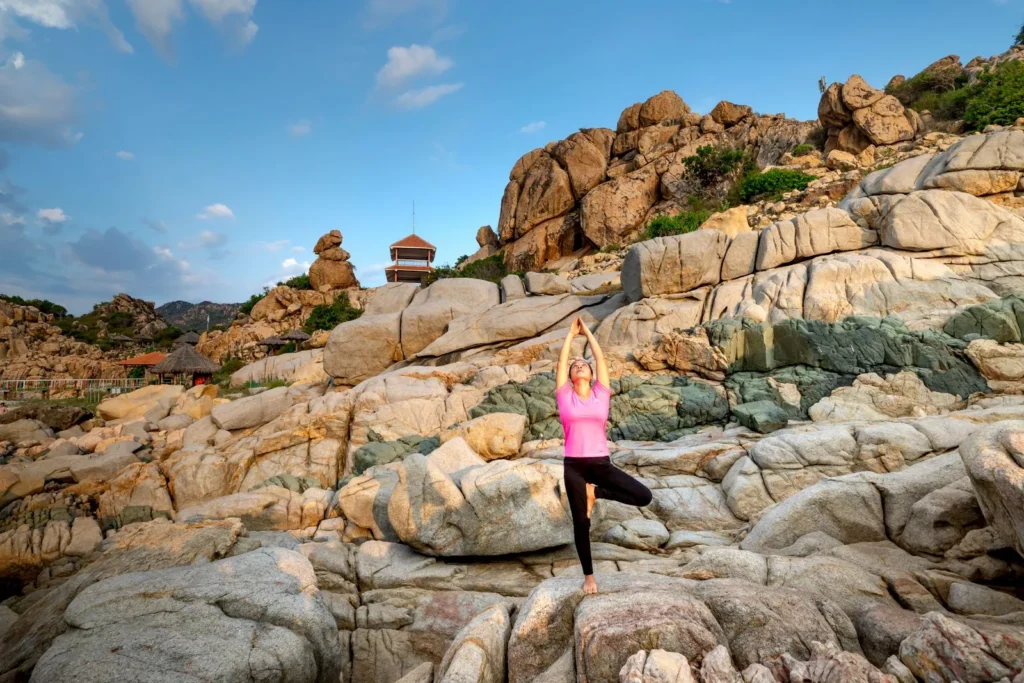
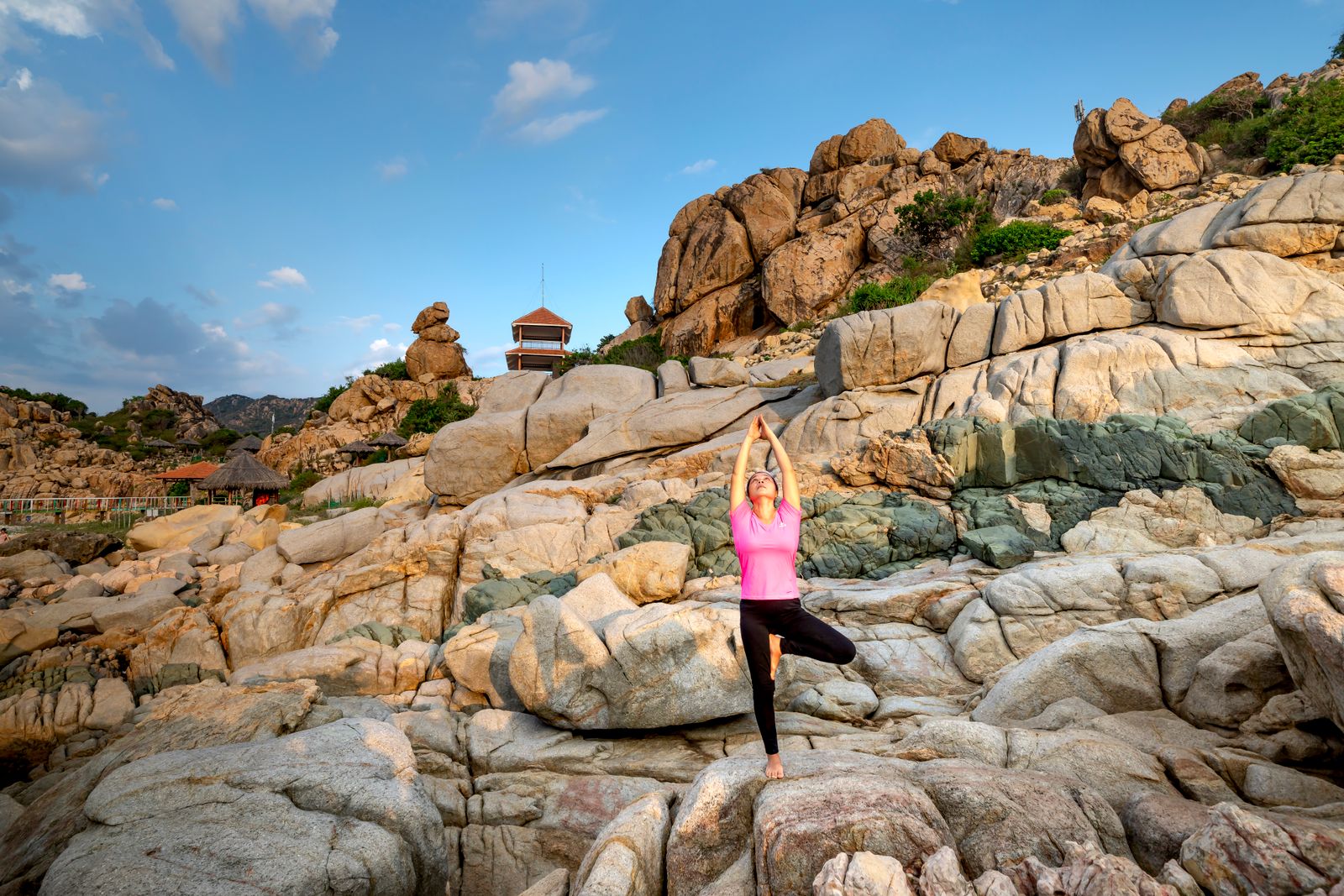
| 5 | Vrikshasana (Tree Pose) | 5 breaths each side | Gaze at a fixed point, hips level | Core and balance for an upright stance |
| 6 | Bhujangasana (Cobra Pose) | 4 to 5 breaths, 3 rounds | Lift with the back muscles, keep the neck long | Strengthens spine extensors, opens the chest |
| 7 | Setu Bandhasana (Bridge Pose) | 5 breaths, 3 rounds | Press the feet down, knees stay over ankles | Glutes and back strength, hip flexor stretch |
| 8 | Adho Mukha Svanasana (Downward Dog) | 5 to 8 breaths | Bend the knees if hamstrings are tight, lengthen the spine first | Decompresses the spine, stretches the back of the body |
| 9 | Savasana | 3 to 5 minutes | Lie flat, let the lower back soften | Lets the body settle and recover |
These are the yoga poses to increase height that make the most sense for adults and teenagers, because each lengthens or strengthens the spine rather than forcing it. For more detail on the muscle side, see yoga for posture, yoga for strength and yoga for flexibility.
A simple weekly plan
Five to six days a week works well; one rest day keeps it sustainable.
| Day | Focus | Time |
|---|---|---|
| Monday | Full 9-step routine | 25 minutes |
| Tuesday | Standing poses and core, steps 2 to 5 | 20 minutes |
| Wednesday | Full 9-step routine | 25 minutes |
| Thursday | Back-strength steps 6 to 8 plus Savasana | 20 minutes |
| Friday | Full 9-step routine | 25 minutes |
| Saturday | Gentle Cat-Cow, Tadasana, long Savasana | 15 minutes |
| Sunday | Rest, easy walk, measure your posture | As you like |
Troubleshooting: You Practise but Still Do Not Stand Taller
If weeks have passed and nothing seems to change, check these before giving up.
- You measure carelessly. Stand barefoot with heels, hips and shoulders against a wall, at the same time of day, ideally morning. A 1 cm swing from time of day can hide real progress.
- Your ribs flare in Tadasana. Over-arching the lower back fakes height for a second and strains the spine. Draw the lower ribs down and think “tall”, not “chest out”.
- Your neck pokes forward in Cobra and Dog. Keep the back of the neck long, chin slightly tucked.
- You skip the strengthening poses. Stretching alone fades within hours; the back and core muscles keep you upright. Hold the Bridge and Cobra rounds.
- You sit for 9 hours straight. Stand and walk for a couple of minutes every 30 to 45 minutes, and keep the screen at eye level. Our yoga for back pain guide helps if sitting already hurts.
Body weight and belly fat can also change how your frame carries itself. If that is part of your picture, yoga for weight loss and online weight loss training are better-aimed tools than any height routine.
What Should Teenagers and Parents Focus On for Height?
For a growing child or teenager, the biggest levers are enough sleep, balanced meals, regular activity and regular check-ups. Children aged 5 to 12 generally need about 9 to 12 hours of sleep and teenagers about 8 to 10. Yoga helps by calming stress, improving posture and making sleep easier.
Genes decide most of final height, often cited as roughly 80 per cent, but food, sleep and health decide whether a child reaches their own potential. A sensible Indian plate for a growing teenager includes:
- Milk, curd, paneer or buttermilk daily for calcium.
- Dal, rajma, chana, eggs, fish or chicken (if non-vegetarian) at most meals for protein.
- Ragi, til (sesame), almonds and green leafy vegetables for minerals.
- Fruit and vegetables across the day, with limited chips, sodas and packaged snacks.
- Some morning sunlight, since vitamin D matters for bones.
Avoid height “boosters”, herbal powders and injections sold online. If you want a food plan built around a child’s or teen’s actual diet, an online nutritionist consultation is a safer route. For age-appropriate poses and games, read yoga for kids, and for winding down before sleep try yoga nidra. Keep sessions short, playful and supervised; teenagers should not be pushed into deep backbends or inversions.
Who Should Avoid or Modify These Poses?
Yoga here is supportive only, never a treatment. People with spine conditions, recent injury, osteoporosis, pregnancy or uncontrolled blood pressure should not follow this routine without a doctor’s approval, and should skip or modify the poses listed below until cleared.
- Diagnosed scoliosis, or a spine that visibly curves sideways.
- Slipped disc, sciatica, nerve pain, numbness or tingling in the arms or legs.
- Osteoporosis or low bone density, especially with deep backbends or forward folds.
- Recent surgery, fracture or injury to the back, hips, neck or shoulders.
- Pregnancy, especially lying flat on the back or deep twists and backbends.
- High blood pressure, heart conditions, glaucoma or vertigo, particularly with head-down poses such as Downward Dog.
- Children and teenagers with pain, a fast-changing posture or unexplained fatigue.
Modify by keeping the knees bent in Downward Dog, lifting only slightly in Cobra, and skipping Bridge if it strains your neck or lower back. Never force a range of motion, and treat pain as a stop sign.
When Should You See a Doctor About Height?
See a doctor if growth is the worry, not posture. Book a paediatrician or paediatric endocrinologist if a child seems much shorter than classmates, has slowed growth over a year or more, or has not started puberty on time. A doctor can check growth charts, bone age and thyroid or nutrition issues, which yoga cannot fix.
Adults should see a doctor or physiotherapist for back pain that lasts more than a few weeks, pain travelling down a leg, numbness, weakness, a sudden loss of height, or a visibly curving spine. Never stop or change prescribed medicines because of a yoga routine.
Frequently Asked Questions
Can yoga increase height after 25?
No, yoga cannot add bone length after 25 because growth plates have fused for almost everyone. It can improve posture and spinal alignment, which may reveal about 1 to 2 centimetres that slouching and compression were hiding. Treat it as recovering your own height, not growing new bone.
Does yoga increase height in children more than in adults?
Not directly at any age. In children, yoga’s value is indirect: better posture, calmer stress and easier sleep support the body’s own growth. In adults, the benefit is postural, standing taller by undoing slouch. A child’s final height still depends mainly on genes, nutrition, sleep and overall health.
How long does yoga take to improve posture and standing height?
Many people notice a difference in how they stand within 1 to 2 weeks of daily practice. More stable change usually takes 8 to 12 weeks of regular sessions. Results vary with age, how long you have slouched, and how consistently you strengthen your back and core.
Which yoga pose is best to increase height?
Tadasana is the most useful single pose, because it trains the neutral, tall alignment you want all day. It works best alongside Cobra, Bridge and Downward Dog for strength and decompression. No single pose adds bone length, so a short routine done regularly beats any one pose.
Are hanging and headstands safe for growing taller?
They do not lengthen bone, and headstands carry a higher neck-injury risk, especially for beginners and teenagers. Gentle spinal lengthening in standing and floor poses gives a similar short-term decompression with less risk. If you want to try inversions, learn them with a qualified instructor and get medical clearance first.
Next step: if you want your posture checked and a spine-friendly sequence tailored to your body, join a live session in Fitstrot’s online yoga classes and ask your instructor for a posture-focused plan.


