

Using zumba for posture is less about standing tall on command and more about training the muscles that keep you tall without effort. A class asks your trunk to twist, brace and rebalance for 45 to 60 minutes, which is steady, moderate core work that desk-bound bodies rarely get. This guide covers what that movement does to your spine and core, three practical cues (ribcage over pelvis, shoulders, neck), a desk-worker angle, short self-check tables, and when to see a doctor instead.
Does Zumba improve posture?
Yes, it can help. Regular Zumba, roughly 3 classes a week for 6 to 8 weeks, trains the core, glute and upper-back muscles that hold your spine in a neutral position, and it loosens tight hips and chest. It builds strength and habit, but it will not straighten a structural curve or replace medical care.
Most everyday slouching is an endurance problem, not a bone problem: the muscles that hold you upright tire after an hour at a screen, so your ribcage sags, your head drifts forward and your shoulders round. Dance fitness gives you thousands of small repetitions of finding and re-finding your upright position, which suits people who find static posture drills boring.
How Zumba movement loads your core and spine
Almost every Zumba step involves your trunk, even when the choreography looks like all legs and arms:
- Hip circles and pelvic rocks teach your pelvis to move independently of your ribcage, the foundation of a neutral lower back.
- Torso twists work the obliques and the deep muscles between ribs and pelvis, which stop you leaning to one side at a desk.
- Squat steps and side lunges strengthen the glutes and thighs that help hold your pelvis level. Our guide to Zumba for toned legs covers this half of the equation.
- Reaches, presses and arm swings wake up the upper back and the muscles around the shoulder blades.
- Quick weight shifts and direction changes challenge the small stabilisers along the spine.
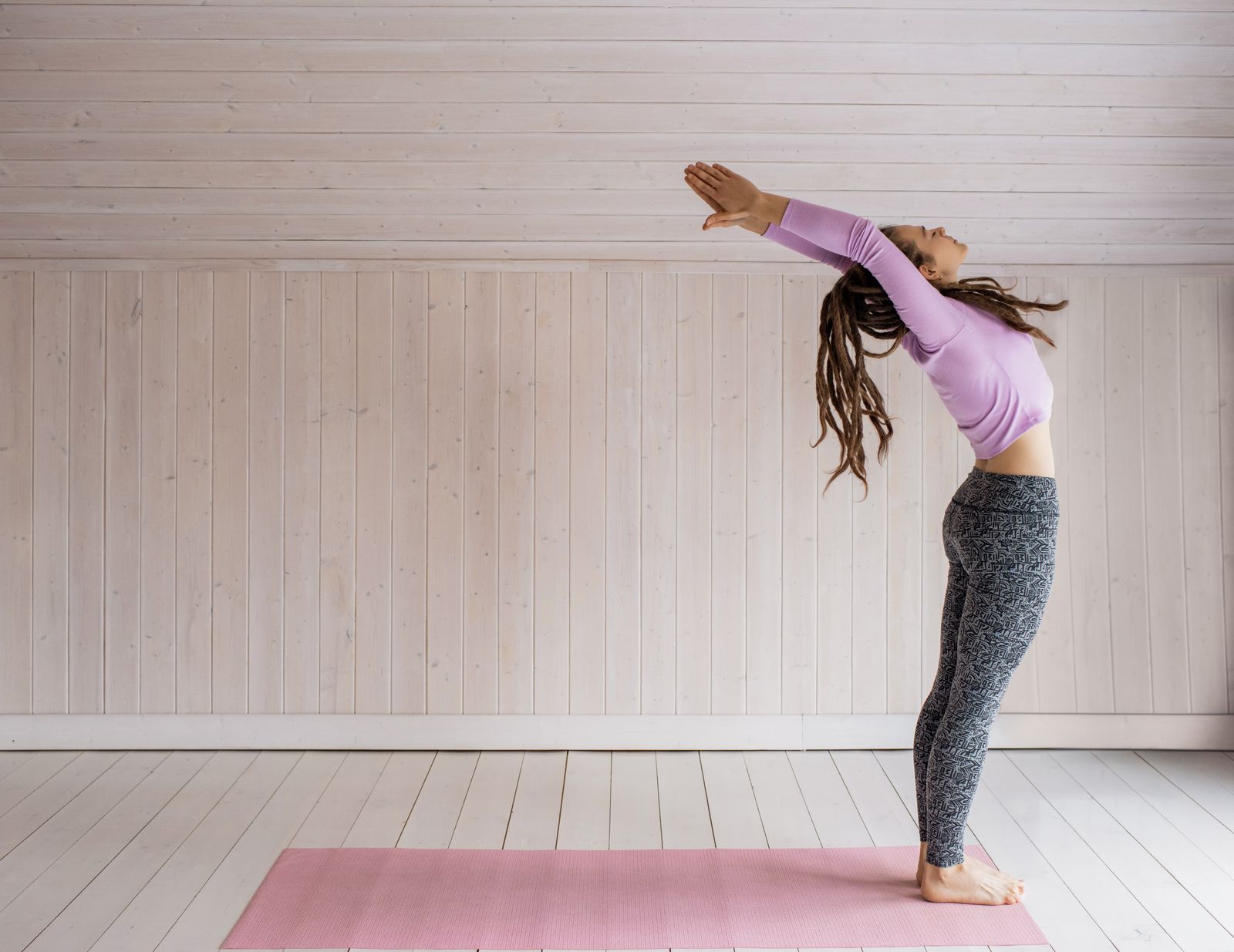
The catch is that movement alone does not guarantee alignment. If you dance with flared ribs and a forward chin, you simply practise the slouch at higher speed. For a stronger midsection, our Zumba for abs and core guide shows which moves do the most work, and core strength is the biggest single lever for holding posture.
Three practical cues to use in every song
You cannot think about ten things while following choreography, so use three, stacked from the bottom up.
Cue 1: ribcage over pelvis
Picture your ribcage as a box sitting directly on your pelvis, like two stacked bowls. The most common fault is ribs flaring forward during arm raises, which overarches the lower back. The opposite fault is tucking the tailbone hard under, which flattens the back and stiffens the hips.
To find the middle, stand with soft knees, one hand on your lower ribs and one on your hip bones. Exhale until the front ribs soften downward, then keep that stack as your arms rise. If your ribs pop forward, lower the arms a little: a smaller reach with a stable trunk beats a big reach with a collapsed lower back. During hip moves, let the pelvis move while the ribcage stays quiet, and keep breathing; you should be able to hum comfortably while you rotate.
Cue 2: shoulders down and wide
Rounded shoulders usually come with a tight chest and tired upper-back muscles. Yanking the shoulders back just moves the tension into the neck. A gentler cue works better: let the shoulders drop away from your ears, then widen across the collarbones as if opening a door in front of your chest.
When you reach or punch, start from the shoulder blade sliding along the ribs, not from the neck. On shoulder rolls, make the circle slow and complete (up, back, down) rather than a quick shrug. If the muscle between neck and shoulder feels tight mid-class, your shoulders have crept up; drop them and carry on.
Cue 3: neck long, chin level
Your head weighs roughly 4 to 5 kg, and every few centimetres it drifts forward of your shoulders makes your neck and upper back work harder. In class the culprit is usually looking down at your feet or craning toward a small screen. Aim for ears roughly over shoulders and eyes on the horizon.
Online learners have an easy fix: raise the screen to about eye level, with a laptop on a stack of books or a phone on a stand. Think of a string lifting the crown of your head, not a forced chin tuck, which tends to tighten the front of the neck.
Posture check by rhythm
Each rhythm stresses alignment differently. Use this as a quick reference.
| Rhythm | What the movement asks for | What tends to slip | Quick cue |
|---|---|---|---|
| Merengue | Marching steps, arm pumps, quick hip sway | Shoulders hunching up with each arm pump | Drop shoulders, march tall |
| Salsa | Forward and back steps, hip and torso turns | Leaning forward from the waist on the step | Ribs over pelvis, move from the hips |
| Cumbia | Shuffling steps, hip circles, arm swings | Overarching the lower back on hip circles | Soft knees, ribs down |
| Reggaeton | Low, grounded bounce, isolations, squats | Rounding the upper back, chin forward | Chest wide, eyes level |
| Bachata | Side steps, hip lifts, slower reaches | Sinking into one hip on the side step | Weight even, reach long |
Is Zumba bad for your back?
For most healthy adults, no. Back trouble in class usually comes from too much arch, rushed rotations or high-impact jumping on tired legs, not from dance itself. Keep movements controlled, choose low-impact options when needed, and stop if pain is sharp or travels down a leg.
Controlled rotation and hip movement keep the spine moving, while fast, sloppy twisting with locked knees does the opposite. Three myths worth dropping:
- Myth: “I need to pull my shoulders hard back all class.” A strong pinch creates neck tension. Aim for relaxed, wide and down.
- Myth: “More intensity means better posture.” Posture improves when you hold form, not when you hit top speed. A slower, tidier version of a move is often the better one.
- Myth: “Zumba will correct my spine in a couple of weeks.” You can build strength and awareness, but a structural curve or medical back condition is a job for your doctor or physiotherapist.
If you want less jumping while building the same habits, our Zumba Gold guide explains how a gentler class keeps the rhythm and trims the impact.
Can Zumba help if you sit at a desk all day?
Yes, with realistic expectations. Dance classes counter desk-job posture by opening tight hip flexors and chest muscles and strengthening the glutes and upper back that long sitting switches off. Three classes a week, plus a stand-and-move break every 30 to 60 minutes, is the most practical combination.
Sitting shortens some muscles and quietly switches others off. This table pairs each common desk habit with what it does and the Zumba response.
| Desk habit | What it tends to do | Zumba response |
|---|---|---|
| Hunching toward the screen | Rounds shoulders, tightens chest | Wide arm reaches and presses with shoulders down |
| Sitting for hours | Shortens hip flexors, switches off glutes | Squat steps, side lunges, hip circles |
| Head forward on a laptop | Strains neck and upper back | Eyes-level gaze and slow shoulder rolls |
| Crossing the same leg | Tilts the pelvis, loads one side | Even weight shifts left and right |
| Slumping on the sofa | Lets the lower back round | Ribs-over-pelvis stack during torso moves |
The best class slot is the one you will keep. Between classes, set a reminder to stand, roll your shoulders and do 10 slow hip circles; it takes under a minute and breaks up the long sitting blocks class alone cannot offset. For a post-class stretch of chest and hips, our Zumba and yoga guide shows how the two styles combine, and online yoga classes are a natural partner for rest days.
What to do when your back or neck complains mid-class
Mild muscle fatigue is normal. Sharp, pinching or radiating pain is not. To troubleshoot without quitting the session:
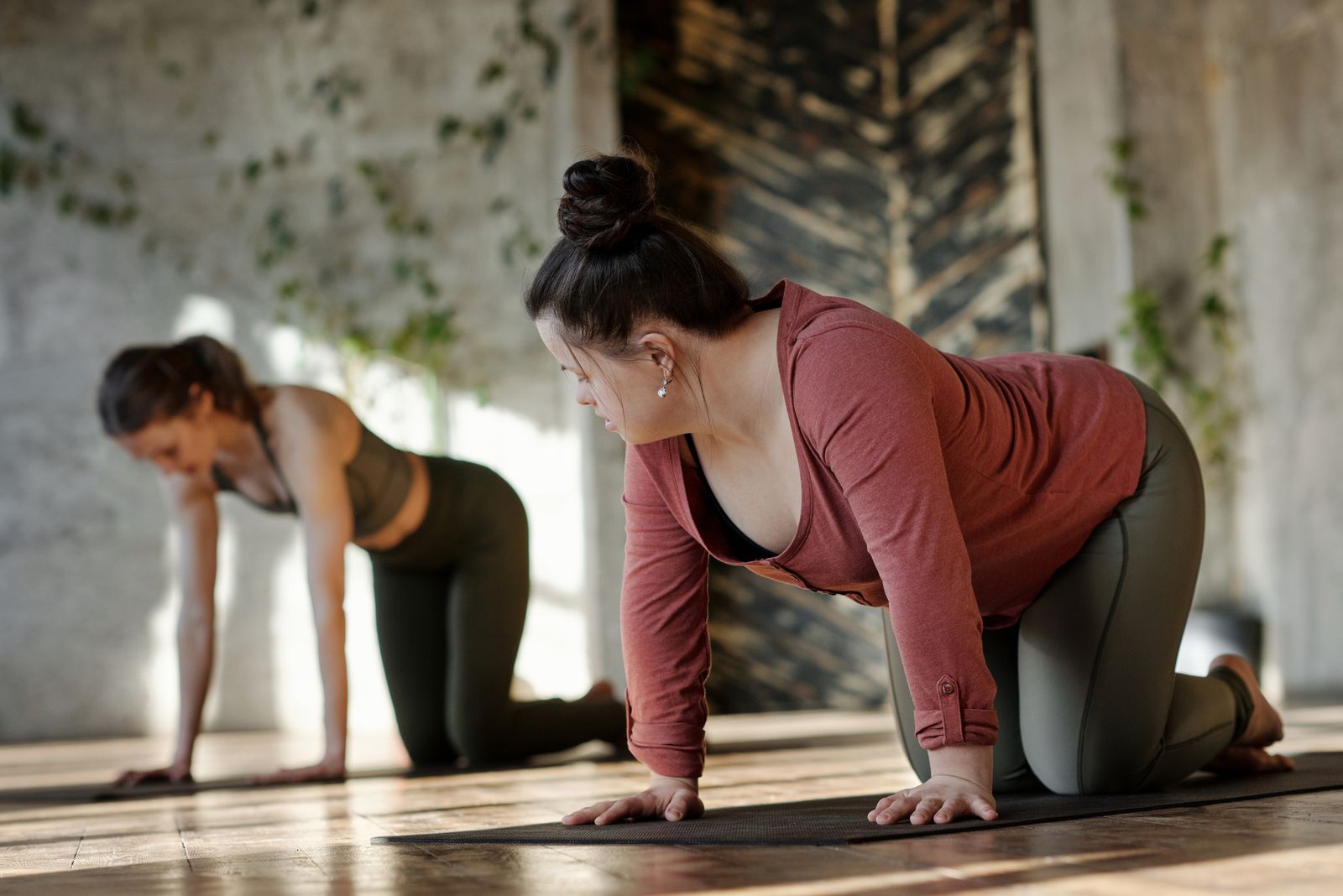
- Lower back tightens during arm raises: your ribs are probably flaring. Lower the arms, exhale, restack ribs over pelvis, then lift again.
- Neck and shoulders ache: shoulders have crept up or your gaze is dropping. Drop the shoulders, lift the screen and soften your jaw.
- Back aches after jumps: switch to the low-impact version and bend your knees more on landing.
A two-minute posture self-check you can repeat
Do this once a week, on the same day and time, so you can compare. You need a wall and a phone.
| Check | How to do it | What good looks like | If it is off |
|---|---|---|---|
| Wall test | Stand with heels about 10 cm from a wall, hips and shoulder blades touching it | Head touches or nearly touches without lifting the chin; a hand-thick gap at the lower back | Practise ribs-over-pelvis and the screen-height fix |
| Side photo | Ask someone to photograph you side-on, standing naturally | Ear, shoulder, hip and ankle roughly in one vertical line | Work on neck-long and shoulders-down cues |
| Overhead reach | Raise both arms overhead without arching | Ribs stay down; arms reach near your ears | Shorten the reach and keep the stack |
Building posture work into your week
A sensible target is 3 Zumba sessions a week with a rest day between at least two of them, plus 5 to 10 minutes of chest and hip-flexor stretching afterward; the benefits of Zumba go well beyond posture. Add two short core sessions of 10 to 15 minutes (planks, dead bugs, bird-dogs).
For extra muscle support, see our Zumba Toning guide. If you want someone to watch your alignment on video and correct it live, 1-on-1 personal training fits better than a group class, since the whole session goes on your form.
When to see a doctor instead
Exercise is not the answer to every back or neck problem. See your doctor or a physiotherapist before starting or continuing classes if you have persistent back or neck pain (lasting more than a couple of weeks) or pain that is getting worse, pain that wakes you at night, numbness, tingling or weakness in an arm or leg, a diagnosed disc problem, recent surgery or injury, or known or suspected scoliosis. With scoliosis, ask which movements are safe for your curve; Zumba cannot reverse a structural curve. Stop and get checked if you feel sharp pain, dizziness or chest discomfort.
Frequently asked questions about Zumba for posture
How long does it take for Zumba to improve posture?
Most people notice better body awareness and less stiffness within 2 to 4 weeks of regular classes. Visible changes, like standing taller or less shoulder rounding, usually take about 6 to 8 weeks of consistent practice, because they depend on building strength and changing habits. Results vary from person to person.
Can Zumba fix rounded shoulders from desk work?
It can help, but it is not a guaranteed fix. Arm reaches, presses and slow shoulder rolls strengthen the upper back and open the chest, especially when you keep your shoulders down and wide. Pair classes with chest stretches and regular breaks from your desk for the best chance of improvement.
Is Zumba safe if I have scoliosis?
That depends on your curve and your doctor’s advice. Some people with mild curves exercise normally, but others need modified movement. Ask your doctor or physiotherapist which moves to avoid, and choose a low-impact class. Zumba does not correct a structural curve, so treat it as general fitness, not treatment.
Does Zumba strengthen the lower back?
Yes, indirectly. Hip circles, torso rotations and squat steps work the muscles around the lower spine, including the deep core, glutes and back extensors. Strong support muscles help the spine hold a neutral position. If lower back pain is persistent, speak to a doctor before relying on class alone.
Should I do Zumba every day for posture?
Three to four sessions a week is a better target than daily classes. Muscles strengthen during recovery, and posture changes depend on that adaptation. On rest days, walk, stretch the chest and hips, or try a gentle yoga session. Listen to fatigue and soreness rather than pushing through.
Want to try these cues with a live instructor? Join Fitstrot’s online Zumba classes, led by lead Zumba trainer Yash Pathak (ZIN Licensed, ACE Certified, Strong Nation Certified), take your side-on photo this week, and compare it in 6 to 8 weeks. Unsure what to expect? Our online Zumba classes guide walks you through it.


