
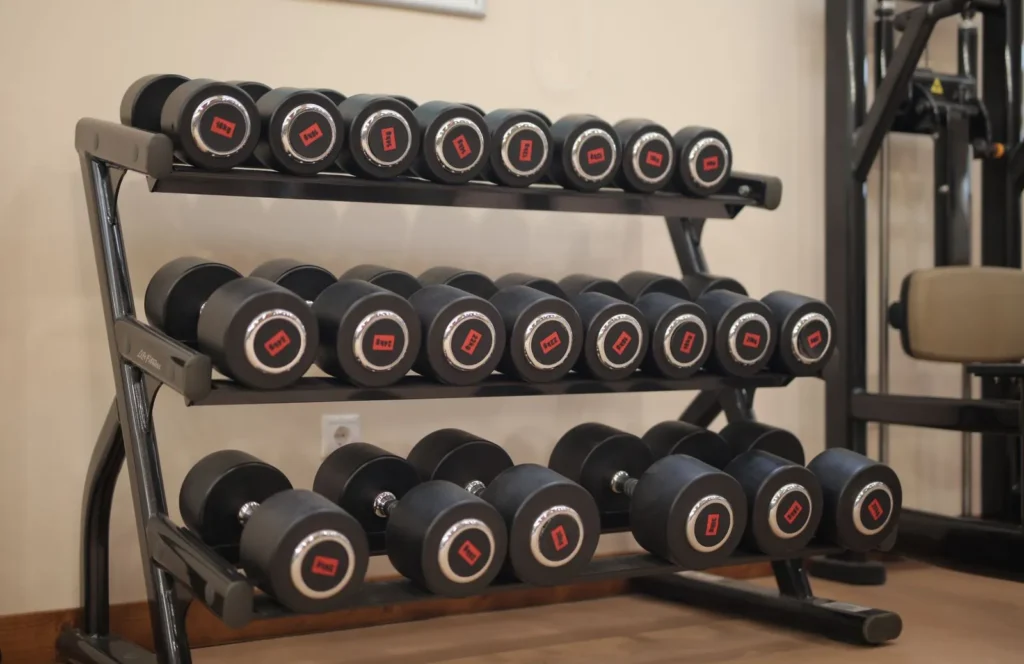
Zumba and strength training work well together because they do different jobs. Zumba builds stamina, coordination and heart fitness in a class most people enjoy enough to repeat. Lifting builds muscle, bone strength and joint stability. Put them in the right order, with enough rest between sessions, and a normal week of training covers almost everything a general-fitness goal needs.
This guide gives you a day-by-day plan, a strength routine with sets, reps, rest and form cues, fixes for common problems, and food guidance for Indian meals. It also shows how to add strength work inside Zumba itself on weeks when a gym or dumbbell session does not fit.
Can you do Zumba and strength training in the same week?
Yes. Most healthy adults do well with two or three strength sessions of 30 to 45 minutes and two or three Zumba classes of 45 to 60 minutes each week. Place them on alternate days, or on the same day with strength first, keep one full rest day, and build effort slowly over four to six weeks.
The sessions do not compete as long as you respect recovery. Your heart and lungs recover from a dance class quickly, but your muscles need roughly 48 hours before you load the same muscle group hard again. That is why alternating days works so well: lifting on Monday, dancing on Tuesday, lifting on Wednesday.
What does each one give you that the other does not?
Zumba gives you sustained cardio, rhythm, coordination and a lot of enjoyment, burning roughly 300 to 500 kcal in a 60-minute class depending on body weight and effort. Strength training gives you progressive resistance, which is what actually builds muscle and bone density, at roughly 150 to 300 kcal per 45-minute session.
| What you want | Zumba | Strength training | Both together |
|---|---|---|---|
| Heart and stamina | Strong: continuous 45 to 60 minute effort | Moderate: short bursts with rests | Best coverage |
| Muscle size and strength | Low: bodyweight only, no overload | High: load rises over weeks | Muscle plus conditioning |
| Calories per session (estimate) | About 300 to 500 kcal per hour | About 150 to 300 kcal per 45 minutes | Higher weekly total, plus more muscle to keep |
| Bone and joint loading | Light impact, good for coordination | Heavier, controlled loading | Better overall bone support |
| Fun and consistency | High: music and group energy | Varies: needs a clear plan | Variety lowers boredom |
| Typical weak spot | Upper body gets little load | Little rhythm or agility work | Each covers the other’s gap |
Calorie figures are rough estimates and vary widely by body weight, intensity and how hard you actually push. Use them to compare, not to count. If you want the baseline on muscle first, our guide on whether Zumba builds muscle explains what a dance class alone can and cannot do.
Myth check: weights make you bulky, and Zumba alone tones you
“Lifting will make me bulky.” Adding large amounts of muscle takes years of heavy, structured training and a steady calorie surplus. On two or three moderate sessions a week, most people gain firmness and shape, not bulk.
“Zumba alone will tone me.” Zumba improves muscular endurance, and many people feel and look firmer after a few weeks. But toning is really muscle you can see once body fat comes down. Without any added load, your arms, back and shoulders get little stimulus, which is why a purely dance-based week often leaves the upper body behind.
One more point: you cannot choose where fat leaves. Squats will not burn thigh fat specifically, and dance will not shrink the belly alone. Fat loss happens across the whole body.
A weekly plan for Zumba and strength training
Start with the beginner column if you have trained less than three months, or are returning after a long break. Move to the standard column once you finish four weeks without missing sessions. Both keep a rest day and never stack two hard sessions for the same muscles back to back.
| Day | Beginner (2 + 2) | Standard (3 + 3) |
|---|---|---|
| Monday | Strength A (full body, 30 min) | Strength A (full body, 40 min) |
| Tuesday | Zumba (45 min) | Zumba (60 min) |
| Wednesday | Rest or a 20 to 30 minute walk | Strength B (full body, 40 min) |
| Thursday | Strength B (full body, 30 min) | Zumba (60 min) |
| Friday | Rest or stretching | Strength A again (40 min) |
| Saturday | Zumba (45 min) | Zumba (60 min), lighter effort |
| Sunday | Rest | Rest, easy walk or stretching |
Strength A and B are both full-body, so every muscle group gets two or three hits a week. The Zumba classes sit between lifting days, giving the muscles you loaded a day to recover while your heart works. If you are weighing up how Zumba compares with other dance cardio before you commit, the benefits of Zumba are worth reading first.
Walkthrough: a 40-minute strength session you can do at home
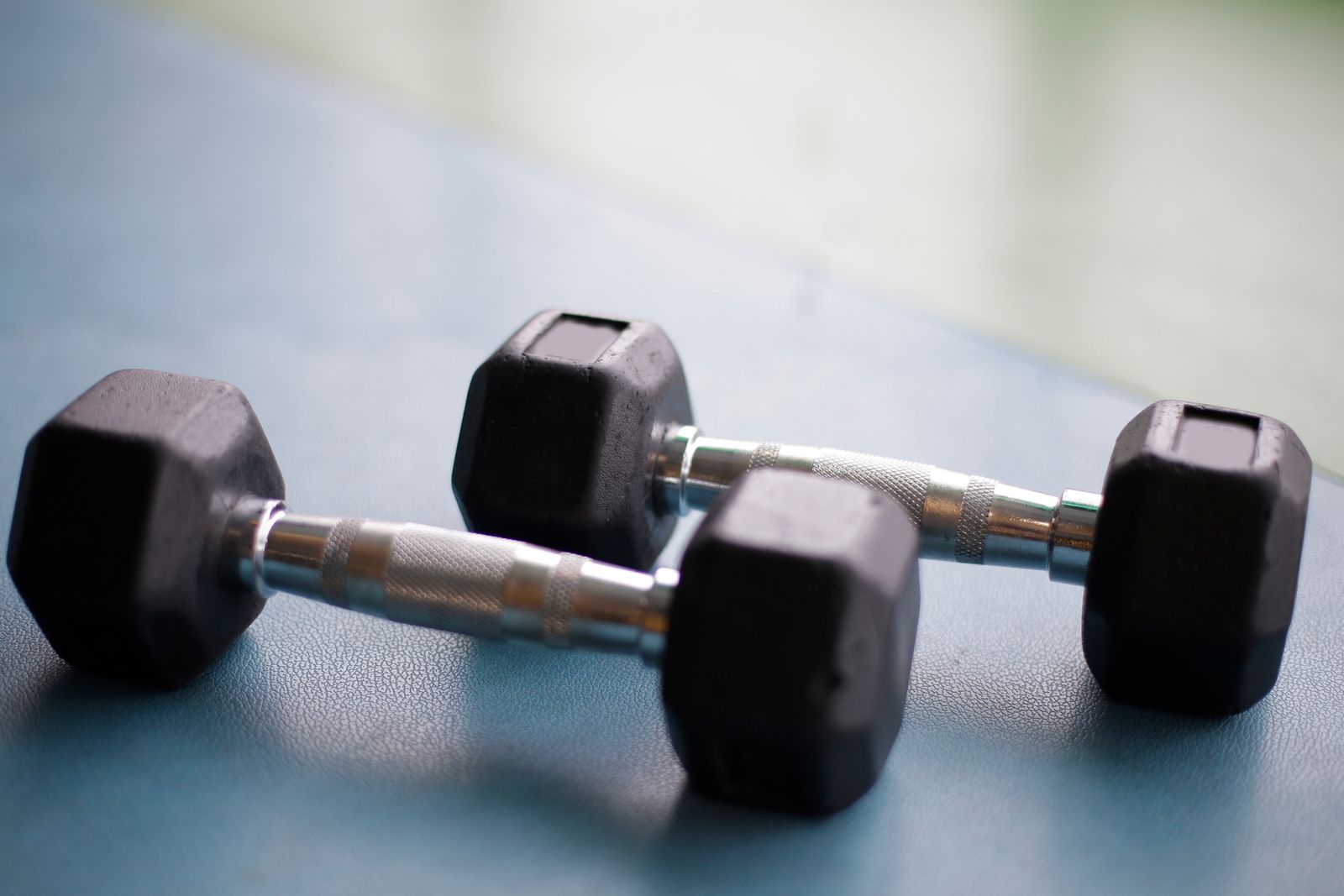
Start with five minutes of easy marching, arm circles and bodyweight squats. Then work through the table below. A pair of 2 to 5 kg dumbbells is enough for most beginners, and filled 1-litre water bottles, which weigh about 1 kg each, work for the first few weeks. Rest times are the gap between sets.
| Exercise | Sets x reps | Rest | Form cue |
|---|---|---|---|
| Goblet squat | 3 x 10 to 12 | 60 to 90 sec | Chest tall, knees track over toes, sit back and down |
| Glute bridge | 3 x 12 to 15 | 45 to 60 sec | Press through heels, squeeze at the top, ribs down |
| Incline push-up (hands on a sturdy table) | 3 x 8 to 12 | 60 sec | Body in one line, elbows about 45 degrees from the torso |
| One-arm dumbbell row | 3 x 10 per side | 60 sec | Flat back, pull the elbow to the hip, no twisting |
| Dumbbell shoulder press | 3 x 8 to 12 | 60 to 90 sec | Ribs down, press straight up, do not arch the lower back |
| Reverse lunge | 2 x 8 per leg | 60 sec | Step back, front shin vertical, lower with control |
| Plank | 3 x 20 to 40 sec | 30 to 45 sec | Squeeze glutes, shoulders over elbows, hips level |
Pick a weight where the last two reps of each set feel hard but your form stays clean. When you hit the top of the rep range on every set, add one or two kilograms the next week, or add a rep or two. That steady, small increase is the whole principle behind building strength.
If you would like someone to check your technique and set weights for you, 1-on-1 personal training with a live coach is the fastest way to remove guesswork.
Which comes first when you do both on the same day?
Lift first, dance second. Resistance exercises need fresh muscles, focus and stable joints, and all three fade after an hour of high-energy cardio. Doing strength work in the first 30 to 45 minutes protects your form and your ability to lift real weight, while Zumba afterwards is forgiving of tired legs.
There is one exception. If your main goal is a specific dance event or you are training for stamina, put Zumba first and keep the lifting lighter, with fewer sets. Most people with general fitness or fat-loss goals should keep the lifting first.
Troubleshooting: when the combination is not working
Your legs are sore for Zumba after squat day. Move the lower-body-heavy strength day away from your most intense class, or cut squat and lunge sets by one for a week. Soreness usually settles after two or three weeks as your body adapts.
The scale is not moving. Early on, muscle gain and fat loss can offset each other, so weight stays flat while clothes fit differently. Track waist measurement and how your strength changes over four to six weeks before judging the plan. If both are static, look at food intake and sleep before adding more sessions.
You feel tired all week. That usually means too much volume, too little sleep or too little food, and it rarely means you need more training. Drop to the beginner column for a week, aim for seven to eight hours of sleep, and eat a proper meal after each session.
Your knees complain during lunges or jumpy choreography. Shorten the range, slow the tempo and take the low-impact option in class. Pain that is sharp, swollen or persistent is a reason to see a doctor or physiotherapist before you continue, not something to push through.
Adding strength inside Zumba itself
If you cannot fit a separate lifting session, some formats bring resistance into the class. Zumba Toning uses light weighted sticks to load the arms and shoulders. Zumba Sentao uses a chair as a prop for balance and strength moves, and Zumba in the Circuit alternates dance blocks with strength stations.
These are a reasonable middle ground, but the loads stay light, so treat them as a supplement and not a full replacement for progressive lifting. In standard classes you can also go deeper and slower on squat and lunge segments to get more from the same choreography. Runners, cyclists and other athletes use the same idea to add variety, as covered in our piece on Zumba for cross-training.
Who should adjust the plan, and how
Complete beginners: start with two lifting and two dance sessions, and spend the first two weeks learning movements with light weights or none. Women and men over 40: lifting matters more with age because muscle and bone density decline gradually, so keep at least two strength days; warm up longer and avoid bouncing at the bottom of squats and lunges. Busy professionals: two 30-minute home lifting sessions plus two classes beat a perfect plan you drop in week three. Anyone with a heart condition, high blood pressure, joint problems or pregnancy: check with your doctor before starting a combined programme.
Eating to support both
Training twice as many ways raises recovery needs. A common target for people lifting and doing cardio is roughly 1.2 to 1.6 g of protein per kg of body weight per day, which is about 72 to 96 g for a 60 kg person. Spread it across meals instead of loading it into dinner.
In Indian meals, that could mean eggs (about 6 g each), paneer (about 18 g per 100 g), dal with curd, roasted chana, soya chunks (about 15 g per 30 g dry weight) or chicken for non-vegetarians. Add roti, rice or poha for energy before sessions, and a protein-plus-carb meal within a couple of hours after. If you have kidney issues or any medical condition, get tailored guidance first. A consultation with an online nutritionist can turn these ranges into a plan around your food, budget and schedule.
Frequently asked questions about Zumba and strength training
Can Zumba replace strength training completely?
Not if building muscle or strength is a goal. Standard Zumba uses bodyweight with no progressive overload, so it builds endurance and fitness effectively but does not give muscles a reason to grow. If your goals are heart health, enjoyment and calorie burn, Zumba alone is a valid choice.
How many days a week can I combine Zumba and strength training?
Most people do well with four to six active days a week: two to three strength sessions and two to three Zumba classes, plus at least one rest day. Beginners should start at four total sessions and add a fifth or sixth only after several weeks of steady recovery.
Does Zumba Toning count as strength training?
Partly. The weighted sticks add light resistance to arm and shoulder movements, which is more than plain Zumba offers, but the loads are far lighter than a dedicated lifting routine uses. Think of it as a useful supplement, not a full substitute for progressive resistance work.
Will doing both help me lose fat faster than Zumba alone?
It can help over time, since lifting preserves and builds muscle while Zumba adds a solid calorie burn. But results depend mainly on your overall food intake, sleep and consistency. No combination guarantees a specific loss in a specific time, and a slow, steady pace is safer.
Is it safe to do both if I am a beginner or over 40?
For most healthy adults, yes, if you start light, learn technique first and increase effort gradually. If you have a heart condition, high blood pressure, joint pain, a recent injury or you are pregnant, check with your doctor before starting a combined routine.
Start your balanced week
Book a live class in Fitstrot’s online Zumba classes, led by lead Zumba trainer Yash Pathak (ZIN Licensed, ACE Certified, Strong Nation Certified), then slot two short strength sessions around it using the plan above. You can also compare formats in our guide to online Zumba classes.


