

Does Zumba build muscle? A little, in the right places, but not in the way most people picture. A standard class trains muscular endurance in your legs, glutes and core and can add small amounts of lean tissue in people who were previously inactive. It will not produce the visible size gains of a weight-training programme, because the resistance never gets heavier from one week to the next.
That is not a knock on Zumba. The Zumba exercise benefits for your heart and mood are well documented. But if you joined hoping for firmer arms or stronger legs, this guide shows what the research found, which muscles do the work, and what to add, with Indian food examples and a weekly plan you can copy.
Does Zumba build muscle, or just burn calories?
Mostly it burns calories and builds endurance. In an American Council on Exercise study, women averaged about 80% of maximum heart rate and burned roughly 369 kcal in a 39-minute class. A 2016 systematic review of 11 trials concluded that Zumba improves aerobic capacity but found only “limited evidence” of gains in muscular strength.
The heart-rate and calorie figures come from the ACE-sponsored Zumba study, which tested 19 women aged 18 to 22 who already knew the choreography. They worked at about 64% of VO2max and burned around 9.5 kcal per minute. That is solid cardio intensity for a class that feels like a party.
The muscle side is thinner. The 2016 systematic review in PM&R pooled 586 participants and rated only 4 of the 11 studies as high quality. Its conclusion is worth quoting directly: Zumba “could be considered an effective type of physical activity able to improve aerobic capacity,” while “limited evidence described positive effects on muscular strength and flexibility.”
So the honest answer has two parts. If you were sedentary, Zumba will make your muscles stronger and more resistant to fatigue for the first few months, because almost any movement is a new stimulus. After that, it becomes maintenance for your muscles and training for your heart. If you want to know where it ranks as a heart workout, our guide on whether Zumba counts as cardio covers that in detail.

What the studies actually measured
Most Zumba research tracks weight and VO2max. Only a handful of trials measured strength or lean mass, and the effects were real but small.
| Study | Who | Zumba dose | Muscle or strength result |
|---|---|---|---|
| Barene et al., J Sports Sci, 2016 | 107 female hospital staff, aged 25-63 | 2-3 one-hour classes a week for 3 months, then 1 a week for 6 months | Trunk extension strength +3.1 kg at 3 months; lower-limb lean mass +0.4 kg at 9 months vs controls. No change in jump height. |
| Barranco-Ruiz & Villa-González, 2020 | 98 physically inactive working women | Zumba only vs Zumba plus a bodyweight strength circuit | Both groups improved handgrip and sit-up scores. No significant difference between the two groups. |
| Lahiani et al., Exp Aging Res, 2024 | 42 postmenopausal women | 12 weeks of Zumba | Better lower-limb strength and balance compared with their own baseline |
| Vendramin et al., PM&R, 2016 (review) | 11 studies, 586 people | Varied | “Limited evidence” of strength gains; aerobic capacity improved |
Read the Barene numbers carefully, because they are the best evidence that Zumba can add muscle at all. Nine months of classes added 0.4 kg of lean mass to the legs. That is a real, measurable change, and it matters for balance and joint health as you age. For scale, a 2018 meta-analysis of 49 resistance-training trials found that adding protein alone, on top of lifting, added about 0.3 kg of fat-free mass over the training period. In other words, Zumba’s nine-month effect on the legs is roughly the size of a minor add-on to a weights programme, not the programme itself.
Zumba muscles worked, ranked by how hard they work
Zumba choreography leans heavily on the lower body and trunk. Your arms move constantly, but they carry almost no load, so they get an endurance workout rather than a strength one. This table shows which muscles do the most work and what you can realistically expect from each.
| Muscle group | Zumba moves that load it | Stimulus level | What you will notice after 8-12 weeks |
|---|---|---|---|
| Quadriceps (front thigh) | Reggaeton squats, lunges, cumbia steps in a low stance | Moderate | Stairs feel easier, thighs stop burning halfway through class |
| Glutes | Squats, hip lifts, side lunges, merengue march | Moderate | Better endurance; little change in size without added load |
| Calves | Constant bouncing, salsa and samba footwork | Moderate to high (endurance) | Calves fatigue less; possible slight firmness |
| Core (abs, obliques, lower back) | Hip rolls, belly dance isolations, torso twists | Low to moderate | Better posture and trunk control; measured back-extension strength gains |
| Hamstrings | Kicks, hip hinge in some routines | Low | Minimal change |
| Shoulders and arms | Arm waves, punches, overhead claps | Very low (no load) | Endurance only; no meaningful tone change |
| Chest and upper back | Almost none | Negligible | No change |
Notice the gap at the bottom. Chest, upper back and arms get almost nothing from standard Zumba, and those are often the areas people most want to firm up. If you are specifically after the lower body, our guide to Zumba for toned legs goes deeper on that.
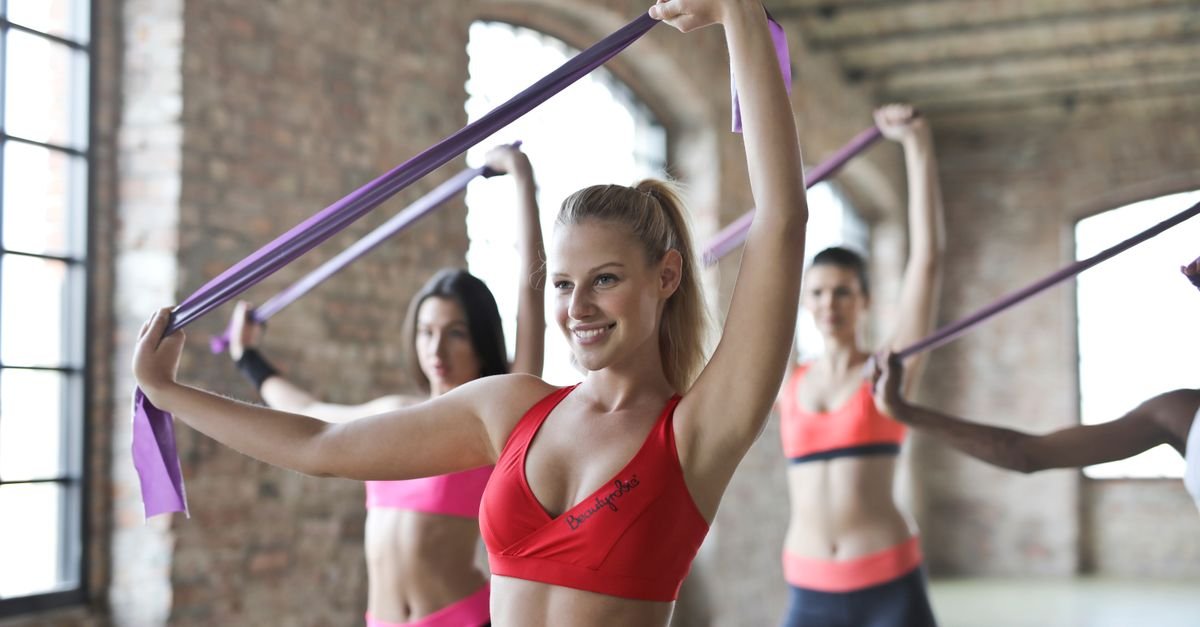
Myth check: “I don’t want to bulk up, I just want to tone”
This is the most common reason people choose Zumba over weights, and it rests on a misunderstanding. There is no separate “toning” process. What people call a toned look is simply more muscle with less fat covering it. You cannot firm a muscle without either growing it or uncovering it.
Zumba helps with the second part through calorie burn but does little for the first once you are past the beginner stage. That is why many regulars lose weight yet still describe their arms and thighs as “soft”.
The fear of bulking is also misplaced. Noticeable size takes months of deliberately heavier training plus enough protein and calories; it does not happen by accident from two sessions a week.
So, does Zumba tone your body?
Partly. It reduces the fat layer if your diet supports a calorie deficit, and it improves muscular endurance in your legs and core. For the firmer look most people mean by “toned”, you need the muscle underneath to grow a little too, and that requires resistance that increases over time.
Is Zumba strength training? Why the load hits a ceiling
No, standard Zumba is aerobic training, not strength training. Muscles grow when they are pushed close to fatigue against a load that keeps rising. Zumba’s resistance is your own bodyweight moving at a fixed tempo, so after the first two to three months the challenge stops increasing and so does muscle growth.
Strength coaches call this progressive overload. Every few weeks, you make the work a little harder: more weight, more reps, slower tempo or more sets. A 2017 meta-analysis of 15 studies found a clear dose-response pattern: each extra weekly set per muscle was linked to roughly 0.37% more muscle gain, with 10 or more weekly sets per muscle tending to do best.
There is a common counter-argument: “light weights work too.” It is true, up to a point. A 2017 meta-analysis of 21 studies found that loads at or below 60% of your one-rep max built as much muscle as heavy loads. But in every one of those studies, each set was taken to momentary muscular failure, meaning the person could not do one more rep. Zumba never asks you to do that. You might do 32 squats in a song, but at a pace and depth that stays comfortable enough to keep dancing. That is endurance work, and it is why Zumba strength training, on its own, levels off.

Zumba Toning, STRONG Nation and Step: which format comes closest?
Zumba’s own sub-formats exist partly to close this gap. Some help more than others. Here is how they compare for muscle.
| Format | Added resistance | Muscle stimulus | Best for |
|---|---|---|---|
| Standard Zumba | None (bodyweight) | Low; endurance only after the first few months | Cardio, mood, coordination, calorie burn |
| Zumba Toning | Toning sticks, about 0.45 kg (1 lb) each | Low to moderate for shoulders and arms; still endurance-focused | Beginners who want some arm work inside a dance class |
| Zumba Step | Raised step platform | Moderate for quads and glutes | Lower-body endurance and a higher heart rate |
| STRONG Nation workout | Bodyweight squats, lunges, burpees and planks synced to music | Moderate; closest to a strength-circuit format | People who want interval training without dancing |
| Zumba plus 2 strength sessions a week | Progressive dumbbells, bands or machines | High | Visible tone, stronger joints, muscle gain |
Do Zumba toning sticks build muscle?
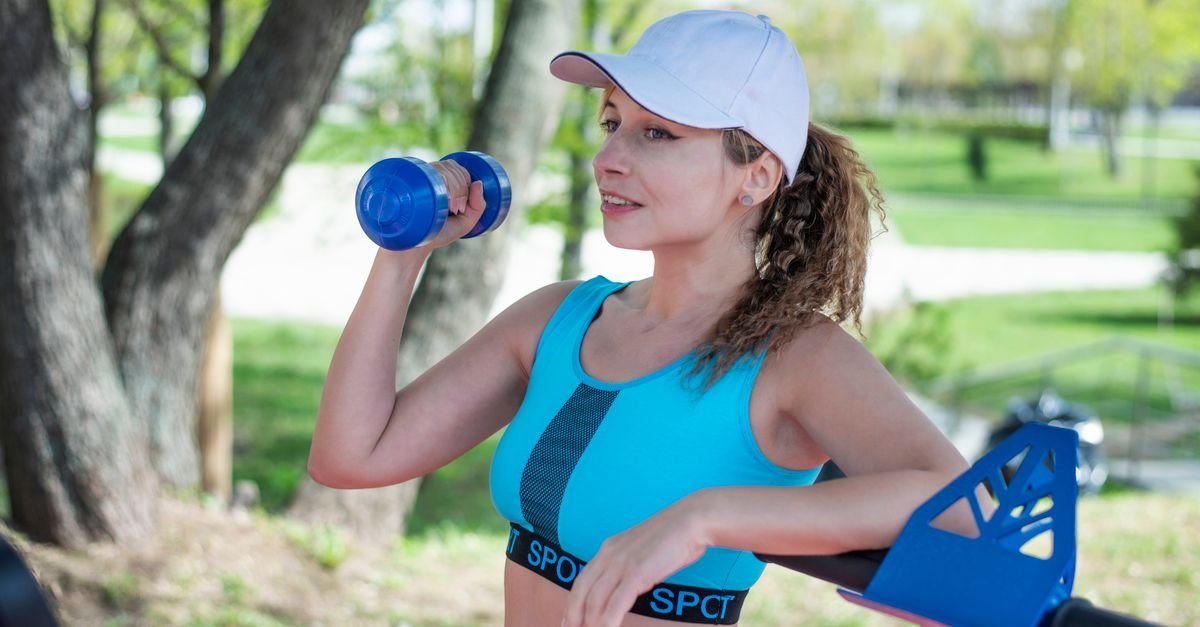
Zumba toning sticks are hollow, sand-filled sticks that rattle like maracas and weigh about 1 lb (0.45 kg) each. That is enough to make your shoulders burn during long arm sequences, which is useful for beginners. It is not enough to grow the arms of anyone who already carries shopping bags or a toddler. At less than half the weight of a full 1-litre water bottle, the load mostly adds endurance work.
Is a STRONG Nation workout better for muscle?
STRONG Nation drops the dance steps and builds intervals around squats, lunges, burpees and plank holds timed to the music. Because the moves are closer to strength exercises and the sets are harder, it gives more muscle stimulus than standard Zumba. It still has no built-in progression of load, so treat it as a bridge rather than a replacement for weights.
Fitstrot’s lead Zumba trainer, Yash Pathak, is ZIN Licensed, ACE Certified and Strong Nation Certified, so our online Zumba classes can mix toning and STRONG-style blocks into the dance format rather than treating them as separate programmes.

Zumba vs gym for building muscle
If the question is “Zumba or gym?”, the answer depends on your goal, not on which is better overall.
- For heart health, mood and sticking with exercise: Zumba often wins, because people actually show up, and the research consistently shows better aerobic capacity.
- For muscle size and maximal strength: the gym wins clearly. You can add a small amount of weight to a lift every week or two. Zumba has no equivalent dial.
- For the best overall result: do both. The CDC’s adult guidelines recommend 150 minutes of moderate activity a week plus at least 2 days of muscle-strengthening activity working the legs, hips, back, abdomen, chest, shoulders and arms. Zumba covers the first part well. It does not cover the second.
The WHO estimates that 31% of adults, about 1.8 billion people, do not meet recommended activity levels. If Zumba gets you moving, keep it and add strength work alongside.
How to pair Zumba with strength training: a weekly walkthrough
The simplest structure that works for most beginners is 3 Zumba classes and 2 short strength sessions a week, with at least one rest day. Strength days should not follow your hardest dance day, so your legs are fresh enough to lift with good form.
Sample week: Monday Zumba, Tuesday Strength A, Wednesday Zumba, Thursday rest or a walk, Friday Strength B, Saturday Zumba, Sunday rest.
Each strength session takes 30-40 minutes with home dumbbells or a basic gym. Pick a weight where the last 2 reps of each set are genuinely hard but your form stays clean. When you can do the top of the rep range for every set, increase the weight by the smallest step available.
| Exercise | Session | Sets x reps | Rest | Form cue |
|---|---|---|---|---|
| Goblet squat | A | 3 x 8-12 | 90 sec | Hold the dumbbell at your chest, sit between your heels, knees track over toes |
| Dumbbell Romanian deadlift | A | 3 x 8-12 | 90 sec | Push hips back, keep the weights close to your legs, flat back |
| Push-up (incline on a bed or counter if needed) | A | 3 x 6-12 | 60-90 sec | Body in one straight line, lower your chest to the surface |
| One-arm dumbbell row | A | 3 x 10-12 each side | 60 sec | Pull your elbow towards your hip, do not twist your torso |
| Reverse lunge | B | 3 x 8-10 each leg | 90 sec | Step back, drop the back knee straight down, front heel stays planted |
| Glute bridge or hip thrust | B | 3 x 10-15 | 60-90 sec | Squeeze your glutes at the top, ribs down, no arching the lower back |
| Seated dumbbell shoulder press | B | 3 x 8-12 | 90 sec | Press straight up, stop just short of locking your elbows |
| Plank | B | 3 x 20-40 sec | 45 sec | Squeeze your glutes, keep your hips level with your shoulders |
Two sessions give each major muscle group roughly 6 hard sets a week. That is a sensible starting volume. After 6-8 weeks, you can add a fourth set to the exercises that target the areas you most want to change, moving towards the 10 weekly sets the dose-response research favours. If you would rather have a coach adjust the plan and check your form on video, our 1-on-1 personal training is built for exactly that.

Eating to keep and build muscle on a Zumba schedule
A busy dance week burns a lot of energy. If your diet is also very low in calories or protein, your body has little material to build or even keep muscle.
The 2018 BJSM meta-analysis found that muscle gains from resistance training levelled off at about 1.6 g of protein per kg of body weight per day. For a 60 kg woman, that is about 96 g a day at the upper end. Even 1.2 g/kg (72 g) is well above what many Indian vegetarian diets provide, which often rely on rice, roti and a small katori of dal.
Practical ways to reach 20-30 g of protein at each main meal in an Indian kitchen:
- Breakfast: besan or moong dal chilla with paneer filling, or eggs with a roti, instead of poha alone.
- Lunch: a full bowl of dal or rajma plus a side of curd or raita, not just a spoonful alongside rice.
- Evening: roasted chana, sprouts chaat or a glass of milk or buttermilk after class.
- Dinner: paneer, tofu, soya chunks, fish, chicken or eggs as the main dish, with vegetables and a smaller portion of roti or rice.
If you have kidney disease, diabetes or another condition, speak to your doctor before raising protein intake. For a meal plan matched to your training days and food habits, an online nutritionist consultation takes the guesswork out.
Troubleshooting: “I do Zumba 5 days a week and still don’t see muscle”
One of these is usually the cause:
- No added resistance. Five classes of the same choreography is the same stimulus five times. Swap two classes for strength sessions.
- Too few calories. Combining daily Zumba with a strict diet can mean you lose muscle along with fat. Aim for a moderate deficit, not a crash diet.
- Low protein. Track one normal day. If you are under 1 g/kg, fix that first.
- Shallow range of motion. Half-squats keep the rhythm going but load the muscles less. On squat tracks, go as low as you can with control.
- Poor sleep and no rest days. Muscle is built during recovery. At least one full rest day a week is not optional.
- Expecting change too fast. Even with lifting, visible change usually takes 8-12 weeks.
Who can expect muscle gains from Zumba, and who shouldn’t
Previously sedentary adults: You will likely get stronger in the first 2-3 months, as the 2020 and 2016 trials above show. Zumba’s main strength here is that it builds the exercise habit.
Women over 40 and postmenopausal women: Muscle and bone loss speeds up after menopause. The 2024 trial in postmenopausal women found better leg strength and balance after 12 weeks, which is valuable for preventing falls. Still, adding two strength sessions gives far more protection for bone and muscle than dance alone.
Men or women who want visible size: Zumba alone will not get you there. Use it as cardio on non-lifting days.
People with knee, hip or back pain: Jumps and quick pivots can aggravate joints. Choose low-impact options, and get clearance from your doctor or physiotherapist before adding loaded squats or lunges.
Pregnant women: Do not start a new high-intensity programme or heavy lifting without your obstetrician’s approval.
Frequently asked questions
Can Zumba build muscle without weights?
Only a little, and mostly in beginners. A 9-month trial found Zumba added about 0.4 kg of leg lean mass compared with controls. After the first few months, bodyweight dance moves stop getting harder, so muscle growth stalls without added resistance.
How long does it take to see muscle tone from Zumba?
Most people notice better endurance within 4-6 weeks. Visible firmness depends more on fat loss and strength training than on Zumba itself, and usually takes 8-12 weeks of consistent classes, sensible eating and two strength sessions a week.
Is Zumba Toning enough to build arm muscle?
No. Zumba toning sticks weigh about 0.45 kg each, which trains shoulder endurance but is too light to grow the arms of most adults. Add push-ups, rows and dumbbell presses for real arm and shoulder strength.
Is Zumba or the gym better for building muscle?
The gym, because you can add load progressively. Zumba is better for cardio fitness, enjoyment and consistency. The CDC recommends both: 150 minutes of moderate activity plus at least 2 days of muscle-strengthening activity each week.
Can I do Zumba and strength training on the same day?
Yes. Do the strength session first if muscle is your priority, or leave a few hours between them. Avoid heavy leg training straight after a long, high-intensity dance class, when tired legs make poor form more likely.
Will Zumba make me lose muscle?
Zumba itself will not, but doing it daily on a very low-calorie, low-protein diet can. Keep protein around 1.2-1.6 g per kg of body weight and include two strength sessions a week to protect the muscle you have.
Which muscles does Zumba work the most?
The quadriceps, glutes, calves and core do most of the work through squats, lunges, footwork and hip movements. The arms, shoulders, chest and upper back get very little load in a standard class.
Keep the dance, add the strength. Book a trial of Fitstrot’s online Zumba classes and ask for toning and STRONG-style blocks, so your cardio days and your muscle goals finally work together.


