
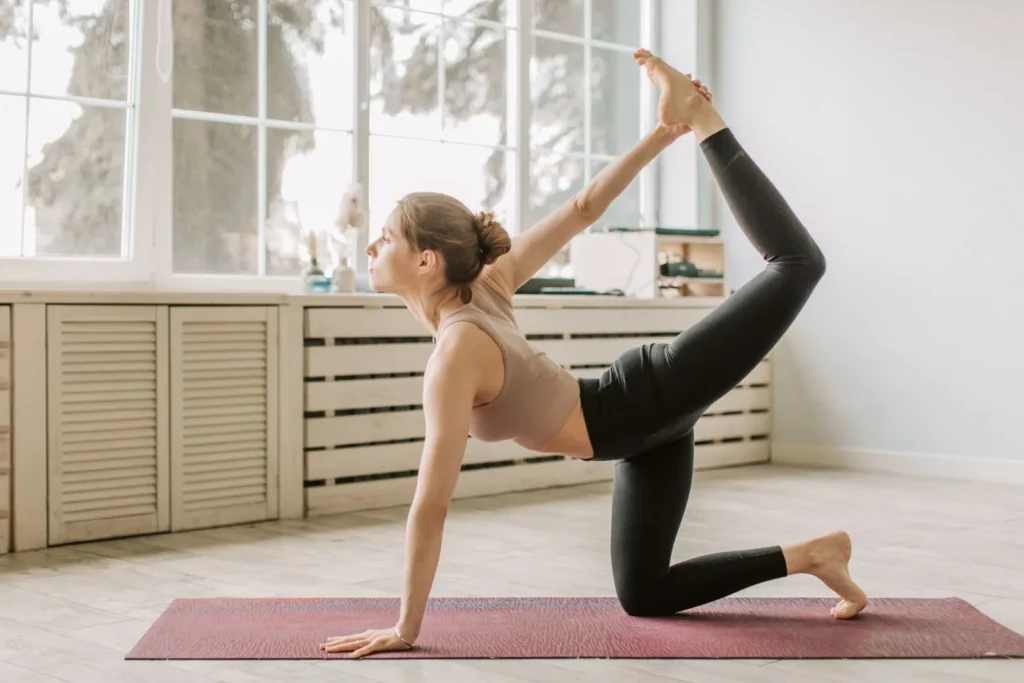
Doing yoga for pcod works best as a supportive daily habit, not a treatment. A gentle routine of 20 to 25 minutes, four to five days a week, can help you manage stress, keep moving and sleep a little better while you follow your gynaecologist’s plan and a sensible diet. It cannot cure PCOD, and it should never replace medicines, scans or check-ups. This guide gives you a safe sequence, a four-week start plan and clear red flags.
Can yoga help with PCOD?
Yoga can help you live with PCOD by lowering everyday stress, keeping the body moving and improving sleep, which makes it easier to stick with medical advice and diet changes. It does not cure PCOD, and it cannot promise regular periods or lower hormone levels. Treat it as a 20 to 25 minute support habit alongside treatment.
That framing matters because PCOD is a medical condition that your doctor diagnoses and monitors, usually with a clinical history, blood tests and an ultrasound. Yoga sits next to that care. What it offers is practical: a calmer evening, a body that is used to moving, and a routine you can keep even on busy weeks.
PCOD vs PCOS: does the difference change your yoga?
In everyday Indian conversation, “PCOD” and “PCOS” often describe the same picture: irregular cycles, acne, extra hair growth or weight gain, with polycystic-looking ovaries on a scan. The label matters less than your symptoms, so the gentle pcod yoga routine below suits both. Your diagnosis and treatment come from your doctor, not a yoga class.
If your report says PCOS specifically, our separate guide on yoga for PCOS covers that angle. This page stays focused on a practical routine for women who use the word PCOD and want something simple to do at home.
Why stress and movement matter when you have PCOD
Many women with PCOD describe a loop: worry about periods, skin or weight raises stress, stress disturbs sleep and eating, and poor sleep and eating make symptoms harder to manage. Yoga cannot fix the underlying hormones, but slow breathing and gentle stretching can take the edge off that loop. Regular movement of any kind also supports the metabolic side of PCOD, which your doctor and dietitian are usually watching.
The same stress-and-routine logic applies to other hormone-related concerns, which we cover in yoga for hormonal imbalance. Think of yoga as the part of your plan that you do for yourself every day, between appointments.
A 25-minute pcod yoga routine you can do at home
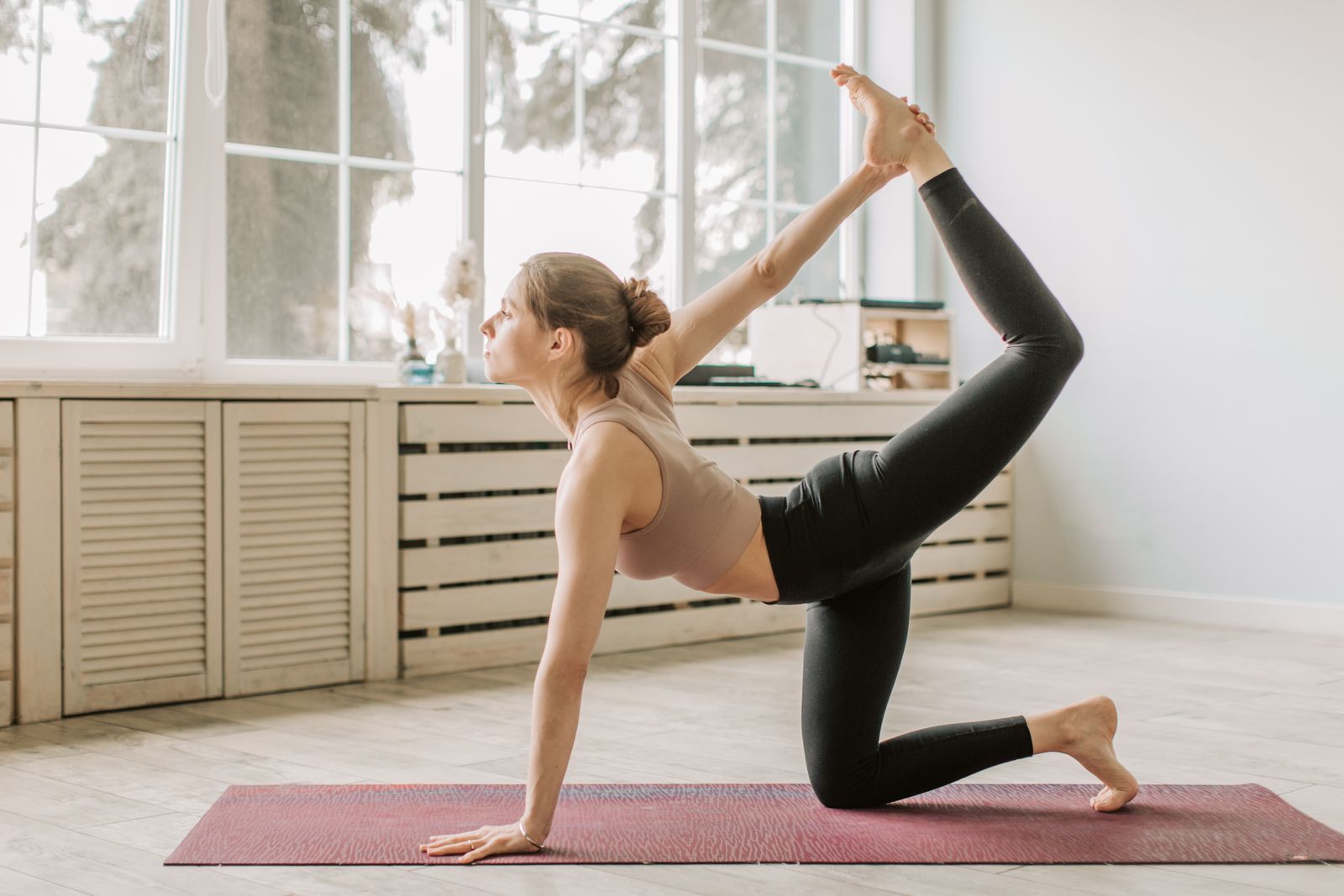
This pcod yoga at home sequence needs only a mat, a folded blanket and a wall. Practise on an empty stomach or two to three hours after a meal. Move slowly, breathe through the nose, and stop any pose that causes pain rather than a mild stretch. Here are the yoga poses for pcod in order.
| Order | Pose | Time | Form cue |
|---|---|---|---|
| 1 | Easy seat with slow breathing (Sukhasana) | 3 minutes | Sit on a folded blanket, spine tall, breathe in for 4 counts and out for 6 |
| 2 | Cat-cow | 1 minute | 8 slow rounds, moving with the breath, shoulders away from ears |
| 3 | Butterfly (Baddha Konasana) | 2 minutes | Soles together, sit on a cushion, let knees drop without forcing them |
| 4 | Garland squat (Malasana) | 2 rounds of 30 seconds | Heels on a folded blanket if they lift; hold a wall or chair for balance |
| 5 | Low cobra (Bhujangasana) | 3 rounds of 5 breaths | Elbows bent, lift only the chest, keep the pelvis heavy on the mat |
| 6 | Bridge (Setu Bandhasana) | 3 rounds of 5 breaths | Feet hip-width, press through heels, neck relaxed and still |
| 7 | Wind-relieving pose (Pawanmuktasana) | 5 breaths each side | Hug one knee in at a time, keep the other leg long |
| 8 | Legs up the wall (Viparita Karani) | 4 minutes | Hips a hand-width from the wall, arms loose, breathe slowly |
| 9 | Final rest (Shavasana) | 5 minutes | Lie flat, let the breath settle, cover up if you feel cold |
Total time is about 25 minutes. If the full list feels like too much, do steps 1, 3, 8 and 9 on tired days. A short, regular practice is more useful than one long session you dread.
Breathing practices: keep them slow and simple
Pranayama for pcod should be calming, not forceful. Three options are enough for most beginners.
- Slow diaphragmatic breathing: inhale for about 4 counts, exhale for about 6, for 3 to 5 minutes. This is the easiest place to start.
- Bhramari (humming bee breath): inhale, then hum softly on the exhale for 5 to 7 rounds. Many people find it settling before bed.
- Anulom Vilom (alternate nostril breathing): keep it gentle and skip any breath-holding at the start.
Leave out fast or forceful techniques such as Kapalabhati and Bhastrika unless a trained teacher has cleared them for you. They are generally avoided during periods and pregnancy, and by people with high blood pressure or heart problems.
Myth correction: what yoga for PCOD cannot do
Social media is full of big promises, so it helps to be plain about the limits.
- Myth: yoga reverses or cures PCOD. It does not. PCOD is managed over the long term, and your plan is set by your doctor.
- Myth: a particular pose fixes your hormones or brings on a period. No pose does that, and nobody can promise a specific result in a specific number of weeks.
- Myth: you can stop medicines once you take up yoga. Never stop or change any medicine on your own. Any change must come from your doctor.
- Myth: harder yoga means faster results. Intense or heated sessions can leave some women exhausted and discouraged. Start gentle and build up.
What you can reasonably expect is more modest and still worthwhile: feeling calmer, sleeping a bit better and building a routine you can sustain.
A four-week start plan for beginners
If you are new to yoga, build up slowly. The plan below fits a beginner with no injuries. Our guide to yoga for beginners explains the basics of pacing, and the overview of the types of yoga helps you choose a style later.
| Week | Days per week | Minutes per session | What to do |
|---|---|---|---|
| 1 | 3 to 4 | About 10 | Slow breathing, cat-cow, butterfly pose, final rest |
| 2 | 4 | About 15 | Add garland squat and wind-relieving pose |
| 3 | 4 to 5 | About 20 | Add low cobra and bridge pose |
| 4 | 5 | About 25 | Full sequence with legs up the wall |
Skip a day when you are unwell and restart the next day without guilt. Keep a simple note of sleep, mood and energy so you can show your doctor how you are doing.
Troubleshooting: adjust the practice on the day
Some days your body will not follow the plan. Use these adjustments instead of pushing through.
| Situation | What to change |
|---|---|
| First heavy days of your period | Choose rest, slow breathing and legs up the wall only. Skip bridge, strong core work and forceful breathing |
| Poor sleep or very tired | Do the restorative steps (1, 3, 8, 9) for 10 to 15 minutes |
| Knee discomfort in garland squat | Sit on a block or folded blanket, or skip it |
| Lower back pinch in cobra | Lift less, keep elbows bent, or switch to cat-cow |
| Dizzy when standing up | Come up slowly, drink water, and skip legs up the wall until you have asked your doctor |
| Feeling drained after practice | The session was too long or too intense; cut it by a third |
How does yoga fit with diet, sleep and other exercise?
Yoga fits best as one part of a plan that also covers food, sleep and other movement. For most adults, health guidance suggests about 150 minutes of moderate activity a week, such as brisk walking, with yoga counted on top as stress relief and flexibility work. Food advice for PCOD should come from a doctor or registered dietitian.
If weight is one of your goals, be realistic. Yoga uses far less energy than brisk walking or strength training, so it is a helper rather than a main tool. Our guide to yoga for weight loss explains the calorie side, and more active styles such as Vinyasa yoga or power yoga can be added on one or two days a week once you feel steady. Stop if they leave you wiped out. Eating advice belongs with a dietitian, so use the right professional for each part of your plan.
If you also have thyroid, blood pressure or anxiety concerns
Many women with PCOD also manage another condition, and the gentle approach here usually carries over with small changes.
- Thyroid: keep the sequence calm and follow your doctor’s treatment; our guide on yoga for thyroid has pose notes.
- High blood pressure: avoid breath-holding and long head-down positions, and read yoga for high blood pressure first.
- Anxiety or low mood: slow breathing and Bhramari tend to suit best, and yoga for anxiety adds more options. Persistent low mood deserves a professional’s support, not just a mat.
- General background: the benefits of yoga overview shows what regular practice can and cannot do.
Who should avoid or modify this routine
Gentle yoga suits many women, but check with your doctor first, and hold off until cleared, in these situations:
- You are pregnant, or you think you might be.
- You have severe or unexplained pelvic pain, or a known ovarian cyst that your doctor has asked you to watch.
- You have heavy or prolonged bleeding.
- You have recently had abdominal or pelvic surgery.
- You have uncontrolled high blood pressure, a heart condition, severe anaemia or frequent dizziness.
- You are on fertility treatment, where timing and activity advice is specific to your cycle.
Avoid deep twists, strong backbends and inversions such as headstand until a qualified teacher and your doctor say they suit you. Pain, dizziness, breathlessness or a pulling sensation in the pelvis mean stop.
When to see a doctor instead of relying on yoga
See a gynaecologist promptly if you have missed periods for three months or more, very heavy bleeding, severe or sudden pelvic pain, or are trying to conceive. Do not wait for yoga to make a difference. Do not stop or change any medicine on your own.
Book a medical appointment if any of these apply:
- Missed periods: no period for three months or more, or cycles that become much less predictable.
- Heavy bleeding: soaking a pad every hour or two for several hours, passing large clots, or periods lasting more than 7 days.
- Severe pain: sudden sharp pelvic pain, especially with fever, vomiting or fainting, needs urgent care.
- Trying to conceive: if you have been trying for 12 months, or 6 months if you are over 35, or you already know you have PCOD, speak to your doctor early.
- New or worsening symptoms: rapid weight change, severe acne, increasing hair growth or feeling low most days.
Frequently asked questions
Can yoga cure PCOD?
No. PCOD is a long-term condition with hormonal, metabolic and lifestyle aspects, and yoga does not cure it. A gentle routine can support stress management, sleep and regular movement alongside medical treatment, a balanced diet and follow-up with your doctor.
Which yoga pose is best for PCOD?
There is no single best pose. Butterfly pose (Baddha Konasana), cat-cow, low cobra and legs up the wall are common beginner choices because they are gentle and easy to modify. Choose the ones that feel comfortable, and finish with a few minutes of rest.
How long should I do yoga for PCOD each day?
Start with about 10 minutes, three to four days a week, and build to roughly 25 minutes on five days. Short, regular sessions are easier to keep up than long ones. Take rest days when you are unwell or tired, and judge progress by how you feel.
Can I do yoga during periods if I have PCOD?
Gentle practice is usually fine if you feel well: slow breathing, light stretching and resting poses. Skip strong core work, inversions and forceful breathing, and take full rest on heavy or painful days. If pain is severe, see your doctor.
Can beginners do pcod yoga at home without a teacher?
Yes, if you have no medical restrictions, keep the poses gentle and follow the four-week plan above. A live teacher helps with form and modifications, especially if you have pain, a related condition or are unsure about a pose. Check with your doctor first if unsure.
Want a teacher to guide your form and pace? Book a trial with Fitstrot’s online yoga classes and tell the instructor about your PCOD so the session stays gentle.


