

Done well, yoga for concentration in students works best when it is short, scheduled and tied to study time: a few minutes of slow breathing, one balance pose and a quiet seated pause before a revision block can settle a restless mind. This guide gives you timed sequences, desk-friendly study-break practices and an exam-week timetable you can follow, with safety notes for breathing practices and teens.
How does yoga help a student concentrate?
Yoga helps concentration by calming the body’s stress response and giving attention something steady to follow. Slow breathing for two to five minutes lowers physical tension, balance poses reward staying present, and a short seated pause trains you to notice distraction and return. It supports good study habits and sleep; it does not replace them.
Concentration is a limited resource. Long screen hours, back-to-back classes, late nights and exam worry all draw on it, so focus tends to fade after roughly 45 to 60 minutes of continuous study. Yoga works as a reset in those gaps, which is why timing matters more than how advanced the poses are. For a general overview of the topic, see our guide on yoga for concentration, and for the memory side, yoga for memory and learning.
Which yoga practice fits which part of a student’s day?
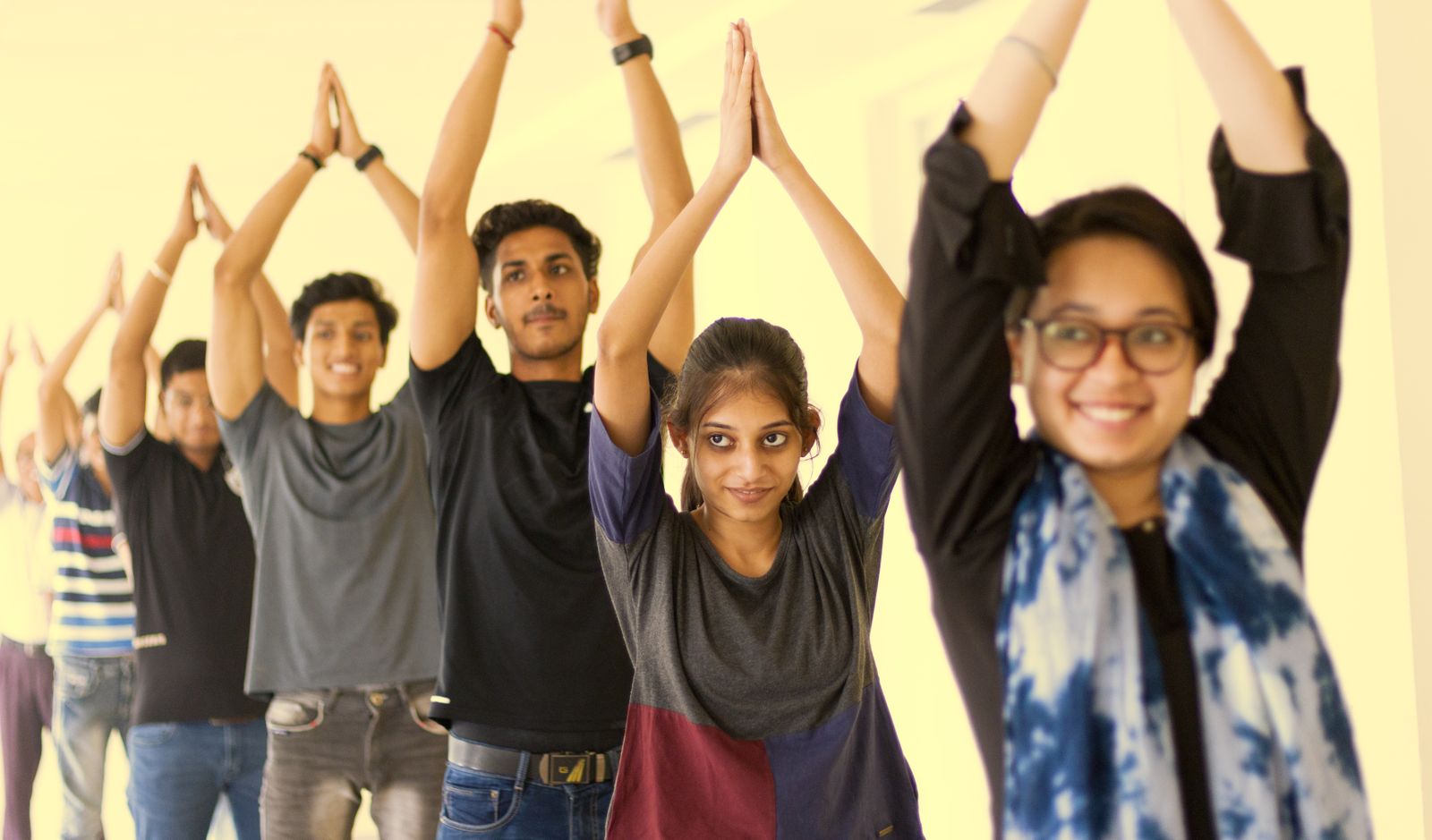
Match the length of the practice to the moment. Use 10 to 12 minutes before a study session, 3 to 5 minutes between revision blocks, 2 minutes after lunch to beat the afternoon slump, and 5 to 10 slow minutes before bed. Short and frequent beats one long session on a weekend.
| Moment | Time needed | What to do | What it is for |
|---|---|---|---|
| Before a study block | 10-12 minutes | Seated breathing, tree pose, a gentle flow, quiet sitting | Shift from scattered to settled |
| Between revision blocks (every 45-60 minutes) | 3-5 minutes | Stand, stretch the neck and wrists, 10 slow breaths | Reset attention without opening the phone |
| After lunch | 2-3 minutes | Standing side bends, chair twist, slow breaths | Ease the afternoon dip |
| Before an exam or test | 3-5 minutes | Slow breathing with a longer exhale, relaxed shoulders | Lower the racing-heart feeling |
| Before bed | 5-10 minutes | Child’s pose, legs up the wall, slow breathing | Wind down for sleep |
A 12-minute pre-study sequence, step by step
This sequence suits a student sitting down to a 90-minute revision block. Do it on a mat or folded blanket, in a quiet corner, with the phone in another room. If you are new to yoga, learn the basic poses first in our yoga for beginners guide.
| Step | Time | Practice | Cue to follow |
|---|---|---|---|
| 1 | 2 minutes | Easy seat with eyes closed | Sit tall, relax the jaw, count 10 natural breaths |
| 2 | 3 minutes | Alternate nostril breathing, 8 to 10 rounds | Slow, smooth, no holding of the breath |
| 3 | 2 minutes | Tree pose, 1 minute each side | Fix your eyes on one spot at eye level |
| 4 | 3 minutes | Two slow rounds of sun salutation | Move with the breath, keep it gentle |
| 5 | 1 minute | Child’s pose | Forehead down, exhale fully |
| 6 | 1 minute | Seated stillness | Choose one task for the session, then begin |
Tree pose is the star here. Wobbling is not failure: every time you lose balance and return to your fixed gaze, you are practising the same skill that brings attention back to a textbook. Keep a wall or chair nearby until it feels stable. Students who want a flowing version can explore vinyasa yoga, and those who sit for long hours benefit from the stretches in yoga for flexibility.
Which breathing practices help focus, and which should you skip?
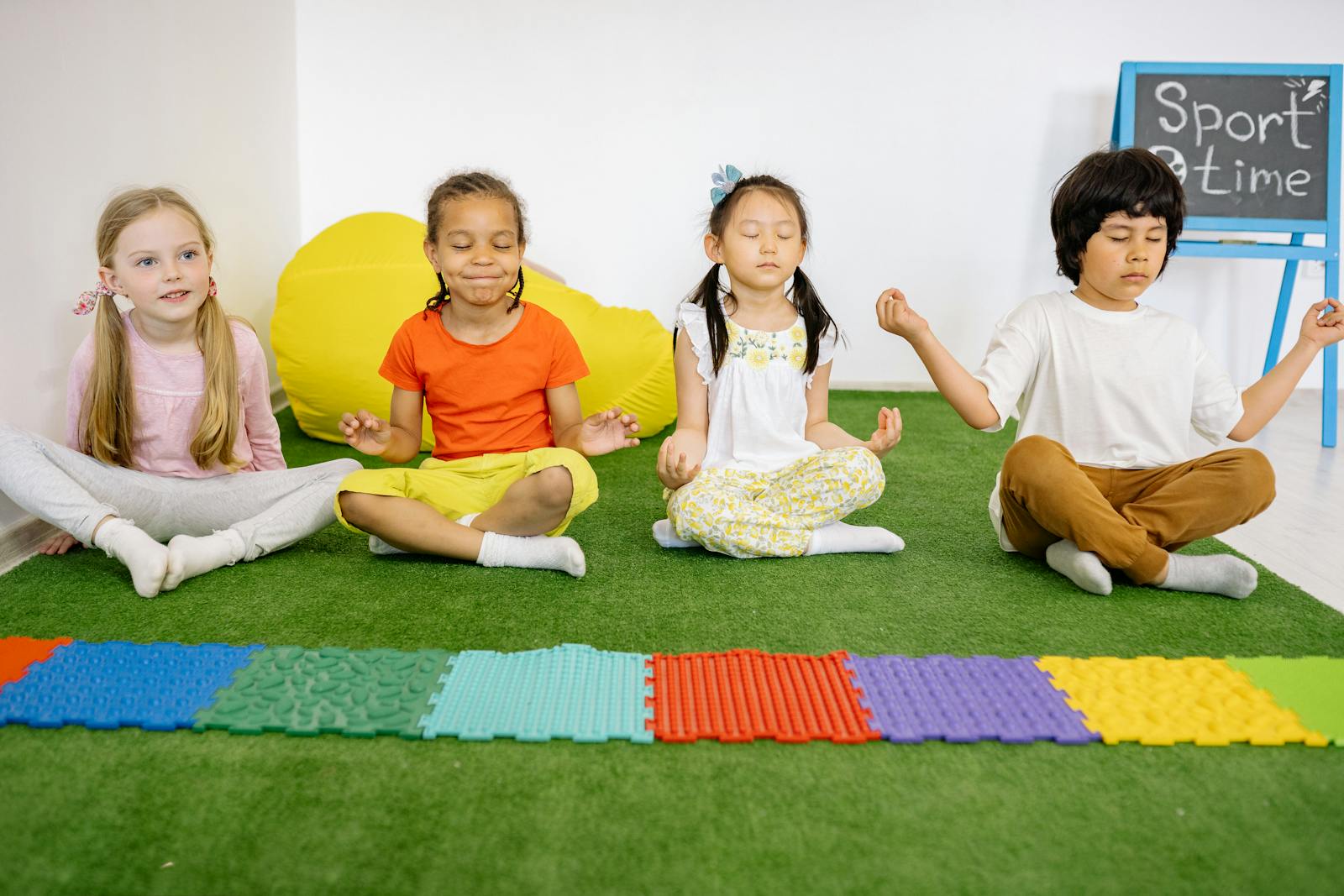
Gentle, smooth breathing is enough. Alternate nostril breathing for five minutes, humming-bee breath for one to two minutes and a simple longer exhale (breathe in for four counts, out for six) are safe starting points for healthy students. Skip breath holding, rapid breathing and forceful techniques unless a qualified teacher guides you.
- Alternate nostril breathing: Close one nostril lightly, breathe in through the other, switch, and breathe out. Keep the breath quiet and effortless. Eight to ten rounds is plenty.
- Humming-bee breath: Breathe in through the nose, then hum softly on the exhale. Useful when you feel wired but tired.
- Longer-exhale breathing: Inhale for about four counts, exhale for about six. Easy to do at a desk or outside an exam hall.
Stop and breathe normally if you feel dizzy, light-headed, short of breath or anxious. Never strain, and never hold your breath to feel more “advanced”. Pushing harder does not sharpen focus; it only adds tension.
What can you do at your desk during a study break?
A desk break takes three to five minutes: stand up, roll the shoulders back ten times, tilt the neck gently side to side, stretch the wrists, do a seated twist on each side and finish with ten slow breaths. Keep the screen off during it, so the break actually rests your eyes and mind.
- Stand and reach both arms up for three slow breaths.
- Roll the shoulders back ten times, then drop the chin slightly and release the neck.
- Do a seated twist, 5 breaths each side, holding the chair back.
- Open and close the hands ten times, then shake out the wrists.
- Look at something far away for 20 seconds to rest your eyes.
- Take ten long breaths with the exhale slightly longer than the inhale.
Pair it with a glass of water and, if you can, a short walk. For longer routines you can do at home on weekends, see yoga at home and yoga routine. Students who want a topic-specific plan can also read yoga for students.
How should you schedule yoga across exam week?
Keep the practice the same in exam week and shorten it rather than dropping it. Do 10 minutes in the morning, 3 to 5 minutes between study blocks, a 3-minute breathing reset before the exam, and a 5 to 10 minute wind-down at night. Protect sleep first; most teens need about 8 to 10 hours.
| Time | Practice | Duration |
|---|---|---|
| Wake-up | Water, easy seat, alternate nostril breathing, tree pose | 10 minutes |
| Study block 1 (about 50 minutes) | Study, then desk break | 3-5 minutes |
| Study block 2 (about 50 minutes) | Study, then walk and shoulder rolls | 5 minutes |
| After lunch | Standing side bends, slow breaths | 2-3 minutes |
| Study block 3 | Study, then desk break | 3-5 minutes |
| Exam morning, before leaving | Longer-exhale breathing, relaxed shoulders | 3 minutes |
| Outside the exam hall | Ten slow breaths, feet flat on the floor | 1-2 minutes |
| Night | Child’s pose, legs up the wall, slow breathing, lights off | 5-10 minutes |
On the night before an exam, resist the urge to add extra revision hours at the cost of sleep. A tired brain recalls less, and no breathing technique fully makes up for that.
Myth check: can yoga replace sleep, revision or a study plan?
No. Yoga does not teach you the syllabus, and it is not a trick that makes ten minutes of practice equal to a night of rest. It makes the time you do spend studying easier to use, by lowering stress and helping you start without a long fight with distraction.
A second myth is that you need advanced poses. For focus, the simplest practices usually do the most: sitting still, breathing slowly and holding a balance pose. A third is that yoga should feel dramatic right away. Most students notice a small, calm shift in a single session and a steadier pattern after two to four weeks of near-daily practice, but results vary and are not guaranteed.
Troubleshooting: you are doing yoga and still cannot focus
- You practise only before exams. A single session cannot undo weeks of stress. Do 5 minutes daily instead of 30 minutes once.
- Your mind races during breathing. Count breaths from one to ten and restart when you lose count. That restart is the exercise, not a failure.
- You feel sleepy after the practice. You may be short on sleep. Shift the session earlier or switch to a standing flow.
- The phone keeps pulling you back. Leave it outside the room during the practice and the first study block.
- Eyes and neck are tired. Add the 20-second far-gaze and neck release to every break, and check your desk and chair height.
- Nothing helps after a few weeks. Look at sleep, meals, screen time and stress. If low focus is constant or severe, speak to a doctor or school counsellor.
Eating on time also helps. A light meal such as poha, idli, curd rice or fruit with nuts is easier to practise after than a heavy one, so wait about two hours after a full meal before the sequence and about 30 to 45 minutes after a light snack. If you also want to add movement for weight, read yoga for weight loss.
How should school children, teens and college students practise?
Children under about 12 do best with play-based sessions of 5 to 10 minutes: animal-themed poses, simple balance games and a few slow breaths, ideally with a parent or a trained teacher present. Skip deep breathing drills and long holds.
Teens (13 to 17) can follow the 12-minute sequence above. Keep breathing gentle, avoid competitive pose holds, and treat it as a stress tool rather than a performance target.
College students and coaching-class aspirants usually have the most irregular sleep. Use the short breaks and the exam-week timetable first, and add a longer weekend session when time allows.
Yoga can be a supportive habit for students who find attention difficult, but it is not a treatment for attention difficulties or anxiety. If a child or teen struggles to concentrate in a way that affects school and daily life, a paediatrician or qualified mental health professional should assess them, and yoga can be discussed as an addition to that care, not a substitute.
When should you see a doctor before starting yoga for concentration?
See your doctor before starting breathing practices if you have asthma, high or low blood pressure, a heart condition, epilepsy, a recent injury or surgery, a history of fainting, or if you are pregnant. Do not change or stop any prescribed medicine because of yoga. Stop and get medical advice if you feel chest pain, severe dizziness or breathlessness.
Persistent trouble with focus, low mood, constant worry, panic or poor sleep is worth discussing with a doctor, school counsellor or registered mental health professional. Yoga can sit alongside that support. It should not delay it.
Frequently asked questions
How quickly does yoga improve concentration in students?
Many students feel calmer and a little clearer after a single session of slow breathing. A steadier change in attention usually takes two to four weeks of near-daily practice. Results vary with sleep, stress and study habits, so treat it as a skill you build, not a quick fix.
How long should a student’s yoga session be?
Ten to twelve minutes before studying is enough, with three to five minute breaks between study blocks. A short daily habit works better than one long weekly class. On free days, a 20 to 30 minute session can add stretching and a longer seated pause.
Is yoga better than a phone break between study sessions?
For most students, yes. A phone break keeps the mind busy, while a yoga break lowers tension and rests the eyes. Three to five minutes of stretching and slow breathing between 45 to 60 minute study blocks makes returning to the desk easier.
Which yoga pose is best for concentration?
Tree pose is a good starting point because balance needs a steady gaze and calm breathing. Pair it with a simple seated pose and slow breathing. Keep a wall or chair close for support, and do not hold a pose through pain or dizziness.
Can children practise yoga for concentration safely?
Yes, with supervision and age-appropriate practice. Children under about 12 do best with short, playful sessions of 5 to 10 minutes and gentle breathing. Avoid breath holding and long holds, and speak to a paediatrician if there is a medical condition or attention concern.
Want a guided routine built around your timetable? Join a live class on Fitstrot online yoga classes and start with the 12-minute sequence this week.


