

Yoga courses range from a four-week beginners batch in your neighbourhood to a multi-year university degree, and the right one depends on what you want at the end: a steady personal practice, a teaching job, or a recognised academic credential. This guide sorts the main options, shows how to compare them honestly, and gives you a checklist to run before paying anyone. It deliberately quotes no fixed fees, because prices change by school, season and city, so you should always ask for an itemised quote.
What are the main types of yoga courses?
There are five broad types: beginner courses (usually 4-12 weeks), teacher training programmes at 200, 300 or 500 hours, university certificate, diploma and degree programmes, therapeutic or specialty modules, and short workshops on one topic. Each serves a different goal, so pick the type first and the school second.
Most confusion comes from mixing these up. Someone who wants to feel better in their back does not need a 200-hour teacher training, and someone who wants to teach full time will outgrow a beginner batch quickly. The table below puts the types side by side so you can match them to your goal.
| Course type | Best for | Typical length | What you get | Check before joining |
|---|---|---|---|---|
| Beginners course | First-timers, desk workers, anyone restarting | 4-12 weeks, 2-4 sessions a week | Breath awareness, basic poses, a short routine | Small batch size, injury screening |
| Teacher training (200 / 300 / 500 hour) | Aspiring teachers, serious students | From about 3-4 weeks full-time to several months part-time | Anatomy, sequencing, teaching practice, philosophy | Registration, lead teacher’s experience, refund terms |
| University certificate, diploma or degree | Domestic credential seekers, school or wellness roles | Months to years, often distance | Academic syllabus and exams | Recognition status, current prospectus, eligibility |
| Therapeutic or specialty module | Back care, prenatal, stress, seniors | Weeks to a few months | Focused skills for one group or concern | Instructor’s training for that group |
| Workshop or short course | Trying one topic, such as pranayama or Ashtanga | A day to a few weeks | Exposure, no formal credential | Whether a certificate is promised and by whom |
Lengths and eligibility rules change, so treat this table as a map, not a promise. Confirm the current structure with each school or university before you plan your year around it.
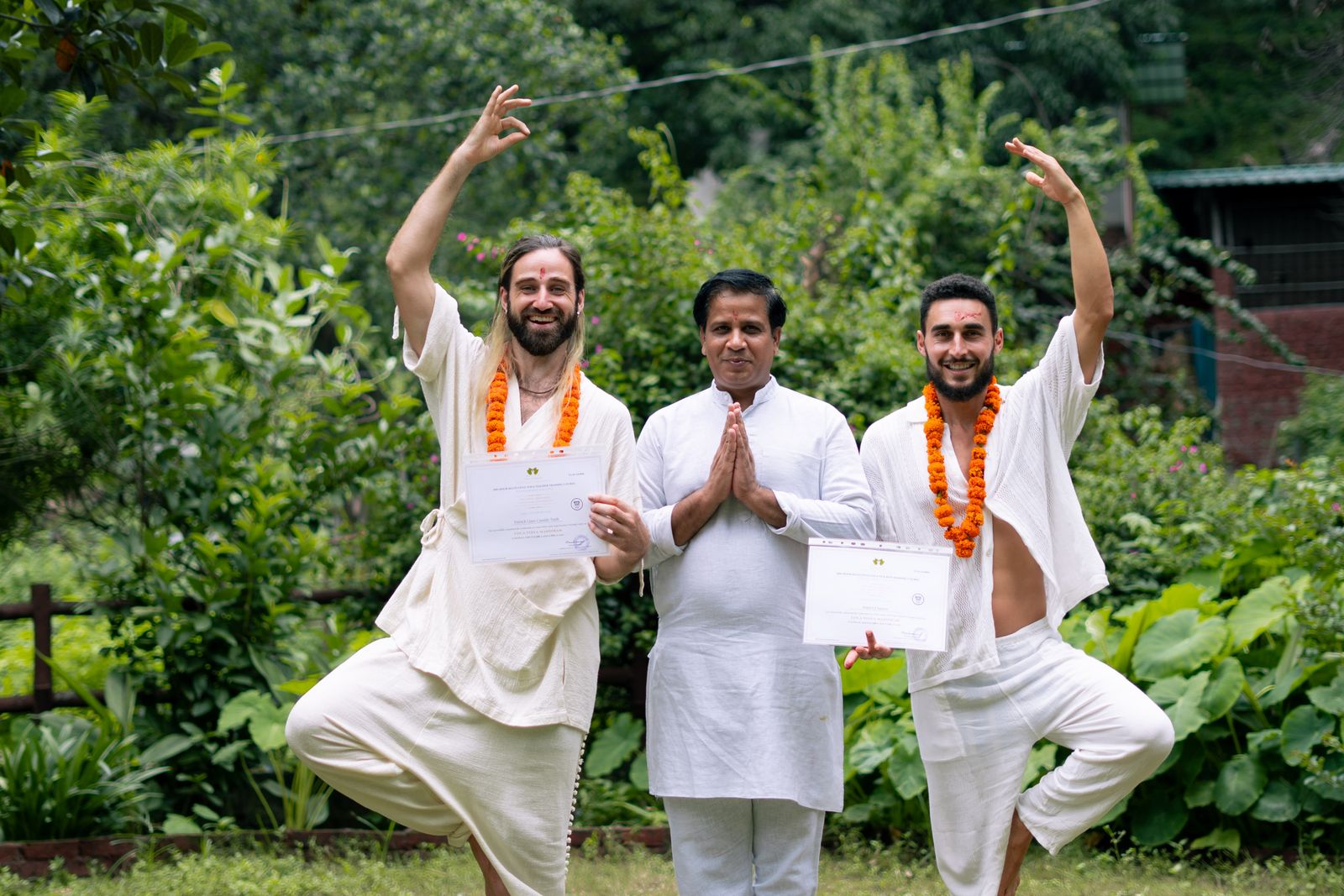
How do you choose between a beginners course and a teacher training?
Choose a beginners course if you have practised for under six months or just want fitness and calm. Choose a teacher training if you already practise regularly, ideally for six to twelve months, and want to teach or study deeply. Joining a teacher training with no base is possible but usually harder and more tiring.
A beginners course focuses on comfort and safety. You learn to breathe, enter and leave a handful of poses, and string them into a short sequence you can repeat alone. There is rarely an exam. A teacher training assumes you can already hold a basic practice and then adds anatomy, how to cue, how to adjust, supervised teaching and the philosophy behind the poses. Many people find it more useful to spend a few months in regular classes first, or to take a shorter certificate programme, before committing time and money to a full teacher training. For a closer look at certificate-level options, see our guide to the yoga certificate course, and for the teacher-training route see yoga teacher training.
Myth check: three beliefs that cost people money
- “A certificate means you are a good teacher.” A certificate shows you attended and passed a programme. Teaching quality comes from the trainer, the practice hours behind them and your own teaching practice afterwards.
- “A pricier course is a better course.” Price often reflects accommodation, location and marketing as much as teaching. Ask what part of the fee is tuition and what part is stay and meals.
- “You must go to Rishikesh to learn properly.” Rishikesh has a long yoga heritage and many schools, but good teachers also work in other cities and online. Choose the teacher and syllabus, then the place.
Choosing a course in six steps: a walkthrough
- Write your goal in one line. For example, “practise safely at home”, “teach weekend classes” or “get a recognised credential for a school job”.
- Pick the course type from the table above, not the brand name.
- Set a realistic time budget. A full-time residential course needs weeks off work. A part-time or online batch fits around a job but needs steady discipline.
- Shortlist three options and ask each for a syllabus, the daily schedule, the lead teacher’s background and an itemised fee list.
- Try before you commit. Attend a demo class or a short course with the same teacher or school.
- Read the refund and deferral terms in writing before paying a deposit.
Where to study: studio, residential, university or online
Place shapes the experience as much as the syllabus. This table compares the common settings in general terms, without quoting prices.
| Setting | What it suits | Typical strengths | Watch out for |
|---|---|---|---|
| Local studio | Beginners, regular routine | In-person correction, no travel | Teacher credentials vary widely |
| Rishikesh and similar hubs | Immersive, multi-style learning | Many schools, strong yoga culture | Quality varies; accreditation matters more than location |
| Goa and coastal hubs | Intensive blocks mixed with a break | Often more Vinyasa and Ashtanga flavour | Short intensive formats can feel rushed |
| Mysore | Dedicated Ashtanga students | Traditional self-practice method | Not ideal for those exploring styles, see Ashtanga yoga first |
| University distance programme | Working adults wanting a domestic credential | Academic structure, flexible pace | Limited live practice; may not be accepted abroad |
| Live online course | Busy professionals, small towns | Flexible, no travel, recorded revision | Needs self-discipline and a quiet space |
If you are weighing a residential programme specifically, our post on yoga teacher training in Rishikesh explains how to vet a school there before you book.
What should a beginners yoga course teach you?
A good beginners course teaches four things in order: breath awareness, safe alignment in a few basic poses such as Tadasana, Balasana and Adho Mukha Svanasana, a short repeatable sequence you can do alone, and a guided relaxation in Savasana. If the first week is advanced backbends or inversions, be cautious.
Proper sequencing and injury prevention matter more in the first few weeks than how impressive the poses look. By week four you should be able to follow a 20-30 minute sequence at home without the teacher. Our yoga at home guide helps you set up space and routine, and the yoga sequence post gives patterns to repeat. If you mainly need to learn pose names and alignment, browse yoga poses alongside your course.
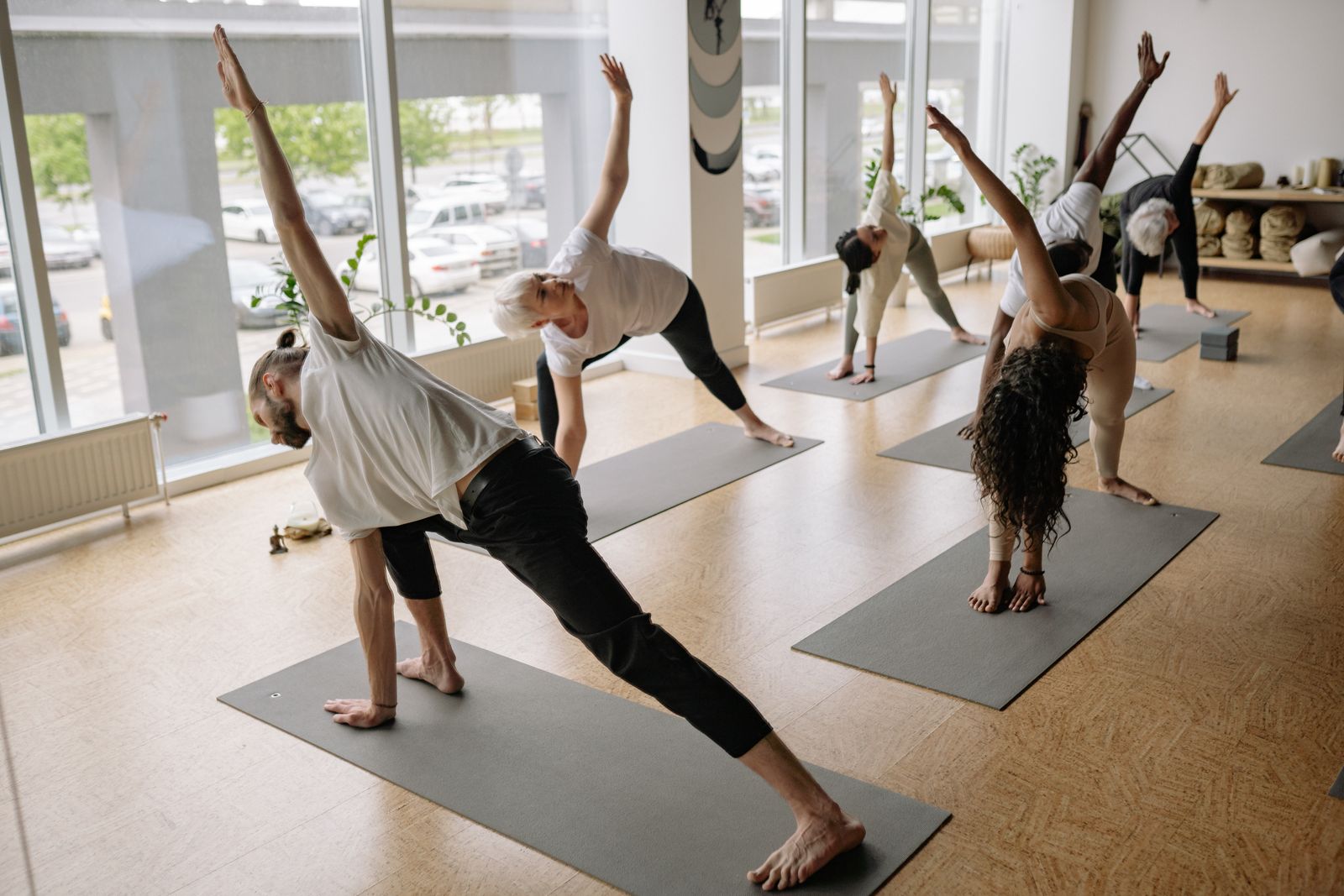
Therapeutic and specialty yoga courses: what to expect
Specialty courses cover areas such as prenatal yoga, yoga for seniors, stress relief, and back care. They can be useful, but the word “therapy” is used loosely, and a yoga course is not medical treatment. Look for instructors who are clear about their training for the group in question, and who ask about your health history before the first class.
If you have a back problem, a heart condition, high blood pressure, are pregnant, or are recovering from surgery, speak to your doctor before joining any course, and tell the teacher on day one. Be wary of any course that claims to cure a disease or asks you to stop medicines. For gentle back-focused practice, start with our yoga for back pain guide and take a qualified instructor’s advice.
Which course for which person?
- Complete beginner or restarting after a break: a 4-12 week beginners course or a live online batch.
- Working professional: evening or weekend batches, or a part-time online course.
- Student wanting a credential: a university certificate or diploma through distance learning, after checking its current recognition.
- Career changer: practise regularly first, then a teacher training with supervised teaching hours.
- Over 50 or managing joint issues: small-batch classes with a teacher experienced in gentle practice, after a doctor’s go-ahead.
Troubleshooting: when a course is not working
- The pace is too fast. Ask for a level change in week one. Do not push through pain to keep up.
- You are bored or plateauing. Add a different style from our types of yoga guide for variety.
- The teacher avoids questions. That is a signal about the whole programme. Raise it politely, and if nothing changes, ask about the refund policy.
- You cannot keep a schedule. Move to a flexible or recorded format before you drop out altogether.
- Fees keep growing. Compare your signed quote against what you are being billed and ask for the difference in writing.
Pre-enrolment checklist
Run through this table before paying a deposit for any course.
| Check | Good sign | Red flag |
|---|---|---|
| Recognition | Clearly named registry or university, verifiable | Vague “international certificate” with no body named |
| Lead teacher | Shares background, years of teaching, own training | No names or credentials on the website |
| Batch size | Small enough for individual correction | Large batches, no assistants |
| Fee breakdown | Tuition, stay, meals, exam and certificate listed separately | One lump sum, extras added later |
| Refund terms | Written policy and deferral option | “Non-refundable” with no explanation |
| Health screening | Asks about injuries and conditions | Promises cures or guaranteed results |
| Syllabus | Includes anatomy, practice teaching and philosophy | Poses only, or philosophy only |
What careers can a yoga course lead to?
A recognised teacher training can lead to group classes at studios and gyms, private sessions, corporate wellness and online teaching. Demand varies by city, so treat income as uncertain, and check what employers ask for. Our guide to yoga instructor jobs explains the requirements employers usually list. Many teachers start part-time while keeping their main job.
Build your base from home with Fitstrot
If you are unsure which course to take, start with a few weeks of live, instructor-led practice. Our online yoga classes help you build a routine, get feedback on alignment and learn which style and pace suit you, before you spend on a longer programme. You can also read our overview of online yoga classes to see how live sessions work.
Frequently asked questions
Which yoga course is best for beginners?
A 4-12 week beginners course, either in a local studio or live online, is usually best. It builds breath control, basic alignment and a short home sequence without the intensity of a teacher training. Choose a small batch where the teacher can correct your posture.
Do I need prior experience to join a teacher training?
Many schools do not strictly require it, but most reputable ones recommend about six to twelve months of regular practice first. Arriving with some familiarity with basic poses and breathing makes a long daily schedule far more manageable.
Are university yoga certificates recognised for teaching jobs?
They are often accepted in India for school, wellness and government-linked roles, but recognition rules differ by employer and change over time. If you plan to teach abroad, many studios ask for an international registration instead, so check the job requirements first.
Should I choose Rishikesh, Goa or Mysore for a yoga course?
Choose by style and teacher, not fame. Rishikesh offers the widest choice of schools, Goa often leans towards Vinyasa and Ashtanga with a relaxed setting, and Mysore suits students committed to traditional Ashtanga. Always verify accreditation and the lead teacher.
Can I complete a yoga course entirely online?
Yes. Many schools and open universities run live or distance programmes, and they remove travel and stay costs. They need strong self-discipline, and you get less hands-on correction, so choose a live format with small groups if you are new.
Next step: shortlist three courses today and email each one for a syllabus and an itemised fee list, then try a live class on Fitstrot’s online yoga classes while you decide.


