
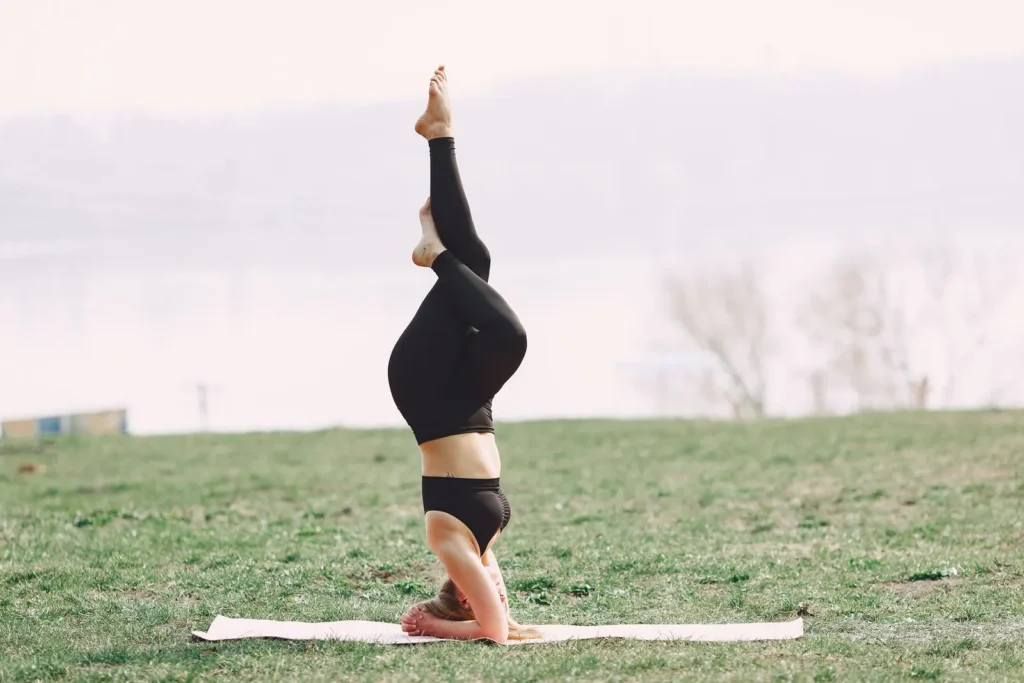
Sirsasana, the yoga headstand, is an inverted pose where the body balances on the forearms and the crown of the head with the legs lifted toward the ceiling. It is one of the most talked-about postures in yoga poses lists and also one of the highest-risk, because the neck sits under the whole body. This guide covers the prerequisites, the staged build-up, the neck-safety rules, who should skip it, and how to come out safely.
Please read this first: sirsasana should be learned in person with a qualified yoga teacher who can see your alignment and spot you. Do not teach yourself from a video, a photo or this article. If you have any medical condition, or you are unsure, see your doctor before you attempt any inversion. Nothing here is medical advice.
What is sirsasana, and should you learn it on your own?
Sirsasana (also written shirshasana) is the Sanskrit name for the supported headstand: “sirsa” means head and “asana” means pose. It should never be learned alone. Most beginners need weeks or months of shoulder and core preparation, plus in-person correction from a qualified teacher, before the legs leave the floor.
In practice, sirsasana is an arm-and-shoulder strength pose with a balance element, not a flexibility pose or a test of courage. Many experienced practitioners never do it, and that is a sound choice.
Fitstrot is an online platform, so we say this plainly: our online yoga classes are a good way to build the strength, alignment and body awareness that come before an inversion, but the headstand itself is best taught by someone in the room with you.
Neck safety: where your weight should actually go
The cervical spine (your neck) is built to hold up the head, not the whole body. In a correct headstand, the forearms and shoulders carry most of your weight and the crown of the head touches the floor only lightly. If the neck is doing the work, the pose is wrong and you should come down.
Use these rules as a baseline, and let your teacher refine them:
- Press the forearms into the floor and lift the shoulders away from the ears, so the shoulder blades broaden and the neck stays long.
- Keep the elbows about shoulder-width apart. Wide elbows collapse the base and push weight onto the head.
- Never use momentum. No kicking or hopping up. Every lift should be slow and controlled.
- Stop at once if you feel pressure in the head or eyes, tingling, sharp neck pain or dizziness.
- Use a thin, firm folded mat. Thick cushioning makes the base wobbly.
Prerequisite checklist: are your shoulders and core strong enough yet?
Wall work usually starts only when you can hold a forearm plank and a dolphin pose comfortably and steadily. As a rough guide, that means about 30 to 45 seconds of each with good form and calm breathing. If you cannot, spend more time on preparation.
| Check | Rough benchmark | If you cannot do it yet |
|---|---|---|
| Forearm plank | About 30 to 45 seconds, hips level, no sagging | Practise on the knees, build up in short sets |
| Dolphin pose | About 30 seconds, shoulders pressing away from the floor | Bend the knees, keep forearms parallel |
| Neck comfort | No pain or tingling in daily movement | Skip inversions and see a doctor |
| Core control | Lift both knees toward the chest while lying down, slowly, without jerking | Build core strength with slower variations |
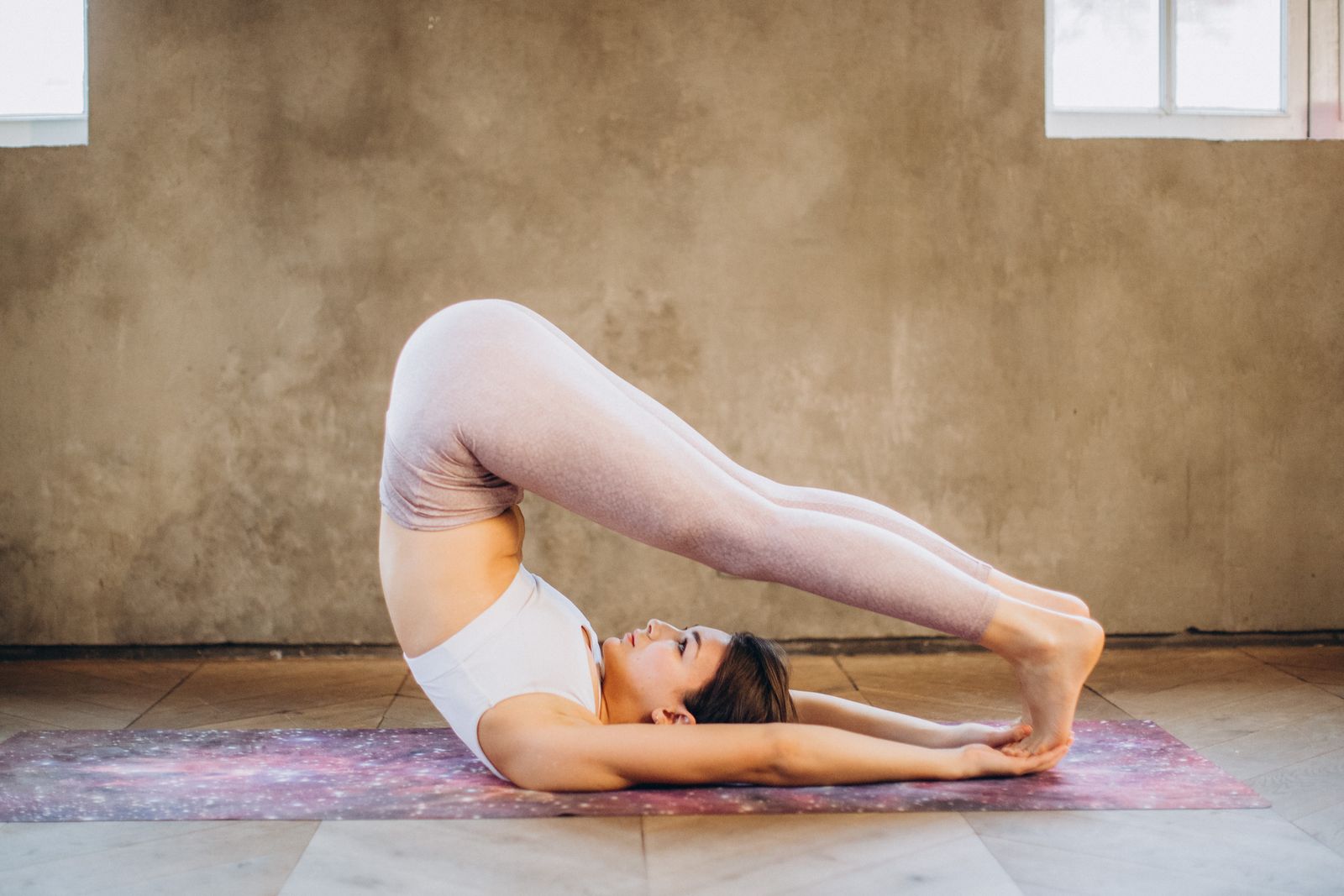
Standing and balance work help too. Tadasana teaches you to stack the head over the shoulders and hips, and vrksasana trains a steady, quiet balance. A regular surya namaskar practice warms the wrists, shoulders and spine and builds basic upper-body endurance.
From dolphin to wall: a staged progression
Treat the build-up as stages, not a countdown. Move on only when the current stage feels easy and steady for several sessions in a row. Going back a stage is normal, and many people stop at stage four.
| Stage | Pose or drill | What you are training | Rough hold or reps |
|---|---|---|---|
| 1 | Forearm plank | Shoulder and core endurance | 3 sets of 20 to 30 seconds |
| 2 | Dolphin pose | Pressing the floor away, shoulder strength | 3 sets of 5 to 8 breaths |
| 3 | Dolphin with one leg lifted | Weight shift and hip stacking | 3 to 5 breaths per side |
| 4 | Wall prep: forearms down, feet walk up the wall into an L-shape | Feeling the forearm base without the head loaded | 5 to 10 breaths, 2 or 3 rounds |
| 5 | Supported headstand set-up with a teacher | Alignment, with spotting and cues | Teacher decides, usually brief |
| 6 | Longer supported holds | Calm, controlled time upside down | 10 to 30 seconds at first |
Stage five is where an in-person teacher matters most. Whether you ever move to a free-standing headstand away from the wall is a decision to make with that teacher, not a goal to chase.
How do you do sirsasana step by step with a teacher?
With a teacher present, a headstand starts from a kneeling forearm base: elbows shoulder-width apart, fingers interlaced, crown of the head lightly on the mat. The teacher guides the hips over the shoulders, then a slow lift of the legs. The sequence below is for understanding, not self-instruction.
- Build the base. Kneel in front of a wall, forearms down, elbows about shoulder-width, fingers interlaced with the palms open and the outer wrists pressing in.
- Place the head. The crown rests lightly on the mat with the back of the head cupped by the hands. Press the forearms down so the head carries very little.
- Lift the knees. Tuck the toes and straighten the knees, as in dolphin. Walk the feet in until the hips stack over the shoulders.
- Raise the legs slowly. With a teacher beside you, lift one bent knee at a time toward the chest, or both together if your core allows it. No jumping.
- Extend only if steady. Straighten the legs upward only when the hips are stacked and the breath is calm.
- Exit the way you entered. Lower the legs slowly and rest (details in the exit section below).
Common sirsasana mistakes and how to fix them
Most headstand problems come from the same few habits. If you see any of these in yourself, step back a stage rather than trying to push through.
- Too much weight on the head. Fix: go back to dolphin and wall prep until you can press the floor away with the forearms.
- Elbows sliding wide. Fix: keep them about shoulder-width, and ask a teacher to check the base.
- Kicking up with momentum. Fix: practise controlled knee-to-chest lifts only.
- Sagging or collapsing shoulders. Fix: strengthen with plank and dolphin, and keep the shoulders lifted away from the ears.
- Holding the breath. Fix: shorten the hold until the breath is steady.
- Going upside down when tired or after a meal. Fix: practise warmed up and on an empty stomach, roughly two to three hours after eating.
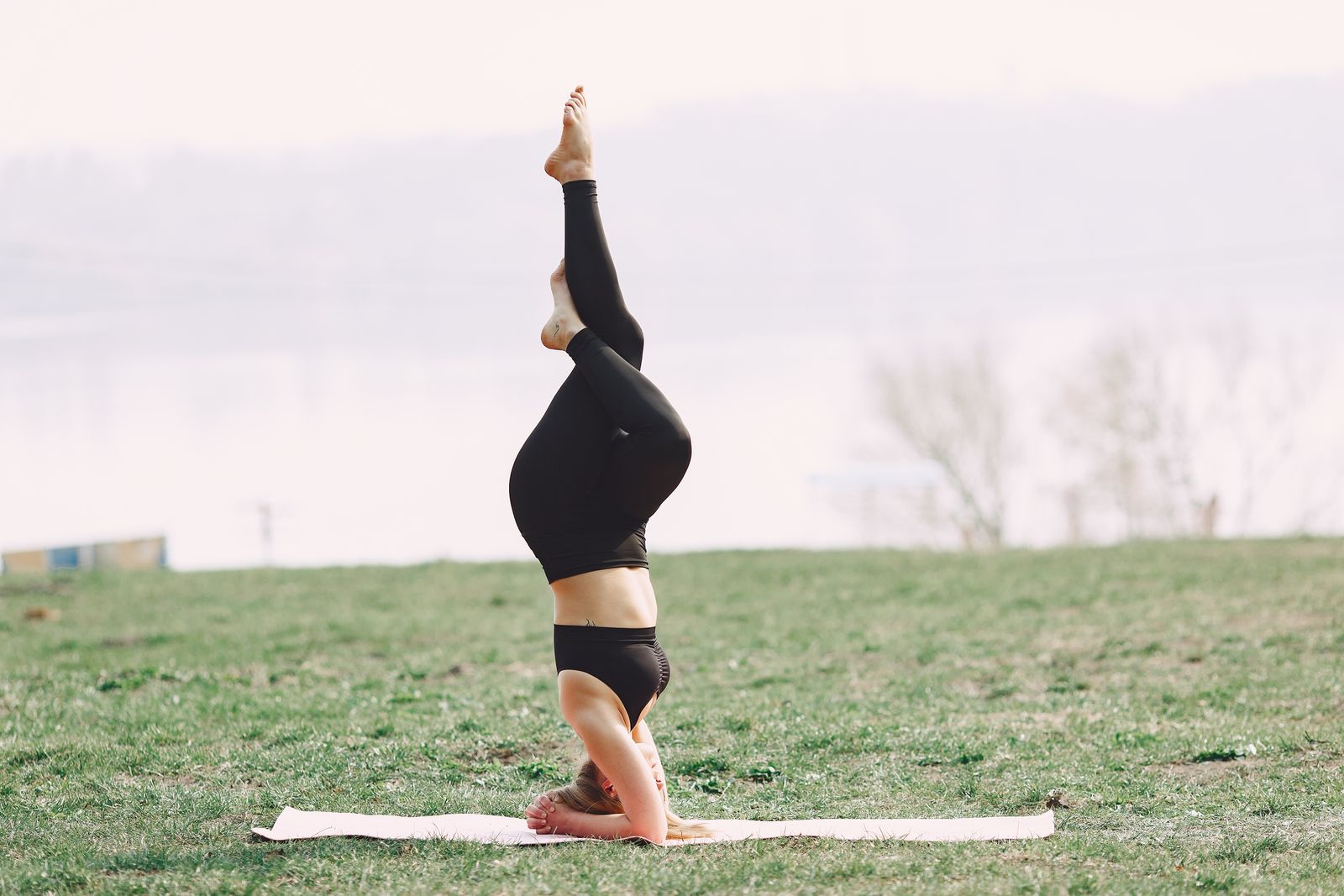
Who should not do a headstand? Contraindications
People with neck or spine problems, high blood pressure, glaucoma, heart conditions, osteoporosis, vertigo, pregnancy, or recent surgery should avoid sirsasana unless a doctor has explicitly cleared them. Inversion changes pressure in the head and loads the neck, so “I feel fine” is not enough of a reason to try it.
| Condition or situation | Why inversions are a concern | What to do |
|---|---|---|
| Neck injury or cervical spine problem | The pose loads the neck | Skip it, ask your doctor |
| High blood pressure | Being upside down shifts blood and pressure toward the head | Skip it unless your doctor clears you |
| Glaucoma or other eye conditions | Eye pressure can rise when inverted | Skip it, ask your eye doctor |
| Heart conditions | Inversion changes the demands on the heart | Skip it unless your cardiologist clears you |
| Pregnancy | Balance changes and a fall carries more risk | Avoid it, ask your doctor or prenatal teacher |
| Osteoporosis or low bone density | A fall or neck loading carries more risk | Skip it, ask your doctor |
| Vertigo or dizziness | Balance and orientation are less reliable | Skip it |
| Recent surgery | Healing tissue and pressure changes | Wait for your surgeon’s clearance |
See your doctor first. If you have any of these conditions, take any regular medication, or are simply unsure, talk to a doctor before attempting inversions. Do not change any medication because of yoga. Also skip it with a cold, headache or upset stomach.
How long should you hold a headstand?
Short. Beginners working with a teacher usually hold a supported headstand for only about 10 to 30 seconds, and many people never need more than a minute. A longer hold does not mean a better pose, and fatigue is when alignment slips and neck strain becomes more likely.
A useful rule: come down while you still feel in control, not when you begin to shake. If you feel effort in the neck or head, the hold is already too long.
How do you come out of a headstand safely?
Lower the legs slowly and in control, bend the knees and set the feet down, then rest in child’s pose for roughly 30 to 60 seconds with the head down. Come up to sitting gradually. Do not jump or collapse out of the pose, and wait until any light-headedness has passed.
- Bend the knees toward the chest first, then lower the feet to the floor with control, the same way you lifted them.
- Keep the forearms pressing down until both feet are on the mat.
- Rest in child’s pose for about 30 to 60 seconds, breathing normally.
- Lift the head last and slowly, and sit up gradually.
- If you feel dizzy, stay down and breathe until it passes. If it does not pass or you have neck pain, stop practising and see a doctor.
Myth check: what does a headstand actually do?
A headstand builds shoulder and core strength, balance and body awareness. That is the honest, modest benefit. It is not a treatment for any health condition, and no yoga pose guarantees a physical change. Be wary of dramatic claims about what inversions will do for your body.
Those same gains come from dolphin, plank and balance poses, with far less risk. If a headstand ever feels like a requirement for your practice, it is not.
Janu sirsasana is not a headstand
The name causes confusion. Janu sirsasana is a seated head-to-knee forward bend. It shares the “sirsa” (head) word but involves no inversion, no neck loading, and none of the headstand’s risks. It is a gentle, popular hamstring and hip stretch for most beginners.
If you must skip inversions, you still have standing and balance poses, plank and dolphin, and forward folds. Our guide to types of yoga can help you choose a style, and hatha yoga and vinyasa yoga classes can both be practised without ever inverting.
Where does sirsasana fit in a class?
When taught, a headstand is placed after a full warm-up and strength work, never as a cold start. A typical order is surya namaskar, standing poses, core work, then the inversion, then a counterpose such as child’s pose and a calm seated finish. Teachers in a hatha or vinyasa class will often offer a non-inverted alternative at the same moment.
Shoulder, core and mobility work in 1-on-1 personal training sessions can also help you prepare and discuss your limits before approaching any inversion.
Questions people ask about sirsasana
Is sirsasana safe for beginners?
Not on their own. Beginners should build plank and dolphin strength first and learn any headstand in person with a qualified teacher, ideally at a wall. If you have neck, eye, heart or blood pressure concerns, or you are pregnant, speak to your doctor before attempting it at all.
Can headstand cause a neck injury?
Yes. If too much weight sits on the head, or you enter with momentum, the neck can be strained or injured. That is why teachers insist on forearm-led alignment and slow entries, and why you should stop immediately if you feel neck pain, tingling or dizziness.
How long does it take to learn a headstand?
There is no set timeline. Most people need several weeks to several months of consistent shoulder and core preparation before a supported headstand is even appropriate, and some never do it. Progress depends on strength, body awareness and a teacher’s assessment, so do not hurry.
Is it safe to practise headstand alone against a wall?
We do not recommend it for beginners. A wall reduces the fear of falling, but it does not protect the neck, and you cannot see your own alignment. Work with a qualified teacher first, and only if you are cleared to invert.
Is shirshasana the same as sirsasana?
Yes. Shirshasana, sirsasana and shirshasan are different spellings of the same Sanskrit name for the supported headstand. Janu sirsasana, however, is a different pose: a seated forward bend with no inversion.
Your next step
Build your shoulder strength, core control and alignment first. Join a Fitstrot online yoga class to practise plank, dolphin and balance work with live guidance, and keep the headstand itself for an in-person teacher.


