

The principles of yoga are a short set of ideas that tell you how to practise, not just which poses to do: cause no harm to yourself, balance effort with ease, let the breath lead, and progress gradually. This guide covers those four working principles, shows where they sit next to the traditional five-point Sivananda list, and explains how to use them in an ordinary Indian day, on the mat and off it.
What are the basic principles of yoga?
The basic principles of yoga practice are ahimsa (non-harming), balance between effort and ease, breath awareness, and gradual progress. In practice this means you never force a pose, you keep breathing smoothly while you hold it, and you add time or difficulty slowly over weeks and months, not in a single class.
You will also meet the “5 principles of yoga” taught in the Sivananda tradition: proper exercise, proper breathing, proper relaxation, proper diet, and positive thinking with meditation. The two lists do not compete: the five points describe the parts of a yoga lifestyle, the four principles describe the attitude you bring to each. If you want the wider background first, start with what is yoga.
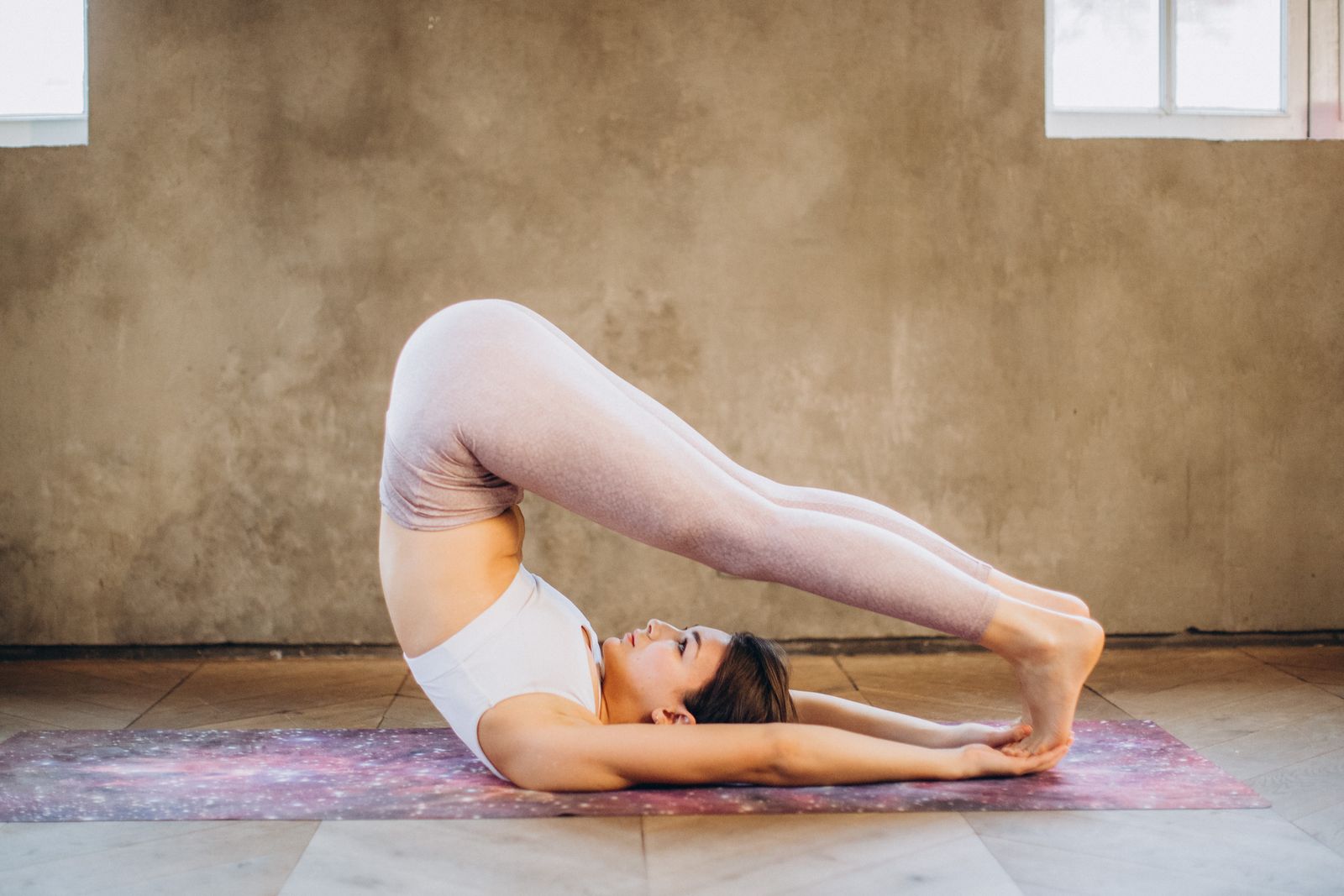
What does ahimsa mean in yoga practice?
Ahimsa in yoga means non-harming, and it starts with your own body. On the mat it means stopping at a firm stretch, never pushing into sharp, pinching or burning sensations. A good working rule is to stay at roughly 6 or 7 out of 10 effort, where you can still breathe evenly and the sensation settles within a minute of leaving the pose.
Most yoga injuries come from ego, not from the poses. Copying a photo or chasing “one more inch” in a forward fold are small acts of violence against your own joints. Ahimsa replaces that with curiosity about how the pose feels today. Here is a simple self-check for any posture:
- Green: a steady stretch or light muscle effort, even nasal breathing, face and jaw relaxed.
- Amber: shaky breath, clenched jaw, or the urge to hold your breath. Ease off by a third.
- Red: sharp or pinching pain, tingling, numbness, or pain at a joint rather than in the muscle. Come out slowly and do not return to that depth today.
The four principles at a glance: on the mat and off it
This table condenses each principle into one practical test you can use in class or at your desk.
| Principle | Core idea | On the mat | Off the mat | Quick check |
|---|---|---|---|---|
| Ahimsa | Non-harming | Stop at a firm stretch, never into sharp pain | Speak kindly to yourself and others, rest when ill | Does this leave me better or worse in 24 hours? |
| Balance (sthira-sukha) | Steady and comfortable | Mix strength poses with softening poses | Alternate hard work with real rest | Am I tense, or collapsed? |
| Breath awareness | Breath leads movement | Move on the exhale, breathe through the nose | Three slow breaths before a call or a meal | Can I breathe smoothly right now? |
| Gradual progress | Small steps, repeated | Add 5 minutes or one new pose at a time | Build a habit before raising the target | Could I repeat this every week? |
How does balance work in yoga?
Balance in yoga means holding effort and ease together. Patanjali’s Yoga Sutras describe a good posture as sthira-sukham: steady and comfortable. If a pose feels only like strain, you are gripping; if only like slack, you are collapsing. Aim for the middle, around 60 to 70 percent of maximum effort.
Balance applies to the whole week too. A sensible mix is two or three days of active practice such as a vinyasa yoga flow or a steady hatha yoga sequence, and one or two days of softer work like restorative yoga or yin yoga.
Balance is personal. A very flexible person needs strength and stability; a stiff, strong person needs patience and long, gentle holds. Same principle, opposite homework.
Why does breath awareness come before the pose?
Breath awareness comes first because your breath is the quickest honest measure of effort. If you can breathe slowly through the nose while holding a pose, the intensity is sustainable. If you start gasping, holding your breath, or breathing through the mouth, you have gone past the principle of balance and need to back off.
A resting adult usually breathes roughly 12 to 20 times a minute. Slow, smooth breathing during practice tends to settle that rhythm and is a large part of why a class can feel calming. For beginners, keep it simple:
- Breathe in and out through the nose unless it is blocked.
- Inhale as you lengthen or open, exhale as you fold, twist or move deeper.
- Try an inhale of about 4 counts and an exhale of 4 to 6 counts. Never strain to stretch the count.
- Hold each simple pose for about 3 to 5 breaths at first, then build to 8 to 10 breaths.
Skip breath retention and forceful breathing until a qualified teacher has taught you. If you feel dizzy or light-headed, return to normal breathing and rest.
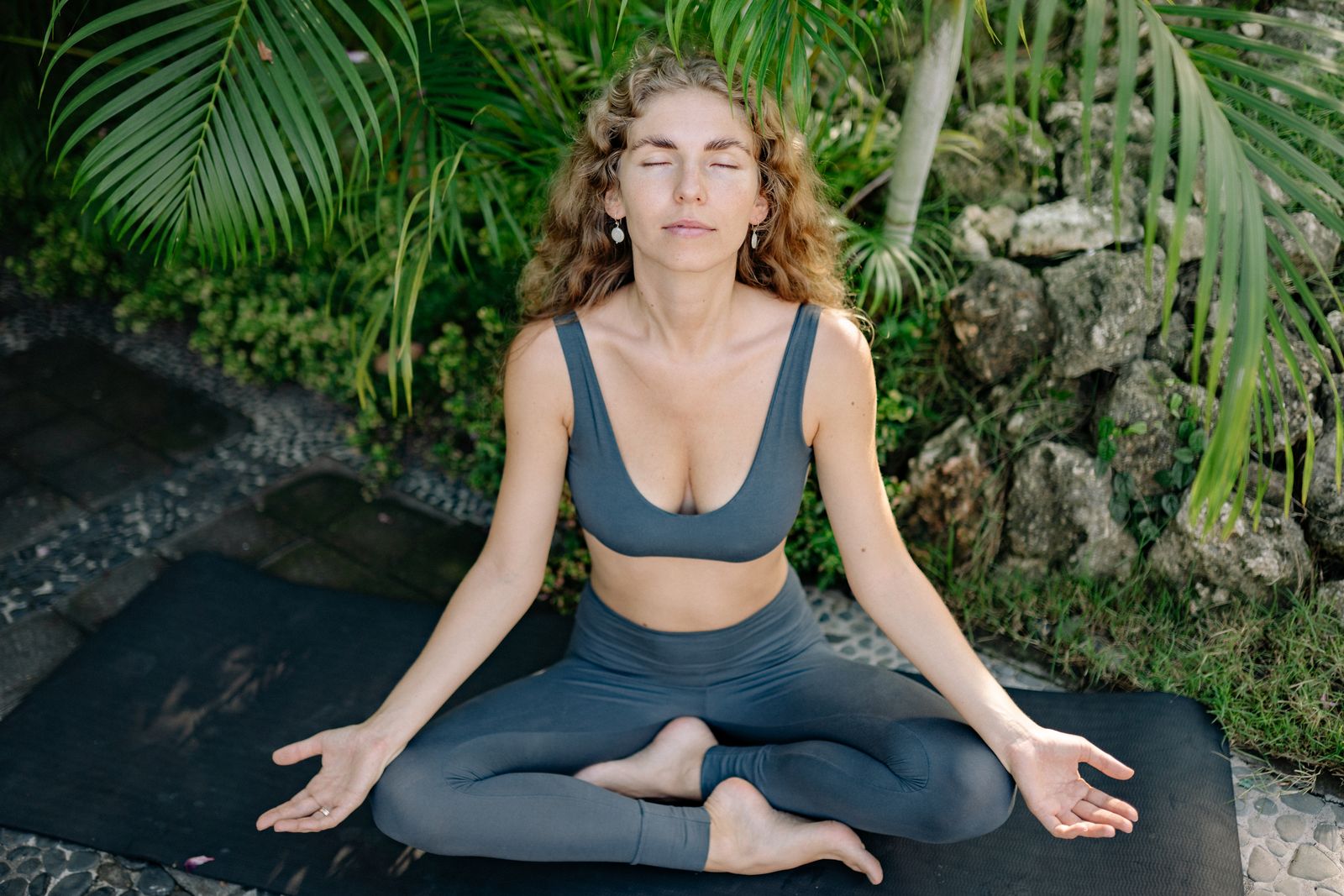
How do you make gradual progress in yoga? A 12-week walkthrough
Gradual progress in yoga means increasing session length or difficulty by about 10 to 20 percent every week or two, and only when the previous level feels easy. A beginner can reasonably go from 10 minutes, three days a week, to around 40 minutes, four days a week, over 12 weeks.
Classical teaching says practice takes root when it is done for a long time, without long breaks. Consistency beats intensity. Here is a realistic plan for yoga principles for beginners:
| Weeks | Sessions per week | Length | Focus | Move on when |
|---|---|---|---|---|
| 1 to 2 | 3 | 10 to 15 min | Breath through the nose, 6 to 8 basic poses, 3 to 5 breaths each | You finish without strain or soreness lasting beyond a day |
| 3 to 4 | 3 to 4 | 20 min | Add sun salutations at slow pace, 3 rounds, plus 3 minutes of final rest | You can match movement to breath for the whole round |
| 5 to 8 | 4 | 30 min | Hold poses 5 to 8 breaths, add one standing balance and one twist | You feel steady, not drained, afterwards |
| 9 to 12 | 4 | 40 to 45 min | Add 5 minutes of quiet sitting and one slightly harder pose variation | You look forward to practice and sleep is no worse |
If you miss a week because of travel, a festival or illness, restart one step back, not where you left off. New to all of this? Yoga for beginners gives you a starting sequence to slot into weeks 1 and 2.
Myths that make people ignore the principles of yoga
Four beliefs stop people from using the principles of yoga properly: that you must be flexible first, that a deeper pose is a better pose, that yoga needs a particular religion, and that relaxation is wasted time. Each is wrong.
- “I am too stiff for yoga.” Stiffness is the reason to begin. Bend your knees, use a folded blanket, and call it a full pose.
- “Deeper is better.” Depth is a by-product of months of practice. A smaller, well-breathed pose beats a deep, gritted one.
- “Yoga is a religion.” Yoga has deep roots in Indian philosophy, but these principles are about attention, effort and kindness, and people of every faith use them.
- “Final rest is optional.” Savasana, a closing rest of 3 to 10 minutes, is where the body settles. Cutting it for one more pose trades balance for ambition.
When your practice drifts: a troubleshooting table
When a class leaves you sore, wired or discouraged, one principle has usually slipped. Find it here and apply the fix next session.
| What you notice | Principle that slipped | Try this next session |
|---|---|---|
| Knee, wrist or lower-back pain the next day | Ahimsa | Reduce depth by a third, add support, skip the pose that caused it |
| Holding your breath in hard poses | Breath awareness | Leave the pose, take 3 breaths, return at lower intensity |
| Exhausted and irritable after practice | Balance | Shorten the session and finish with 5 minutes of final rest |
| Practising hard for 10 days, then quitting | Gradual progress | Halve the plan and protect three fixed days a week |
How do the principles of yoga change for different people?
The principles stay the same for everyone, but the dose changes with age, health and schedule, so adjust duration, depth and pace to your circumstances.
- Desk workers: aim for 10 to 15 minutes of shoulder, hip and spine mobility twice daily, plus a 5 minute breathing break. If your back tightens by evening, see yoga for back pain for gentle options.
- Students in exam season: keep sessions to 15 to 20 minutes and lean on breath awareness.
- Stress and worry: prefer slow flows, longer exhales and long holds. Yoga for anxiety covers sequences built around this.
- Older adults: use a chair or wall for balance poses and keep holds to 3 to 5 breaths.
Speak to your doctor before starting if you are pregnant, have high blood pressure, glaucoma, a recent surgery, a disc problem, or any condition that limits movement. A teacher can modify poses, but only a doctor can tell you what is safe for your medical situation. Yoga supports health, and it does not replace treatment.
How can you apply the principles of yoga to daily life?
You can apply the principles of yoga to daily life by attaching one small action to each part of the day: three slow breaths on waking, a stretch break every 60 to 90 minutes of sitting, a calm pause before reacting, a lighter dinner, and an unhurried wind-down at night. Five minutes each adds up to a real practice.
- Morning (5 to 10 minutes): a few rounds of gentle spinal movement and 10 slow breaths before checking your phone.
- Commute: breathe through the nose, drop your shoulders, unclench your jaw.
- Work block: stand up every hour or so for 2 minutes. That is balance, alternating effort with ease.
- Meals: eat without a screen when you can. A plain dal, roti and sabzi suits the diet principle better than a heavy late-night meal.
- Evening: five minutes of quiet sitting or a short restorative pose, then a regular bedtime.
Our guide to the benefits of yoga explains what regular practice can realistically give you, and live online yoga classes let a teacher correct your form as you go.
How do the five Sivananda principles relate to Patanjali’s eight limbs?
The five Sivananda principles are a modern practical summary, while Patanjali’s eight limbs are the classical map. Proper exercise matches asana, proper breathing matches pranayama, and positive thinking with meditation points towards concentration and meditation. Relaxation and diet are treated as supports for all the rest.
You do not need the Sanskrit to benefit. If the classical system interests you later, ashtanga yoga is a good next read.
Frequently asked questions about the principles of yoga
What are the 5 principles of yoga?
The five principles of yoga taught in the Sivananda tradition are proper exercise (asana), proper breathing (pranayama), proper relaxation (savasana), proper diet, and positive thinking with meditation. They treat body, breath and mind as one connected system, so skipping one weakens the benefit of the others.
What is the main principle of yoga?
The main principle of yoga is union: bringing body, breath and mind into one steady, coordinated state. In daily practice that shows up as ahimsa, balanced effort, breath awareness and gradual progress, which together keep you safe while you build strength, flexibility and calm.
What does ahimsa mean in yoga?
Ahimsa means non-harming. In practice it means working at roughly 6 or 7 out of 10 effort, stopping before sharp or joint pain, resting when you are unwell, and being gentle in how you speak to yourself. It is considered the first of the yamas, the ethical guidelines of yoga.
How long does it take to see results from following the principles of yoga?
Most beginners notice easier breathing, better sleep or less stiffness within about 3 to 6 weeks of practising three to four days a week. Visible gains in flexibility and strength usually take 2 to 3 months. Results vary with age, health and consistency, and nothing is guaranteed.
Can beginners follow the principles of yoga at home?
Yes. Start with 10 to 15 minutes, three days a week, keep breathing through the nose, and stay in the green zone of effort. Home practice works best with a clear sequence, a quiet space and, ideally, a live teacher to check your alignment now and then.
Next step: book a live session with FitStrot’s online yoga classes and have a teacher help you apply these four principles to your first week of practice.


