

The nutritional value of carbohydrates comes down to three things: the energy they give (about 4 kcal per gram), the fibre and micronutrients that arrive with them, and how quickly they reach your blood. A bowl of ragi porridge and a glass of sweetened cola can both supply about 30 g of carbs, yet they behave very differently in your body. This guide covers grams, kcal, Indian foods and practical swaps, so you can choose carbs by quality instead of fearing them.
Carbohydrates are not the villain that crash-diet trends made them. They are your body’s preferred fuel, and the function of carbohydrates in nutrition goes well beyond energy: they support the brain and spare protein for muscle repair. For the chemistry behind sugars, starches and fibre, see our guide to the classification of carbohydrates in nutrition.
How many calories and grams of carbohydrates do you need each day?
Carbohydrates supply about 4 kcal per gram. Most adult dietary guidance puts them at roughly 45 to 65 percent of daily calories, which is about 225 to 325 g on a 2,000 kcal day. Active people usually sit higher in that range, while people managing blood sugar need a personalised target from a doctor or dietitian.
For comparison, protein also gives about 4 kcal per gram and fat gives about 9 kcal per gram. So a 100 g serving of pure carbohydrate is about 400 kcal, while the same weight of fat is about 900 kcal. To see how this fits your total intake, read nutrition and calories.
Many traditional Indian plates lean above the 65 percent mark because the dal, sabzi and protein are small beside the rice or roti. Fixing that balance matters more than removing any one food.
Carbohydrate content of common Indian foods, per 100 g
Figures below are approximate, for raw or dry weight unless stated, and vary by variety and brand. Use them to compare foods, not as lab values.
| Food (per 100 g) | Carbs (g) | Fibre (g) | Energy (kcal) | Worth knowing |
|---|---|---|---|---|
| Whole wheat atta (raw) | about 70 | about 11 | about 340 | Keeps the bran, so roti is more filling than maida bread |
| Maida (refined flour, raw) | about 75 | about 3 | about 350 | Bran and germ removed; digests quickly |
| White rice (raw) | about 78 | about 1 | about 350 | Cooked, it is about 28 g carbs and 130 kcal per 100 g |
| Rolled oats (dry) | about 66 | about 10 | about 380 | Also about 12 g protein |
| Ragi, bajra, jowar flour | about 70 | about 8 to 12 | about 340 to 360 | Millets add minerals such as calcium (ragi) and iron (bajra) |
| Dals, rajma, chana (dry) | about 55 to 62 | about 10 to 16 | about 330 to 350 | Carbs plus about 20 to 25 g protein |
| Besan (gram flour) | about 58 | about 10 | about 360 | Chilla and cheela give carbs with protein |
| Poha (dry flattened rice) | about 77 | about 1 to 2 | about 350 | Quick to digest; add peanuts, veg and curd |
| Banana (ripe, peeled) | about 23 | about 2 | about 90 | Good pre-workout carb |
| Apple | about 14 | about 2 | about 55 | Fibre slows the sugar |
| Table sugar | 100 | 0 | about 400 | One level teaspoon is about 4 g, or 16 kcal |
Two points trip people up. First, dry and cooked weights are very different: rice and dal absorb water, so one katori of cooked rice (about 150 g) holds only about 40 g of carbohydrate, not 117 g. Second, one medium roti made from about 30 g atta gives roughly 20 g carbs, 3 g fibre and 100 kcal, which makes counting by roti easy.
What do carbohydrates give you besides energy?
Beyond about 4 kcal per gram, whole-food carbohydrates bring fibre, B vitamins, iron, magnesium and potassium. Fibre slows glucose absorption and feeds gut bacteria, while B vitamins help your body turn food into usable energy. Refined carbs like maida and sugar keep the calories but lose most of this extra nutrition.
- Fibre: many guidelines suggest about 25 to 38 g a day, yet most people eat less. Our guide to fiber nutrition lists foods and gentle ways to build up.
- B vitamins and minerals: they sit mostly in the bran and germ, which is why polished white rice and maida lose a large share of them.
- Resistant starch: rice or potato that has been cooked and cooled forms some starch that behaves like fibre in the gut.
- Protein sparing: when you eat enough carbohydrate, the body does not need to break down muscle for glucose. Pulses and dals also bring protein; compare it in the nutritional value of protein.
Simple vs complex carbohydrates: does the difference still matter?
Yes, but processing and fibre matter more than the label. Simple carbs (sugars) digest quickly, while complex carbs (starches and fibre) digest more slowly. Still, a ripe banana is simple and nutritious, while maida is technically complex yet digests fast. Judge a carb by its fibre, processing and the foods eaten with it.
The glycemic index (GI) ranks foods against pure glucose, which scores 100. A score of 55 or below is low, 56 to 69 is moderate and 70 or above is high. Most dals, vegetables and minimally processed grains land low; white bread and many packaged cereals land high. Use GI as one input, not a rule. Watermelon scores high but has a low glycemic load, because a normal slice holds little digestible carbohydrate.

White rice eaten with dal and sabzi raises glucose more gently than white rice alone, because protein and fibre slow digestion.
Refined vs whole: Indian swaps that change the nutrition
You do not need a new diet, only a few upgrades. Each swap below keeps a familiar taste and adds fibre or protein.
| Common choice | Better swap | What changes |
|---|---|---|
| Large plate of white rice | Smaller rice portion with extra dal and sabzi, or brown or parboiled rice | More fibre and protein per meal, gentler glucose rise |
| Maida naan, white bread, pav | Whole wheat roti, multigrain or bajra roti | About 3 to 4 times the fibre per 100 g flour |
| Plain poha or upma | Same dish with vegetables, peanuts and a bowl of curd | Slower digestion, longer fullness |
| Packaged sweet cereal or biscuits | Oats with fruit and nuts, or roasted chana | Less added sugar, more fibre and protein |
| Fruit juice | The whole fruit | Fibre stays, and it is easier to stop at one serving |
| Sweetened chai or cold drink | Chai with half the sugar, or nimbu pani with a measured teaspoon | A 300 ml cola holds about 30 g sugar, roughly 120 kcal |
Myth check: do carbohydrates make you gain weight?
No. Weight gain comes from regularly eating more calories than you burn, not from carbohydrates as a group. Fibre-rich carbs like dal, oats and vegetables are filling, while sugary drinks and refined snacks are easy to overeat. Cutting all carbs often means losing fibre and variety, which most people cannot sustain.
The fast drop on a very low-carb plan is mostly water, because stored carbohydrate (glycogen) holds water in the body. It returns when normal eating resumes, so it is not fat loss. A safer approach is to keep carbs, shrink refined portions and build around protein and vegetables. If you want a structured plan, an online weight loss trainer can set targets that fit your routine. No eating pattern guarantees a particular result.
A day of carbs on an Indian plate: a walkthrough
This sample day is built around 1,800 kcal and about 235 g of carbohydrate, roughly half of the calories. It is an illustration of balance, not a prescription, so adjust portions to your size, activity and goals.
| Meal | What is on the plate | Carbs (about) | Why it works |
|---|---|---|---|
| Breakfast | 2 besan chillas with vegetables, 1 katori curd, 1 apple | 55 g | Carbs with protein and fibre from the start |
| Lunch | 2 rotis, 1 katori dal, a bowl of sabzi, half a katori rice, salad | 90 g | Whole grain plus pulses; rice kept to a small portion |
| Evening snack | 30 g roasted chana, chai with a little sugar | 25 g | Fibre-rich snack that prevents a late hunger spike |
| Dinner | 2 rotis, sabzi, paneer or dal, salad | 65 g | Lighter carb load with protein and vegetables |
| Day total | about 235 g | Within the usual 45 to 65 percent range |
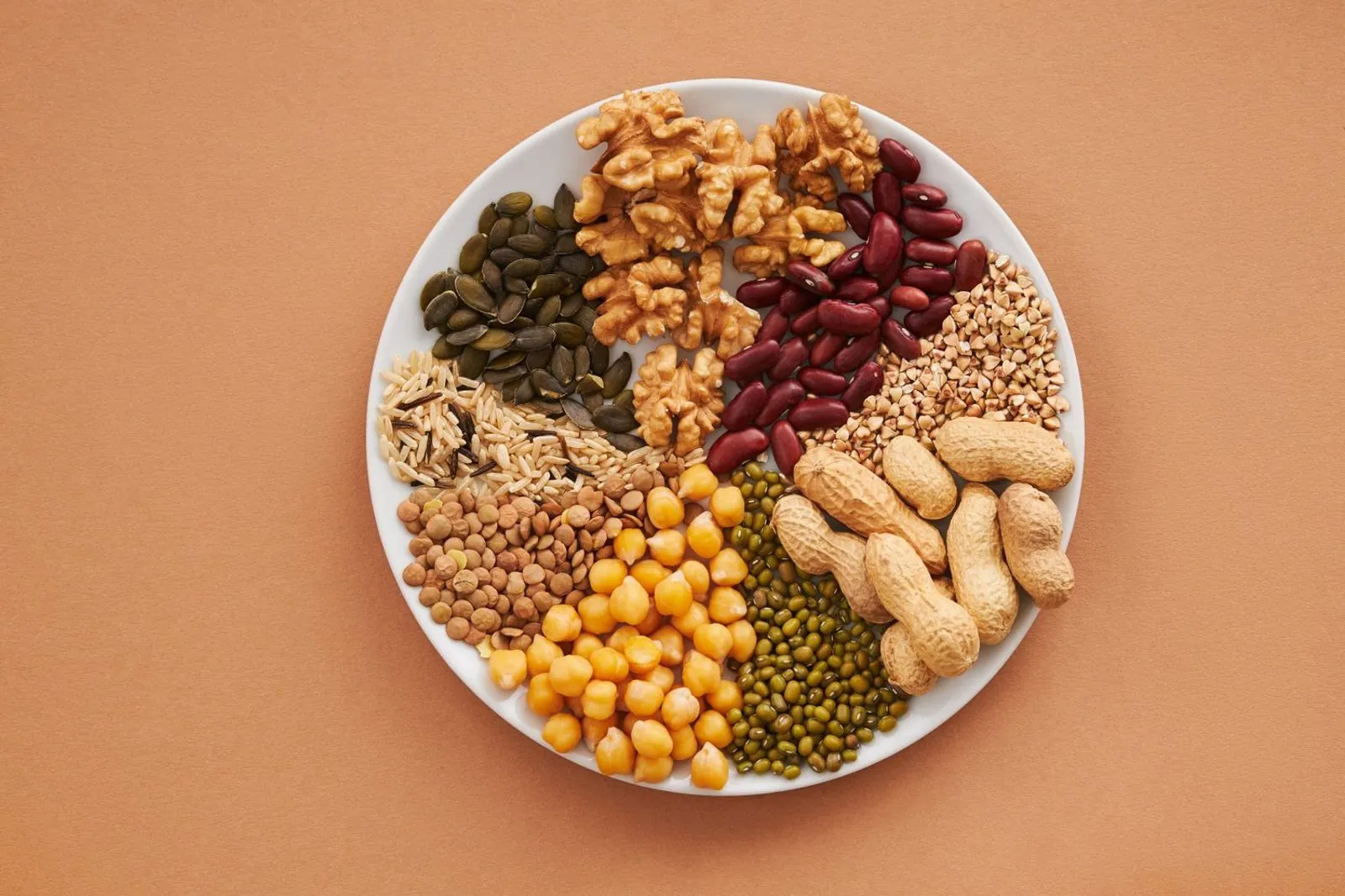
A quick plate rule for any meal: fill about half with vegetables and salad, a quarter with protein such as dal, curd, paneer, eggs or chicken, and a quarter with a whole grain or starch. For the wider picture of how carbohydrates, protein and fat work together, see our overview of diet and nutrition.
Troubleshooting: when carbs do not seem to work for you
You feel sleepy after lunch
A large, mostly refined meal is the usual cause. Cut the rice portion by a third, add dal and vegetables, and take a 10-minute walk afterwards.
You are hungry within two hours
The meal probably lacked protein and fibre. Swap maida or plain poha for whole grains or add curd, sprouts or paneer.
You get bloated after adding dal, rajma or oats
Raise fibre slowly, by about 2 to 3 g every few days, and drink enough water. Soaking pulses well and cooking them fully also helps.
Your weight has stalled
Check portions of rice, sweets, juices and snacks before blaming carbs. Liquid calories and oil are often the hidden part. A weekly 1 to 2 kg fluctuation is normal water movement.
You feel flat during workouts
You may be eating too little carbohydrate around training. A banana or a small bowl of poha about an hour before, and a meal with carbs and protein afterwards, often helps. A 1-on-1 personal trainer can match this to your sessions.
Carbohydrates for office workers, gym-goers, vegetarians and people with blood sugar concerns
Desk-based routines: you need fewer carbs than an active person, so keep rice and roti portions moderate and fill up on vegetables, dal and curd. Gym-goers: you can sit at the higher end of the range, with faster carbs such as banana or rice around workouts. Vegetarians: pair every carb with a pulse, curd, paneer or sprouts to cover protein (see protein and nutrition); dal and rice or rajma and roti are classic combinations.
People with blood sugar concerns: quality and portion size matter, and spreading carbs across meals helps. Beyond that, carbohydrate targets should be set with your care team, because medication, activity and insulin all interact with what you eat.
See your doctor or registered dietitian if you have diabetes or prediabetes, kidney disease, or are pregnant or breastfeeding. Also see them if you are feeding a child with fussy eating, or notice unexplained weight loss, constant thirst or tiredness. Never change or skip medication because of a food change, and do not start a very low-carb plan with a medical condition without professional guidance. For wider needs by life stage, read about nutritional needs.
Frequently asked questions
How many grams of carbohydrate are in one roti?
A medium roti made from about 30 g of whole wheat atta has roughly 20 g of carbohydrate, 3 g of fibre and about 100 kcal. Size and thickness change this, and ghee adds extra calories.
Is rice or roti better for carbohydrates?
Neither is bad. Roti from whole wheat usually gives more fibre per serving, while rice is easy to digest. What matters more is portion size and what you eat with it. Pair either with dal, sabzi and curd.
Are natural sugars in fruit as bad as table sugar?
No. Whole fruit comes with fibre, water and vitamins, which slow absorption and make it hard to overeat. Table sugar and juice deliver sugar quickly with little else. Still, portions matter, especially if you manage blood sugar.
Can I eat carbohydrates at night?
Yes. Total daily intake and portion size matter more than the clock. A lighter dinner of one or two rotis with sabzi and protein suits most people. Very large, refined late meals may leave you sluggish or disturb sleep.
What is the healthiest carbohydrate to eat every day?
No single food wins. A mix of whole grains such as wheat, oats and millets, pulses, vegetables and whole fruit gives fibre, minerals and steady energy. Rotate them through the week instead of relying on one.
Want a carbohydrate plan built around your own thali, workouts and health history? Book an online nutritionist consultation with Fitstrot and get portions you can actually follow.


