
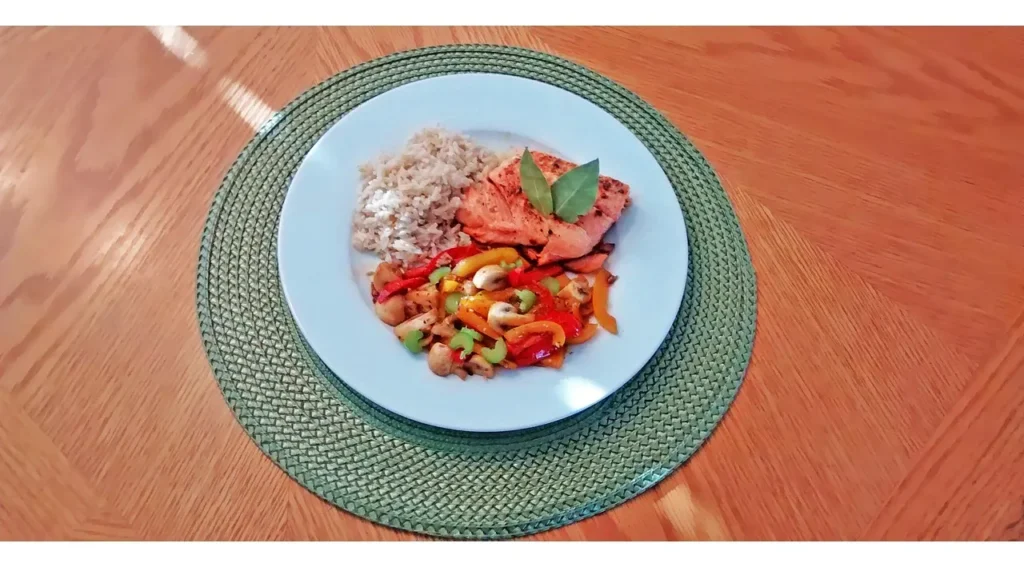
Good nutrition for weight loss is not a list of banned foods or a single “fat-burning” ingredient. It is three things working together: a modest calorie deficit, enough protein and fibre to make that deficit bearable, and enough vitamins and minerals that your energy, hair and blood count don’t suffer. This guide explains each one using Indian food, Indian portions and ICMR’s own plate model, so you can judge any diet plan instead of just following it.
Want a ready plan instead? Use our day-by-day diet plan for weight loss.
What does nutrition for weight loss actually mean?
Nutrition for weight loss means eating slightly less energy than you burn, about 500 kcal a day for roughly 0.5 kg a week, while still getting enough protein, fibre and micronutrients. ICMR-NIN’s 2024 guidelines call half a kilo a week safe and say weight-reduction diets should never drop below 1,000 kcal a day.
Most diets fail on quality, not arithmetic. A 1,300 kcal day of tea, biscuits, aloo-roti and late-night namkeen is a deficit, but it’s low in protein and fibre and leaves you hungry by 11 am. A 1,600 kcal day of dal, curd, vegetables, sensible grains and fruit is also a deficit for most adults, and one you can keep up for six months.
The ICMR-NIN Dietary Guidelines for Indians (2024) also flag how common the problem is: about 25% of Indians are overweight or obese, and Asians are classified as overweight from a BMI of 23 (not 25), because we tend to carry more body fat at the same BMI.
The deficit: how big, how fast, and where people go wrong
A kilo of body fat stores roughly 7,000–7,700 kcal. Spread over a week, a daily shortfall of about 500 kcal gets you close to half a kilo, which is exactly the pace ICMR-NIN describes as safe. The CDC gives a similar range of 1–2 pounds (about 0.5–0.9 kg) a week, noting that people who lose weight at that gradual pace are more likely to keep it off. The same page points out that losing just 5% of your body weight can lower the risk of heart disease, prediabetes and type 2 diabetes. For an 80 kg person, that’s 4 kg.
Three caveats:
- The first week lies. Cutting salt and refined carbs drops water, so the scale can fall 1–2 kg in days. That isn’t all fat.
- The deficit shrinks as you shrink. A lighter body burns less energy, so loss slows over months. That’s physics, not a “damaged metabolism”.
- Crash targets backfire. “5 kg in a week” plans rely on water loss and eating below the 1,000 kcal floor.
Macronutrients for weight loss, side by side
The big long-term trials settle one debate quickly. In the POUNDS Lost trial, published in the New England Journal of Medicine in 2009, adults were assigned to reduced-calorie diets with fat from 20% to 40%, protein from 15% to 25% and carbohydrate from 35% to 65%. All groups lost an average of about 6 kg (7% of body weight) at six months, and at two years there was no meaningful difference between them (Sacks et al., 2009). What predicted success was adherence: every counselling session a person attended was linked to another 0.2 kg lost.
So the macro split matters less than whether you can live with it. Each macronutrient still has a job:
| Macronutrient | kcal per gram | Its job while you lose weight | Practical target | Indian sources |
|---|---|---|---|---|
| Protein | 4 | Preserves muscle, adds fullness, costs more energy to digest | 1.2–1.6 g per kg body weight; ~25–30 g per main meal | Dal, chana, rajma, curd, paneer, tofu, soya chunks, eggs, fish, chicken |
| Carbohydrate | 4 | Fuel for training and the brain; whole grains bring fibre | Cereals at or below ~45% of calories; at least half as whole grains or millets | Phulka, brown or hand-pounded rice, jowar, bajra, ragi, oats, fruit |
| Fat | 9 | Hormones, fat-soluble vitamins; the easiest place to overshoot | ≤30% of calories; about 20–27 g visible oil or ghee a day | Mustard, groundnut or rice-bran oil in measured teaspoons; nuts, seeds |
| Fibre | ~2 (varies) | Slows digestion, keeps you full, feeds gut bacteria | At least 25 g a day | Whole dals, vegetables, greens, whole fruit, millets, flaxseed |
Sources for the targets: protein range from Leidy et al., American Journal of Clinical Nutrition, 2015; cereal, oil and millet guidance from ICMR-NIN 2024; fat and fibre limits from the WHO healthy diet fact sheet.
Protein: why a deficit needs more than the RDA
ICMR’s recommended dietary allowance is 0.83 g protein per kg per day, or 54 g for a 65 kg adult, set for a stable weight. In a deficit, Leidy and colleagues (2015) linked 1.2–1.6 g/kg (78–104 g for the same person) to better appetite control and more lean mass kept. ICMR adds that intakes above about 1.6 g/kg don’t add further muscle gains. If you have kidney disease, agree protein targets with your doctor. For food-by-food protein counts and a full plan, see our guide to a high-protein diet for weight loss.
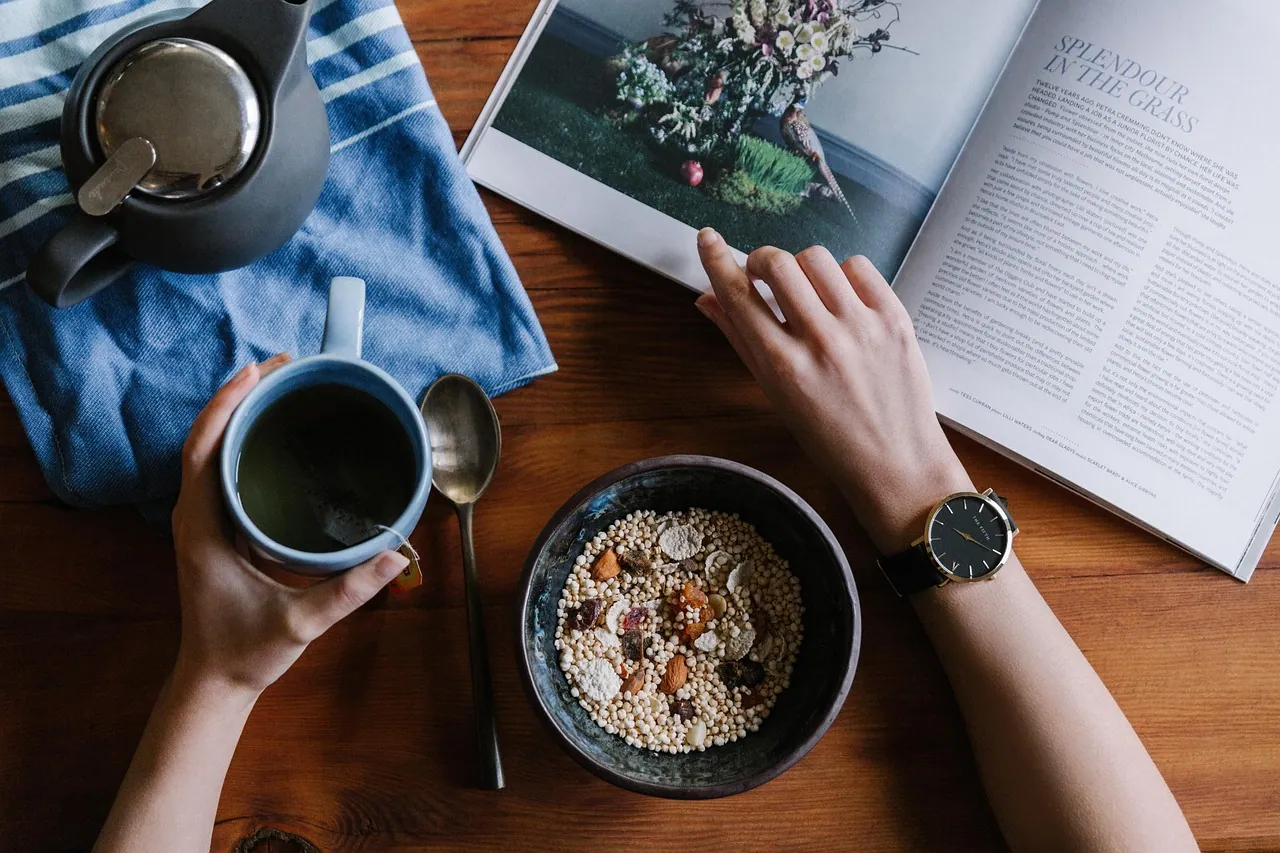
Balanced nutrition for weight loss: ICMR’s My Plate for the Day
ICMR-NIN’s “My Plate for the Day” (2024) builds a 2,000 kcal Indian day from at least eight food groups: vegetables, greens, roots and fruit fill about half the plate, cereals stay at or below 45% of energy, and the rest comes from pulses, milk or curd, nuts and 27 g of oil.
The plate was built for healthy eating, not specifically weight loss. That’s why it’s useful: you don’t need special “diet food”, just a trimmed version of balanced eating. The trim column below is our illustration, not an ICMR prescription. Your own numbers depend on your weight, height and activity.
| Food group | ICMR raw weight per day | Energy share | Sensible trim for a deficit |
|---|---|---|---|
| Cereals incl. millets | 250 g | 42% | Main lever: drop to ~150–180 g; keep at least half whole grain |
| Pulses | 85 g | 14% | Keep or raise; this is your plant protein |
| Milk / curd | 300 ml | 11% | Keep; choose toned milk and plain curd |
| Vegetables + green leafy | 400 g | 9% | Keep or raise; lowest calories per bite |
| Fruits | 100 g | 3% | Keep; whole fruit, not juice |
| Nuts & seeds | 35 g | 9% | Trim to ~15–20 g; easy to overeat |
| Fats & oils | 27 g | 12% | Trim to ~15–20 g; measure, don’t pour |
Source: ICMR-NIN Dietary Guidelines for Indians 2024, Table 1.2a. ICMR also caps sugar at 25–30 g a day and says cereals should be reduced if sugar is eaten.
The trims fall on cereals, oil and nuts, the most calorie-dense groups. Vegetables, pulses and curd stay because they carry the protein, fibre, calcium and iron. For regional thalis built on this logic, see our Indian diet for weight loss guide.
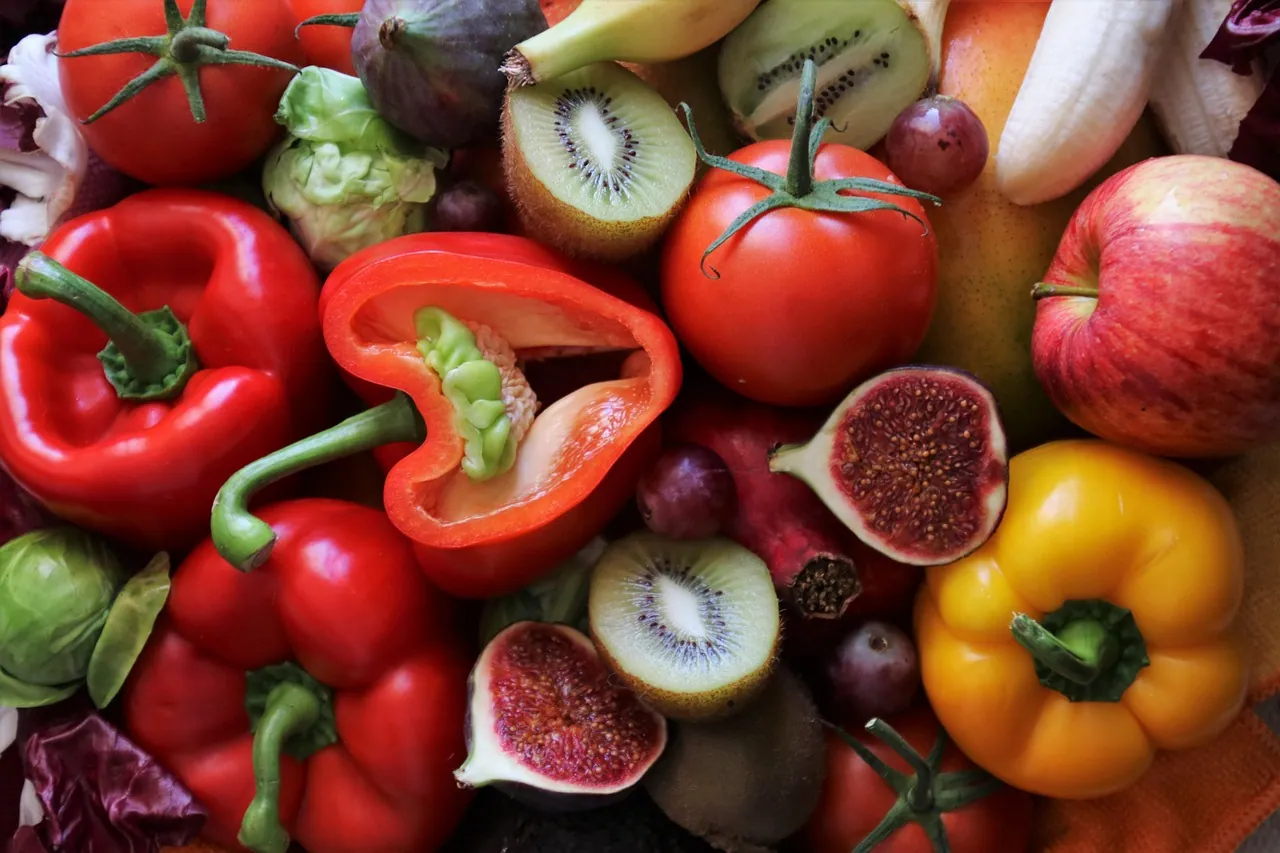
Energy density: low calorie foods for weight loss that still fill you up
Energy density is calories per gram. It’s why a big bowl of lauki sabzi and a small packet of bhujia cost about the same. ICMR notes its balanced plate works out to roughly 100 kcal per 100 g of cooked food. Foods far above that are easy to overeat. Foods below it fill a normal plate within a deficit.
| Food (as eaten) | Approx. kcal / 100 g | Why it helps or hurts | Swap or use |
|---|---|---|---|
| Cucumber, tomato, salad greens | 15–25 | Mostly water plus fibre | Start lunch and dinner with a bowl |
| Lauki, tori, bhindi, cabbage sabzi (1 tsp oil) | 40–70 | High volume, fibre, minerals | Make it half your plate |
| Thin moong or masoor dal | 80–110 | Protein plus fibre in a filling liquid | Go for a second katori instead of a second roti |
| Plain curd | 60–70 | Protein and calcium | Swap for sweetened lassi (often 2× the calories) |
| Boiled chana / sprouts chaat | 130–170 | Protein plus fibre, slow to digest | Evening snack in place of biscuits |
| Phulka (dry) | ~260–300 | Dense per gram but each one is small | Count them; skip the ghee coating |
| Paneer | ~260–290 | High protein but also high fat | 80–100 g portions; tofu is lighter |
| Biscuits, namkeen, bhujia | 450–570 | Fat plus refined starch, very little fibre | Roasted chana or makhana |
Values are approximate and vary with recipe. The pattern matches a landmark experiment. In a 2019 NIH inpatient trial, 20 adults ate as much as they wanted from either an ultra-processed or an unprocessed diet, with meals matched for calories offered, sugar, fat, fibre and salt. On the ultra-processed diet they ate about 508 kcal more per day and gained 0.9 kg in two weeks. On the unprocessed diet they lost 0.9 kg (Hall et al., Cell Metabolism, 2019).
Fibre (fiber) foods for weight loss: the Indian shortlist
In a 2019 analysis of 345 adults on a diet 750 kcal below their needs, fibre intake was the strongest predictor of weight loss over six months (average loss: 7.3 kg). It also predicted how well people stuck to their diet, independent of calories and macros (Miketinas et al., Journal of Nutrition, 2019). WHO sets a minimum of 25 g a day for adults. Reliable Indian sources:
- Whole pulses: rajma, chana, lobia, whole moong and masoor with the skin on.
- Millets: jowar, bajra and ragi rotis. ICMR suggests millets can make up 30–40% of your cereals.
- Greens and vegetables: methi, palak, drumstick leaves, beans, carrots.
- Whole fruit: guava, pear, apple with skin, papaya, oranges. Juice strips most of the fibre.
- Seeds: a tablespoon of ground flaxseed or chia in curd or atta.
Increase fibre over a couple of weeks and drink enough water, or bloating will make you quit.
Micronutrients that quietly go missing in a deficit
Eating less food means fewer vitamins and minerals unless what you keep is nutrient-dense. ICMR-NIN says weight-reduction diets must “provide all nutrients”, which is another reason to cut oil and refined snacks rather than dal and vegetables. Common shortfalls:
- Iron: anaemia remains a public-health problem in India, especially in women. Pair greens, whole pulses and ragi with vitamin C (lemon, amla, guava), and keep tea an hour away from those meals.
- Calcium: don’t drop milk and curd to “save calories”. Keep about 300 ml of dairy, or use ragi, sesame and tofu.
- Vitamin B12 and vitamin D: vegetarians get B12 almost only from dairy, and low vitamin D is common even in sunny cities. Test before supplementing.
Fatigue, hair fall or dizziness early in a diet is a reason to get checked, not to push harder. A CBC, ferritin, B12, vitamin D and TSH panel is a sensible baseline.
How to read nutrition labels in 60 seconds
To read a nutrition label, check four things in order: the per-100 g energy (above 250 kcal per 100 g for solids is ICMR’s high-calorie flag), sugar, fat and saturated fat, salt or sodium, and then the first three ingredients. Serving sizes on the front of the pack are often smaller than what people actually eat.
- Find the per-100 g column. It lets you compare two namkeens fairly.
- Check energy. ICMR-NIN 2024 treats more than 250 kcal per 100 g of solid food, or more than 70 kcal per 100 ml of a drink, as the cut-off for high-calorie HFSS (high fat, sugar, salt) products.
- Scan sugar, fat and salt against the thresholds below.
- Read the first three ingredients. The NHS notes that ingredients are listed by weight, so if sugar, maida, palm oil or vanaspati come first, that is mostly what you’re buying.
- Ignore front-of-pack words like “multigrain” or “baked”. ICMR says fortifying an ultra-processed food doesn’t make it wholesome.
| Nutrient (per 100 g) | Low: good sign | High: think twice |
|---|---|---|
| Energy, solid food (ICMR-NIN) | around 100 kcal (typical home meal) | more than 250 kcal |
| Energy, drinks per 100 ml (ICMR-NIN) | close to 0 (water, plain buttermilk ~20) | more than 70 kcal |
| Total fat | 3 g or less | more than 17.5 g |
| Saturated fat | 1.5 g or less | more than 5 g |
| Total sugars | 5 g or less | more than 22.5 g |
| Salt (sodium × 2.5) | 0.3 g or less | more than 1.5 g |
Two daily limits give these numbers context. WHO advises keeping free sugars below 10% of energy (about 50 g, or 12 level teaspoons, on 2,000 kcal) and salt below 5 g a day.
Five myths that stall progress
Myth 1: “Rice makes you fat, roti doesn’t.” Per 100 g as eaten, cooked rice is less calorie-dense than roti. Portion and accompaniments decide the outcome.
Myth 2: “Eating after 8 pm causes weight gain.” Total intake matters more than the clock. An earlier dinner helps mainly by stopping 11 pm snacking.
Myth 3: “Carbs or fat, one of them is the enemy.” As the POUNDS Lost trial showed, diets ranging from 35% to 65% carbohydrate produced similar results over two years. Choose the split you can keep.
Myth 4: “Fruit is sugar, so skip it.” WHO recommends at least 400 g of fruit and vegetables a day. Limit juice, not whole fruit.
Myth 5: Herbal nutrition for weight loss will do the work for you
Herbal powders, “fat-burner” capsules and branded shakes are heavily searched in India, but the evidence is thin. The NIH Office of Dietary Supplements reports that green tea catechins produced only about 0.95 kg more weight loss than placebo, that garcinia cambogia’s effect “remains uncertain”, and that green tea extract has been linked to liver damage in at least 50 published case reports since 2006. Meal-replacement shakes can create a deficit simply by replacing a meal, but so can a bowl of dal and a salad, at a fraction of the price and with more fibre.
Diet and nutrition for weight loss: what changes by person
Nutrition for weight loss for women
Women usually need fewer calories, leaving less room above the 1,000 kcal floor, so protein and nutrient quality matter more. Iron needs are higher before menopause; calcium and vitamin D matter more after it. If you have PCOS, thyroid disease, are pregnant or are breastfeeding, get a plan from a doctor or registered dietitian rather than following a generic deficit, and never adjust medicines on your own.
Nutrition for weight loss and muscle building
Beginners can lose fat and gain some muscle at once with a small deficit (300–500 kcal), protein near 1.6 g/kg and strength training two to four times a week. For a vegetarian, 25–30 g per meal could be dal plus 150 g curd plus some paneer, tofu or soya. If you want structured strength coaching, Fitstrot’s 1-on-1 personal training pairs programming with your nutrition targets.
Stuck? A troubleshooting checklist
If the scale hasn’t moved in three to four weeks (not days), check these before cutting more food:
- Measure oil for a week. Two extra teaspoons a day is about 90 kcal.
- Audit drinks. Sweet chai, lassi and packaged juice can add 400+ kcal.
- Count weekends. Two restaurant days can erase most of the week’s deficit.
- Track your waist, not just weight. With strength training, the waist can shrink while weight holds.
- Fix sleep. Short sleep increases hunger.
- Rule out medical causes such as hypothyroidism or medicines, with a doctor.
Frequently asked questions
What is the best nutrition for weight loss?
The best nutrition for weight loss is a moderate calorie deficit of about 500 kcal a day, built on vegetables, pulses, curd, whole grains or millets and fruit, with protein at roughly 1.2–1.6 g per kg of body weight and at least 25 g of fibre. The best plan is the one you can keep for months.
How many calories should I eat a day to lose weight?
Most adults lose about 0.5 kg a week by eating around 500 kcal less than they burn. ICMR-NIN (2024) advises that weight-reduction diets should not drop below 1,000 kcal a day. Your exact target depends on your weight, height, age and activity, so a dietitian can calculate it for you.
How much protein do I need per day to lose weight?
ICMR-NIN’s RDA is 0.83 g per kg per day (about 54 g for a 65 kg adult). During a calorie deficit, research reviewed in the American Journal of Clinical Nutrition (2015) supports 1.2–1.6 g per kg, spread as about 25–30 g per main meal. People with kidney disease should check with their doctor first.
Can I lose weight without giving up rice or roti?
Yes. Weight loss depends on your total calorie intake, not on cutting out one grain. Keep cereals at or below about 45% of calories, make at least half of them whole grains or millets, and fill half your plate with vegetables and dal. Portion size matters more than choosing rice or roti.
Do herbal supplements or weight loss shakes work?
The evidence is weak. The NIH Office of Dietary Supplements reports that green tea catechins add only about 0.95 kg of weight loss versus placebo and that garcinia cambogia’s effect is uncertain, and some products carry liver-safety risks. A shake only helps if it replaces a meal and creates a deficit, which normal food can also do.
Which nutrients should I watch while dieting?
Iron, calcium, vitamin B12, vitamin D, folate and potassium are the most common shortfalls in an Indian weight-loss diet. Keep dairy, greens, whole pulses and fruit in your diet, cut oil and packaged snacks instead, and consider a blood test for haemoglobin, ferritin, B12 and vitamin D.
How fast is it safe to lose weight?
About 0.5 kg a week is considered safe by ICMR-NIN (2024), and the CDC gives a range of 0.5–0.9 kg a week. Faster loss in the first week is mostly water. Losing 5% of your body weight can already lower the risk of heart disease and type 2 diabetes.
Your next step: book an online nutritionist consultation with Fitstrot. Bring your usual meals and recent blood reports, and leave with calorie, protein and fibre targets built around the food you already cook.


