
Most people searching for a diet plan for weight loss do not need another lecture on calories in versus calories out. They need to know what to put on the plate tomorrow morning. So this page starts with the plan itself — a complete seven-day Indian chart with real portions and calorie counts — and then explains how to adjust it for your body weight, your kitchen and your schedule. Everything here is built around Indian meal structure and ICMR-NIN reference figures, not a translated American template.
Two honest caveats before the chart. First, a safe rate of loss is roughly 0.5–1 kg per week; the NHS and Mayo Clinic both put it there, and Mayo quantifies the gap needed as about 500–750 kcal per day below maintenance. Anything promising 10 kg in a fortnight is selling water loss. Second, the chart below is a template, not a prescription. If you are pregnant, on insulin, on thyroid medication, or managing kidney disease, get it checked by a qualified professional before you change anything.
Your 7 days diet plan for weight loss: the complete chart
A 7 days diet plan for weight loss works best at roughly 1,450–1,550 kcal per day for an average Indian woman and 1,750–1,900 kcal for an average Indian man, with 75–110 g of protein and 30–35 g of fibre. The chart below is built at approximately 1,500 kcal. It uses ordinary Indian home food — dal, roti, curd, sabzi, eggs, paneer — in weighed portions, so nothing needs to be bought specially. Scaling instructions for men and for higher activity levels follow the table.
| Day | Early morning | Breakfast | Mid-morning | Lunch | Evening | Dinner | Approx. kcal / protein |
|---|---|---|---|---|---|---|---|
| Day 1 Mon |
Warm water + 5 soaked almonds (7 g) | 2 besan chilla (60 g besan) + 2 tbsp pudina chutney + 150 g curd | 1 guava (150 g) | 2 phulka (40 g atta) + 1 katori rajma (150 g cooked) + lauki sabzi (150 g) + kachumber salad (100 g) | Green tea + 30 g roasted chana | 150 g paneer tikka (grilled) + 1 phulka + 200 ml mixed veg soup | 1,510 kcal 82 g protein |
| Day 2 Tue |
Warm water + 1 tsp roasted flaxseed | 2 idli (100 g) + 150 g sambar + 100 g curd | 1 orange (150 g) + 10 g walnuts | 1 katori brown rice (50 g raw) + 150 g chicken curry or 150 g chana masala + 150 g bhindi sabzi + salad | Black coffee + 1 boiled egg or 30 g sprouts chaat | 2 phulka + 150 g palak-tofu + 100 g curd | 1,495 kcal 88 g protein |
| Day 3 Wed |
Warm water + jeera | Vegetable poha (50 g raw poha, 100 g veg) + 150 ml toned milk | 1 apple (150 g) | 2 phulka + 1 katori moong dal (150 g) + 150 g cabbage-carrot sabzi + 100 g curd | Green tea + 25 g makhana (roasted) | 3 egg-white + 1 whole egg bhurji + 1 phulka + cucumber-tomato salad | 1,470 kcal 79 g protein |
| Day 4 Thu |
Warm water + 5 soaked almonds | 2 moong dal cheela (60 g dal) + 150 g curd | 1 pear or 1 small banana (100 g) | 1 katori rice (50 g raw) + 150 g rasam/sambar + 100 g beans poriyal + 150 g curd | Buttermilk (200 ml) + 20 g roasted peanuts | 150 g grilled fish or 150 g soya chunk curry + 1 phulka + sauteed veg (150 g) | 1,530 kcal 91 g protein |
| Day 5 Fri |
Warm water + 1 tsp chia soaked | 1 multigrain paratha (40 g atta, 1 tsp oil) + 150 g curd | 1 bowl papaya (150 g) | 2 phulka + 1 katori kala chana (150 g) + tinda/tori sabzi (150 g) + salad | Green tea + 1 khakhra (25 g) | 200 g chicken/paneer clear soup + 100 g stir-fried tofu + 1 phulka | 1,485 kcal 84 g protein |
| Day 6 Sat |
Warm water + lemon | 2 dosa (60 g batter each) + 100 g coconut-free tomato chutney + 100 g curd | 10 g almonds + green tea | Flexible meal: 1 katori rice + 150 g dal/chicken + 150 g sabzi + salad (eat out if needed, keep it to one plate, skip the sweet) | Buttermilk (200 ml) | Big salad bowl: 150 g chickpeas + 200 g raw veg + 30 g feta/paneer + lemon-olive oil dressing | 1,545 kcal 77 g protein |
| Day 7 Sun |
Warm water + 5 soaked almonds | 3-egg omelette (1 yolk) with veg + 1 slice multigrain toast or 100 g paneer bhurji + toast | 1 orange (150 g) | 2 phulka + 150 g mixed dal + 150 g mixed veg + 150 g curd | Green tea + 25 g roasted chana | Khichdi (50 g rice + 30 g moong dal) + 100 g curd + papad-free salad | 1,460 kcal 76 g protein |
Calorie and protein values are calculated from ICMR-NIN Indian food composition ranges for raw weights, cooked in 3–4 tsp of total oil per day. Expect a ±5–8 % margin depending on how much oil actually goes into your kadhai.
How to read this diet plan for weight loss chart
Five rules make the difference between this working and not working:
- All grain weights are raw. 40 g atta makes two phulkas. 50 g raw rice makes one heaped katori cooked. Weighing the raw grain once a week for a month is the single highest-return habit on this list.
- Oil is capped at 3–4 tsp (15–20 ml) per day for the whole household portion you eat. WHO puts total fat at 30 % or less of daily energy and saturated fat under 10 %; ghee and coconut oil count.
- Days are interchangeable. If Thursday’s fish is impossible, swap it with Tuesday. The week’s totals are what matter.
- Curd, salad and dal are non-negotiable anchors. They carry the protein, the fibre and the volume that keep you full at 1,500 kcal.
- Nothing is banned. Day 6 lunch is deliberately flexible. A plan you break by Wednesday is worse than a slightly looser plan you keep for six months.
How many calories should you actually eat?
Start from your maintenance requirement and subtract 500–600 kcal. ICMR-NIN 2020 puts a sedentary Indian man at about 2,110 kcal/day at a 65 kg reference weight and a sedentary woman at 1,660 kcal/day at 55 kg. That makes a realistic first target roughly 1,500–1,600 kcal for most women and 1,700–1,900 kcal for most men, adjusted upward for body size and activity. Cleveland Clinic notes that a 500 kcal daily deficit produces about 1 lb (0.45 kg) of loss per week, and warns that cutting far deeper mostly buys fatigue, headaches and a deficit you cannot sustain.
| Profile | Body weight | Est. maintenance | Weight-loss target | Protein target (1.2–1.6 g/kg) | Expected loss/week |
|---|---|---|---|---|---|
| Woman, desk job, no exercise | 55 kg | 1,650–1,750 kcal | 1,250–1,350 kcal | 66–88 g | 0.3–0.5 kg |
| Woman, desk job, 4 workouts/wk | 65 kg | 1,950–2,100 kcal | 1,450–1,550 kcal | 78–104 g | 0.5–0.7 kg |
| Woman, 75 kg+, starting out | 75 kg | 2,150–2,300 kcal | 1,600–1,700 kcal | 90–110 g | 0.6–0.9 kg |
| Man, desk job, no exercise | 65 kg | 2,100–2,200 kcal | 1,600–1,700 kcal | 78–104 g | 0.5–0.7 kg |
| Man, desk job, 4 workouts/wk | 78 kg | 2,500–2,650 kcal | 1,900–2,050 kcal | 94–125 g | 0.6–0.9 kg |
| Man, 90 kg+, starting out | 90 kg | 2,700–2,900 kcal | 2,100–2,250 kcal | 108–144 g | 0.8–1.0 kg |
Two things about that protein column. The baseline RDA is only 0.8 g per kg of body weight, or 10–35 % of daily calories — that is the amount needed to avoid deficiency, not the amount that protects muscle while you are eating less. ICMR-NIN’s own footnote is telling: for people on cereal-based diets with lower-quality protein, the requirement rises to 1 g/kg/day, which describes most Indian households. And a 2021 Nutrients meta-analysis of 37 intervention studies found higher-protein diets produced about 1.6 kg more weight reduction than controls. Aiming at 1.2–1.6 g/kg is the practical translation. If hitting it feels impossible on vegetarian food, our guide to a high protein diet for weight loss lists the Indian sources that actually move the number.
Portion sizes that make an Indian diet plan for weight loss work
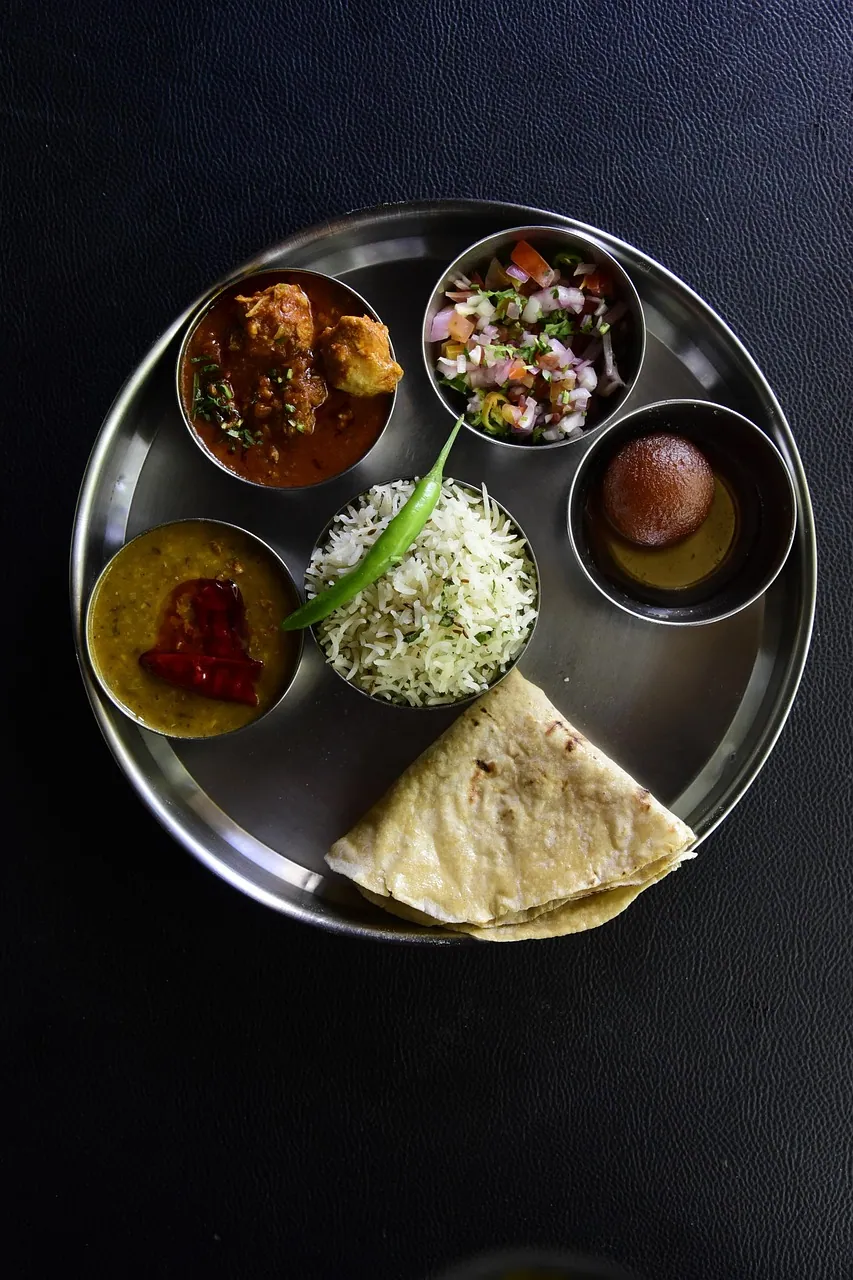
Indian food is not fattening. Indian serving sizes and cooking fat are where the calories hide. The table below is the reference to keep on your phone — it is the part of this page worth screenshotting.
| Food | Standard portion | kcal | Protein (g) | Swap note |
|---|---|---|---|---|
| Phulka (no ghee) | 1 roti, 20 g atta | 70 | 2.4 | Ghee on top adds 45 kcal each |
| Cooked rice | 1 katori, 50 g raw | 175 | 3.5 | Same calories as 2.5 phulkas |
| Toor/moong dal, cooked | 1 katori, 150 g | 130 | 8 | Double the dal, halve the rice |
| Rajma / chana, cooked | 1 katori, 150 g | 180 | 11 | Best veg protein-per-rupee |
| Paneer (cow milk) | 100 g | 265 | 18 | Tofu: 145 kcal, 16 g protein |
| Curd, toned milk | 150 g | 90 | 5 | Greek/hung curd: 150 kcal, 15 g |
| Egg, whole | 1 large | 75 | 6.5 | White only: 17 kcal, 3.6 g |
| Chicken breast, cooked | 100 g | 165 | 31 | Highest protein density on the list |
| Soya chunks, dry | 30 g | 105 | 16 | Cheapest protein in an Indian kitchen |
| Cooking oil / ghee | 1 tsp, 5 ml | 45 | 0 | The most underestimated line item |
| Samosa | 1 piece | 260 | 4 | Equals a whole dinner’s dal + roti |
| Sweet tea, 2 tsp sugar | 1 cup | 90 | 1.5 | Four cups a day = 360 kcal |
That last row matters more than it looks. WHO caps free sugars at under 10 % of daily energy — about 50 g, or 12 teaspoons, and the ICMR-NIN Dietary Guidelines for Indians (2024) tightens that to 20–25 g of added sugar per day, alongside roughly 55 % of energy from carbohydrate, 30 % from fat and 10–15 % from protein. Five cups of sweet chai already breach the ICMR number before you have eaten anything.
Vegetarian, eggetarian and non-veg versions of the same week
The chart above is already mostly vegetarian. To run it as a strict indian diet plan for weight loss with no eggs, make three substitutions: replace Day 3’s egg bhurji with 120 g paneer bhurji (same calories, 3 g less protein), Day 4’s grilled fish with 150 g soya chunk curry, and Day 2’s boiled egg with 40 g roasted chana. To run it non-vegetarian, do the reverse — swap two paneer meals for 150 g grilled chicken or fish and you gain about 20 g of protein for 60 fewer calories.
Jain kitchens can drop onion and garlic without touching the calorie maths; use hing, ginger substitutes and extra tomato for flavour, and lean on moong, masoor and paneer for protein since root vegetables are out. For a regional breakdown — South Indian, Bengali, Punjabi — our companion piece on the Indian diet for weight loss goes cuisine by cuisine.
Myth check: is the best healthy diet plan for weight loss low-carb, keto or something else?
No single macronutrient pattern wins. Across controlled trials, low-carb, low-fat and Mediterranean diets produce broadly similar 12-month weight loss when calories are matched; adherence is the variable that separates them. The best healthy diet plan for weight loss is therefore the one whose food you would still eat in month nine. Three specific corrections worth making:
- “Rice makes you fat.” One katori of cooked rice is 175 kcal — about the same as two and a half phulkas. Rice is not the problem; three katoris of it with one spoon of dal is.
- “Eat every two hours to boost metabolism.” Meal frequency has a negligible effect on total energy expenditure. Eat on whatever schedule keeps you from raiding the fridge at 11 pm.
- “Fruits have too much sugar.” Whole fruit comes packaged with fibre and water. Harvard’s Nutrition Source puts the adult fibre target at 25–35 g a day, against a typical intake near 15 g — most people need more fruit, not less. Fruit juice is a different argument.
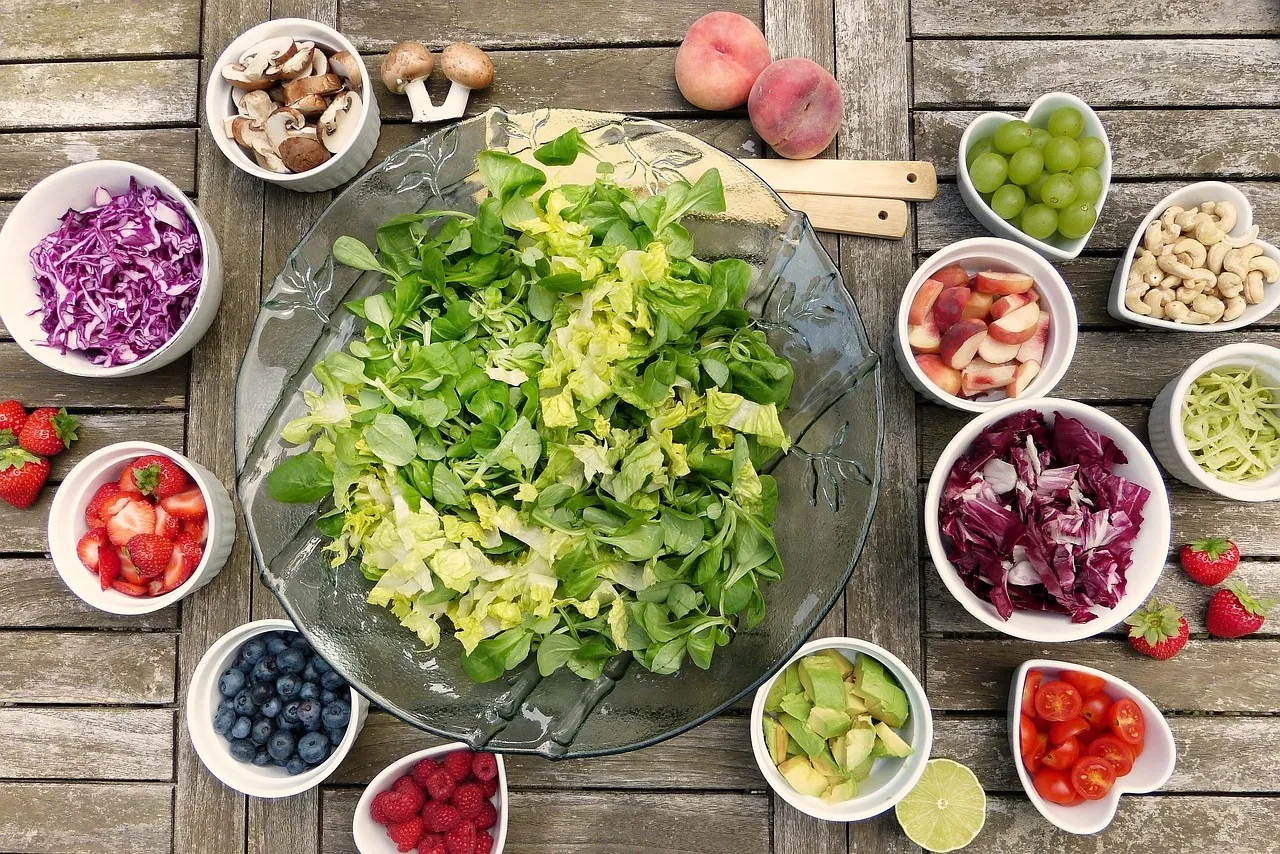
One genuinely useful frame is the half-plate rule: half the plate vegetables and fruit, a quarter whole grains, a quarter protein. Applied to a thali, that means the sabzi and salad katoris get bigger, the roti-rice share shrinks, and a protein dish appears at every meal rather than at one.
Build your own plan in 30 minutes: a five-step walkthrough
If you would rather construct a normal diet plan for weight loss from the food your family already cooks, work through these steps once and you will not need to think about it again:
- Step 1 — Fix the number. Take your target from Table 2. Round it to the nearest 50. Write it down.
- Step 2 — Book the protein first. Divide your protein target across three meals. For a 65 kg woman at 90 g, that is 30 g per meal: 150 g curd plus a katori of rajma at lunch, 100 g paneer at dinner, two eggs plus chilla at breakfast.
- Step 3 — Fill volume with vegetables. Add 150 g of cooked sabzi and 100 g of raw salad to lunch and dinner. This is where fullness comes from — roughly 100 kcal for 250 g of food.
- Step 4 — Spend what is left on grain and fat. Whatever calories remain after protein and vegetables become roti, rice and oil. Usually that lands at 2 rotis or 1 katori rice per meal plus 3–4 tsp of oil a day.
- Step 5 — Leave 100 kcal unallocated. A daily buffer for chai, a biscuit or a colleague’s birthday cake stops the whole plan collapsing on a Tuesday afternoon.
Cook once, eat twice: batch the dal and the sabzi on Sunday and Wednesday, keep boiled eggs and roasted chana in the fridge, and the plan takes about 25 minutes of active cooking a day.

Who this changes for: women, men and specific conditions
Diet plan for weight loss for women
A diet plan for weight loss for women usually sits between 1,250 and 1,600 kcal, with 65–100 g of protein, 18–21 mg of iron and 1,000 mg of calcium — the micronutrients matter as much as the deficit. Three practical adjustments: keep curd or milk at two meals to protect calcium intake; pair iron-rich foods (rajma, palak, ragi) with lemon or amla rather than with tea, which blocks absorption; and expect 1–2 kg of water-weight fluctuation in the week before your period — do not “correct” for it by cutting calories further. For PCOS, the same chart works with the grain portion reduced by about a third and the protein and fibre pushed to the top of their ranges.
Diet plan for weight loss men
A diet plan for weight loss men can follow typically runs 1,700–2,100 kcal with 95–140 g of protein, because higher lean mass raises both maintenance needs and the protein required to protect muscle in a deficit. Run the Table 1 chart with these changes: add one extra roti at lunch and dinner, add 100 g of chicken, fish or paneer to the evening meal, and add 200 ml of milk or a second serving of curd. Alcohol is the usual blind spot — two large beers is roughly 400 kcal with no satiety return and a measurable dip in next-day training quality.
Thyroid, diabetes and shift work
Hypothyroidism that is properly medicated does not stop weight loss; it does slow it by roughly 10–15 %, so give the plan 12 weeks rather than 6. For type 2 diabetes, keep the structure but move a portion of the grain from dinner to lunch and never eat fruit alone — pair it with nuts or curd. Night-shift workers should anchor the largest meal before the shift, not at 3 am, and keep a protein-heavy option packed so the canteen samosa is not the default.
Weight loss stalled? A troubleshooting table
Nearly every plateau on a sensible plan traces to one of six causes. Work down this list before concluding that your metabolism is broken.
| What you are seeing | Most likely cause | What to do this week |
|---|---|---|
| No change for 7–10 days, early on | Water and glycogen shifts masking fat loss | Nothing. Judge by the 4-week trend and waist measurement, not daily weight |
| No change for 3+ weeks | Portion creep — usually oil, chai sugar and weekend meals | Weigh oil and grain for 7 days. Most people find 250–400 hidden kcal/day |
| Losing, then regaining every weekend | Two high days erasing five deficit days | Cap weekend eating at one flexible meal, not two full days |
| Constant hunger, low energy | Deficit too aggressive or protein too low | Add 150–200 kcal as protein and vegetables, not as grain |
| Weight steady but clothes looser | Fat loss with muscle gain — a good outcome | Track waist, hip and a progress photo monthly |
| Lost 6–8 kg, now completely stuck | Genuine adaptation — maintenance has fallen with body weight | Recalculate Table 2 at your new weight, or take a 2-week maintenance break |
Keep the goal proportionate. The CDC notes that a 5 % reduction — 10 lb for a 200 lb person — already lowers risk for heart disease, prediabetes and type 2 diabetes, and that people who lose at 1–2 lb a week keep it off more reliably than fast losers. Worth remembering too that BMI thresholds are lower for South Asians: the NHS treats BMI 23–27.4 as overweight and 27.5+ as obese for people of South Asian background, against 25 and 30 for the general population. If you are chasing a specific short-term number, read our realistic assessment of 10 kg weight loss in 1 month before you commit to it.

What a free diet plan for weight loss can and cannot do
A diet plan for weight loss free on the internet — including this one — is genuinely useful for the first 6–10 kg. It gives you structure, portions and a protein target, and for a healthy adult with no medical complications that is usually enough. Be honest about its limits, though. A template cannot see your blood work, your thyroid panel, your food intolerances, your travel schedule or the fact that you hate curd. It cannot adjust when you plateau at week nine, and it cannot tell the difference between “I am not losing” and “I am under-reporting by 300 kcal.”
That is the point at which a person beats a page. A dietitian will run the numbers against your actual reports and rebuild the chart around foods you will eat; our online dietitian and nutritionist consultation does exactly that, and pairing it with an online weight loss trainer handles the training side so muscle comes along for the ride. Neither is necessary to start. Both help most in months three to nine, which is where most self-guided plans quietly end.
Frequently asked questions
What is the best diet plan for weight loss in India?
The best diet plan for weight loss in India is a calorie-controlled version of normal home food: roughly 1,500 kcal for women and 1,800 kcal for men, with 1.2–1.6 g of protein per kg of body weight, 30–35 g of fibre, 3–4 tsp of oil a day, and added sugar under the ICMR-NIN limit of 20–25 g. No imported ingredient outperforms dal, curd, eggs and vegetables in measured portions.
How much weight can I lose in 7 days on this diet plan?
Expect 0.5–1 kg of true loss in the first week, plus 1–2 kg of water weight if you are cutting sugar and salt sharply from a previously high intake. The scale therefore often drops 2–3 kg in week one and then slows to under 1 kg a week. That slowdown is normal and is not the plan failing.
Can I follow this diet plan for weight loss for free?
Yes. Every item in the seven-day chart is ordinary Indian grocery — atta, dal, rice, curd, seasonal vegetables, eggs or paneer — and the weekly cost is typically similar to or lower than an unplanned week, because portion control cuts the snack and delivery spend. A kitchen scale for about ₹500 is the only purchase that meaningfully improves accuracy.
Is rice allowed in an Indian diet plan for weight loss?
Yes. One katori of cooked rice from 50 g raw is about 175 kcal, roughly the same as two and a half phulkas. Rice becomes a problem only through serving size and the low protein that usually accompanies a rice-heavy plate. Keep it to one katori, double the dal or curd beside it, and add 150 g of vegetables.
Do I need protein powder to hit my protein target?
Usually not. The chart above reaches 76–91 g of protein a day entirely from food. Whey or plant protein is a convenience for people above roughly 100 g of daily protein, travelling frequently, or unable to cook — a 25–30 g scoop closes a gap, but it is a top-up, not a foundation.
How is a diet plan for weight loss for women different from one for men?
Mainly in scale and micronutrients. Women typically need 1,250–1,600 kcal versus 1,700–2,100 for men, because of lower average lean mass. Women’s plans also need deliberate attention to iron (18–21 mg) and calcium (1,000 mg), and should account for 1–2 kg of premenstrual water-weight fluctuation that men do not experience.
What should I do if I stop losing weight after 3 weeks?
Weigh your oil and raw grain for seven consecutive days before changing anything. Most three-week plateaus are 250–400 kcal a day of unlogged intake, usually cooking fat, sweetened tea and weekend meals. If the log is genuinely accurate, recalculate your maintenance at your new body weight and cut a further 150–200 kcal, or add 30 minutes of walking daily instead.
Is skipping dinner a good diet plan for weight loss?
It works for some people purely because it removes calories, but it is a fragile strategy. Skipping dinner commonly leads to late-night eating, poorer sleep and a protein intake well below the 1.2–1.6 g/kg range needed to protect muscle. A small, protein-led dinner of 350–400 kcal achieves the same deficit with far better adherence.
Start with one week, not one year
Print Table 1, shop for it on Sunday, and run it for seven days exactly as written. Weigh yourself on day 1 and day 8, measure your waist both times, and judge the result on the trend rather than a single morning. If you want the chart rebuilt around your reports, your cuisine and your schedule, book a session with a Fitstrot dietitian and bring your week-one numbers with you.


