

Boat pose, known in Sanskrit as naukasana, is a seated yoga posture in which you balance on your sitting bones while the chest and legs lift into a V shape. Beginners usually hold a bent-knee version for 10 to 15 seconds, while experienced students hold the straight-leg version for 30 to 60 seconds. This guide covers alignment cues, three modifications, a four-week progression, hold times, common mistakes and who should skip the pose.
What is naukasana, and what does the name mean?
Naukasana is the Sanskrit name for boat pose, a seated core and balance posture. “Nauka” means boat and “asana” means posture. You balance on your sitting bones with the torso leaning back and the legs lifted, so the body forms a V like the hull of a boat. Most teachers class it as an intermediate pose.
The full version, paripurna naukasana, has straight legs and a long spine. The half version, ardha naukasana, keeps the knees bent or the torso lower. In the full pose your torso leans back at roughly 45 degrees to the floor while the legs lift to a similar angle in front, with the arms reaching forward at hip height.
Although it looks like a simple lift, boat pose is an isometric hold. The abdominal wall, the hip flexors at the front of the hips, the quadriceps and the muscles along the spine all work together to keep the V steady. It sits comfortably inside a wider set of yoga poses for strength and balance, and a modified version is the sensible starting point for most people.
How do you do naukasana step by step?
To do naukasana, sit with your knees bent and feet on the floor, then lean back until your torso is about 45 degrees to the floor with a long spine. Lift your shins parallel to the floor, straighten the legs only if your back stays long, reach your arms forward and breathe steadily. Hold 10 to 30 seconds.
- Sit tall on the mat with your knees bent, feet flat and hands beside your hips.
- Lengthen your spine, lift your breastbone and lean back slightly, keeping your weight on the sitting bones rather than the tailbone.
- On an exhale, lift your feet until the shins are parallel to the floor. This is the bent-knee boat.
- Reach your arms forward, parallel to the floor, palms facing each other.
- If your back stays long and you feel steady, extend the legs until your toes are about eye level or a little higher.
- Look at your toes or straight ahead, breathe slowly through the nose and hold.
- Exhale, lower the feet and hands, and rest for a few breaths before the next round.
Warm up first. A few rounds of Surya Namaskar or a minute or two of Tadasana with gentle spinal movement wakes up the hips, hamstrings and trunk, so the pose does not begin from cold muscles.
Alignment cues at a glance
| Body part | What to aim for | Common fault |
|---|---|---|
| Pelvis | Balance just in front of the tailbone, on the sitting bones | Sinking back onto the tailbone |
| Spine | Long from the pelvis to the crown of the head | Rounded lower back |
| Chest and shoulders | Breastbone lifted, shoulders drawn away from the ears | Collapsed chest, shrugged shoulders |
| Legs | Toes at or slightly above eye level, thighs active | Legs too low, or knees forced straight with a rounded back |
| Arms | Parallel to the floor, palms facing in, shoulders relaxed | Gripping the thighs or letting the arms drop |
| Neck and gaze | Chin level, soft gaze at the toes or straight ahead | Chin poking forward, neck craned |
| Breath | Slow, even breaths through the nose | Holding the breath |
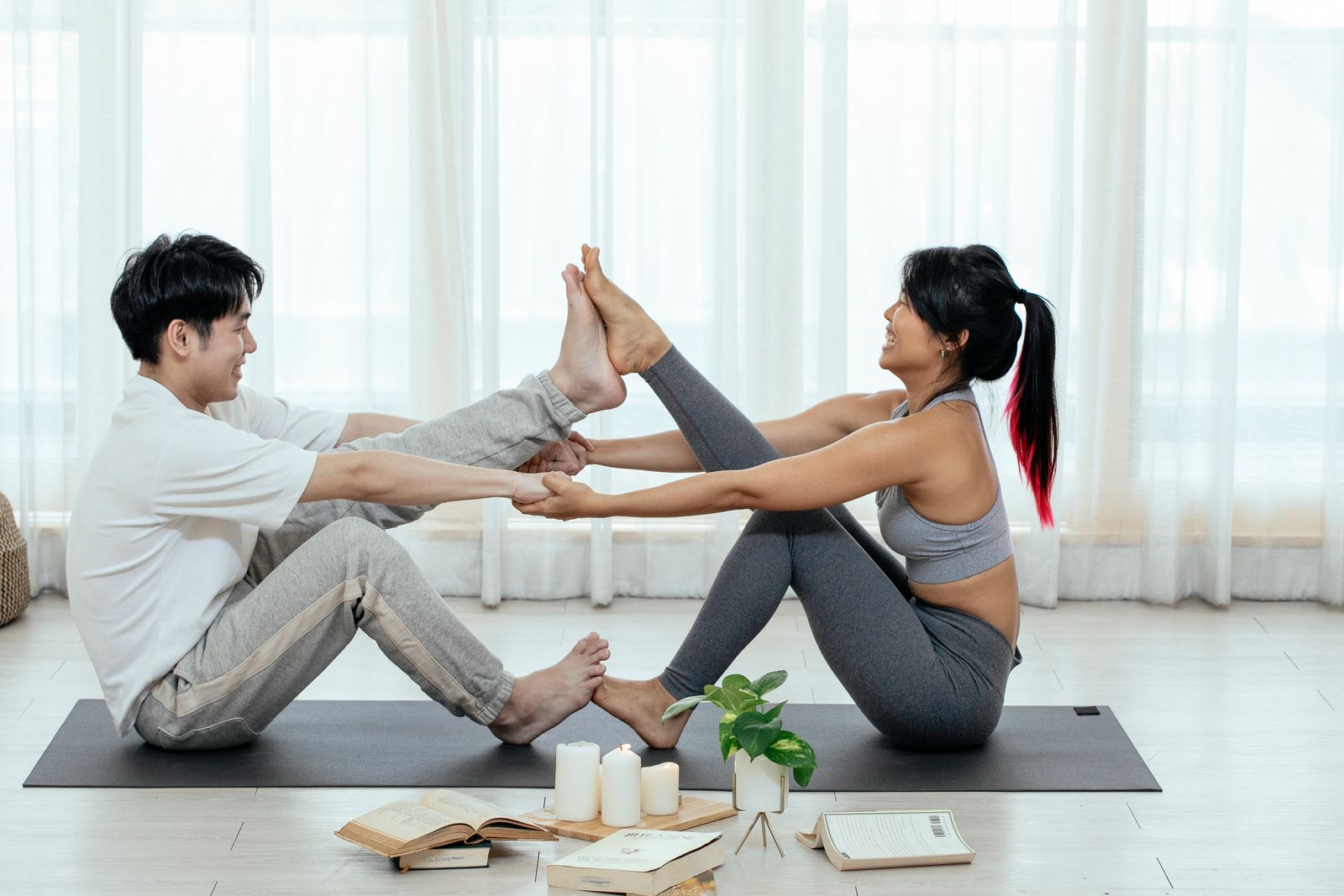
Which boat pose version suits you: bent-knee, strap or half boat?
Choose the bent-knee boat if you are new to the pose, the strap boat if tight hamstrings stop you keeping your back long, and the half boat if you want a lower, supported lift. Hold each for 10 to 20 seconds at first. Move to the full straight-leg boat only when your spine stays long for 20 seconds.
Names vary between teachers. Some call the bent-knee version ardha naukasana, while others use “half boat” for a lower, reclined lift. The table below describes the shape, so you can match it to whatever your teacher calls it.
| Version | How to set it up | Best for | Typical hold |
|---|---|---|---|
| Bent-knee boat | Knees bent about 90 degrees, shins parallel to the floor, arms forward or hands behind the thighs | Beginners, returning after a break | 10 to 15 seconds |
| Strap boat | Loop a yoga strap or a dupatta around the arches of both feet, hold it with both hands, lift the chest and keep the elbows soft | Tight hamstrings, difficulty keeping the spine long | 10 to 20 seconds |
| Half boat | Lean back a little further onto the forearms or fingertips behind you, keep the back long and lift the legs to a lower angle | Building endurance with extra support under the torso | 10 to 20 seconds |
| Full boat (paripurna) | Straight legs, torso and legs both at roughly 45 degrees, arms parallel to the floor | Students who can hold a long spine without shaking | 20 to 60 seconds |
Some Vinyasa yoga classes move between the bent-knee and straight-leg boat on the breath. Learn the static hold first.
Myth check: does a higher leg lift mean a better naukasana?
No. The quality of a boat pose depends on a long spine and steady breathing, not on how high the legs go. A lower, straight-backed lift with bent knees works the trunk more usefully than a high lift with a rounded back, which shifts load onto the lower spine. Raise the legs only as far as the back stays long.
A second myth is that shaking means you are doing it wrong. A mild tremor is normal muscle fatigue in any isometric hold. Sharp lower-back pain or tingling down a leg is different, and means you should come out of the pose.
Why does my back hurt or my legs shake in boat pose?
Back strain in boat pose usually comes from a rounded lower spine or from lifting the straight legs before the core is strong enough. Bend the knees, lower the legs, lift the chest and shorten the hold to 10 seconds. Persistent or sharp pain should be checked by a doctor or physiotherapist.
- Lower back rounds: bend the knees, hold a strap or place your hands behind the thighs, and think of lifting the breastbone rather than the feet.
- Legs will not straighten: tight hamstrings are common in people who sit for long hours. Keep the knees bent, or use a strap.
- Neck aches: keep the chin level and the gaze soft. Do not crane forward to watch your toes.
Naukasana for beginners and desk workers
Beginners. Start with the bent-knee boat for 3 rounds of 10 seconds, resting 30 seconds between rounds. A short session of foundational postures such as Vrksasana and Tadasana builds the body awareness that makes boat pose easier to learn.
Desk workers. Long sitting tends to leave the hip flexors tight and the trunk muscles switched off, and a tight hip flexor often tugs the lower back into a rounded shape in boat pose. Use the bent-knee or strap version, and spend a minute stretching the front of the hips first. If you already live with back discomfort, read our guide to yoga for back pain and talk to a doctor before adding boat pose.
A four-week naukasana progression
This plan assumes three practice days a week with a rest day between sessions. If any week feels too hard, repeat it. Progress means a calm breath and a long spine, not speed. It is not a promise of results.
| Week | Version | Hold per round | Rounds | Rest between rounds |
|---|---|---|---|---|
| 1 | Bent-knee boat | 10 seconds | 3 | 30 to 45 seconds |
| 2 | Bent-knee boat | 15 seconds | 4 | 30 seconds |
| 3 | Strap boat or half boat | 20 seconds | 4 | 30 seconds |
| 4 | Full boat with a long spine, or strap boat with straighter legs | 20 to 30 seconds | 3 to 5 | 30 to 60 seconds |
After the final round, lie on your back and hug your knees to your chest for a few breaths, or rock gently side to side.
Who should skip naukasana or check with a doctor first?
Skip naukasana, or get medical advice first, if you have a back injury or slipped disc, are pregnant, have had recent abdominal surgery or have a hernia. Many traditional teachers also advise avoiding it during menstruation. Check with your doctor if you are unsure.
- Back injury or disc problems: boat pose loads the lower spine, and flare-ups or nerve pain need a clinician’s guidance first.
- Pregnancy: deep abdominal compression and strong core holds are generally avoided. A prenatal teacher can suggest suitable alternatives.
- Recent abdominal surgery: wait for your surgeon’s clearance before any pose that loads the abdominal wall.
- Hernia: straining the abdomen can aggravate it, so ask your doctor before practising.
- Menstruation: traditional yoga teaching often advises leaving out strong abdominal poses during the period. Some modern teachers treat it as a personal choice based on comfort. Follow your teacher’s advice and how your body feels.
- Dizziness, neck pain or a heart condition: ask your doctor first, and keep any hold short and gentle.
See your doctor or physiotherapist if you feel pain, numbness or tingling during or after the pose, or if you have any ongoing medical condition. When in doubt, practise the easiest version under a qualified teacher.
How often and how long should you hold boat pose?
Practise naukasana 3 to 4 times a week, for 3 to 5 rounds per session. Beginners hold 10 to 15 seconds per round, intermediate students 20 to 30 seconds, and advanced students up to 60 seconds. Rest 30 to 60 seconds between rounds, and end any round the moment your back starts to round.
For breathing, inhale to lengthen the spine before you lift, exhale as the legs rise, then settle into slow, even breaths through the nose. Avoid holding your breath, since that tends to tighten the neck and jaw.
In a class, boat pose usually follows standing and balancing work and precedes forward folds or twists. It fits easily into most types of yoga, from Hatha to power-style classes, as the core strengthening block of the session. Afterwards, hug your knees to your chest to release the lower back.
Naukasana vs navasana vs sit-ups: what is the difference?
Naukasana and navasana are two names for the same boat pose in most yoga schools, since “nauka” and “nava” both mean boat. A sit-up is different: it repeatedly curls the spine forward, while boat pose is a steady hold that trains the trunk to keep the spine long and still against gravity.
Naukasana FAQs
How long should I hold naukasana?
Beginners can start with the bent-knee boat for 10 to 15 seconds and build up to about 30 seconds over several weeks. Experienced students often hold the full straight-leg boat for 30 to 60 seconds, usually across 3 to 5 rounds.
Can beginners do naukasana?
Yes, with modifications. Begin with the bent-knee boat, keep your hands behind your thighs if needed, or loop a strap around your feet to keep the spine long. Hold for 10 seconds, rest and repeat three times.
Why does my back hurt in naukasana?
Back pain in naukasana usually means your lower spine is rounding or your legs are too straight for your current core strength. Bend the knees, lower the legs, lift the breastbone and shorten the hold. If pain is sharp or lingers after practice, stop and ask a doctor or physiotherapist.
Are naukasana and navasana the same pose?
In most schools, yes. Both names mean boat pose, and the alignment, benefits and precautions are the same. Some teachers use navasana for the Ashtanga and vinyasa style and naukasana for Hatha and traditional texts, and a few describe naukasana as a slightly more reclined version. Follow your teacher’s cues.
Who should avoid naukasana?
People with back injuries or slipped discs, pregnant women, anyone with a hernia or recent abdominal surgery, and those who are dizzy or have neck pain should avoid it or ask a doctor first. Many traditions also suggest skipping it during menstruation. A qualified teacher can offer gentler alternatives.
Want a teacher to check your boat pose in real time? Join a live online yoga class with Fitstrot for guided alignment and modifications, or book a 1-on-1 personal training session if you want a core plan built around your back and hips.


