

Ishvara pranidhana is the fifth niyama of Patanjali’s yoga, usually translated as surrender, devotion or dedicating your actions to something larger than yourself. It is also the most misunderstood. Some people hear “God” and switch off, others hear “surrender” and assume it means giving up. This guide takes a plain, practical view: what the Sanskrit and the Yoga Sutras actually say, how devotional and secular readings differ, and how to practise ishvara pranidhana in a class, in an exam season, or during a hard week at work, without needing to adopt any belief you do not hold.
What does ishvara pranidhana mean?
Ishvara pranidhana combines “Ishvara”, meaning the Lord, the supreme or the highest consciousness, with “pranidhana”, meaning placing forward, dedicating or offering. Together it means offering your effort and its results to something higher than the personal ego, and then letting go of the need to control the outcome.
Notice the two halves of that definition: offering the effort, and releasing the result. The first half keeps you working. The second half keeps you from clenching around the outcome. Both are needed, which is why the teaching sits comfortably beside disciplined practice rather than replacing it.
What do the Yoga Sutras actually say about it?
The Yoga Sutras mention ishvara pranidhana at several points. Sutra 2.32 lists it as the fifth niyama, sutra 2.1 includes it in kriya yoga, and sutra 2.45 says that accomplishment in samadhi comes from it. Sutras 1.23 to 1.27 describe Ishvara itself in abstract terms.
- Sutra 1.23: samadhi is brought near by devotion to Ishvara.
- Sutra 1.24: Ishvara is a special consciousness untouched by affliction, action and its results.
- Sutra 1.27: the sound-symbol of Ishvara is Om, to be repeated with its meaning in mind.
- Sutra 2.1: kriya yoga is tapas (discipline), svadhyaya (self-study) and ishvara pranidhana.
- Sutra 2.32: the niyamas are saucha, santosha, tapas, svadhyaya and ishvara pranidhana.
- Sutra 2.45: perfection in samadhi comes from ishvara pranidhana.
Translations vary between teachers, so treat the wording above as a summary, not a quotation. What stays consistent is Patanjali’s description of Ishvara as something unaffected by the suffering and action that bind the rest of us. That is a philosophical definition, not a temple or a doctrine. If you want the wider framework these verses sit inside, our guide to types of yoga shows where Patanjali’s path fits among the traditions.
Sutra 2.1 is worth pausing on. Kriya yoga bundles three practices: tapas builds disciplined effort, svadhyaya builds honest self-awareness, and ishvara pranidhana stops effort from hardening into pride or anxiety. Seen this way, surrender is not an optional extra at the end of the path. It is the counterweight that keeps ambition healthy, and it is why teachers describe the three as a package rather than separate chores.
The reference to Om is also practical. Repeating Om slowly, with attention on its meaning rather than its sound alone, gives a restless mind one simple object to rest on. Many practitioners use three to five rounds at the start or end of class as a gentle form of dedication, whether they hear it devotionally or simply as a steady hum.

Is ishvara pranidhana a religious practice?
It can be devotional, but it does not have to be. Patanjali defines Ishvara abstractly, so Hindus, Muslims, Christians, Sikhs, Parsis, agnostics and atheists can all practise it. What matters is the act of offering effort and releasing the result, whatever you place your trust in.
Different readings emphasise different things. The table below sets three common approaches side by side so you can see which one fits you, or borrow from more than one.
| Reading | What “Ishvara” means | What practice looks like | Everyday example |
|---|---|---|---|
| Devotional | A personal deity or God as you understand Him | Prayer, mantra, bhajan, a short dedication before practice | Offering a hard exam to your ishta devata before you sit down to write |
| Philosophical | Pure consciousness untouched by suffering and action, as Patanjali defines it | Meditation on Om, contemplating the sutras, quiet reflection | Sitting for five minutes each night, handing the day back |
| Secular | Something larger than the self: nature, community, a purpose, the flow of life | Dedicating a practice to others, accepting limits, gratitude | Doing your best at an interview, then taking a walk instead of replaying it |
The Bhagavad Gita presents a devotional and action-based version of the same idea, where acting well without clinging to the fruit is central. Our article on the Bhagavad Gita and yoga explains how the two texts complement each other.
Myth check: “Surrender means giving up”
It does not. Ishvara pranidhana asks for full effort first, then release of the result. Giving up withdraws effort because you fear failure. Surrender keeps working, accepts that outcomes depend on many factors you cannot control, and stays steady when things do not go your way.
The Gita’s well-known line, that you have a right to action but not to its fruits, is the same teaching. It is not a licence to be careless. A student who stops studying and says “it is all up to God” has misread the teaching; a student who studies thoroughly and then stops obsessing about the result is practising it.
| Situation | Giving up | Surrender (ishvara pranidhana) |
|---|---|---|
| Board exam or entrance test | Skips revision, says “whatever happens” | Revises fully, sleeps well, accepts the result calmly |
| Job search | Stops applying after a few rejections | Keeps applying and improving, stops checking email every ten minutes |
| Difficult pose | Avoids it forever | Practises with props, accepts today’s range |
| Family conflict | Withdraws or goes silent | Speaks honestly and kindly, lets the other person respond in their own way |
How do you practise ishvara pranidhana on the mat?
Start class with a ten-second dedication, give honest effort through the active part, then use the final rest to let go completely. Because surrender is an attitude, any style can carry it: the sequence below works in hatha, vinyasa or yin, in a studio or at home.
- Arrive (1 minute). Sit, close your eyes and dedicate the session to something beyond performance: health, a person, gratitude, or the practice itself.
- Work honestly (30 to 40 minutes). In a vinyasa yoga flow or a steady hatha yoga class, move with full attention. When a pose is hard, note the urge to force it, then choose the version that is true for today.
- Soften (10 minutes). A slow, long-hold style such as yin yoga teaches you to stay with sensation without fixing it.
- Rest (5 to 8 minutes). In savasana, stop directing the body. Notice where you are still “doing”, and let that go.
- Close (30 seconds). Offer the practice and its effects, good or poor, to whatever you trust.
If you prefer guidance, an experienced teacher can weave these cues into a live class, and our online yoga classes overview shows what to look for.
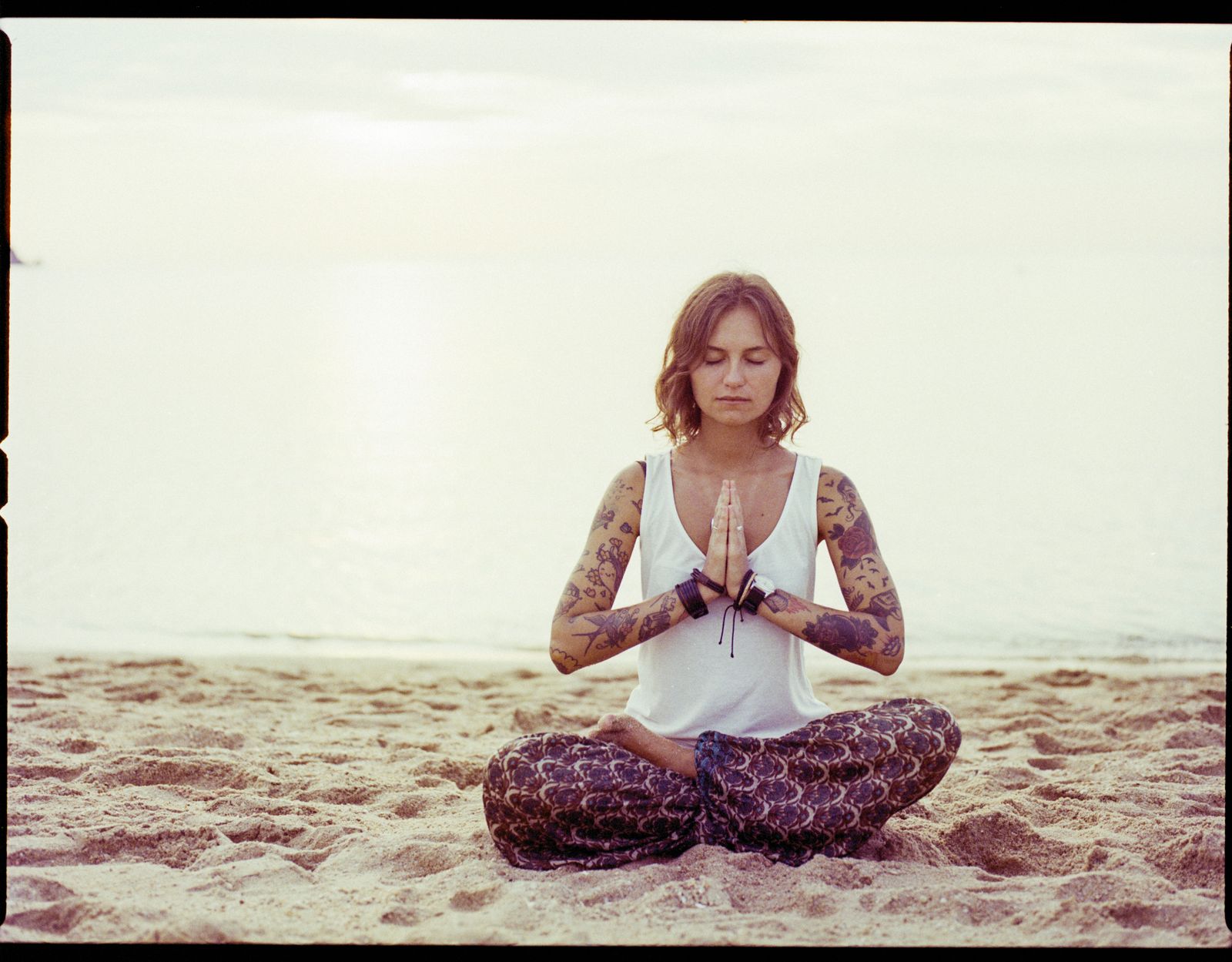
How do you practise it off the mat? A seven-day starter
Practise surrender in small, repeatable steps: pick one uncertain situation, do your honest best, then use a short ritual to release the result. A week is enough to notice whether you grip less. Keep each step under ten minutes.
| Day | Practice | Time |
|---|---|---|
| 1 | Write down one outcome you are gripping. Split it into “mine to do” and “not mine to control”. | 5 min |
| 2 | Do the “mine to do” task fully. Afterwards, say: “I did my part.” | 10 min |
| 3 | Five minutes of seated breathing, with a hand open on each knee as a symbol of release. See meditation for beginners. | 5 min |
| 4 | Dedicate your yoga or walk to someone else. | 20-30 min |
| 5 | Notice one moment you tried to control something small, such as another driver or a delayed reply. Let it pass. | 2 min |
| 6 | Practise a calming class or breath session; see online yoga for stress relief. | 30-45 min |
| 7 | Review: where did you let go, where did you grip, what will you repeat? | 5 min |
Pair this with the other restraints and observances. Honesty about your limits links with satya, kindness towards yourself with ahimsa, and steady use of your energy with brahmacharya.
Troubleshooting: when surrender feels forced or fake
- It feels like pretending. Drop the God language and use “something larger than me”. Sincerity matters more than vocabulary.
- It turns into avoidance. If you are using “letting go” to dodge a task, return to the “mine to do” list and finish it first.
- The worry comes back an hour later. That is normal. Release is repeated, not once and done. Say the phrase again.
- You feel flat or numb. Surrender should feel like relief, not shutdown. If it feels like emptiness, slow down and get support.
- You only remember it in a crisis. Attach it to something you already do daily, such as the first sip of chai or the moment you roll out your mat, so the habit exists before you need it.
- You compare yourself with a “spiritual” friend. This is not a performance. Practise quietly.
Who should take extra care with this practice?
Most people can try these exercises safely. If you live with anxiety, depression, trauma or obsessive thoughts, treat surrender as a supplement to professional care, not a replacement. Ideas like “everything is not in my control” can feel heavy when you are already overwhelmed.
Students facing exams, people waiting for medical results and anyone caring for a sick family member often find the dedicate-then-release habit helpful. If your worry affects sleep, work or relationships for weeks, speak to a doctor or qualified counsellor. Philosophy supports mental health; it cannot treat a disorder, and no yoga teacher should ask you to stop prescribed treatment.
Ishvara pranidhana FAQ
What is the simplest definition of ishvara pranidhana?
It is surrender or dedication to a higher power or larger purpose. You give your honest effort and then release attachment to the exact result. It is the fifth niyama in Patanjali’s Yoga Sutras and does not mean giving up.
Do you need to be religious to practise ishvara pranidhana?
No. Patanjali describes Ishvara in abstract terms, so people of any faith or none can practise. You can direct surrender towards a deity, universal consciousness, nature, community or simply something larger than your own ego.
Is surrender the same as giving up?
No. Giving up withdraws effort; surrender keeps full effort and releases only the demand for a particular outcome. Revising thoroughly for an exam and then accepting the result calmly is surrender, while skipping revision is not.
Which niyama comes before ishvara pranidhana?
Svadhyaya, or self-study, is the fourth niyama and comes just before it. The order is saucha, santosha, tapas, svadhyaya, ishvara pranidhana, which many teachers read as a gradual build towards letting go.
How can a beginner practise ishvara pranidhana?
Begin with a ten-second dedication before class, give honest effort, and notice your grip in savasana. Off the mat, split worries into what is yours to do and what is not, do your part, then release the rest.
Next step: bring this into a guided session by joining a live class at Fitstrot online yoga classes and ask your teacher to include a short dedication and a long savasana.


