
A home workout for muscle gain works when you train it like real strength training: a handful of well-chosen movements, enough hard sets each week, and a plan to make those sets harder over time. You do not need a gym or a rack of plates. A pair of adjustable dumbbells, one resistance band and your own bodyweight are enough for the first one to two years. Below you get a three-day plan with sets, reps, rest and form cues, the ways to progress when the weights run out, and what to eat in Indian meals.
Can you really build muscle with a home workout?
Yes. Muscle grows when you train each muscle with hard sets, usually about 10 to 15 per week once you are past the beginner stage, take those sets close to failure, and eat roughly 1.6 to 2 grams of protein per kg of bodyweight daily. Bodyweight, dumbbells and bands can deliver all of that for most people.
Be realistic about the limits. A complete beginner may add roughly 0.25 to 0.5 kg of lean muscle per month in the first few months, and the pace slows after the first year. Nobody can promise a specific result, because sleep, food, genetics and consistency all change it. What a home setup cannot easily copy is a barbell loaded to 100 kg. That only matters later, once your legs outgrow what dumbbells and single-leg work can challenge.
How many days a week should you train at home?
Three or four days a week works for most people. Three full-body sessions, for example Monday, Wednesday and Friday, let you train each muscle about three times weekly with a rest day in between. Four days suits you if you prefer shorter upper-body and lower-body sessions of 40 to 50 minutes each.
A simple week: train Monday, Wednesday and Friday, alternating Workout A and Workout B (A-B-A one week, B-A-B the next). Use Tuesday and Thursday for an easy 20 to 30 minute walk, and keep the weekend for rest or a gentle yoga session.
If you are brand new to home workout routines in general, start with two sessions a week for the first two weeks and add the third once your body stops feeling sore for days. Our guide to the home workout basics covers that starting point in more detail.
Workout A: squat, push, row and hinge
Warm up for five minutes first with arm circles, bodyweight squats and a few slow push-ups, then work through the table in order. “Close to failure” means you stop a rep or two before you truly cannot continue, with your form still clean.
| Exercise | Sets x reps | Rest | Form cue |
|---|---|---|---|
| Goblet squat (one dumbbell at the chest) | 3-4 x 8-12 | 90 sec | Elbows inside knees, chest tall, heels flat, 3 seconds down |
| Push-up (hands on a chair if the floor is too hard) | 3 x 8-15 | 90 sec | Body in a straight line, elbows about 45 degrees from your sides |
| One-arm dumbbell row (hand on a sturdy chair or bed) | 3 x 10-12 per side | 75 sec | Pull the elbow towards your hip, do not twist your torso |
| Dumbbell Romanian deadlift | 3 x 10-12 | 90 sec | Push hips back, soft knees, flat back, weights slide along your thighs |
| Dumbbell shoulder press (seated or standing) | 3 x 8-12 | 75 sec | Ribs down, no leaning back, press straight overhead |
| Plank | 3 x 30-45 sec | 45 sec | Squeeze glutes, ribs tucked, no sagging hips |
Workout B: single-leg work, chest, back and shoulders
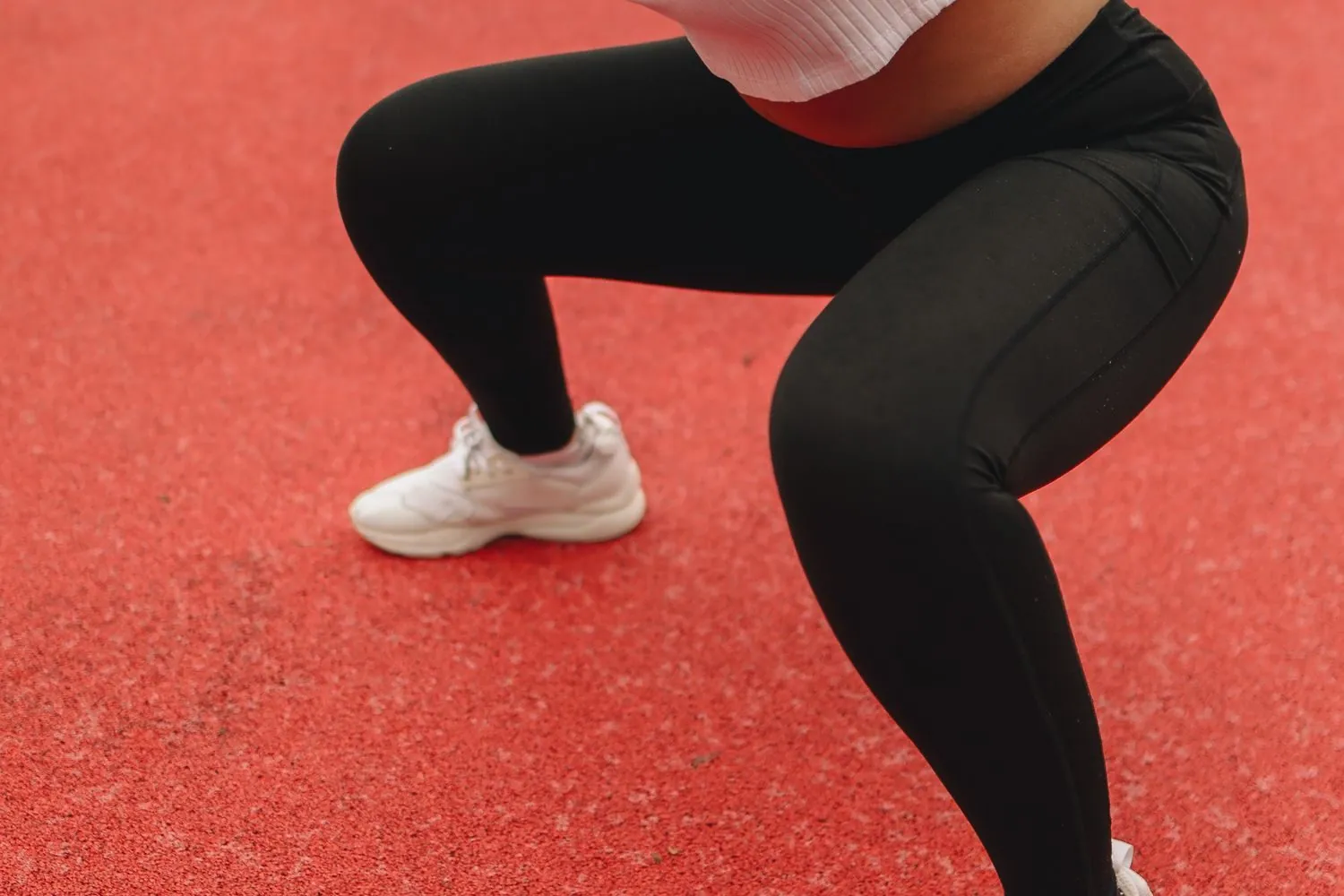
Workout B shifts the emphasis to single-leg exercises, which are some of the best ways to load your legs when you only own light dumbbells. If you want more variety once these feel easy, the home dumbbell workout guide has extra movements to rotate in.
| Exercise | Sets x reps | Rest | Form cue |
|---|---|---|---|
| Bulgarian split squat (rear foot on a sofa or chair) | 3 x 8-12 per leg | 75 sec | Front shin fairly upright, lower straight down, drive through the front heel |
| Dumbbell floor press | 3 x 8-12 | 90 sec | Elbows about 45 degrees, lower until upper arms touch the floor |
| Resistance band row (band anchored to a door or your feet) | 3 x 12-15 | 60 sec | Squeeze shoulder blades together, hold for 1 second |
| Hip thrust (shoulders on a sofa edge) | 3 x 12-15 | 60 sec | Chin tucked, ribs down, squeeze glutes hard at the top |
| Dumbbell lateral raise | 3 x 12-15 | 45 sec | Light weight, lift to shoulder height, lead with the elbows |
| Dead bug | 3 x 8 per side | 45 sec | Lower back stays pressed into the floor, move slowly |
Want more arm size? Add two sets of dumbbell curls and two sets of overhead triceps extensions at the end of either workout.
Myth: more reps of the same easy move will keep building muscle
This is the most common reason a bodyweight workout for muscle gain stops working. Doing 40 easy squats or 50 casual push-ups mostly builds endurance. Muscle responds to effort, meaning sets that end close to failure, not to the rep count on its own.
The nuance is that lighter loads can build muscle too, as long as the last few reps of a set feel genuinely hard. So 20 slow, controlled push-ups taken to near failure will do more than 50 fast ones with energy to spare. When a movement lets you do more than about 20 to 25 reps with room left, it is time to make it harder rather than longer.
How do you progressively overload at home when the weights run out?
Progressive overload means gradually asking your muscles to do slightly more than before. At home you can do this by raising reps within a range (for example 8 to 12), adding load, slowing the lowering phase to about 3 seconds, adding a 2-second pause at the hardest point, switching to a single-limb version, or cutting rest by 15 to 30 seconds.
Use this ladder for each movement pattern. Move to the next level once you can complete all your sets at the top of the rep range with clean form.
| Pattern | Level 1 | Level 2 | Level 3 | Level 4 |
|---|---|---|---|---|
| Push | Incline push-up (hands on a chair) | Floor push-up | Feet-elevated push-up | Slow push-up, 3 sec down, 2 sec pause |
| Squat | Chair squat | Goblet squat | Split squat | Bulgarian split squat with dumbbells |
| Hinge and glutes | Glute bridge | Hip thrust, sofa edge | Dumbbell Romanian deadlift | Single-leg Romanian deadlift |
| Pull | Band row | One-arm dumbbell row | Row with 2-sec pause at the top | Backpack row with books or a loaded bag |
| Core | Dead bug | Plank | Plank with shoulder taps | Slow body saw or ab wheel, only if comfortable |
Track every session in a notebook or your phone, and try to beat last time by one rep. For a deeper library of dumbbell moves, see our dumbbell workouts guide.
What equipment actually makes a difference?
You can get far with very little: one pair of adjustable dumbbells (or a fixed pair around 10 to 20 kg), a light and a medium resistance band, and a sturdy chair or sofa edge to act as a bench. A backpack filled with books or a 5 kg bag of atta adds load to squats, rows and push-ups.
If you already follow a plan like our muscle workout plan, you can swap its gym exercises for the home versions in the ladder above.
What should you eat to gain muscle at home?
Aim for about 1.6 to 2 grams of protein per kg of bodyweight daily, spread across three to four meals, and eat roughly 250 to 300 kcal above your maintenance intake. For a 65 kg person that means about 105 to 130 grams of protein a day. Training without enough food gives slow results.
Here are rough protein amounts from common Indian foods. These are estimates and vary by brand and preparation:
- 1 whole egg: about 6 g
- 100 g paneer: about 18 g
- 1 katori cooked dal (about 150 g): about 7 to 9 g
- 30 g dry soya chunks: about 15 g
- 100 g cooked chicken breast: about 30 g
- 1 glass milk (250 ml): about 8 g
- 1 katori curd (about 150 g): about 5 to 6 g
Vegetarians can reach their target with paneer, curd, dal, chana, soya and milk, though it takes planning. Protein powder is optional, a convenient top-up rather than a requirement. Our best diet for muscle gain guide builds this out into full meals, and a registered dietitian through online nutritionist consultation can tailor the numbers to your body, budget and food preferences.
Not growing? Troubleshoot these four stalls first
- You are eating too little. If your weight has not moved in 4 weeks and your lifts are flat, add about 200 kcal a day, for example a banana with a glass of milk and a handful of peanuts.
- Your sets are too easy. If you finish a set feeling you could have done 8 more reps, add load, slow the tempo or switch to a harder variation.
- You skip sessions. Two sessions a week every week beats five sessions for two weeks and then nothing.
- You sleep too little. Aim for about 7 to 9 hours.
Soreness 1 to 3 days after a new session is normal and fades as your body adapts. For what is normal and what is not, read our guide on muscle pain after workout.
How should beginners, thin lifters and women adjust this plan?
Complete beginners: start with 2 sets per exercise for two weeks, use incline push-ups and chair squats, and stop each set with 3 reps left. Add a third set and the harder variations from week three.
Thin or “hard gainer” lifters: keep sessions to about 45 minutes, rest the full 90 seconds on big lifts, avoid extra cardio for now, and eat more consistently, since appetite is usually the real limit. Our weight gain workout guide covers this in more depth.
Women: the same plan applies, with the same sets, reps and progressions. Lifting dumbbells at home does not make you “bulky” overnight, because building large amounts of muscle takes years of heavy training and high food intake. Expect firmer, stronger and more defined legs, shoulders and back instead.
When should you see a doctor?
Check with your doctor before starting if you have a heart condition, high blood pressure, a recent surgery, back, knee or shoulder pain that does not settle, or if you are pregnant. Stop and seek medical advice if you feel chest pain, dizziness, sharp or sudden joint pain, numbness or tingling. Mild muscle burn and general fatigue are normal; sharp pain is not. If an injury affects a specific movement, swap it for a pain-free version rather than pushing through.
Frequently asked questions
Can I build muscle at home without any equipment?
Yes, especially in your first six to twelve months. Push-ups, squats, lunges, glute bridges and planks can build muscle if you take sets close to failure and progress them with slower tempos, pauses and single-leg or single-arm versions. Over time, adding dumbbells or a backpack makes progress easier.
How long does it take to see results from a home workout for muscle gain?
Strength usually improves within 3 to 4 weeks. Visible changes in your arms, shoulders and legs typically take about 8 to 12 weeks of consistent training, three sessions a week, with enough protein and sleep. Results differ from person to person and slow down after the first few months.
How many sets and reps should I do at home to gain muscle?
Most exercises work well at 3 sets of 8 to 12 reps, with 12 to 15 reps for smaller moves like lateral raises and band rows. Beginners can start at 2 sets. Take each set close to failure, and add reps or load once you complete every set at the top of the range.
Do I need protein powder to gain muscle at home?
No. You can reach about 1.6 to 2 grams of protein per kg of bodyweight with eggs, paneer, dal, curd, milk, soya and chicken. Protein powder is a convenient top-up if your meals fall short, but food should come first.
How can I gain muscle if I only have light dumbbells?
Use single-leg and single-arm variations, slow the lowering phase to 3 seconds, add 2-second pauses, take sets to within a rep or two of failure and shorten rest by 15 to 30 seconds. A backpack loaded with books can add resistance to squats and rows.
If you would like a muscle-building plan built around the equipment you actually own, with a coach checking your form and adjusting your loads every week, book a session for 1-on-1 personal training and start with a program that keeps progressing after bodyweight moves stop being enough.


