
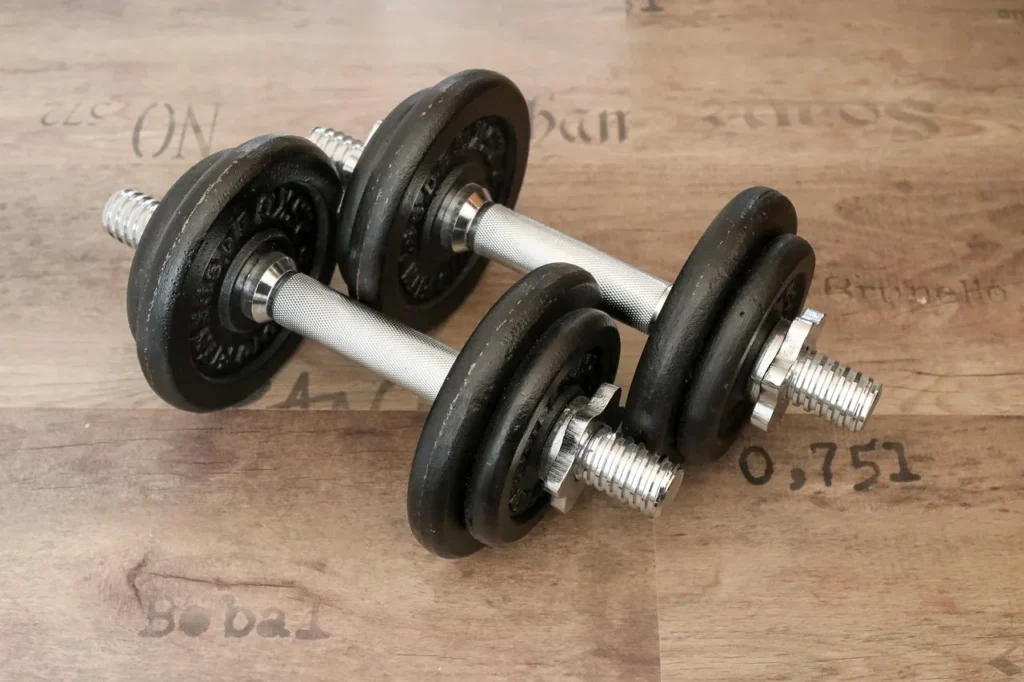
A pair of dumbbells is the cheapest complete gym you can own. With 10 to 20 kg of iron and a patch of floor, dumbbell exercises can train every major muscle in your body, at home, three or four times a week. This guide gives you the exercises sorted by muscle, a 3-day and a 4-day routine with sets, reps and rest, a buying guide with 2026 Indian prices, and a simple way to keep progressing when your heaviest pair starts to feel light.
Are dumbbell exercises enough to build muscle and strength?
Yes, for most people. A 2017 meta-analysis of 21 trials found muscle growth was similar with light loads (60% of one-rep max or less) and heavy loads, as long as sets were taken close to failure. Dumbbells let you do that at home. The trade-off: you will lift about 16% less on a dumbbell press than a barbell press.
That finding comes from Schoenfeld and colleagues’ 2017 review. Heavy loads still won for maximum strength, which matters to powerlifters. For everyone else, effort matters more than the size of the weight.
The 16% figure is real, too. In a 2012 study of 11 trained men, one-rep max on the chest press averaged 106.4 kg with a barbell but 89.5 kg with dumbbells, because each arm has to stabilise its own weight (van den Tillaar and Saeterbakken, 2012). That balancing work also fixes left-right imbalances.
The health case is just as strong. A 2022 meta-analysis of 16 cohort studies in the British Journal of Sports Medicine linked muscle-strengthening activity to a 10–17% lower risk of death from all causes, heart disease, cancer and diabetes, with the biggest benefit at roughly 30–60 minutes a week (Momma et al., 2022). That is two or three short sessions. The WHO estimates 31% of adults (1.8 billion people) don’t meet basic activity guidelines.
Dumbbell exercises by muscle group: sets, reps, rest and form cues
The table below is your menu. Every exercise needs only dumbbells and, at most, a sturdy chair or the floor. Sets and reps follow the American College of Sports Medicine’s 2009 position stand, which recommends 8–12 reps per set for beginners and 1–2 minutes of rest for muscle-building work.
| Muscle | Exercise | Sets | Reps | Rest | Form cue |
|---|---|---|---|---|---|
| Chest | Floor press | 3 | 8–12 | 90 s | Elbows about 45° from your body; pause when your upper arms touch the floor |
| Chest | Push-up to renegade row (advanced) | 3 | 6–10 | 90 s | Feet wide, hips level; don’t let your body twist when you row |
| Chest | Floor fly | 2–3 | 10–15 | 60 s | Soft bend in the elbows; stop when your arms touch the floor |
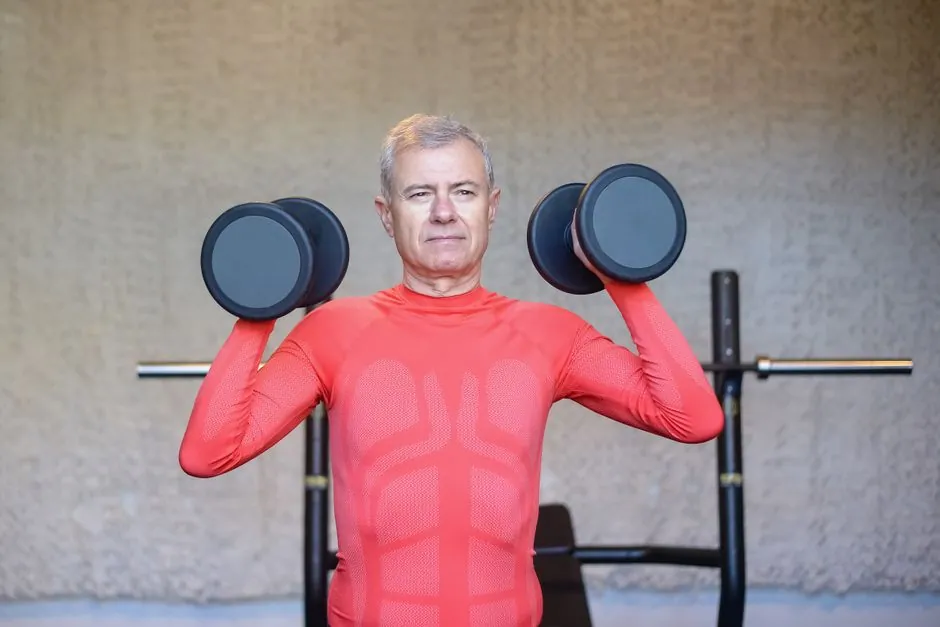
| Shoulders | Seated overhead press | 3 | 8–12 | 90 s | Ribs down, no arching; press slightly in front of your head |
| Shoulders | Lateral raise | 3 | 12–15 | 60 s | Lead with the elbows; stop at shoulder height |
| Shoulders | Bent-over rear-delt raise | 2–3 | 12–15 | 60 s | Chest near your thighs; lift out wide, not back |
| Back | One-arm row (hand on chair) | 3 | 8–12 each | 60–90 s | Pull your elbow toward your hip, not your ear |
| Back | Two-arm bent-over row | 3 | 8–12 | 90 s | Flat back at about 45°; squeeze your shoulder blades together at the top |
| Back / hips | Romanian deadlift | 3 | 8–12 | 90 s | Push your hips back, dumbbells skim your thighs, spine neutral |
| Triceps | Overhead extension (one dumbbell) | 3 | 10–12 | 60 s | Elbows point forward, not out |
| Triceps | Kickback | 2–3 | 12–15 | 60 s | Upper arm stays still and parallel to the floor |
| Biceps | Alternating curl | 3 | 10–12 | 60 s | No swinging; take 2–3 seconds to lower |
| Biceps | Hammer curl | 2–3 | 10–12 | 60 s | Thumbs up; keep your wrists straight |
| Legs | Goblet squat | 3 | 8–12 | 90 s | Hold the dumbbell at your chest, knees track over your toes, heels down |
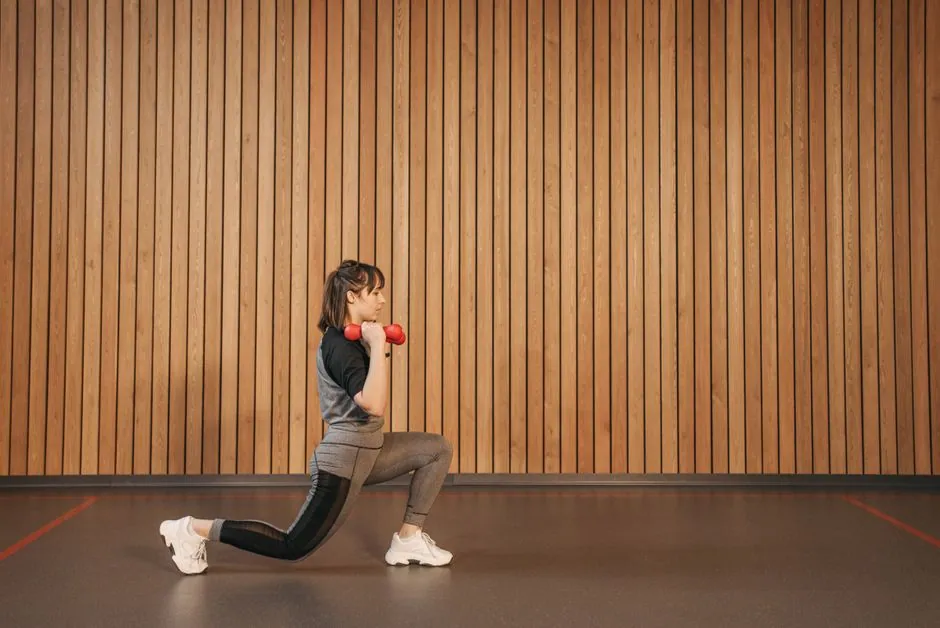
| Legs | Reverse lunge | 3 | 8–10 each | 60–90 s | Step back, front shin close to vertical, back knee near the floor |
| Legs | Bulgarian split squat (rear foot on chair) | 3 | 8–10 each | 90 s | Most of your weight on the front foot; lean slightly forward |
Dumbbell exercises for chest (with or without a bench)
The floor press is the best home substitute for the bench press. The floor stops your elbows at a shoulder-friendly depth. With a firm bench or steel diwan, switch to a flat press for more range. Aim for 10–20 hard sets a week for chest across all exercises. The 2017 volume meta-analysis (15 studies) found each extra weekly set added about 0.37% more muscle growth, with 10+ sets per muscle doing best.
Shoulder dumbbell exercises that protect the joint
Overhead presses build the front of the shoulder, lateral raises build width, and rear-delt raises balance out the pressing. Most home lifters skip the third, and their shoulders round forward. Do at least as many rear-delt and row sets as pressing sets.
Dumbbell exercises for the back
Without a pull-up bar, rows do all your back work. The chair-supported one-arm row lets you go heavier than any other home back exercise. Romanian deadlifts cover the lower back, glutes and hamstrings.
Dumbbell exercises for triceps and biceps
Presses already work the triceps hard, so 2–3 extra sets of overhead extensions or kickbacks is usually enough. For biceps, hammer curls also build the forearm and help your grip on rows.

Leg dumbbell exercises
Leg muscles are big, so a 10 kg dumbbell quickly becomes too light for squats. Single-leg moves fix that: a Bulgarian split squat with 10 kg in each hand is much harder than a goblet squat with 20 kg.
Dumbbell exercises at home: space, floor and safety
You need about 2 m × 2 m of clear floor, a stable chair or diwan without wheels, and a yoga mat or two interlocking EVA tiles. Tiles matter on marble or vitrified floors, which a dropped 5 kg dumbbell can chip. Train barefoot or in flat shoes.
Some practical safety rules:
- Check spin-lock collars before every set.
- For floor presses, sit down with the dumbbells on your thighs and roll back. Don’t lift them off the floor from behind your head.
- If you have high blood pressure, heart disease or a recent injury, check with your doctor first. The NHS adult guidelines advise the same if you haven’t exercised for a while.
The 3-day dumbbell workout for beginners
If you are new to lifting, or returning after a long break, train your whole body three days a week, with at least one rest day between sessions. The ACSM recommends 2–3 days a week for beginners, and a 2016 meta-analysis on training frequency found that training each muscle twice a week beat once a week for muscle growth (effect size 0.49 vs 0.30).
| Day | Exercise | Sets × reps | Rest | Form cue |
|---|---|---|---|---|
| Day A | Goblet squat | 3 × 10–12 | 90 s | Sit between your heels |
| Floor press | 3 × 10–12 | 90 s | Pause lightly on the floor | |
| One-arm row | 3 × 10–12 each | 60 s | Elbow to hip | |
| Lateral raise | 2 × 12–15 | 60 s | Stop at shoulder height | |
| Dead bug (no weight) | 2 × 8 each side | 45 s | Lower back pressed into the mat | |
| Day B | Romanian deadlift | 3 × 10–12 | 90 s | Hips back, spine neutral |
| Seated overhead press | 3 × 10–12 | 90 s | Ribs down | |
| Two-arm bent-over row | 3 × 10–12 | 90 s | Squeeze at the top | |
| Reverse lunge | 2 × 8 each | 60 s | Front shin vertical | |
| Hammer curl | 2 × 12 | 60 s | No swinging | |
| Day C | Split squat (both feet on floor) | 3 × 8–10 each | 90 s | Straight down, not forward |
| Floor fly | 2 × 12–15 | 60 s | Soft elbows | |
| Rear-delt raise | 3 × 12–15 | 60 s | Wide, not back | |
| Overhead triceps extension | 2 × 12 | 60 s | Elbows forward | |
| Farmer’s hold (heaviest pair) | 3 × 30–40 s | 60 s | Stand tall, shoulders down |
For the first two weeks, stop each set with 3–4 reps still in reserve. By week 3–4, finish most sets with 1–2 reps left. If you only have 20–30 minutes, Mayo Clinic notes that a single set of 12–15 reps with the right weight builds muscle well in most people. Do one hard set of each exercise and you’re done. Finish each session with 5 minutes of cool-down stretches.
The 4-day dumbbell workout plan: upper / lower split
After 8–12 weeks of full-body training, most people are ready for four days; the ACSM places intermediate lifters at 3–4 days a week. An upper/lower split still hits each muscle twice weekly but allows more sets per muscle. Not sure how many sets you need? Our guide on how many sets per workout covers it in detail.
| Day | Exercises (sets × reps) | Rest | Weekly sets per muscle |
|---|---|---|---|
| Mon – Upper 1 (strength) | Floor press 4 × 6–8; One-arm row 4 × 6–8 each; Seated overhead press 3 × 8; Hammer curl 3 × 10; Overhead extension 3 × 10 | 2 min on main lifts, 60–90 s on arms | Chest 10, Back 10–13, Shoulders 9–12, Arms 6 each |
| Thu – Upper 2 (volume) | Floor fly 3 × 12–15; Two-arm row 3 × 10–12; Lateral raise 3 × 15; Rear-delt raise 3 × 15; Alternating curl 3 × 12; Kickback 3 × 12 | 60–90 s | |
| Tue – Lower 1 (strength) | Goblet squat 4 × 8; Romanian deadlift 4 × 8; Reverse lunge 3 × 8 each; Farmer’s hold 3 × 40 s | 2 min on squat and RDL | Quads 10–13, Hamstrings/glutes 10–13 |
| Fri – Lower 2 (single-leg) | Bulgarian split squat 3 × 10 each; Single-leg RDL 3 × 10 each; Step-up on chair 3 × 10 each; Dead bug 3 × 8 each | 60–90 s |
Why 2 minutes on the main lifts? In a 2016 trial, 21 trained men who rested 3 minutes between sets gained more strength and more thigh muscle than those who rested 1 minute (Schoenfeld et al., 2016). Short rests feel harder but don’t build more muscle.
Prefer whole-body days? Our full-body workout guide shows how to lay out the week.
Which dumbbell weight should you start with, and what does it cost in India?
Most beginners do well with an adjustable pair of about 10–15 kg per hand, or two fixed pairs: a light one for shoulders and arms and a heavier one for legs and rows. In September 2026, Indian retail listings put PVC dumbbells at roughly ₹55–110 per kg and rubber or neoprene at roughly ₹180–220 per kg. Prices vary by brand and city.
For example, one Indian brand listed a 2 × 5 kg PVC hex set at ₹549, a 2 × 10 kg rubber hex pair at ₹3,699 and a 1.5–18 kg adjustable set at ₹11,999. Compare current prices before buying. The starting weights below are coaching guidance, not research findings.
| Your level | Arms and shoulders | Chest press and rows | Legs (goblet squat uses one dumbbell) | Budget option | Approx. cost |
|---|---|---|---|---|---|
| Complete beginner, lighter frame | 2–3 kg | 4–5 kg | 6–10 kg | PVC pairs: 2 × 3 kg + 2 × 5 kg | ₹900–1,500 |
| Complete beginner, larger frame | 4–5 kg | 6–8 kg | 10–15 kg | Spin-lock rod set, 10–20 kg total | ₹1,000–2,500 |
| 3–6 months of training | 5–8 kg | 10–15 kg | 15–20 kg | Rubber hex pairs or spin-lock set, 20–30 kg | ₹2,500–5,500 |
| 6–12+ months | 7.5–12 kg | 15–22.5 kg | 20–30 kg | Adjustable dial or plate set up to about 18–24 kg per hand | ₹8,000–20,000+ |
5kg dumbbell exercises: is one pair enough?
A 2 × 5 kg pair is the most common first purchase in India, and it’s enough for 6–10 weeks for most beginners on shoulders, arms and one-arm rows. It gets too light for legs and chest within weeks. When that happens, do the slow and single-leg progressions described below, then buy a heavier pair or spin-lock plates. Don’t buy a 50 kg set on day one; most people never use the heaviest pairs.
Progression when your dumbbells feel light
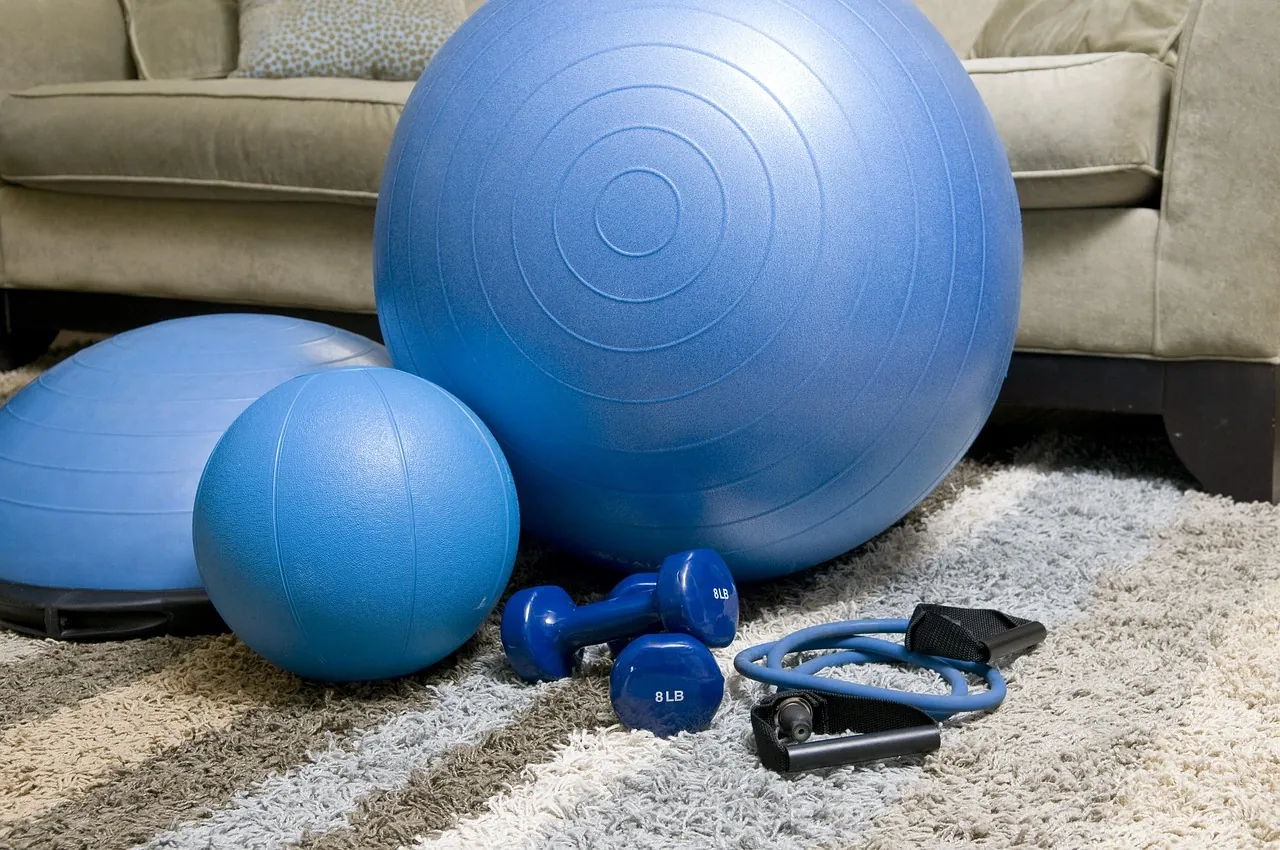
The ACSM rule is to increase the load by 2–10% once you can do 1–2 more reps than your target on two sessions in a row. Dumbbells make that hard: going from 5 kg to 7.5 kg is a 50% jump. Use these steps in order before buying heavier weights:
- Add reps. Work up from 8 to 12 (or 15 for arms) with the same weight.
- Add a set. Go from 3 to 4 sets, staying within about 20 hard sets per muscle each week.
- Slow the lowering phase. A 3–4 second descent adds work without extra weight.
- Add a pause. Hold 2 seconds at the bottom of squats and presses to remove the bounce.
- Train one side at a time. A one-arm floor press or single-leg RDL roughly doubles the load on the working side.
- Then add weight. Drop back to 8 reps with the heavier pair and start again.
Log every session (exercise, weight, reps). Without a log, most people repeat the same workout for months.
Three dumbbell myths that stall your progress
Myth: “Light dumbbells only tone, they don’t build muscle”
“Toning” is just muscle plus less fat. The 2017 load meta-analysis showed similar growth with light loads when sets are hard. The problem isn’t light weight; it’s stopping at rep 12 when you could do 20.
Myth: “Women will bulk up with dumbbells”
Noticeable size takes years of hard training and a calorie surplus. What women usually see is better shape, posture and strength. The routines above are the same for everyone; only starting weights differ.
Myth: “Side bends and dumbbell crunches burn belly fat”
You can’t lose fat from one spot by working the muscle underneath. Fat loss comes from an overall calorie deficit, and the big dumbbell exercises (squats, RDLs, rows, presses) burn more energy than any ab exercise. Pair your training with a sensible Indian diet. A Fitstrot nutritionist can set protein and calorie targets around dal, paneer, eggs and curd instead of expensive supplements.
Troubleshooting: wrist, elbow and lower-back pain
- Wrist ache on presses or curls: your wrist is bending back under the weight. Grip the handle in the heel of your palm and keep your knuckles pointing up. For presses, try a neutral grip (palms facing each other).
- Front-of-elbow pain on curls: you are probably swinging and locking out hard at the bottom. Lower the weight, slow the lowering phase to 3 seconds and switch half your sets to hammer curls.
- Pinching in the front of the shoulder on presses: your elbows are flaring to 90°. Tuck them to about 45° and press slightly in front of your face.
- Lower-back tightness after RDLs or rows: your back is rounding at the bottom. Shorten the range so the dumbbells stop at knee height and your spine stays neutral.
- Sharp pain, numbness, or pain that lasts over 48 hours: stop that exercise and see a doctor or physiotherapist. Sharp pain is not the same as normal muscle soreness.
Adjustments for women, over-50s and desk workers
Women: use the same exercises and structure. If you’re pregnant or postpartum, get clearance from your gynaecologist first and follow their advice on which positions to avoid.
Adults over 50: strength training matters more with age, not less. The NHS guidelines call for strengthening activities that work all major muscle groups (legs, hips, back, abdomen, chest, shoulders and arms) on at least 2 days a week. Start with the 3-day plan and the lightest weights, and progress by reps before adding load.
Desk workers: long sitting rounds your upper back. Favour rows, rear-delt raises and Romanian deadlifts (about 2:1 pulling to pressing), and keep at least one 20-minute session a week during busy months.

Frequently asked questions
Can I build muscle with only dumbbells at home?
Yes. A 2017 meta-analysis of 21 studies found similar muscle growth with light and heavy loads when sets were taken close to failure. Dumbbells plus smart progression (more reps, slower lowering, single-side work) are enough for most people for their first one to two years of training.
How many days a week should I do dumbbell exercises?
Beginners do well with 3 full-body days a week. Intermediates can move to a 4-day upper/lower split. Research shows training each muscle at least twice a week produces more growth than once a week.
What weight of dumbbells should a beginner buy in India?
Most beginners do well with a 2 × 5 kg pair plus a heavier pair for legs, or a spin-lock set of 10–20 kg total. Expect to pay roughly ₹900–2,500. Pick a weight that lets you do 10 reps with good form and 2–3 reps left in reserve.
Is a 5 kg dumbbell enough to build muscle?
For shoulders, arms and rows, a 5 kg pair works for the first 6–10 weeks. For legs and chest it becomes too light quickly. Use slow lowering, pauses and single-leg moves, then move to a heavier pair.
How long should rest be between dumbbell sets?
Rest 60–90 seconds on arm and shoulder isolation moves and about 2 minutes on squats, RDLs, presses and rows. A 2016 study found 3-minute rests produced more strength and muscle gain than 1-minute rests in trained men.
Can dumbbell workouts reduce belly fat?
Not directly. You can’t burn fat from one spot. Dumbbell training builds muscle and burns calories, but belly fat comes off through an overall calorie deficit from diet, daily steps and consistent training over months.
Are dumbbells better than a barbell?
Neither is better overall. Barbells let you lift about 16% more on the chest press, which helps maximum strength. Dumbbells train each side on its own, fix imbalances, go easier on the shoulders and fit a home. For general fitness and muscle, dumbbells are enough.
Want someone to check your form? Book a Fitstrot 1-on-1 online trainer. They will watch your floor press and Romanian deadlift over video, set your starting weights, and adjust your plan each week around the dumbbells you actually have.


