
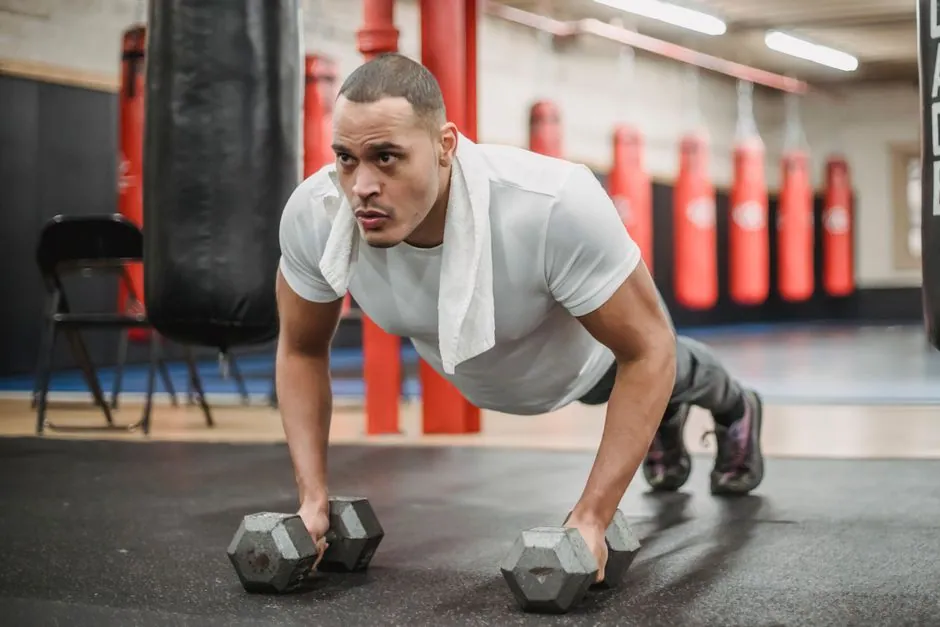
A full body workout trains your legs, hips, back, chest, shoulders and core in the same session, usually three times a week on non-consecutive days. It is the most time-efficient way for most people in India to start lifting, whether you train in a society gym, a neighbourhood gym or a spare corner of your flat with two dumbbells. Below you will find a complete three-day A/B/C program with sets, reps, rest and a form cue for every lift, a home version that needs no equipment, a 12-week progression plan and an honest look at when a split routine is the better choice.
What counts as a full body workout?
A full body workout is one session with at least one exercise for each major movement pattern: a squat or lunge, a hip hinge, a horizontal or vertical push, a horizontal or vertical pull, and a core exercise. Done two to three times a week, it trains every major muscle group two to three times weekly instead of once.
Forty minutes of burpees is a conditioning circuit, not a strength program. A real full body session is built around five movement patterns, loaded so the last two reps of each set are genuinely hard.
- Squat pattern: goblet squat, back squat, front squat, leg press, split squat.
- Hinge pattern: Romanian deadlift, trap-bar deadlift, hip thrust, kettlebell swing.
- Push: push-up, bench press, dumbbell press, overhead press.
- Pull: dumbbell row, seated cable row, lat pulldown, inverted row.
- Core: plank, dead bug, Pallof press, farmer’s carry.
The UK’s NHS physical activity guidelines ask adults to do strengthening activities that work all the major muscle groups (legs, hips, back, abdomen, chest, shoulders and arms) on at least 2 days a week. A full body routine meets that target in two or three sessions without any extra planning.
How many days a week should you train full body?
Three non-consecutive days a week (for example Monday, Wednesday and Friday) is the best starting point for a full body workout. A 2016 meta-analysis in Sports Medicine found that training each muscle group at least twice a week produced greater muscle growth than once a week, and three full body sessions comfortably clears that bar.
The key study here is Schoenfeld, Ogborn and Krieger (2016), which pooled ten trials and reported a hypertrophy effect size of 0.49 for higher-frequency training versus 0.30 for lower frequency. The authors concluded that major muscle groups should be trained at least twice a week, while noting that whether three times beats twice “remains to be determined”. In other words, two sessions work; three gives you margin for the week you miss one.
For strength, a 2018 meta-analysis of 22 studies by Grgic and colleagues found effect sizes rising from 0.74 at one session a week to 1.08 at four or more. But when total weekly volume was equal, frequency made no significant difference (p = 0.421). The practical takeaway: frequency is mostly a tool for fitting in enough good-quality sets. Spreading them across three shorter sessions is easier than cramming them into one long one.
If three days is not realistic, two full body sessions still meet the NHS and WHO minimum. The WHO physical activity fact sheet (updated June 2024) states that 31% of the world’s adults, about 1.8 billion people, do not meet recommended activity levels, and that muscle strengthening benefits everyone.
The 3 day full body workout routine for beginners
This program rotates three different sessions, A, B and C, across the week. Each day hits every movement pattern, but with different exercises, so joints get variety and you practise a wider range of lifts. The loading follows the American College of Sports Medicine position stand on progression (2009), which recommends an 8–12 repetition maximum range and 2–3 training days per week for novices, with multi-joint exercises placed before single-joint ones.
Choose a weight you could lift for about two more reps than prescribed. That is roughly “2 reps in reserve” (RIR 2), which keeps form clean while still being challenging.
| Day | Exercise | Sets × reps | Rest | Form cue |
|---|---|---|---|---|
| A (Mon) | Goblet squat or back squat | 3 × 8–10 | 2 min | Knees track over toes; chest stays tall |
| Dumbbell or barbell bench press | 3 × 8–10 | 2 min | Shoulder blades pinched, feet planted | |
| One-arm dumbbell row | 3 × 10–12 per side | 90 s | Pull elbow to hip, not to ear | |
| Romanian deadlift | 2 × 8–10 | 2 min | Push hips back; bar slides down thighs | |
| Front plank | 3 × 20–40 s | 60 s | Squeeze glutes; no sagging lower back | |
| B (Wed) | Trap-bar or dumbbell deadlift | 3 × 5–6 | 2–3 min | Brace before you pull; stand tall at the top |
| Standing overhead press | 3 × 8–10 | 2 min | Ribs down; press bar in a straight line | |
| Lat pulldown | 3 × 10–12 | 90 s | Pull bar to upper chest; no leaning back | |
| Walking lunge | 2 × 10 per leg | 90 s | Front shin near vertical; soft back knee | |
| Dead bug | 3 × 8 per side | 60 s | Lower back stays pressed into the floor | |
| C (Fri) | Leg press | 3 × 10–12 | 2 min | Lower until hips start to tuck, then stop |
| Incline dumbbell press | 3 × 10–12 | 90 s | Elbows about 45° from torso | |
| Seated cable row | 3 × 10–12 | 90 s | Chest up; squeeze shoulder blades at the end | |
| Hip thrust | 3 × 10–12 | 90 s | Chin tucked; lock out with glutes, not lower back | |
| Pallof press | 2 × 10 per side | 60 s | Resist the twist; hips square to the anchor |
How long each session takes
With a 5–8 minute warm-up (brisk walk or cycle, then two light sets of the first lift), each day runs 45–55 minutes. Finish with a few minutes of easy mobility work; our guide to cool-down stretches after a workout has a routine that fits after any of the three days.
Why the weekly set count works
Across A, B and C, your quads, glutes, chest and back each get roughly 8–10 hard sets a week. A 2017 meta-analysis by Schoenfeld, Ogborn and Krieger found a graded dose-response: each additional weekly set was associated with a 0.37% greater gain in muscle size, and higher-volume groups gained 3.9% more than lower-volume groups. For a beginner, 8–10 sets per muscle is a productive, recoverable dose; add more only once progress stalls.

No equipment full body workout at home (and a dumbbell upgrade)
A no equipment full body workout at home uses the same five movement patterns, with bodyweight replacing the barbell. Beginners can build real strength this way for 8–12 weeks; after that, most people need added load, such as a pair of dumbbells, a loaded backpack or resistance bands, to keep progressing.
The table below swaps each gym lift for a home equivalent. Run it on the same A/B/C schedule, or repeat one session three times a week if you prefer simplicity.
| Pattern | Bodyweight version | Dumbbell version | Sets × reps | Rest | Form cue |
|---|---|---|---|---|---|
| Squat | Bulgarian split squat (rear foot on a chair) | Goblet squat | 3 × 10–15 per leg / 3 × 10–12 | 90 s | Drop straight down; front heel stays planted |
| Hinge | Single-leg hip bridge | Dumbbell Romanian deadlift | 3 × 12–15 per leg / 3 × 10–12 | 90 s | Drive through heels; pause 1 s at the top |
| Push | Push-up (hands on bed or sofa if needed) | Floor press | 3 × 8–15 | 90 s | Body moves as one plank; elbows at 45° |
| Pull | Towel row on a door or under a sturdy table | Bent-over dumbbell row | 3 × 10–12 | 90 s | Lead with the elbow; no jerking |
| Shoulders | Pike push-up | Seated dumbbell press | 2 × 6–12 | 90 s | Head moves forward of hands at the bottom |
| Core | Plank shoulder tap | Suitcase carry (one heavy dumbbell) | 3 × 20 taps / 3 × 30 m per side | 60 s | Hips level; no side-to-side sway |
Dumbbell full body workout: what to buy first
If you plan a full body workout with dumbbells at home, adjustable dumbbells that go up to at least 10–12 kg per hand cover most women and men for the first several months; stronger lifters will outgrow fixed 5 kg pairs within weeks on squats and rows. A single heavier dumbbell is enough for goblet squats, one-arm rows and suitcase carries. For more home routines, see our dumbbell workouts guide.
How to make bodyweight exercises harder
- Slow the lowering phase to 3–4 seconds per rep.
- Add a pause at the hardest point, such as the bottom of a split squat.
- Go single-limb: two-leg bridge becomes single-leg bridge.
- Change leverage: incline push-up, then floor push-up, then feet-elevated push-up.
- Fill a backpack with books or rice packets for squats and hinges.
A 12-week progression timeline
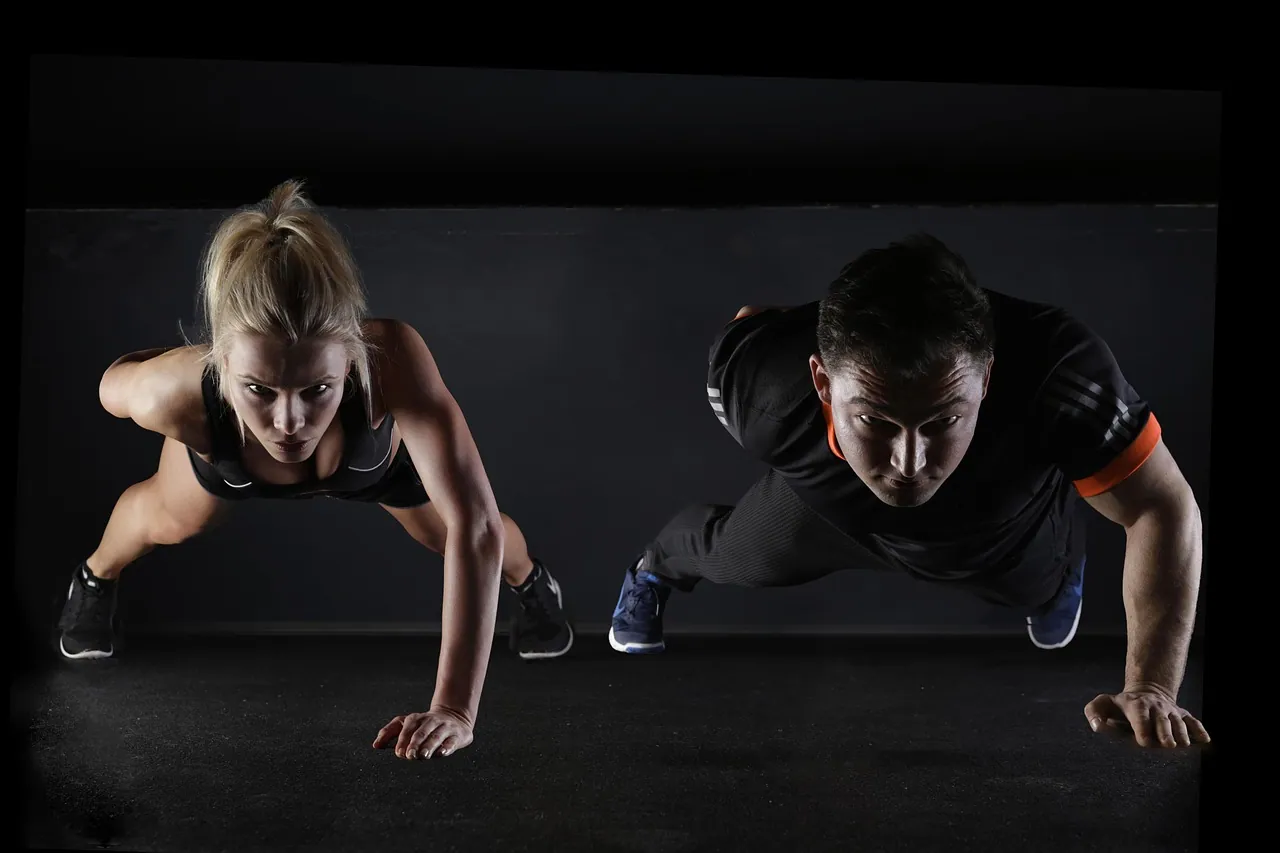
Progress comes from doing slightly more over time: more reps, then more weight. The ACSM position stand recommends a 2–10% load increase once you can complete one to two reps beyond your target. That usually means adding 1–2.5 kg to upper-body lifts and 2.5–5 kg to lower-body lifts.
| Weeks | Sets per exercise | Effort (reps in reserve) | Focus | When to add load |
|---|---|---|---|---|
| 1–2 | 2 | 3–4 RIR | Learn technique; find starting weights | Only if form is solid on every rep |
| 3–4 | 3 | 2–3 RIR | Full program volume | When you hit the top of the rep range on all sets |
| 5–6 | 3 | 2 RIR | Steady load increases | +2.5 kg lower body, +1–2 kg upper body |
| 7 | 2 | 3–4 RIR | Deload: recover, keep the habit | No increases this week |
| 8–10 | 3–4 on main lifts | 1–2 RIR | Push heavier sets on squat, deadlift and press | Every 1–2 weeks per lift |
| 11–12 | 3 | 1–2 RIR | Retest: aim to beat week-3 numbers | Then decide: continue or move to a split |
Keep a simple log in your phone notes: date, exercise, weight and reps for every set.
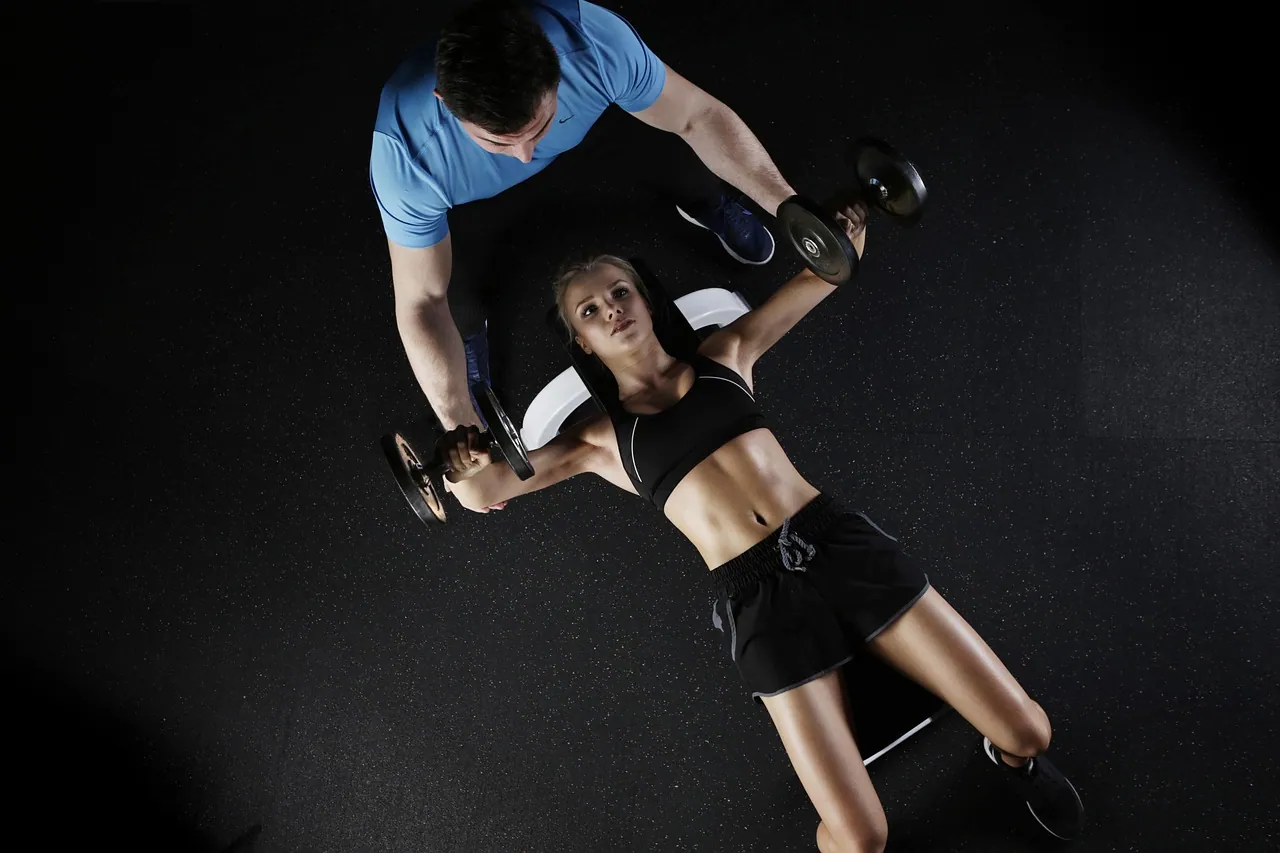
Myth: full body training is only for beginners
Full body training is not just a beginner’s stepping stone. In a 2015 study in the Journal of Strength and Conditioning Research, well-trained men who trained each muscle three times a week with a total-body routine matched a once-a-week split on strength and saw greater forearm-flexor growth over eight weeks.
In that trial, Schoenfeld and colleagues (2015) randomised 20 experienced lifters to a total-body or split routine with the same weekly volume. Maximal squat and bench press gains were not significantly different. It was a small study, so treat it as “full body works for trained people too”, not “full body is superior”.
Full body workout for strength
If your goal is a bigger squat, deadlift or bench press, full body training suits you well, because you practise each main lift two or three times a week. Keep the heavy lift first, use 3–5 sets of 3–6 reps on it with 3–5 minutes of rest (as ACSM recommends for intermediate and advanced strength training), and keep accessory work at 2–3 sets of 8–12.
Split vs full body workout: which should you choose?
Choose full body if you can train 2–4 days a week or often miss sessions; choose a split if you reliably train 4–6 days and want more exercises per muscle. When weekly volume is equal, research shows no clear winner for strength, so pick the schedule you will actually follow.
| Factor | Full body (3×/week) | Upper/lower (4×/week) | Push/pull/legs (6×/week) |
|---|---|---|---|
| Times each muscle is trained per week | 3 | 2 | 2 |
| Typical session length | 45–60 min | 50–70 min | 45–75 min |
| Cost of missing one session | Low: every muscle still gets 2 sessions | Medium: one half of the body gets 1 session | Medium: one muscle group may be skipped that week |
| Exercises per muscle per session | 1 | 1–2 | 2–3 |
| Best suited to | Beginners, busy professionals, people returning after a break | Intermediates with 4 free days | Experienced lifters with time for 6 days |
For a deeper look at choosing between these structures, read our guide to the best workout split.
Women full body workout: what actually changes?
Very little changes. Women build strength with the same exercises, sets and rep ranges as men. In the 2018 Grgic meta-analysis, higher training frequency was linked to significantly greater strength gains in women (p = 0.030), which suits a three-day full body plan well. Set starting weights by your current strength, not your gender.
Three practical points come up often in women’s training:
- “Bulking up” is not a realistic worry for most women on three sessions a week. Muscle gain is slow; typical beginner programs produce firmer, stronger muscles and better posture rather than dramatic size.
- Upper-body pulling deserves attention. Many women start with weaker lats and upper back. If you cannot do a push-up yet, incline push-ups and lat pulldowns are the fastest route.
- Pregnancy, postpartum and pelvic-floor issues need individual guidance. Check with your doctor or a women’s health physiotherapist before starting or restarting a full body routine after childbirth.

Full body workout for losing weight: an honest view
A full body workout helps with weight loss mainly by preserving muscle while you eat in a calorie deficit. Lifting three times a week burns only a few hundred kcal. Your diet determines most fat loss, and the training keeps the weight you lose coming from fat rather than muscle.
Resistance training still matters for long-term health, not just the scale. A 2022 systematic review in the British Journal of Sports Medicine by Momma and colleagues linked muscle-strengthening activities with a 10–17% lower risk of all-cause mortality, cardiovascular disease, cancer and diabetes, with the biggest reduction at roughly 30–60 minutes per week. Two or three full body sessions put you in that range.
Protein supports both goals. A 2018 meta-analysis of 49 trials by Morton and colleagues found no additional muscle gain from resistance training beyond a total intake of about 1.62 g of protein per kg of body weight per day. For a 70 kg adult that is about 113 g a day, which in an Indian diet means spreading paneer, dal, curd, eggs, chicken, fish or soya across breakfast, lunch, evening snack and dinner rather than relying on one big meal. If you have kidney disease or another medical condition, ask your doctor before raising protein. A Fitstrot online nutritionist can build a vegetarian or non-vegetarian plan around your training days.
Troubleshooting: when your full body routine stops working
Most stalls come from a few predictable problems.
“My legs are too sore to train again on Wednesday”
Soreness in the first two weeks is normal and fades as your body adapts. Cut to 2 sets per exercise and stop 3–4 reps short of failure until it settles. Walking on rest days helps more than lying still.
“My lifts stopped going up”
Check sleep first (aim for 7–9 hours), then protein, then whether you are logging workouts. If all three are in order, take a deload week at half volume, then resume. After 4–6 months, stalls are a sign to add a fourth session or move towards an upper/lower split.
“I only have 30 minutes”
Pair exercises into supersets: squat with row, hinge with push. Rest 60–90 seconds after each pair. You keep all five patterns and finish in about 30 minutes.
“My lower back hurts after deadlifts”
Swap in hip thrusts or a trap-bar deadlift for two weeks, reduce the load by 20–30% and film a set from the side. Sharp, shooting or persistent pain, or pain with numbness in the legs, needs a doctor or physiotherapist, not more stretching.
“I keep skipping sessions”
Drop to two sessions a week (A and B), fixed to the same days and times. Consistency across 12 weeks matters far more than a perfect plan followed for two. A coach who checks in each week also helps.
Full body workout FAQs
Is a full body workout 3 times a week enough to build muscle?
Yes. A 2016 meta-analysis found that training each muscle group at least twice a week produces more growth than once a week. Three full body sessions train every muscle three times weekly, which is enough for beginners and many intermediate lifters to build muscle, provided the load increases over time.
Can I do a full body workout every day?
It is not recommended for heavy lifting. Muscles need about 48 hours to recover from hard sets, so daily full body training usually leads to fatigue and stalled progress. Train on alternate days, and use rest days for walking, yoga or light mobility work.
How long should a full body workout be?
Most full body workouts take 45 to 60 minutes, including a 5 to 8 minute warm-up. With supersets you can complete a solid session in about 30 minutes. Sessions much longer than 75 minutes usually mean too many exercises or too much rest scrolling on your phone.
How many exercises should a full body workout have?
Five to six exercises is enough: one squat, one hinge, one push, one pull and one core exercise, plus an optional extra such as a shoulder press or lunge. Adding more exercises usually lowers the quality of the sets that matter most.
Is a full body workout good for beginners?
It is usually the best choice for beginners. It repeats the main lifts two to three times a week, so technique improves quickly, and missing one session still leaves every muscle trained at least twice. The ACSM recommends 2 to 3 training days per week for novices.
Should I do cardio on the same day as a full body workout?
You can. Do the weights first, then 10 to 20 minutes of cardio, or schedule cardio on your rest days. Adults should still aim for 150 minutes of moderate activity each week alongside strength training, according to NHS and WHO guidance.
When should I switch from full body to a split?
Consider a split once you have trained consistently for 6 to 12 months, can reliably commit to four or more days a week, and your lifts have stalled despite good sleep, protein and a deload. Many people never need to switch.
Want a coach to check your squat and set your starting weights? Book a session with a Fitstrot 1-on-1 personal trainer and run this program with live form feedback from week one.


