

A first day gym workout should be short, easy and boring in the best way: about 30 to 40 minutes of light movement that teaches you the room, a few basic exercises and your own limits. Nobody needs to be sore, sweaty or impressive on day one. The only goal is to walk out thinking, “I can do this again on Wednesday.”
If you are standing outside a gym in Ahmedabad, Pune or Delhi right now with a new membership and a knot in your stomach, this guide covers the whole first visit: what to carry, how to register, the exact exercises with sets, reps and rest, and what to do when things go slightly wrong. After this, our beginner gym workout guide takes over for the first few weeks.
What should you do on your first day at the gym?
On your first day at the gym, register and take a short tour, warm up with 8 to 10 minutes of easy walking, then do 5 to 6 simple exercises for 2 sets each, resting 60 to 90 seconds between sets. Finish with 5 minutes of stretching. Keep the total workout under 40 minutes and stop while you still feel fresh.
That is the whole job. Everything below is detail to make it smoother, so you spend your energy on the exercises and not on wondering where the dumbbells live.
First day gym workout plan: exercises, sets, rest and form cues
This is a full-body plan built around machines and bodyweight moves that are hard to get badly wrong. Use weights that feel almost too easy. If the last rep of a set looks shaky, the weight is already too heavy for day one.
| Order | Exercise | Sets x reps / time | Rest | Form cue |
|---|---|---|---|---|
| 1 | Treadmill or cycle warm-up | 8 to 10 minutes | None | Easy pace where you can still talk in full sentences |
| 2 | Bodyweight squat to a bench | 2 x 10 | 60 seconds | Feet shoulder-width apart, chest up, sit back as if lowering onto a chair |
| 3 | Leg press, light load | 2 x 12 | 60 to 90 seconds | Knees follow your toes, never lock them out at the top |
| 4 | Wall or incline push-up | 2 x 8 to 10 | 60 seconds | Body in one straight line, elbows about 45 degrees from the ribs |
| 5 | Lat pulldown, light load | 2 x 12 | 60 to 90 seconds | Pull the bar to your upper chest, shoulders down, no swinging back |
| 6 | Plank on knees or toes | 2 x 15 to 20 seconds | 45 seconds | Hips level, ribs pulled down, breathe normally |
| 7 | Full-body stretch | 5 minutes | None | Hold each stretch 20 to 30 seconds, no bouncing |
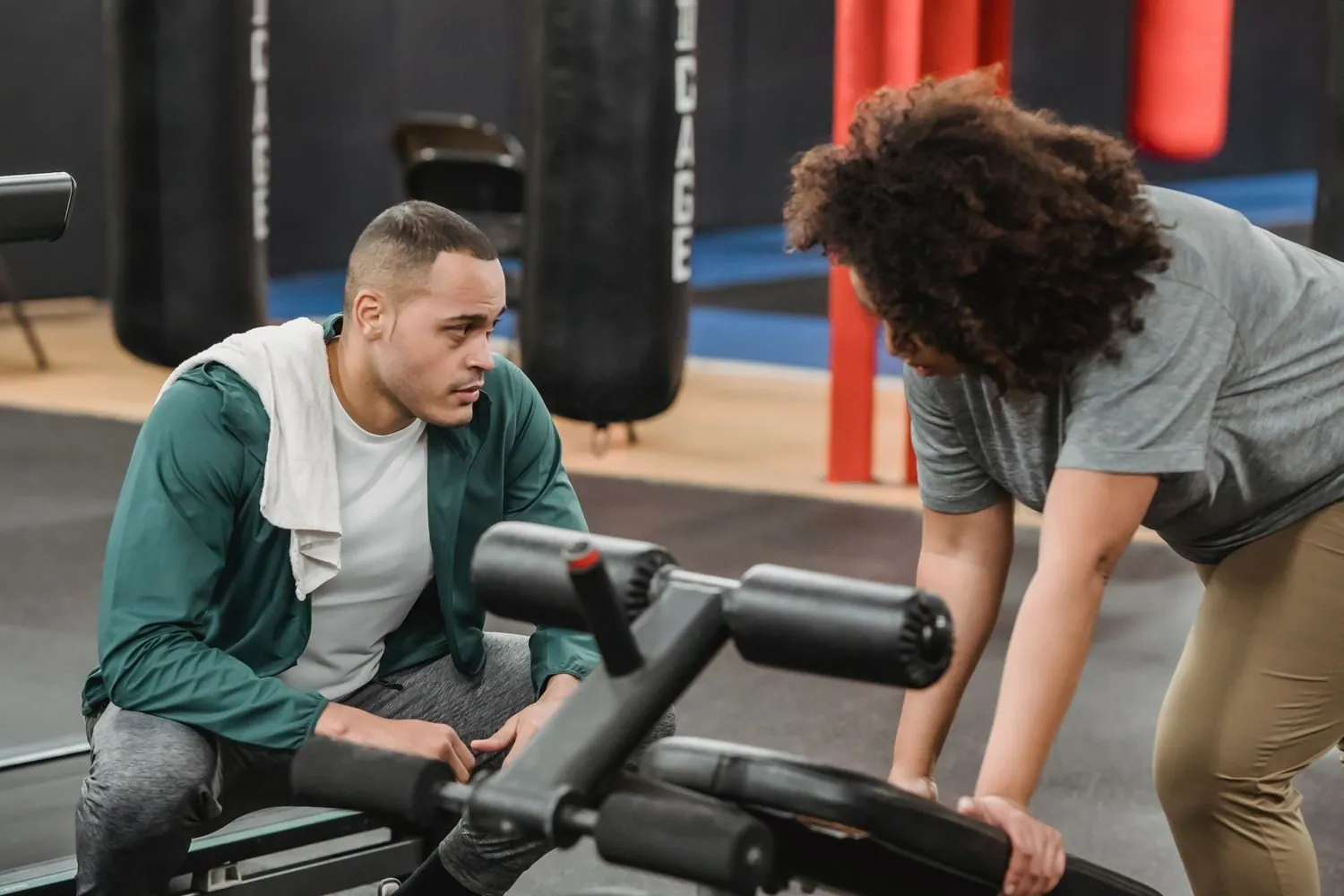
Add it up and you get roughly 35 to 40 minutes. A session like this burns only about 150 to 250 kcal depending on your body weight, so do not judge it by the calories. Day one is about movement patterns and confidence. Fat loss comes from weeks of repeated sessions plus how you eat.
If a machine looks confusing, skip it. Pick the three or four moves you understand, do them with decent form and call it a day. When this routine starts feeling easy, our gym workout chart gives you a printable progression.
Your first gym visit, minute by minute
Most of a first visit is not exercise. It is admin, orientation and settling in. Knowing the sequence removes a surprising amount of nerves, because you are no longer improvising.
| Time from arrival | What happens | What to do |
|---|---|---|
| 0 to 10 minutes | Registration and locker | Show ID, fill the health form honestly, lock your bag, fill your bottle |
| 10 to 15 minutes | Floor tour | Ask where the mats, dumbbells, water point and changing rooms are |
| 15 to 25 minutes | Warm-up | Easy treadmill or cycle walk, then a few arm circles and hip circles |
| 25 to 50 minutes | Strength circuit | Work through the table above, 2 sets each, sipping water between exercises |
| 50 to 55 minutes | Cool-down | Stretch, slow your breathing, let your heart rate settle |
| 55 to 60 minutes | Wrap-up | Wipe any equipment you used, note which moves felt easy or awkward, leave |
Only about 35 to 40 of those 60 minutes are actual training, and that is fine.
What should you bring and wear for your first day at the gym?
Bring a government ID such as Aadhaar or a driving licence, non-marking sports shoes, a 500 ml to 1 litre water bottle, a small towel and a padlock for the locker. Wear breathable cotton or dry-fit clothes you can squat in comfortably. Skip jeans, sandals and anything you would worry about tearing.
- ID: most Indian gyms ask for it during registration, even for a trial.
- Shoes: flat, grippy sports shoes. Running shoes with very soft, thick soles can feel wobbly during squats and leg press.
- Clothes: a t-shirt and track pants or shorts are enough. Women may prefer a supportive sports bra and leggings or track pants that stay put during squats.
Reach 10 to 15 minutes before your slot. Registration forms usually ask about injuries, surgeries, blood pressure, asthma or heart conditions. That is not red tape. It helps the staff avoid giving you something your body is not prepared for.
Myths about the first day that make beginners quit
A lot of day-one advice online is written for people who already train. Here are the ideas that most often backfire.
- Myth: you must be sore to know it worked. Soreness is not a score. Many good sessions leave you only mildly tired, and a very sore first day often means the next three days are a write-off.
- Myth: you need a full split from day one. You do not. A full-body session is the sensible start, and a structured gym workout split can wait until you have a few weeks behind you.
- Myth: lifting heavy shows commitment. Heavy lifting without learned form is the fastest route to a pulled muscle. Weights can go up from session three or four.
- Myth: one great session changes your body. It does not, and no honest trainer will promise it. Visible change takes weeks of regular training, enough protein and sleep.
Troubleshooting: when the first day does not go to plan
Small hiccups are normal. Here is how to handle the common ones without abandoning the session.
- The machine you want is taken. Ask how many sets they have left and do another exercise from the list meanwhile. Gym regulars are used to this and will usually let you “work in”.
- You feel dizzy or lightheaded. Stop, sit down, sip water and breathe slowly. If it settles, finish with stretches only. Eating something light 1 to 2 hours earlier usually prevents this.
- Sharp pain in a joint. Stop that exercise. Dull muscle burn is normal effort, sharp or pinching joint pain is not.
- The floor is too crowded. Do the squats, push-ups and plank on a mat in a quiet corner and come back for machines later. If crowds keep putting you off, a home gym workout is a perfectly good way to build the habit first.
Stop the session and speak to a doctor if you get chest pain, pressure in your chest, fainting, or breathlessness that is out of proportion to the effort. If you have a heart condition, uncontrolled blood pressure, diabetes on medication or a recent injury, check with your doctor before starting.
First day gym tips for women, older beginners and desk workers
The plan above works for most healthy adults, but a few adjustments help specific groups feel at home faster.
- Women: weight training will not make you bulky. Many gyms have a quieter morning or early afternoon window if a crowded floor puts you off. Ask for it when you register.
- Over 40, or returning after a long break: keep the warm-up closer to 10 minutes, lower the leg press load further and add an extra 15 seconds of rest between sets. Balance and slow control matter more than load.
- Desk workers with tight hips and shoulders: spend extra time on the warm-up and stretches, and do not rush the squat depth. Sit only as low as feels comfortable.
- Carrying extra weight: swap the treadmill for a stationary cycle if your knees complain, and use an incline push-up rather than a floor push-up.
What does your first week look like after day one?
After your first gym day, train 3 non-consecutive days in week one, such as Monday, Wednesday and Friday, and keep rest days light. Repeat the same session in your second visit, then add a small change in the third. Gentle walking or yoga on off days helps recovery without adding stress.
| Day | Plan | Goal |
|---|---|---|
| Day 1 (Mon) | First day session from the table above | Learn the room and the movements |
| Day 2 (Tue) | Rest, or a 20 to 30 minute easy walk | Let soreness peak and pass |
| Day 3 (Wed) | Repeat day one with the same weights | Notice what already feels easier |
| Day 4 (Thu) | Rest, or a gentle online yoga class | Loosen hips and shoulders |
| Day 5 (Fri) | Same session, add one set to squats and pulldowns, or a seated row | First small step up |
| Day 6 to 7 | Walk, stretch, sleep well | Recover before week two |
When you want a fuller schedule, the 7 day gym workout plan shows how a complete week can be organised.
What should you eat before and after your first gym session?
Eat a light, mostly carbohydrate meal 1 to 2 hours before training, such as a banana, 2 idlis, a small bowl of poha or a slice of toast with peanut butter. Afterwards, have a balanced meal with protein within a couple of hours, like dal-roti, paneer, curd or eggs.
Do not train on a very heavy stomach or completely empty if you tend to feel faint. Drink water regularly through the day, a few sips every 10 to 15 minutes during the session is plenty. Skip pre-workout powders on day one.
If you want food guidance fitted to your own schedule and preferences, an online nutritionist consultation can map this around your regular Indian meals.
What comes after day one?
Consistency beats intensity in the first month. Aim for 2 to 3 sessions a week, add weight only when every set looks clean, and note what you did on your phone.
If you would like a trainer to plan your first sessions, watch your form live and adjust the pace to how your body responds, FitStrot’s 1-on-1 personal training works whether you train at a gym or from home.
Frequently asked questions
How long should a first day gym workout be?
Aim for 30 to 40 minutes of training, with a total gym visit of about an hour including registration and a tour. That is long enough to warm up, do 5 or 6 simple exercises for 2 sets each, and stretch, without leaving you exhausted or discouraged.
Should you do cardio or weights first on your first day at the gym?
Start with 8 to 10 minutes of easy cardio as a warm-up, then move to weights and bodyweight exercises, then stretch. Keep the cardio gentle so it warms you up rather than tires you out. Longer cardio sessions can wait until you have a few regular weeks behind you.
How heavy should you lift on your first day?
Lift light enough that you could do 4 to 5 more reps than the number written in the plan. If the last rep looks rushed or shaky, reduce the weight. On day one you are practising movement patterns, so the load should feel almost too easy.
Is it normal to feel sore after the first gym session?
Yes, mild soreness is common and usually shows up 24 to 48 hours later, fading within about 3 to 4 days. Light walking helps. Sharp joint pain, swelling or soreness that gets worse after 4 to 5 days is not normal, and is a reason to rest and get checked.
Do you need a trainer on your first day at the gym?
You do not need one, but it helps. A trainer can set up machines for your height, teach squat and pulldown form and stop small errors from becoming habits. If you train alone, ask the floor staff to show you each new machine once.
Book a trial 1-on-1 session with FitStrot’s personal trainers and walk into your first gym day with a plan written for your body.


