
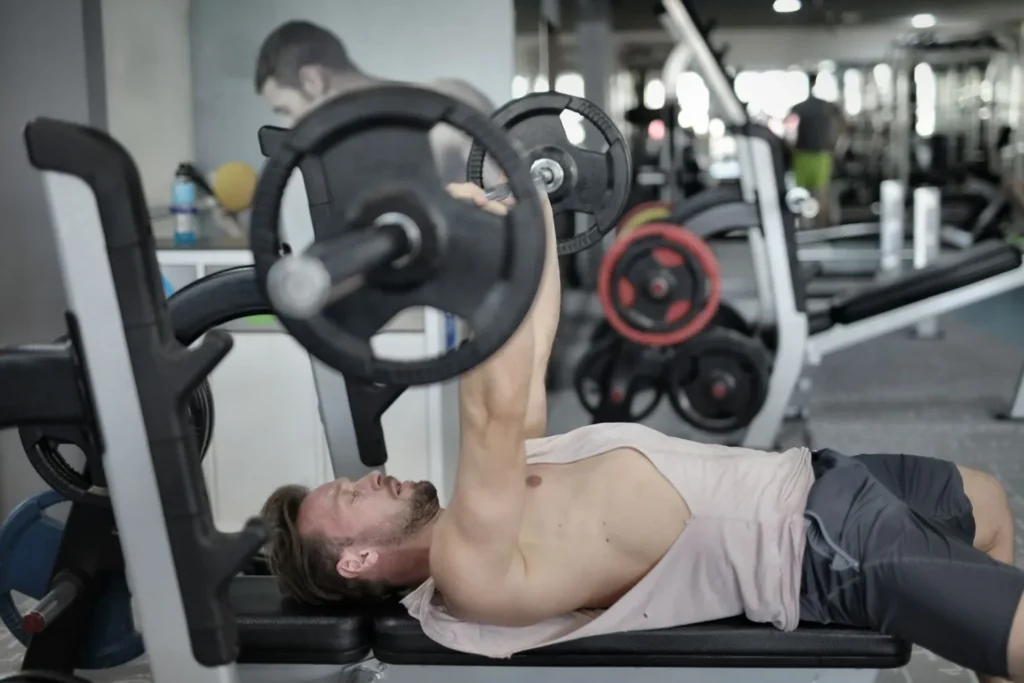
A chest gym workout chart is a one-page reference that lists each chest exercise with its sets, reps, rest time and a single form cue, so you walk into the gym knowing exactly what to lift. This guide gives you a full chart you can screenshot, explains how to choose sets and reps, shows how to progress week to week, and fixes the usual stalls. Every number is a practical starting point, not a promise of results.
What should a chest gym workout chart include?
A useful chest chart lists six things per exercise: the movement, the bench angle or equipment, sets, a rep range, rest time and a form cue. Aim for four to six exercises per session, with at least one incline press, one flat press and one fly or cable move, so the whole chest gets work.
Most charts fail because they stop at exercise names. Without sets, reps and rest, you guess every set, and guessing is how sessions drift into the same three bench variations forever. The chart below fixes that. If you want the same idea applied to your whole body across the week, our gym workout chart and general workout chart guides cover the wider picture.
The chest chart: exercises, sets, reps, rest and form cues
Read the chart top to bottom: heavy presses first while you are fresh, then dumbbell and machine work, then fly and cable moves, then bodyweight finishers. Pick four to six rows for one session instead of doing all eleven.
| Exercise | Emphasis | Sets x reps | Rest | Form cue |
|---|---|---|---|---|
| Incline barbell press | Upper chest, front delts | 4 x 6-8 | 2-3 min | Bench at about 15-30 degrees; bar touches the upper chest, elbows about 45-60 degrees from the torso. |
| Flat barbell press | Mid chest, triceps | 4 x 6-8 | 2-3 min | Feet planted, shoulder blades pinched back and down, bar to the lower chest. |
| Incline dumbbell press | Upper chest | 3 x 8-10 | 90-120 sec | Lower until the elbows are just below the bench line, press up and slightly together. |
| Flat dumbbell press | Mid chest | 3 x 8-10 | 90-120 sec | Wrists stacked over elbows; control the way down for about two seconds. |
| Machine chest press | Mid chest | 3 x 10-12 | 60-90 sec | Set the seat so the handles sit level with the mid chest; do not let shoulders roll forward. |
| Decline press (barbell or dumbbell) | Lower chest | 3 x 8-10 | 90-120 sec | Short, controlled path; use a spotter or safety pins with heavy loads. |
| Chest dips (forward lean) | Lower chest, triceps | 3 x 8-12 | 90 sec | Lean the torso forward, lower until upper arms are about parallel to the floor. |
| Low-to-high cable fly | Upper chest | 3 x 12-15 | 60 sec | Keep a soft bend in the elbows; finish with hands meeting at chin height. |
| Pec deck or machine fly | Mid chest | 3 x 12-15 | 60 sec | Pause one second with the arms together; do not slam the weight stack. |
| High-to-low cable fly | Lower chest | 3 x 12-15 | 60 sec | Sweep the hands down and across; stop around hip height. |
| Push-ups | Mid chest, triceps, core | 2-3 x near failure | 60 sec | Body in one line from head to heels; chest to a fist-height from the floor. |
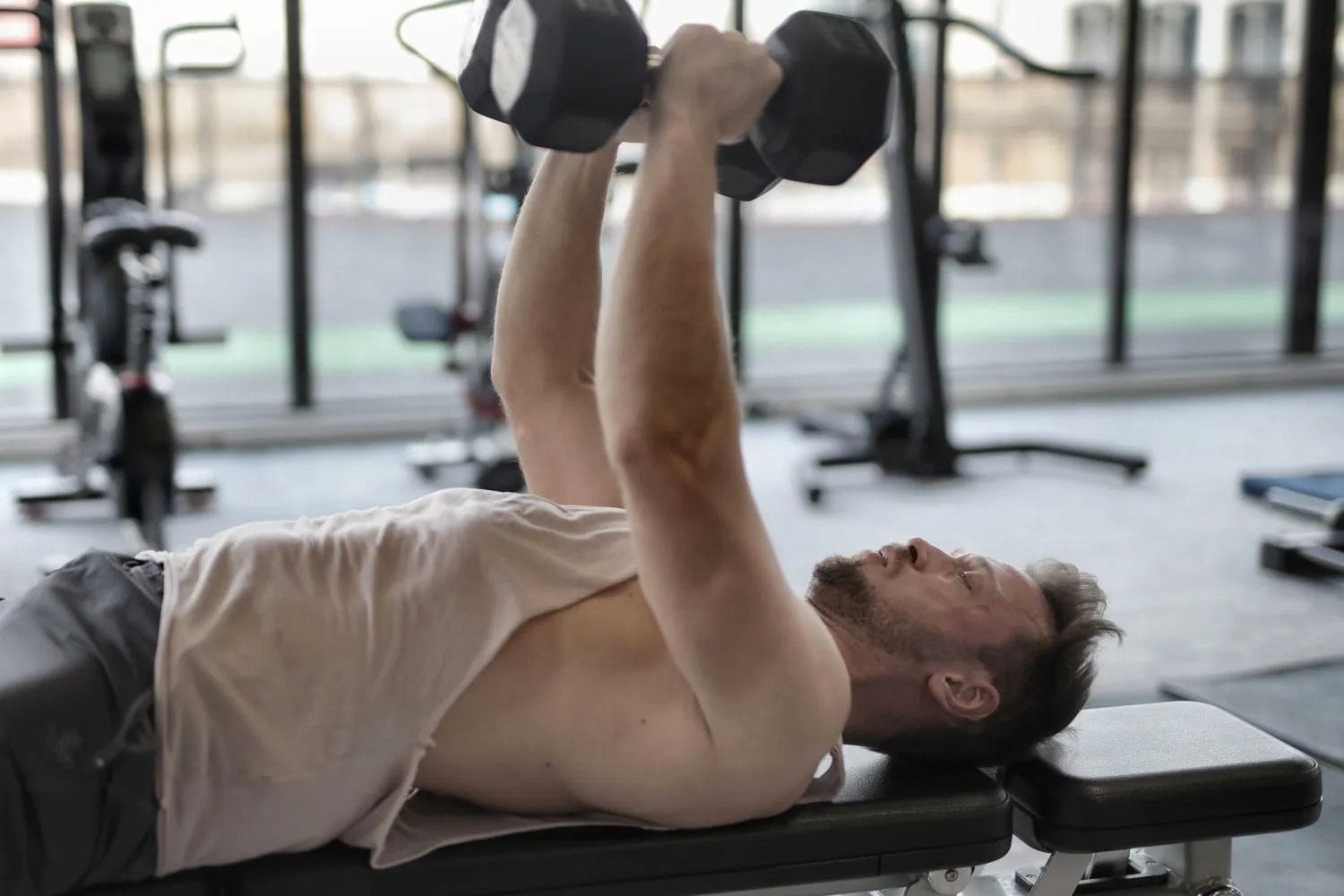
Load matters as much as the numbers. Choose a weight where the last one to three reps of every set feel hard but your form stays identical to rep one. If a set turns into a grind with the hips lifting and the elbows flaring, the weight was too heavy for that rep range.
How many sets and reps should each chest exercise get?
For most gym-goers, 5 to 8 reps suits heavy compound presses, 8 to 12 suits dumbbell and machine work, and 12 to 15 suits fly and cable moves. Aim for roughly 10 to 16 hard sets of chest per week, split over two sessions, and stop each set one to three reps short of failure.
The table below turns that into a quick lookup. Use it to adjust any row of the chart above when your goal changes.
| Goal | Rep range | Sets per exercise | Rest | How it should feel |
|---|---|---|---|---|
| Strength on presses | 4-6 | 3-5 | 2-4 min | Heavy and crisp, bar speed slows only on the last rep. |
| Muscle size (main work) | 8-12 | 3-4 | 90-120 sec | Controlled lowering, a clear stretch across the chest at the bottom. |
| Muscle size (isolation) | 12-15 | 2-3 | 45-75 sec | Constant tension, a burn in the chest rather than the shoulders. |
| Endurance finisher | 15-25 | 2 | 45-60 sec | Light and smooth; push-ups or a machine fly work well. |
Do you really need separate upper, middle and lower chest exercises?
Partly. The chest is one large muscle, so you cannot isolate a region completely, but the bench angle does shift which fibres work hardest. A slight incline of about 15 to 30 degrees leans on the upper chest, flat favours the middle, and dips or declines load the lower portion. Treat angles as variety, not magic.
The myth is that you need five exercises per region. You do not. One or two good presses across two angles, plus one fly, cover the muscle for most people. Past that, extra exercises mostly add fatigue rather than growth. If you want a deeper look at one angle, see our guide to the chest workouts that build a full chest, or the upper chest workout at home if you train without a bench.
Walkthrough: how to run one chest session from the chart
Follow these steps in order. A full session usually takes 45 to 60 minutes, including warm-up.
- Warm up for 5 to 8 minutes. Do light arm circles, band pull-aparts and 15 slow push-ups, then two ramp-up sets of your first press with an empty bar or light dumbbells.
- Start with your heaviest press. Do 3 to 4 working sets of 6 to 8 reps with 2 to 3 minutes of rest. Write down the weight and reps.
- Add one dumbbell or machine press. Switch the angle from your first lift, for example flat after incline. Do 3 sets of 8 to 12 reps.
- Add one stretch-focused move. Cable fly or pec deck for 3 sets of 12 to 15 reps, with a one-second pause when the hands meet.
- Finish with a bodyweight or lower-chest move. Dips or push-ups for 2 to 3 sets, stopping a rep or two before form breaks.
- Log and stretch lightly. Note the top weight for each lift, then hold a doorway chest stretch for 20 to 30 seconds per side.
Two example sessions you can rotate across the week:
- Session A (strength first): incline barbell press 4 x 6-8, flat dumbbell press 3 x 8-10, low-to-high cable fly 3 x 12-15, dips 3 x 8-12.
- Session B (volume first): flat barbell press 4 x 6-8, incline dumbbell press 3 x 8-10, machine chest press 3 x 10-12, pec deck 3 x 12-15, push-ups to near failure.
How often should you use the chest chart each week?
Twice a week works for most people, with at least 48 hours between sessions. That frequency spreads 10 to 16 hard sets across two days, which is easier to recover from than cramming them into one. Once-a-week chest can work for advanced lifters with a very high single-day volume, but it is harder to progress.
If you pair chest with arms on the same day, our chest and bicep workout guide shows how to order the exercises so your pressing is not weakened by tired biceps. Put the heavy chest work first, and arm work after.
How do you progress on the chest chart week by week?
Progress by adding one rep per set until you reach the top of the rep range on every set, then add the smallest weight jump available, usually 1 to 2.5 kg per side on barbells or one dumbbell step up. Repeat the cycle, and plan a lighter week roughly every fourth to sixth week.
The table below shows a simple four-week cycle for a main press such as the incline barbell press. Adjust the numbers to your own starting weight.
| Week | Focus | Sets x reps (main press) | Load rule |
|---|---|---|---|
| Week 1 | Learn the groove | 3 x 8 | Pick a weight you could lift about 3 more times on each set. |
| Week 2 | Add a rep | 3 x 9, then 3 x 10 if smooth | Same weight as week 1; chase the extra reps. |
| Week 3 | Add load | 4 x 6-8 | Increase weight by the smallest step; drop back to 6-8 reps. |
| Week 4 | Lighter week | 2 x 8 | Use about 80 percent of week 3 weight; stop well short of failure. |
Troubleshooting: when the chest chart stops working
Most stalls come from a handful of fixable habits. Check these before you change the whole plan.
- Shoulders do the work, chest feels nothing. Lower the bench angle, pinch the shoulder blades back and down, and keep the elbows about 45 to 60 degrees from your torso rather than flared wide.
- Weight has not moved in three weeks. Sleep, eat enough and check that you are really adding a rep or a small load each week. A lighter week from the table above often breaks the plateau.
- One side is weaker. Swap a barbell press for dumbbells so each arm lifts its own load, and match reps on the weaker side.
- Wrists bend back under the bar. Stack the wrist over the elbow and grip the bar low in the palm. If a barbell is uncomfortable, use dumbbells or a machine.
- Bouncing the bar off the chest. This cuts tension and adds risk. Lower for about two seconds, touch lightly, and press.
- Sharp or lasting pain. Stop the movement. Ordinary muscle fatigue fades quickly, but sharp joint pain does not, so get it checked by a qualified professional before you load it again.
Which version of the chest chart suits you?
The same chart bends to different situations. Pick the version that matches how you actually train.
- Beginners (first 3 months): Use two presses and one fly, such as machine chest press, flat dumbbell press and pec deck, for 2 to 3 sets each. Add a rep each week before adding weight.
- Short on time (35 to 40 minutes): Do one heavy press, one dumbbell press at a different angle and one fly. Cut rest to the lower end of each range.
- Training at home: Swap barbell presses for push-up variations, dumbbell floor presses and a backpack for load. Our home gym workout guide covers how to set up with minimal equipment.
- Vegetarian lifters: Muscle needs protein to grow, and a common practical target is roughly 1.6 to 2.2 g per kg of body weight daily if your doctor has not told you otherwise. Eggs, paneer, curd, dal, soya chunks and whey can all contribute. An online nutritionist consultation can turn that into an Indian meal plan.
For fat loss, keep the chart as it is and manage the calorie side separately. Chest training builds muscle, but it will not burn fat from the chest area alone.
FAQs about the chest gym workout chart
What is a chest gym workout chart?
It is a reference table that lists chest exercises with their sets, reps, rest times and form cues. A good one covers upper, middle and lower chest emphasis so each session has structure and you can track progress from one week to the next.
How many exercises should a chest workout chart have?
Four to six exercises per session is enough for most people. Include at least one incline press, one flat press and one fly or cable move. Going beyond six usually means form slips and the extra sets add fatigue without much extra benefit.
How long should a chest workout take?
Around 45 to 60 minutes, including a 5 to 8 minute warm-up. Heavy presses need 2 to 3 minutes of rest between sets, and isolation work needs 45 to 75 seconds. If your session runs past 75 minutes, you are probably doing too many exercises.
Can beginners follow this chest gym workout chart?
Yes. Start with machine and dumbbell presses, use the lower end of each rep range and keep two or three reps in reserve. Learn the form first, add reps next, and increase weight last. Skip dips and heavy barbell work until the basics feel smooth.
How do you progress on a chest chart?
Add one rep per set each week until you reach the top of the range on every set, then increase the weight by the smallest step and drop back to the bottom of the range. Plan a lighter week every fourth to sixth week.
A chart organises your sessions, but a coach checks your form and adjusts the plan as your lifts change. If you want a trainer to build and tweak your chest programme each week, book a session with Fitstrot’s 1-on-1 personal training team and bring your current numbers.


