
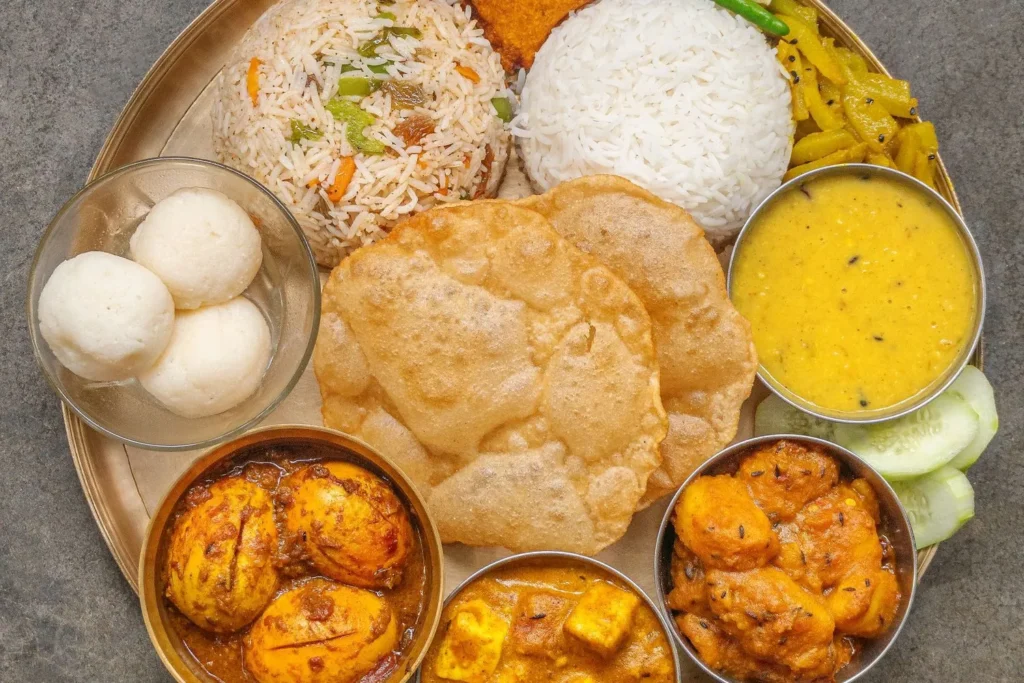
A 7 day high protein meal plan for weight loss only works if you can actually eat it for seven days. This one is built for Indian kitchens: every meal slot has a vegetarian option and a non-vegetarian option with about the same protein, so you choose meal by meal instead of committing to one camp. Expect about 1,500-1,700 kcal and roughly 90-110 g of protein a day, a modest deficit that most adults can sustain without feeling punished.
How is this plan different from a vegetarian-only week?
Each slot in this plan offers a veg and a non-veg choice with similar protein, so you can mix freely within a day. You pick per meal, not per week. Every day lands near 90-110 g of protein on about 1,500-1,700 kcal, built around 20-30 g at each main meal.
That swap system is the whole point. A household where one person eats eggs and another does not can still cook one base meal and adjust the protein on the side. If you want a fully meat-free structure instead, our 7-day vegetarian weight loss meal plan covers it end to end, and the Indian vegetarian meal plan for weight loss goes deeper on regional dishes. For the wider reasoning behind eating more protein while cutting calories, see our guide to a high protein diet for weight loss.
How much protein per day do you need to lose weight?
Most adults losing weight do well on about 1.2-1.6 g of protein per kg of body weight a day, or up to about 2 g per kg if they lift weights regularly. A 65 kg person lands near 80-105 g, split across three or four meals at roughly 20-35 g each.
Protein helps in two practical ways: it keeps you full longer, and it gives your body a reason to hold on to muscle while you eat less. Use the table below as a starting point, not a prescription. Height, age, job and activity move the real numbers, and the calorie column is a rough starting band for a deficit of about 300-500 kcal.
| Body weight | Protein per day (about) | Protein per meal (4 meals) | Starting calories (about) |
|---|---|---|---|
| 55 kg | 65-90 g | 16-22 g | 1,300-1,500 kcal |
| 65 kg | 80-105 g | 20-26 g | 1,500-1,700 kcal |
| 75 kg | 90-120 g | 22-30 g | 1,700-1,900 kcal |
| 85 kg | 100-135 g | 25-34 g | 1,900-2,200 kcal |
If you strength train three or more days a week, aim for the top of your range. For a full calorie framework, our nutrition diet chart for weight loss and nutrition for weight loss guides show how to set your own number.
The 7 day chart: pick the veg or non-veg option at each meal
Portions below are for the 1,500-1,700 kcal band. Protein totals are estimates and assume you eat the listed portions; either path lands in the same range. Each meal also includes a plate of salad or cooked vegetables, and cooking oil stays around 1-2 tsp per meal.
| Day | Breakfast | Lunch | Evening snack | Dinner | Protein (about) |
|---|---|---|---|---|---|
| Mon | Veg: 2 besan chillas with 50 g grated paneer Non-veg: 3-egg masala omelette, 1 roti |
Veg: 1 bowl rajma, ½ cup rice, curd Non-veg: 120 g chicken curry, 1 roti |
Veg: 30 g roasted chana, chaas Non-veg: 2 boiled eggs |
Veg: 100 g paneer bhurji, 1 roti Non-veg: 120 g grilled fish, sauteed veg |
90-100 g |
| Tue | Veg: 2 moong dal chillas, 150 g Greek yogurt Non-veg: 2-egg bhurji, 1 roti, 1 glass milk |
Veg: soya chunk pulao (30 g dry), raita Non-veg: 120 g chicken tikka, 1 roti |
Veg: 1 cup sprouts chaat Non-veg: 1 boiled egg, cucumber |
Veg: 1 bowl moong dal, 1 roti, curd Non-veg: egg curry (2 eggs), 1 roti |
85-100 g |
| Wed | Veg: 150 g Greek yogurt, oats, fruit Non-veg: 2-egg sandwich, whole wheat bread |
Veg: 1 bowl chole, 1 roti, salad Non-veg: 120 g fish curry, ½ cup rice |
Veg: 1 scoop whey or soy protein in water Non-veg: same shake or 2 boiled eggs |
Veg: 150 g tofu stir-fry, ½ cup rice Non-veg: 120 g chicken stir-fry, ½ cup rice |
95-110 g |
| Thu | Veg: paneer-veg sandwich (50 g paneer), curd Non-veg: 2-egg omelette, 1 toast, curd |
Veg: 1 bowl dal palak, 1 roti, curd Non-veg: 120 g chicken keema with peas, 1 roti |
Veg: 30 g roasted chana, chaas Non-veg: 1 boiled egg, chaas |
Veg: soya chunk curry (30 g dry), ½ cup rice Non-veg: 120 g grilled chicken, salad |
90-105 g |
| Fri | Veg: 2 sattu rotis, 1 glass milk Non-veg: 3-egg veg scramble, 1 roti |
Veg: 1 bowl kadhi-chana, ½ cup rice Non-veg: 120 g fish curry, ½ cup rice |
Veg: 150 g Greek yogurt, 10 almonds Non-veg: same or 2 boiled eggs |
Veg: 100 g paneer tikka, 1 roti, salad Non-veg: 120 g chicken tikka, 1 roti |
90-105 g |
| Sat | Veg: sprouted moong salad, 1 glass milk Non-veg: 2-egg poha-style bhurji |
Veg: soya keema, 1 roti, curd Non-veg: 120 g chicken curry, ½ cup rice |
Veg: 20 g peanuts, chaas Non-veg: 2 boiled eggs |
Veg: mixed dal, 1 roti, sauteed greens Non-veg: 120 g baked fish, veg |
85-100 g |
| Sun | Veg: paneer paratha (minimal oil), curd Non-veg: 3-egg omelette, 1 toast |
Veg: rajma, ½ cup rice, salad Non-veg: 120 g chicken stir-fry, ½ cup rice |
Veg: roasted makhana, chaas Non-veg: 1 boiled egg, chaas |
Veg: 1 bowl dal, 1 roti, greens Non-veg: egg curry (2 eggs), 1 roti |
85-100 g |

How to use the chart: a five-step walkthrough
- Pick your calorie band. Use the first table. If you weigh 60-70 kg and mostly sit at work, the 1,500-1,700 kcal portions above are a fair start.
- Anchor each meal with protein first. That means a palm-sized portion: 100-150 g paneer, chicken, fish or tofu, 2-3 eggs, one large bowl of dal or rajma, or 150 g Greek yogurt.
- Swap inside the same slot only. A veg lunch can become a non-veg lunch, but not a snack, or the day’s protein falls apart.
- Fill half the plate with vegetables, then add one roti or about half a cup of cooked rice for carbohydrate.
- Adjust with carbs and fats, not protein. If you are hungry all day, add a roti or a fruit. If the scale stalls for two weeks, trim rice, ghee or nuts by about 100-150 kcal first.
Protein per portion: what common Indian foods actually give you
Use this table to build your own swaps. Values are rough, vary by brand and cooking method, and are for cooked or ready-to-eat portions unless noted.
| Food | Portion | Protein (about) | Calories (about) |
|---|---|---|---|
| Egg | 1 large | 6 g | 70-75 kcal |
| Chicken breast, cooked | 100 g | 30 g | 165 kcal |
| Fish (rohu, surmai), cooked | 100 g | 18-22 g | 110-150 kcal |
| Paneer, full fat | 100 g | 18 g | 260-300 kcal |
| Tofu, firm | 100 g | 10-14 g | 80-120 kcal |
| Soya chunks, dry | 30 g | 14-16 g | 100 kcal |
| Rajma or chole, cooked | 150 g (1 bowl) | 12-14 g | 180-200 kcal |
| Moong or masoor dal, cooked | 150 g (1 bowl) | 9-12 g | 150-170 kcal |
| Greek yogurt | 150 g | 13-15 g | 100-130 kcal |
| Roasted chana | 30 g | 6 g | 110 kcal |
| Whey or soy protein | 1 scoop | 20-25 g | 100-130 kcal |
Notice the trade-off: paneer is protein-rich but also calorie-dense, while chicken, fish, tofu and egg whites give more protein for fewer calories. For more vegetarian combinations, the high-protein Indian diet plan lists dishes that pair well, and the nutritional value of protein explains how amino acids fit together.
Myth check: does more protein mean faster fat loss?
No. Protein keeps you full and protects muscle, but fat loss still comes from eating fewer calories than you burn. Going past about 2 g per kg adds cost and calories without extra benefit for most people. Digesting protein uses about 20-30% of its calories, versus 5-10% for carbohydrates, a small daily bonus, not a fat-burning switch.
“Vegetarians cannot reach 90 g.” They can. Paneer, curd, milk, soya, dals, rajma, chole and sprouts add up fast. You simply need bigger portions than a meat eater to match the same protein, which is why the veg options above are generous.
Why you may feel stuck: hunger, bloating and a flat scale
- Hungry by 4 pm: make the evening snack a real one, with 15-20 g protein such as Greek yogurt or two eggs, and add vegetables to lunch.
- Gas or bloating from dal, rajma or soya: soak well, pressure cook until soft, and raise portions gradually over a week while drinking enough water.
- Scale not moving after two weeks: recheck oil, ghee, nuts and weekend meals first. Trim 100-150 kcal from carbs or fats, not from protein.
- Eating out or office tiffin: choose tandoori chicken, egg curry, dal or paneer tikka over fried food, and ask for extra dal or curd.
- Low energy in workouts: do not drop carbohydrates to zero. Keep one roti or half a cup of rice at the meal before you train.
Realistic expectations matter too. On a 300-500 kcal daily deficit, roughly 0.3-0.5 kg of fat a week is a sensible pace, and no plan can promise more than that safely. If you want someone to check your portions and pace each week, an online weight loss trainer can keep you accountable.
Sunday prep: 90 minutes that cover the week
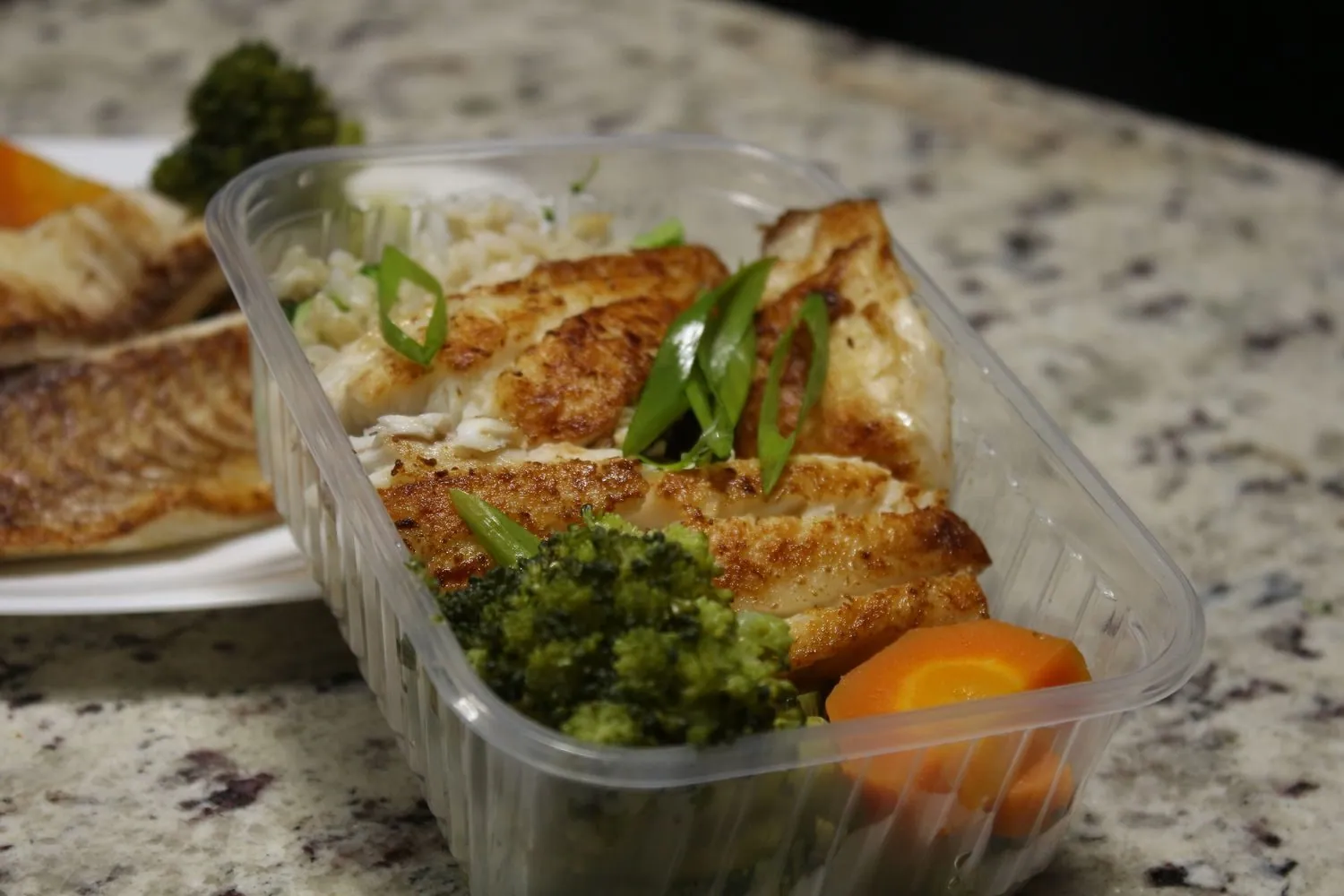
Cook one protein base per category: a tray of baked chicken or fish, a pot of dal or rajma, a box of boiled eggs and a batch of paneer or tofu cubes. Chop salad vegetables for three days and soak chana or sprouts for midweek. Store cooked food in the fridge and use it within three to four days; freeze the rest. Then every meal is just assembly plus a fresh roti.
Who should adjust this plan, and who should see a doctor first?
Healthy adults can usually follow this plan as written. Check with your doctor or a registered dietitian first if you have kidney disease, are pregnant or breastfeeding, have diabetes, take regular medicines, are under 18, or have a history of disordered eating.
- Strength trainers: move toward 1.6-2.0 g per kg and add a fifth meal or a larger snack. A 1-1 personal training plan helps match training load to food.
- Egg-free or Jain households: lean on dairy, soya, dals and sprouts, and use a protein powder if gaps remain.
- Women with smaller frames: start at the lower calorie band and keep protein near 1.2-1.4 g per kg.
- People with medical conditions: do not change medicines or diet targets on your own. Your doctor or dietitian should set the numbers.
Frequently asked questions
Can I follow this plan if I am vegetarian or eggetarian?
Yes. Use the veg option at every meal, or add eggs only where you eat them. Paneer, curd, tofu, soya chunks, dals and sprouts can reach 85-100 g a day if portions are generous. Our 7-day vegetarian weight loss meal plan gives a fully plant-and-dairy version.
How much weight can I lose in a week on this plan?
With a deficit of about 300-500 kcal a day, expect roughly 0.3-0.5 kg of fat in a week. The scale may drop faster in the first few days from water and gut contents. Results vary, so judge progress over three to four weeks rather than seven days.
Do I need protein powder to reach 90-110 g a day?
No. Eggs, dal, paneer, chicken, fish, curd and soya can cover most people’s targets. A scoop of whey or soy protein, at about 20-25 g, is a convenience for busy days or when appetite is low, not a requirement.
Is a high protein diet safe for my kidneys?
For healthy adults, intakes in the ranges above are generally considered fine when you drink enough water. If you have kidney disease, a kidney stone history, or reduced kidney function, protein needs to be set by your doctor or dietitian, so do not follow this plan without that advice.
What should I do after the first 7 days?
Repeat the structure, but rotate vegetables, spices and protein sources every week or two to avoid boredom. Recheck your calories and protein every 4-6 weeks as your weight changes. For a plan tied to your own targets, see our personalised weight loss plan guide.
Want this chart scaled to your weight, food preferences and health history? Book an online nutritionist consultation with Fitstrot and get a protein and calorie target built for you.


