
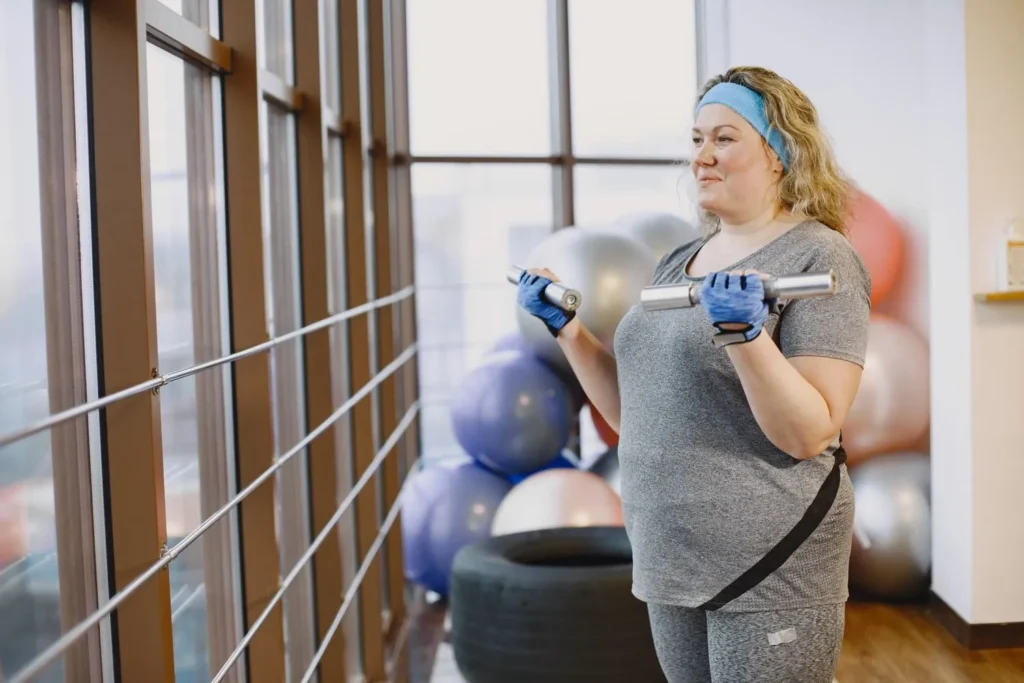
If you want to know how to manage menopause weight gain, start with one reframe: this is mostly a muscle, sleep and fat-storage problem, not a willpower problem. In your late 40s and 50s, falling estrogen, slow muscle loss and broken sleep all push in the same direction. The encouraging part is that strength training, enough protein, better sleep and a small calorie trim work well together. Below is a practical plan with Indian foods, a strength routine and realistic timelines.
One honest note first: weight gain after menopause is common but not inevitable, and nobody can promise a fixed result. This is general education, not medical advice, so read the doctor section near the end before you change your food or exercise.
Why does weight gain start around menopause?
Weight gain around menopause usually comes from three overlapping changes. Falling estrogen shifts fat storage towards the belly, muscle mass slowly declines so you burn fewer calories at rest, and hot flashes or night sweats disturb sleep and raise hunger. Together these can add about 2 to 4 kg over the transition years, even if your meals barely change.
That is why perimenopause weight gain often shows up first as a thicker waist while the scale barely moves: a bit less muscle, a bit more fat around the middle. Daily life adds to it: a desk job, fewer walks, sweet chai, evening namkeen. None of this is a moral failing, and each piece can be adjusted.
Menopause belly fat matters beyond clothes fitting, because fat stored deep around the organs is linked to higher diabetes and heart risk. For that, read how to reduce visceral belly fat, and for a full eating framework see the perimenopause diet and nutrition guide.
The five levers at a glance
To lose weight during menopause without losing muscle, work on five levers together. Treat these as starting points and adjust with your doctor or dietitian.
| Lever | What to do | Rough target (about) |
|---|---|---|
| Strength training | Full-body sessions with dumbbells, bands or body weight | 2 to 3 sessions a week, about 30 to 45 minutes |
| Protein | Spread across 3 to 4 meals, not just dinner | About 1.0 to 1.2 g per kg body weight a day |
| Calories | Small, steady trim only if you need to lose weight | About 250 to 300 kcal below your usual intake |
| Daily movement | Walks, stairs, a 10 minute walk after meals | About 6,000 to 8,000 steps a day |
| Sleep and stress | Fixed bedtime, cool room, short wind-down routine | About 7 to 8 hours of sleep |
If you can only manage two changes this month, pick strength training and protein. They protect the muscle that keeps your metabolism steady.
Myth check: eating less and doing more cardio will not fix it
- Myth: skip meals or eat very little. Severe cutting costs muscle along with fat, which lowers your calorie burn and makes regain easier. A small, steady trim works better.
- Myth: only cardio burns belly fat. Walking and dance help your heart and mood, but cardio alone does little to protect muscle, and crunches cannot spot-reduce the belly.
- Myth: detox teas, kadhas or “fat burner” drinks reset your hormones. No drink targets menopause fat.
- Myth: weight gain after menopause is unavoidable. It is common, not guaranteed.
The fix is boring but dependable: lift, eat enough protein, walk daily, sleep properly and keep a small calorie gap.
How often should you do strength training during menopause?
Aim for two to three full-body strength sessions a week, about 30 to 45 minutes each, with a rest day between them. Work each major muscle group with about 2 to 3 sets of 8 to 12 repetitions, using a weight that feels hard in the last two reps. Increase load slowly and stop any move that causes sharp pain.
Strength training for menopause protects the muscle that sets your resting calorie burn, and weight-bearing work also supports your bones. You do not need a gym: a pair of dumbbells (about 2 to 5 kg to start), a resistance band and a sturdy chair are enough.
| Exercise | Sets x reps | Rest | Form cue |
|---|---|---|---|
| Chair or goblet squat | 3 x 10 | 60 to 90 sec | Sit hips back, knees follow toes, chest tall |
| Dumbbell hip hinge | 3 x 10 | 60 to 90 sec | Soft knees, flat back, push hips straight back |
| Incline push-up (hands on counter) | 3 x 8 to 10 | 60 sec | Body in one line, elbows about 45 degrees from ribs |
| One-arm dumbbell row | 3 x 10 each side | 60 sec | Pull elbow towards hip, keep shoulders square |
| Glute bridge | 3 x 12 | 45 to 60 sec | Press through heels, squeeze at the top, do not arch the back |
| Plank (knees down if needed) | 3 x 20 to 30 sec | 45 sec | Ribs down, long line from head to knees, keep breathing |
How to progress: in weeks 1 and 2, do two sessions of 2 sets per move. From week 3, move to 3 sets. Once the top of the rep range feels easy for two sessions in a row, add a little weight. Warm up for about 5 minutes first.
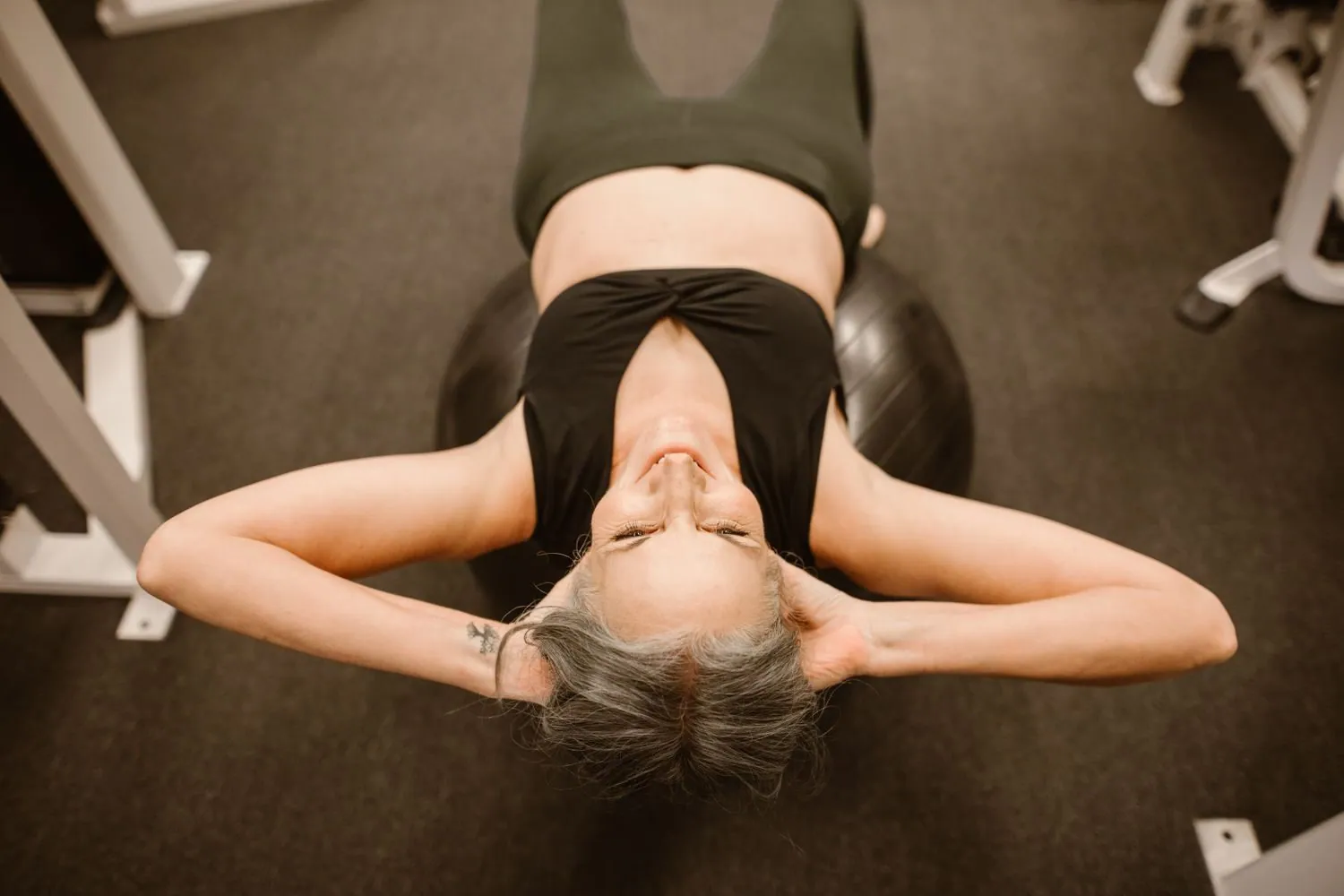
For form checks, a trainer in 1-on-1 personal training can build this routine around your joints. For lower-impact cardio on other days, see Zumba for menopause for adaptable dance fitness.
How much protein do you need during menopause?
Most women in menopause do well with about 1.0 to 1.2 grams of protein per kg of body weight a day, which is roughly 65 to 80 g for a 65 kg woman, spread over three or four meals. The basic RDA is about 0.8 g per kg. If you have kidney disease, check with your doctor before raising protein.
Protein for menopause is about a real portion at every meal, not powders. Many Indian plates are light on protein, so the fix is often an extra katori of dal, a bowl of curd or some paneer.
| Food | Portion | Protein (about) |
|---|---|---|
| Cooked dal (toor, moong, masoor) | 1 katori, about 150 g | 8 to 10 g |
| Paneer | 100 g | 18 to 20 g |
| Curd | 1 bowl, about 200 g | 6 to 7 g |
| Egg | 1 large | 6 g |
| Soya chunks (dry weight) | 30 g | 14 to 16 g |
| Roasted chana | 30 g | 5 to 6 g |
| Cooked rajma or chole | 1 katori, about 150 g | 9 to 11 g |
| Chicken breast, cooked | 100 g | 25 to 30 g |
| Milk | 1 glass, about 250 ml | 8 g |
Here is how one vegetarian-friendly day can look. It adds up to about 65 to 75 g of protein.
- Breakfast: 2 moong dal chillas with mint chutney and a small bowl of curd (about 18 g).
- Mid-morning: a fruit and roasted chana (about 4 g).
- Lunch: 2 rotis, 1 katori dal, a bowl of sabzi, a large salad and curd (about 20 g).
- Evening: tea with milk and little or no sugar, plus a boiled egg or 30 g paneer cubes (about 6 g).
- Dinner: 1 to 2 rotis or millet khichdi, tofu or paneer bhurji, and vegetables filling half the plate (about 20 to 25 g).
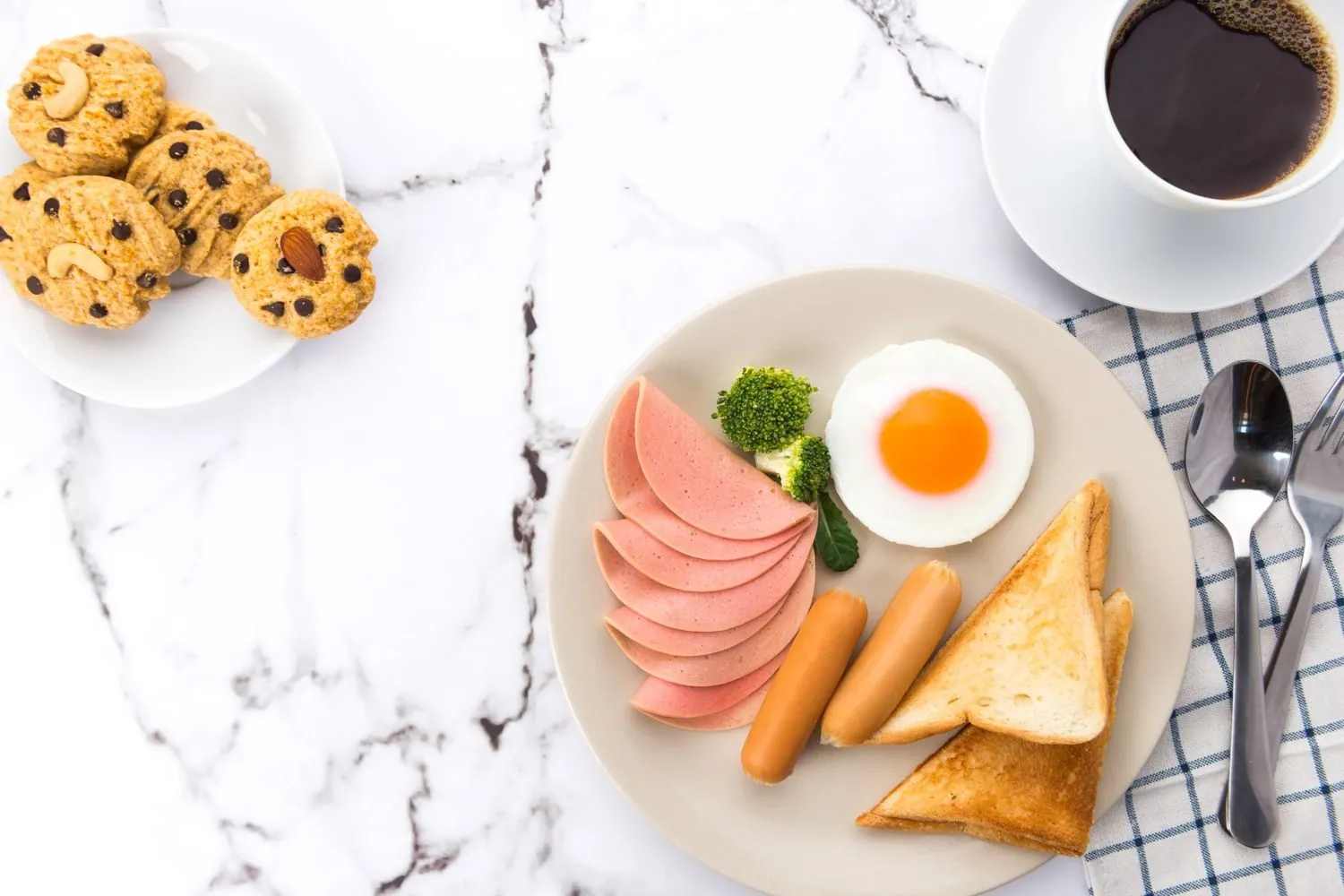
Keep carbohydrates in the plan: whole wheat roti, millets, oats and fruit give fibre and workout energy. If you need to lose weight, trim rice and fried snacks a little. For targets, see protein and nutrition and nutrition and fat loss, or use the best diet plan for menopause for a full day-by-day menu.
How do sleep, stress and hot flashes affect your weight?
Poor sleep raises hunger and cravings the next day, and ongoing stress keeps appetite and evening snacking high. Aim for about 7 to 8 hours, a fixed bedtime, a cool dark room, and no heavy meal or caffeine in the last 2 to 3 hours before bed. If night sweats keep waking you, tell your doctor.
After a bad night most of us reach for sugar or fried snacks, so protecting sleep is a weight-management step. Keep the bedroom cool, put screens away about 30 minutes before bed and eat dinner earlier.
For stress, 10 to 15 minutes of gentle yoga or slow breathing a day is a reasonable start. Skip anything that leaves you dizzy. For guided sessions at home, try our online yoga classes include beginner-friendly options.
Troubleshooting: you are doing everything and the scale will not move
- Track your waist, not just the scale. Measure at the navel once a week. A waist that drops by about 1 to 2 cm while the scale stays flat is real progress, because muscle gain can offset fat loss.
- Expect daily swings. Weight can move about 1 kg a day from water and salt. Weigh once a week and watch the monthly trend.
- Look for hidden calories. Sweet chai, biscuits, juice and namkeen add up.
- Spread your protein. If most of it arrives at dinner, move some to breakfast and lunch.
- Give it time. Judge a plan only after about 8 to 12 weeks of steady effort.
If weight keeps rising quickly despite all this, see a doctor rather than pushing harder.
If you are vegetarian, have joint pain or sit all day
- Vegetarian or vegan: build each meal around dal, rajma, chole, soya, tofu, paneer, curd or sprouts. A dietitian can check that your protein adds up.
- Knee or back discomfort: use chair squats, bridges and supported rows, avoid jumping, and get persistent pain checked.
- Desk job: walk for about 2 to 3 minutes every hour, plus a 10 minute walk after lunch.
If you want a plan that fits your reports, food habits and schedule, an online weight loss trainer can structure the training and the weekly check-ins.
How long does it take to see results?
With steady effort, most women notice better energy and strength in about 4 to 6 weeks, a looser waistband in about 8 to 12 weeks, and clearer body composition changes in about 3 to 6 months. A safe pace of fat loss is about 0.25 to 0.5 kg a week, slower than in your 30s.
Be wary of anyone promising 10 kg in a month or a “menopause reset” in a week. Fast loss at this age mostly costs muscle, the opposite of what you want. Judge progress by clothes fit, reps lifted, energy and sleep, with the scale as one marker among several.
See your doctor or registered dietitian if any of these apply
Please speak to a doctor or registered dietitian before starting this plan if you notice or have any of the following:
- Diabetes, high blood pressure, kidney, liver or heart disease, osteoporosis, or regular medicines. Never change or stop a medicine because of a diet or workout plan.
- Quick weight gain, or swelling in the face, hands or legs.
- Strong tiredness, feeling cold often, hair thinning or constipation, which can point to a thyroid problem that needs testing.
- Very heavy or irregular bleeding, or any bleeding after menopause.
- Chest pain, dizziness, breathlessness or sharp joint pain during exercise. Stop and get checked.
- Low mood for weeks, or sleep that stays poor despite habit changes.
Avoid very low-calorie diets, long fasting plans or any supplement on your own. Menopause symptoms and their treatment are a conversation for your doctor, who knows your health history.
Next step: bring your latest reports and a typical day of eating to an online nutritionist consultation and get a protein and portion plan built around your routine.
Frequently asked questions
Can you lose weight during menopause?
Yes, but it usually moves slower than before. A small calorie gap of about 250 to 300 kcal, two to three strength sessions a week, enough protein and better sleep can work. Aim for about 0.25 to 0.5 kg a week.
Why is my belly getting bigger when I eat the same as before?
Falling estrogen changes where fat is stored, moving it from hips and thighs towards the abdomen, and muscle loss lowers your calorie burn. So your waist can grow even when weight and meals stay the same.
Is walking enough to manage menopause weight gain?
Walking is excellent for your heart, mood and daily calorie burn, and about 6,000 to 8,000 steps a day is a good target. But it does little to protect muscle, so add two or three strength sessions a week.
Is strength training safe if I have never lifted weights?
For most healthy women, yes, when you start light and learn the form first. Begin with body-weight or light dumbbell moves and build up slowly. If you have osteoporosis, joint problems, heart disease or high blood pressure, get your doctor’s approval before you begin.
Will menopause weight gain go away on its own?
Not usually. The fastest changes tend to settle after the transition, but the lower muscle mass and calorie needs remain. Good habits can keep weight stable, and results vary from person to person.


