

Practical nutrition for men with a desk job, a long commute and a gym slot comes down to structure, not supplements. Three habits do most of the work: about 20-30 g of protein at breakfast, no gap longer than 4-5 hours between meals, and alcohol counted as food instead of ignored. This guide is the lifestyle playbook. For the physiology, read our male nutrition guide, and for gram-level targets by body weight, see the daily nutrition requirement for male breakdown.
Why do so many working men eat badly even when they know better?
Because the problem is logistics, not knowledge. A typical working day skips or rushes breakfast, leans on a carb-heavy lunch, patches the 4 PM slump with tea and biscuits, then delivers an oversized dinner at 9 PM. That skip, underfeed, overcompensate loop explains most “I eat okay but still feel sluggish” complaints, and a fixed daily structure breaks it.
The fix is sequencing, not willpower. Protein and fibre early in the day blunt the hunger spike that drives the late-night raid on the kitchen. A loose written plan also beats a mental list of rules you must remember when tired, which is the whole idea behind meal planning in nutrition: decide what you will eat before you are hungry, not after.
What does a good working day of eating look like? A sample structure
Use this as a template for a 9-to-7 job with an evening gym session, then shift the clock times to suit your day. The protein column adds up to roughly 80-105 g, which suits a regularly training man of about 70 kg. Treat every figure as an estimate, because portions and recipes vary.
| Time | Meal | Example (Indian) | Protein (about) |
|---|---|---|---|
| 7:00-8:00 AM | Breakfast | 2 moong chillas with 100 g curd, or a 3-egg bhurji with whole wheat toast | 20-25 g |
| 11:00 AM | Mid-morning (only if lunch is 4+ hours away) | 1 fruit with 20 g roasted chana, or a small handful of peanuts | 5-6 g |
| 1:00-2:00 PM | Lunch | 2 rotis, 1 katori dal, sabzi, salad, curd, plus an egg, 50 g paneer or a piece of chicken | 20-30 g |
| 5:00-5:30 PM | Pre-gym snack | 1 banana with a glass of milk, or sprouts chaat | 8-10 g |
| 8:00-8:30 PM | Post-gym dinner | 2 rotis, about 100 g paneer, fish or chicken, dal or vegetables, salad | 25-35 g |
The exact clock times matter less than the pattern: protein at every sitting and no long, unplanned gaps. If your goal is muscle gain specifically, pair this layout with the targets in our bodybuilding nutrition guide.
How should you time meals around gym and office hours?
Eat a protein-rich meal 2-3 hours before training, or a light carb-and-protein snack 30-60 minutes before, then a proper meal within about two hours after. If you train in the evening after a 1-2 PM lunch, a 5 PM snack such as a banana with milk prevents a flat workout and skipped sessions.
Morning trainers can keep it simple: a banana with a boiled egg, or milk with a few almonds, 30-45 minutes before, then a full breakfast with 20-30 g of protein afterwards. The common mistake is walking into an evening session from a lunch eaten four or five hours earlier and running out of steam by the third exercise. Pair this with a sensible routine from our workouts for men guide.
Which protein-rich breakfast options work in an Indian kitchen?
Aim for 20-30 g of protein at breakfast. Poha, plain idli and toast with jam usually give under 10 g, which is why energy dips by 11 AM. The options below use ingredients found in most Indian homes, and two or three of them on rotation remove the “what do I make?” decision at 7 AM.
| Breakfast | Portion | Protein (about) | Effort |
|---|---|---|---|
| Egg bhurji with toast | 3 eggs, 2 slices whole wheat bread | 22-24 g | 10 min |
| Moong dal chilla with curd | 2 chillas, 100 g curd | 15-18 g | 15 min |
| Paneer bhurji with roti | 80-100 g paneer, 1 roti | 17-21 g | 10 min |
| Pesarattu (green moong dosa) | 2 medium dosas | 12-14 g | 15 min |
| Curd with roasted chana | 200 g curd, 30 g chana | 12-14 g | 2 min, no cooking |
| Sprouted moong salad with peanuts | 1 cup sprouts, 20 g peanuts | 11-13 g | 5 min, no cooking |
If your usual choice lands under 20 g, top it up rather than replacing it: add a boiled egg, a glass of milk or a bowl of curd.
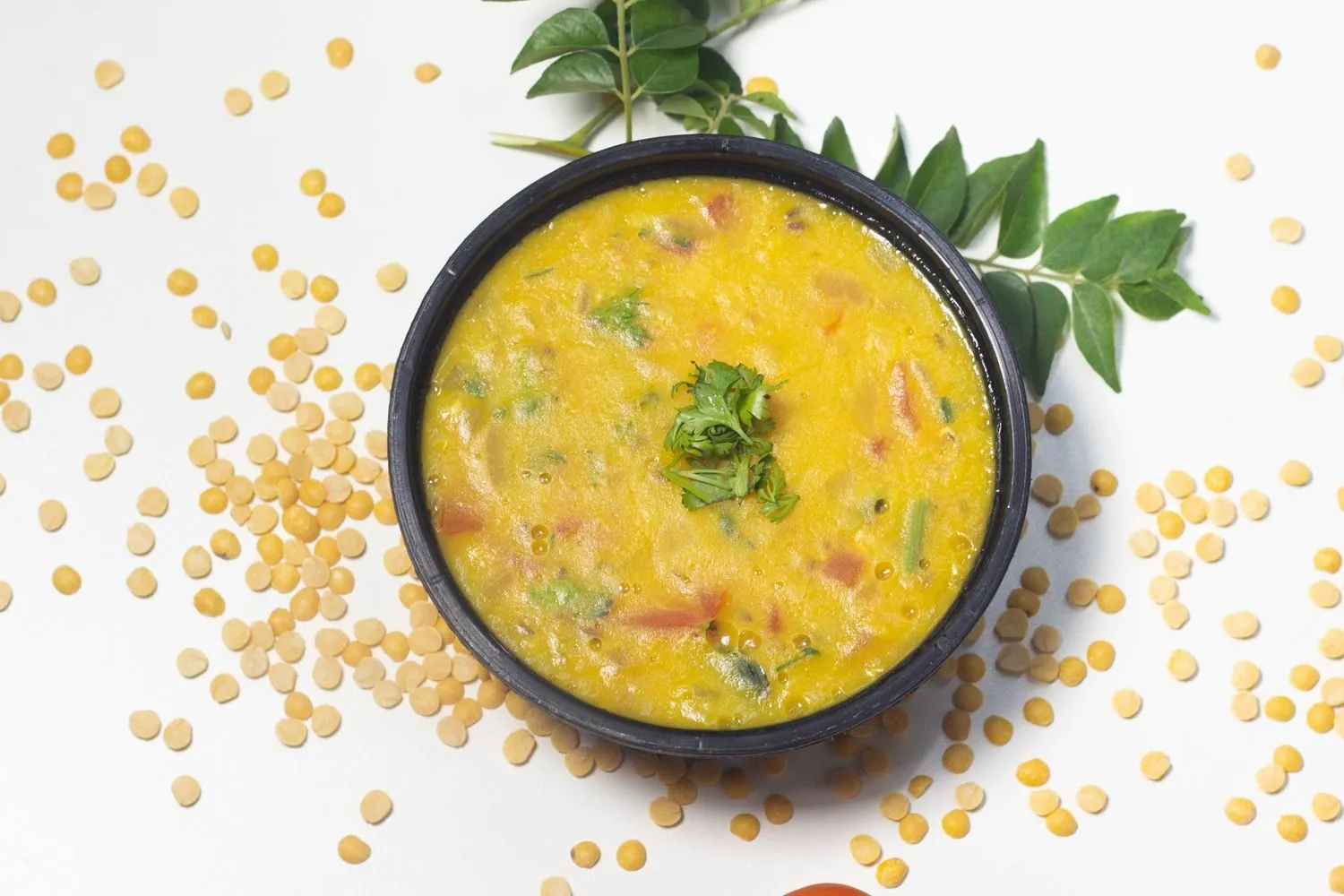
Eating out or on a tiffin: a lunch walkthrough
You do not need to eat “clean” at every meal. You need a few rules applied the same way each day. Work through these in order:
- Build the plate in your head. Half vegetables or salad, a quarter protein (dal, paneer, egg, chicken, fish), a quarter carbohydrate (roti or rice). Restaurant thalis lean heavily on rice, roti and oil, so ask for extra dal or curd to rebalance.
- Add one protein item to the tiffin. Request an extra egg, sprouts or dal two or three days a week instead of switching services.
- Ask for less oil. Tiffin food is usually fine on ingredients but heavy on tempering oil. “Kam tel” is a realistic request.
- Eat the sabzi. It is often the only fibre in an office lunch, and fibre is what keeps you full until the evening snack.
- Carry a backup. A pack of roasted chana, nuts or a fruit stops a delayed meeting from turning into a vending-machine lunch.
None of this means cooking daily. It means making the same order slightly smarter, every time.
How much do alcohol calories really cost a man’s diet?
Alcohol gives about 7 kcal per gram and almost no useful nutrients. A 30 ml whisky is about 70 kcal, a 150 ml glass of wine about 120, and a 330 ml regular beer about 140-150. Three to four drinks add roughly 300-600 kcal, close to a full meal, before any fried snacks arrive.
| Drink or snack | Quantity | Energy (about) |
|---|---|---|
| Whisky, rum or vodka | 30 ml | 65-70 kcal |
| Cola mixer | 200 ml | 80-90 kcal |
| Red or white wine | 150 ml | 120-125 kcal |
| Regular beer | 330 ml | 140-150 kcal |
| Large beer bottle | 650 ml | 280-330 kcal |
| Roasted or fried peanuts | 30 g | about 170 kcal |
Calories are only part of the cost. Regular heavy drinking is known to interfere with how the gut absorbs B vitamins, zinc and iron, and poor sleep after drinking weakens recovery from training. Our zinc nutrition guide covers why that mineral matters for men in particular.
You do not have to quit to improve things. Count drinks as part of the day’s food, cap a drinking night at two standard drinks, eat a protein-containing meal beforehand, alternate with water, and keep several alcohol-free days each week. If you drink daily or find it hard to cut back, speak to a doctor.

Myth check: four beliefs that keep busy men stuck
“Skipping lunch saves calories.” Usually it just moves them. A long daytime gap sets up a hunger spike that makes portion control at dinner close to impossible, whatever your willpower.
“Protein is for gym days.” Muscle repair and daily fullness depend on steady intake across the week, not only on training days.
“Tea and biscuits count as a snack.” They delay hunger without fixing it, and a bigger, less controlled dinner tends to follow. Swap in roasted chana, a fruit with nuts, or a glass of buttermilk.
“High protein means healthy.” A protein shake does not cancel a day with no vegetables or fibre.
Troubleshooting: the 4 PM crash, the 9 PM binge and other common problems
- 4 PM crash. Usually a carb-heavy, low-protein lunch. Add an egg, extra dal or paneer to lunch, and keep a 4 PM snack on hand so tea is not the whole meal.
- 9 PM overeating. Usually the result of an under-fed day. Move calories earlier: a bigger breakfast and a real mid-afternoon snack shrink the dinner problem.
- Sleepy after lunch. Two cups of rice and little protein is the usual cause. Cut rice to one cup, double the vegetables and add curd.
- Too tired to train. Check the gap between lunch and the gym. If it is over four hours, the 5 PM snack is missing.
- Weekend derailment. Keep breakfast and one protein-rich meal on autopilot, and let the rest flex.
If the real goal is losing fat rather than simply eating better, these mistakes are normally the blockers, not a lack of discipline. Our nutrition and fat loss guide covers the calorie maths once this structure is in place, and an online weight loss trainer can keep you accountable week to week.
Nutrition for men over 40, vegetarians and shift workers
Over 40. Muscle mass tends to drop slowly with age unless you eat enough protein and lift weights, so aim for the upper half of the 1.2-1.6 g per kg range if you train. Waist size and family history matter more than the weighing scale, and a yearly check of blood pressure, blood sugar and lipids is sensible. Strength work with a coach, such as 1-1 personal training, protects muscle and joints.
Vegetarians. Paneer, dal, curd, milk, sprouts, chana and soy chunks (30 g dry gives about 15 g protein) cover most needs. Pair dal with rice or chana with roti for a fuller amino acid mix. Vegetarian men are often low in vitamin B12, so ask your doctor about a blood test instead of guessing, and read our vitamin nutrition guide for the basics.
Shift workers. Anchor meals to your wake-up time rather than the clock, keep the heaviest meal away from your sleep window, and stop caffeine about six hours before bed.
How do you build a realistic weekly eating routine?
Use one weekly prep slot and a fixed daily sequence. Boil a dozen eggs, sprout a batch of moong or chana, and portion nuts into 25-30 g bags on Sunday. That covers breakfasts and snacks for most of the week, and the pattern only needs to hold on 5-6 days out of 7.
Weekday lunches stay as they are, with the extra-protein, less-oil tweak. Keep the breakfast, pre-gym snack and dinner sequence fixed whatever kind of day it was, because routines survive bad days better than intentions. Then allow one flexible day with no tracking. The meal planning guide walks through a full week.
Frequently Asked Questions
How much protein does a working man need per day?
Most men who exercise regularly do well on about 1.2-1.6 g of protein per kg of body weight, which is roughly 85-115 g for a 70 kg man. Men who barely exercise need less, around 0.8-1 g per kg. Spread it across three or four meals instead of one large dinner.
Is it okay to skip breakfast if I am not hungry in the morning?
Now and then, yes. As a daily habit it often pushes hunger later and leads to overeating at night. Try a small protein snack first, such as curd with roasted chana, which takes about two minutes, and see whether appetite arrives within an hour.
How many drinks a week are safe for men?
No amount is risk-free, and lower is better for both health and nutrition. A sensible approach is to keep drinking nights to two standard drinks or fewer, space them out, and keep several alcohol-free days each week. If you drink daily, ask your doctor for advice.
Can I build muscle on a vegetarian Indian diet?
Yes. Paneer, dal, curd, milk, sprouts, chana and soy chunks supply enough protein if you plan portions deliberately. It takes more planning than a non-vegetarian diet, usually 25-30 g of protein per meal from two sources, but diet type is not a limit on muscle gain.
What is a realistic first change if my eating habits are a mess?
Start with breakfast. Adding 20-25 g of protein to your first meal is a single, low-effort change that tends to ease the 4 PM crash and evening overeating, without overhauling lunch, dinner and snacks all at once. Once it holds for two weeks, fix the next weak spot.
The bottom line
Good eating for working men is not about an hour of daily meal prep or cutting every indulgence. It is about fixing the two or three points in the day with no structure: a protein-light breakfast, a long unplanned gap before lunch, and an evening where alcohol or a late dinner absorbs the day’s unmet hunger. Get those anchors right on most days and everything else becomes easier.
If you want a plan built around your office hours, gym slot and food preferences instead of a generic template, book an online nutritionist consultation with Fitstrot and turn these principles into a weekly routine.


