
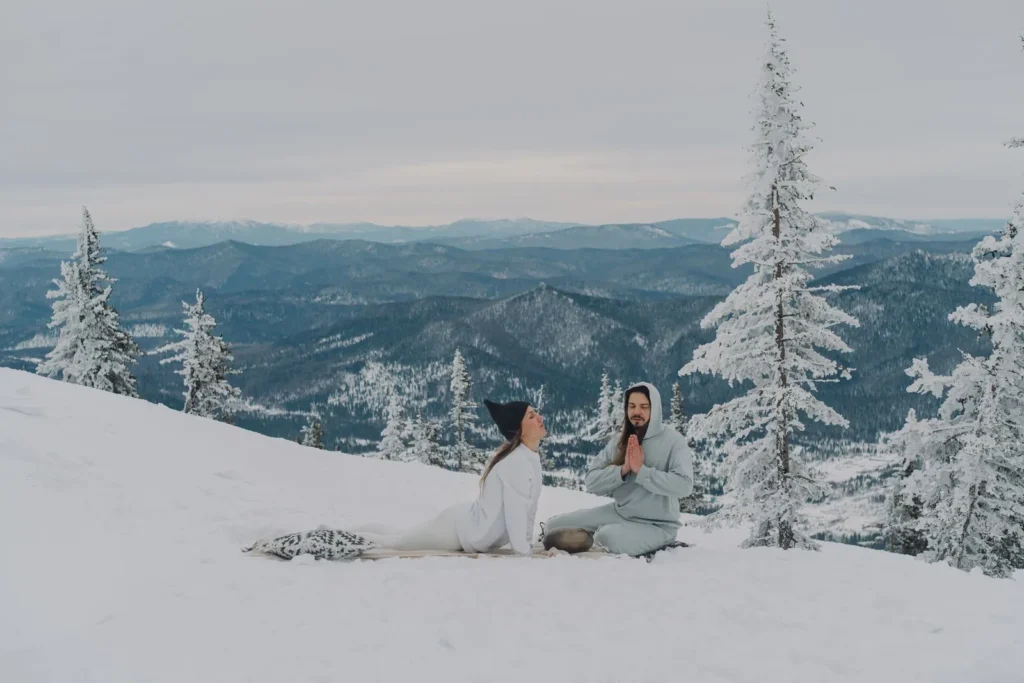
Cold mornings stiffen muscles, shorten your breath and make the mat feel far away. A well-built routine of yoga for winters answers all three: it warms the joints before it stretches them, builds heat through the big leg muscles, and saves long holds and quiet breathing for the end. Below you get a 20-minute morning sequence, alignment cues, easier options, a seven-day plan and a plain list of who should soften or skip the heating practices. Nothing here treats or cures a condition.
Why does yoga feel harder in cold weather?
Cold air makes muscles and connective tissue feel stiffer and less willing to lengthen, and most people also breathe shallowly and lift their shoulders towards their ears when chilly. That is why a forward fold that feels easy in September can feel stuck in January. The fix is a longer, smarter warm-up, not more force.
Winter adds to the problem. In many Indian homes the floors are cold tile or marble, mornings start dark, and a day under a blanket or at a desk means far less movement. The lower back, hamstrings, hips and shoulders complain first. If your back is the trouble spot, our guide to yoga for back pain covers it in more depth, and the wider benefits of yoga become easier to notice when the season is working against you.
What does a 20-minute winter morning sequence look like?
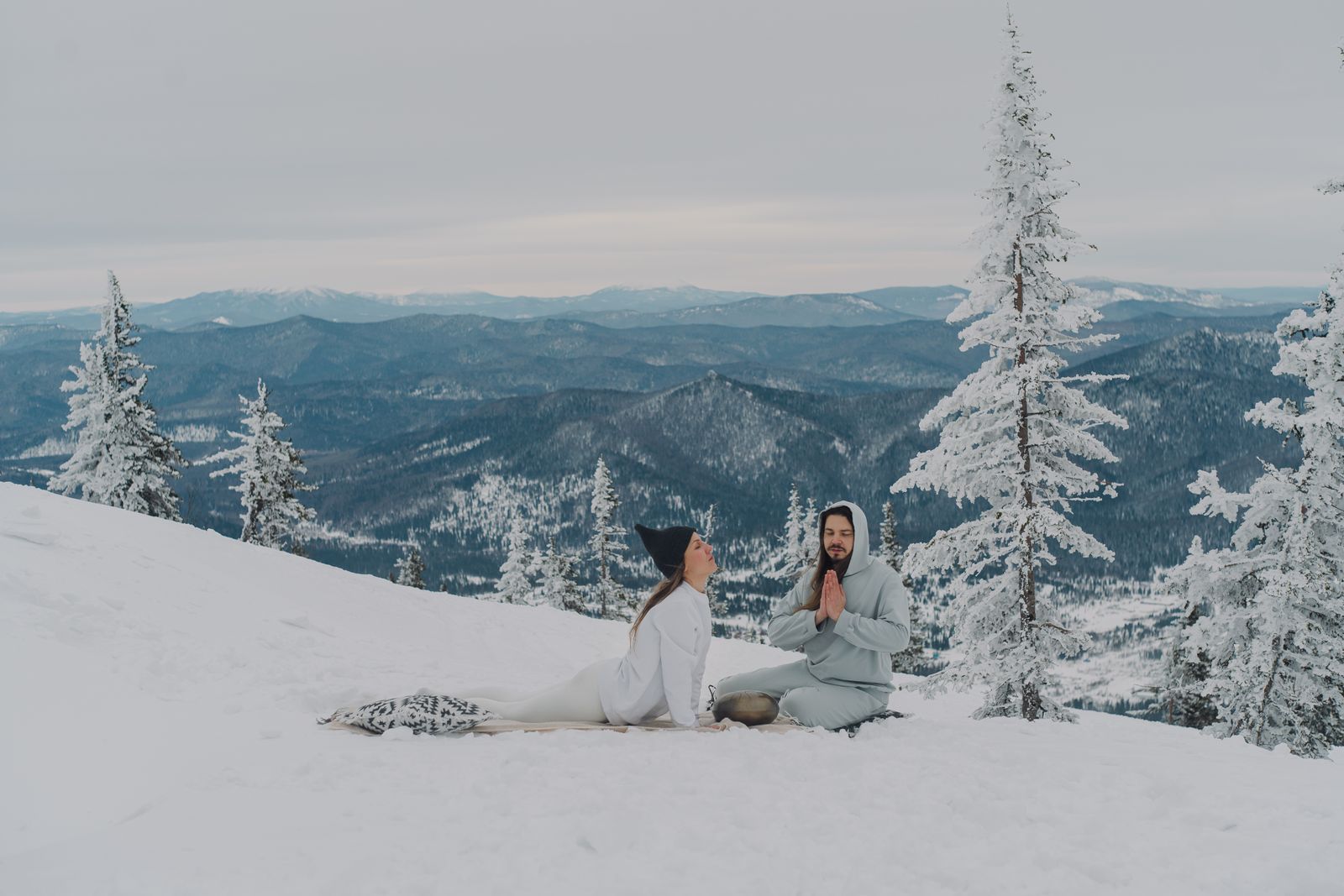
A workable 20-minute winter sequence runs in this order: 3 minutes of joint rotations and Cat-Cow, 5 minutes of slow Sun Salutation A, 5 minutes of Warrior poses, 2 minutes of Chair Pose, 3 minutes of gentle backbends, and 2 minutes of seated breathing and stillness. Heat comes first and depth comes later.
| Minutes | Practice | How long | Alignment cue | Easier option |
|---|---|---|---|---|
| 0-3 | Wrist, ankle, shoulder and hip rotations, then Cat-Cow | 5 slow circles each way, then about 8 breaths of Cat-Cow | Move from the joint, keep the back of the neck long | Do Cat-Cow seated on a chair |
| 3-8 | Sun Salutation A, slow | 3 rounds, one breath per movement | Bend the knees in the forward fold; keep shoulders away from the ears | Step back instead of jumping; keep knees down in the plank stage |
| 8-13 | Warrior I and Warrior II | About 5 breaths per side | Front knee stacked over the ankle, back foot pressing down | Shorten the stance, hands on hips |
| 13-15 | Chair Pose (Utkatasana) | 5 breaths, twice | Weight in the heels, knees tracking over the toes, ribs soft | Sit back less deeply, or practise with your back near a wall |
| 15-18 | Cobra, then Bridge | 3 to 4 breaths each, twice | Lengthen the chest forward and up; keep the neck neutral | Baby Cobra with elbows bent; lower the hips in Bridge |
| 18-20 | Seated breathing and stillness | Natural breath or gentle Nadi Shodhana | Sit tall on a folded blanket so the hips are above the knees | Sit on a chair with feet flat |
Notice what is missing: deep forward folds and big backbends. Keep them out until after the Warrior stage. For ideas on linking poses, the vinyasa yoga guide explains how flowing practice raises heat quickly, while a slower hatha-style class suits very stiff mornings. Our overview of the types of yoga helps you choose.
How do you warm up safely on a cold morning?
Spend three to five minutes on joint rotations and slow spinal movement before any deep stretch, and keep warm layers on until your lower back and legs feel warm. Move into forward folds and backbends only after your breathing has deepened and your muscles feel pliable rather than tight or tugging.
- Warm the room, not just yourself. Close windows, use a sunlit corner, and put the mat on a rug, because cold tile pulls heat from your hands and feet.
- Start with the legs. Standing work and slow Sun Salutations warm you faster than seated stretches on the floor.
- Layer, then peel. Start in socks and a long-sleeved top, remove them once warm, and put a layer back on for the final stillness.
- Treat sharp pain as a stop sign. A mild pull is normal; pinching, stinging or tingling means ease off.
Which poses build the most heat, and how should you align them?
Poses that load the big leg muscles build heat fastest: Chair Pose, Warrior II and slow Sun Salutations, followed by Plank for the core and shoulders. Align the knees over the ankles, keep the shoulders relaxed, and hold only a few breaths at a time. Adjust or skip any pose that causes pain.
| Pose | What it warms | Alignment cue | Modify or avoid if |
|---|---|---|---|
| Chair Pose | Thighs, glutes | Knees over the toes, weight in the heels | Knee pain: sit back only part of the way |
| Warrior II | Legs, hips, shoulders | Front knee over the ankle, torso stacked over the hips | Knee or hip pain: shorten the stance |
| Plank | Core, shoulders, arms | Straight line from head to heels | Wrist or shoulder pain: lower the knees or use forearms |
| Cobra | Back muscles, chest | Elbows bent, hips grounded | Back pain or pregnancy: skip, or ask your teacher for a gentler version |
| Bridge | Glutes, back of the legs | Knees over ankles, head still | Neck pain: lift only slightly, gaze up |
| Seated twist | Spine, abdomen | Sit tall first, then rotate from the upper back | Pregnancy or recent abdominal surgery: avoid closed twists |
Camel Pose is popular in winter classes, but it is a deep backbend, so beginners are better off with Cobra and Bridge until a teacher has checked their form.
Winter yoga myths worth dropping
“You have to sweat for it to count.” You do not. Comfortably warm is the target, and damp clothes in a cold room only leave you shivering.
“Stretch harder to push the stiffness out.” Cold stiffness is a reason to go slower. Forcing a deep fold is how hamstring and lower-back strains happen.
“Heating breaths protect you from colds.” Fast breathing can leave you feeling warm and alert, but it does not prevent or treat an infection.
“You need a heated studio.” Layers, a closed window and a sunny corner are enough for most people. Our yoga at home guide covers the setup. In summer the aim reverses and you release heat instead, as our yoga for summer article explains.
Which breathing practices help in winter, and who should skip them?
Gentle, rhythmic breathing such as Nadi Shodhana and slow belly breathing suits most people. Fast, forceful practices like Kapalabhati and Bhastrika generate warmth but are not suitable with high blood pressure, heart disease, a hernia, epilepsy, pregnancy or recent abdominal surgery. Learn them from a qualified teacher first.
If you are healthy and have been taught the technique, keep forceful rounds short, on an empty stomach, seated tall, and stop at once if you feel dizzy or tingly. Everyone else can simply sit comfortably and breathe in for a count of four and out for four to six, for two to five minutes. Skip any breath-holding if you have heart or blood pressure concerns.
Can winter yoga support immunity and mood?
Regular, moderate yoga may help you sleep better, manage stress and keep moving through winter, and those habits support general wellbeing. It does not prevent colds or flu, and it is not a treatment for seasonal low mood or depression. If low mood lasts more than two weeks or affects daily life, see a doctor.
Sleep, warm balanced meals, hydration and morning light matter just as much. Our article on yoga for immunity explains what a sensible routine can and cannot do.
Food is part of the picture. Traditional Ayurveda links winter with cold, dry qualities and favours warm, freshly cooked meals. That is a traditional framework, not a clinically proven system, but khichdi, dal and soups are practical on cold days, and til-gur laddoo is best kept modest. If you manage diabetes, thyroid or cholesterol issues, an online nutritionist consultation can adapt winter eating to you. The cooler stretch from Navratri to Diwali also disrupts routine, which our piece on yoga during festivals like Diwali and Navratri addresses.
An evening restorative wind-down for long winter nights
Early darkness suits slow, supported poses. Keep socks and a blanket nearby and hold each shape for three to five minutes.
- Supported Child’s Pose: a bolster or two pillows under the chest, knees wide. If your knees object, tuck a folded blanket behind them or pick another pose.
- Reclined Bound Angle: lie back with soles together and a pillow under each knee, so the inner thighs are supported.
- Legs-Up-the-Wall: hips near the wall, legs resting up. Ask your doctor first if you have glaucoma or uncontrolled high blood pressure.

Finish lying flat under a blanket. You can fold this into a wider self-care yoga routine that also covers sleep habits.
Troubleshooting: when winter practice is not working
- Still cold after ten minutes. Add standing poses and an extra Sun Salutation round, and put on a layer. If fingers or toes turn white or blue, or go numb, see a doctor.
- Knees ache in Warrior or Chair. Shorten the stance, reduce the depth and track the knee over the second toe. If pain stays, stop the pose.
- Dizzy after standing or fast breathing. Sit down, breathe normally, drink water and skip forceful breathing for now.
- You cannot get out of bed. Agree on a five-minute minimum and lay out your clothes the night before. Mid-morning sunlight or the evening works too.
Consistency matters more than session length in winter, so a repeatable weekly plan, shown below, takes the daily decision out of it.
Who should modify or skip parts of a winter routine?
- High blood pressure or heart conditions: avoid forceful breathing and breath-holding, and check with your doctor before raising intensity.
- Pregnancy: avoid closed twists, deep backbends and heating breaths, and practise only with a qualified prenatal teacher and your doctor’s approval.
- Arthritis, osteoporosis or old injuries: shorten holds, use props and never force range of motion.
- Asthma or cold-triggered breathing trouble: practise indoors in a warm room with your prescribed reliever close by.
- Hernia, epilepsy or recent surgery: skip forceful breathing and strong abdominal work until your doctor clears you.
See your doctor if you notice chest pain, breathlessness out of proportion to the effort, fainting, or numbness that does not go away. Do not push through these.
A week of winter yoga, day by day
| Day | Session | Minutes | Notes |
|---|---|---|---|
| Monday | The 20-minute morning sequence | 20 | Short holds, smooth breath |
| Tuesday | Slow Sun Salutations plus Chair Pose | 15 | Fourth round only if warm |
| Wednesday | Restorative evening wind-down | 20 to 25 | Blanket, socks, no screens |
| Thursday | Standing flow: Warriors and Triangle | 20 | Shorten stance if knees complain |
| Friday | Gentle backbends and hip openers | 15 | Warm up before each backbend |
| Saturday | Longer mixed class, live or online | 40 to 45 | Good day to learn breathing from a teacher |
| Sunday | Rest, or a slow walk in the sun | 10 to 20 | Light stretches only if you want them |
Move days around to suit your schedule, and skip a session if you are unwell. A missed day is not a failure. For more flows to rotate in, see our yoga sequence guide.
Winter yoga questions, answered
Is it safe to do yoga in cold weather?
Yes, for most healthy people, if you warm up first. Spend three to five minutes on joint rotations and gentle flow before deeper stretches, and stop at sharp pain. With a heart, blood pressure or breathing condition, check with your doctor first.
Do I need a heated room for winter yoga?
No. A closed window, a rug under your mat, warm layers and a sunny corner are enough for most people. A warmer room helps you loosen up sooner, but heavy sweating is not the goal.
Can I do yoga when I have a cold or cough?
With mild symptoms, gentle movement or restorative poses are usually fine if you feel up to it. With fever, body aches or chest congestion, rest first. Avoid forceful breathing while your nose or chest is blocked.
How long should a winter yoga session be?
Fifteen to twenty minutes is enough for most mornings, and ten minutes beats skipping. Add a 40 to 45 minute class once or twice a week if you enjoy it, and always keep the first five minutes for warming up.
Can yoga help with winter weight gain?
Indirectly, by keeping you moving, improving sleep and easing stress-related snacking. But gentle yoga burns modest calories and cannot offset heavy eating alone, so pair it with walking and balanced meals.
Want a teacher to set the pace on cold mornings? Join Fitstrot’s online yoga classes and mention any injuries or conditions up front, so your warm-up and modifications fit your body.


