
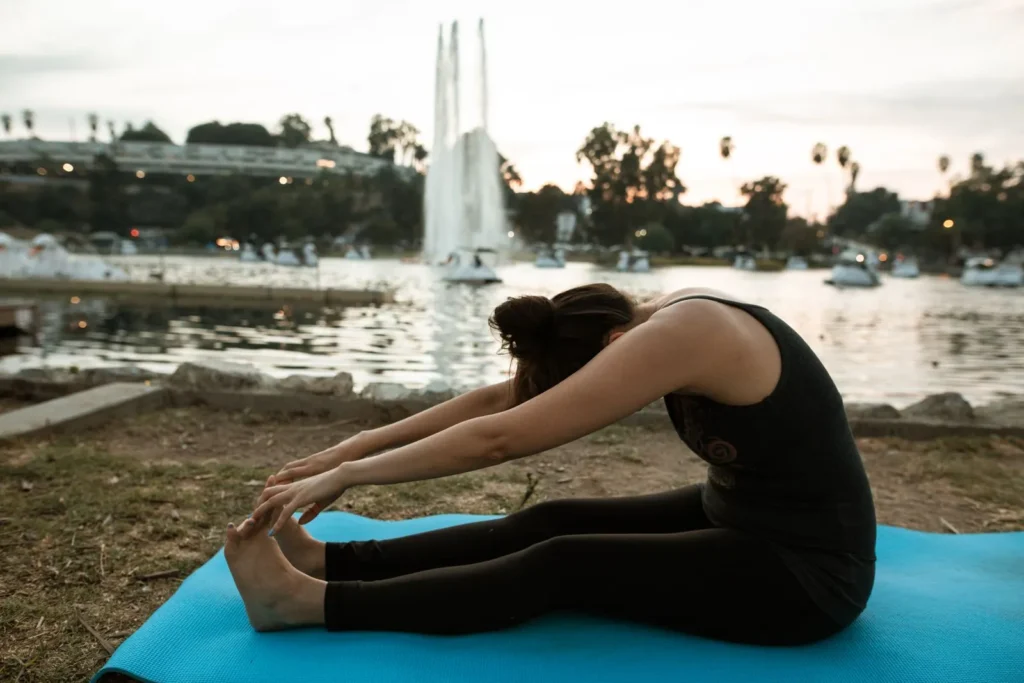
Yoga for summer is not a lighter copy of your winter routine. It is a different brief: practise early or late in the day, keep the pace slower, choose cooling shapes and breathwork, and drink on a plan. In most Indian cities, April to June regularly pushes afternoons past 35°C, and the monsoon adds humidity that makes sweat harder to shed. Below: a time-of-day plan, a cooling sequence, a hydration table and clear rules on who should take more care.
What is the best yoga for summer?
The best yoga for summer is a slower, shorter practice done before 8 AM or after sunset: roughly 25 to 40 minutes of forward folds, gentle twists, hip openers and restorative shapes, finished with 3 to 5 minutes of quiet breathing. Skip heat-building flows at midday. The aim is to stay comfortable and steady, not to sweat the most.
Heat changes how your body handles effort. Heart rate runs a little higher at the same workload, you lose fluid faster, and muscles feel looser than they are, which makes overstretching easy. Traditional Ayurvedic thinking links summer with Pitta, the quality of heat, and favours cooling, calming practice. You do not need the theory to use the lesson: ease off what heats you up.
A continuous vinyasa yoga flow that feels wonderful in January can feel punishing in May. You do not have to drop it. Shorten the flow, slow the transitions, and finish with floor-based poses. The warming style in our guide to yoga for winters is the one to dial back.
Summer yoga timing: a time-of-day plan
Timing matters more in summer than in any other season. Use this table as a starting point and adjust for your city and your own tolerance. Warm up gently at dawn, because the body is stiff after sleep, and skip strong backbends late at night.
| Time window | What suits it | Session length |
|---|---|---|
| Before 7:30 AM | Sun salutations, standing poses, flowing practice | 30-45 minutes |
| 7:30-10 AM | Moderate flow, hatha-style holds | 25-40 minutes |
| 11 AM-4 PM | Only gentle, seated or lying poses, cooling breath | 10-20 minutes |
| 4-6 PM | Light strengthening, standing balance, easy flow | 20-35 minutes |
| After sunset | Forward folds, twists, restorative shapes, winding down | 20-40 minutes |
For outdoor practice, pick grass or shaded stone over sun-baked concrete, which radiates heat into your hands and feet, and avoid direct sun between 11 AM and 4 PM. Apply sunscreen around 20 minutes before you start, and carry more water than you think you need. A cotton mat towel stops a sweaty hand from sliding forward in downward dog. When travel or celebrations crowd the calendar, our note on yoga during festivals shows how to keep a short routine alive.
Myth check: does a drenched mat mean a better practice?
No. Sweat is your body’s cooling system at work, not a score. A very sweaty session mostly tells you the room was hot and that you need to replace fluid and salt. Judge a practice by how steady you feel afterwards.
A second myth is that looser muscles mean you can go deeper. In heat, muscles feel more pliable, but your joints and ligaments are not magically more forgiving, and you feel less resistance warning you to stop. Keep to the range you would use in cooler weather, and stop at a mild stretch.
Heated studio classes deserve a straight word. Rooms set around 35 to 40°C can be hard to tolerate when it is already hot outside, and dizziness, headache and a racing heartbeat are reasons to leave the room and cool down. If you are new to yoga or sensitive to heat, an unheated hatha yoga class is a safer summer default.
A step-by-step cooling sequence you can finish in about 25 minutes
Do this before 8 AM or after sunset in a ventilated room. Move slowly, breathe through the nose and keep your jaw soft. Holds are counted in breaths so you can adapt them to your pace.
| Step | Pose | Hold | Alignment cue | Easier option |
|---|---|---|---|---|
| 1 | Cat-cow (Marjaryasana-Bitilasana) | 8 slow rounds | Wrists under shoulders, knees under hips | Pad the knees; use fists if wrists complain |
| 2 | Standing forward fold (Uttanasana) | 5 breaths | Hinge from the hips, let the head hang | Bend the knees or rest hands on a chair |
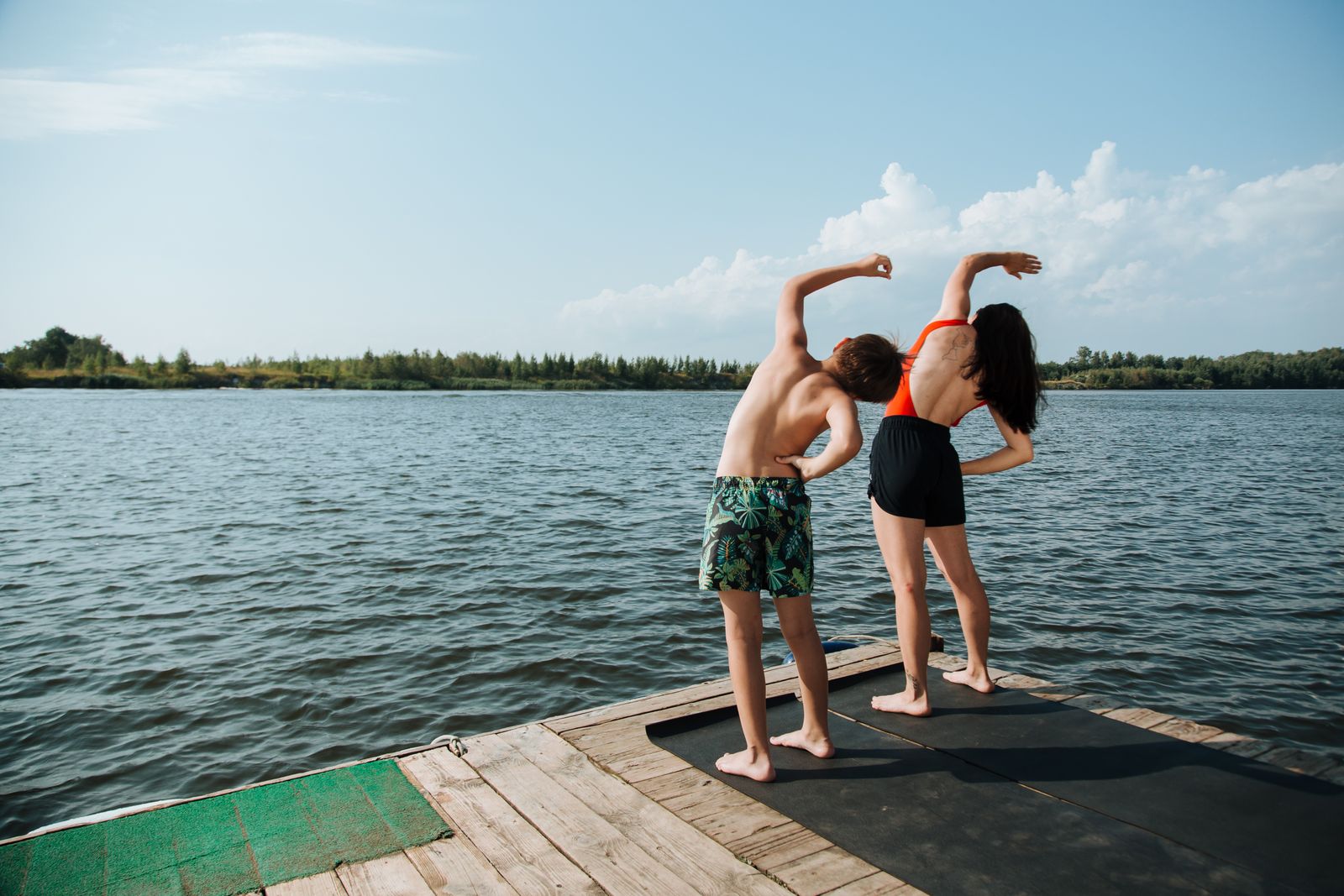
| 3 | Moon salutation (Chandra Namaskar) | 2-3 rounds per side | Wide stance, side bends without leaning forward | Narrow the stance and shorten the side bend |
| 4 | Seated twist (Ardha Matsyendrasana) | 5 breaths per side | Lengthen up first, then rotate | Keep the bottom leg straight; twist a smaller amount |
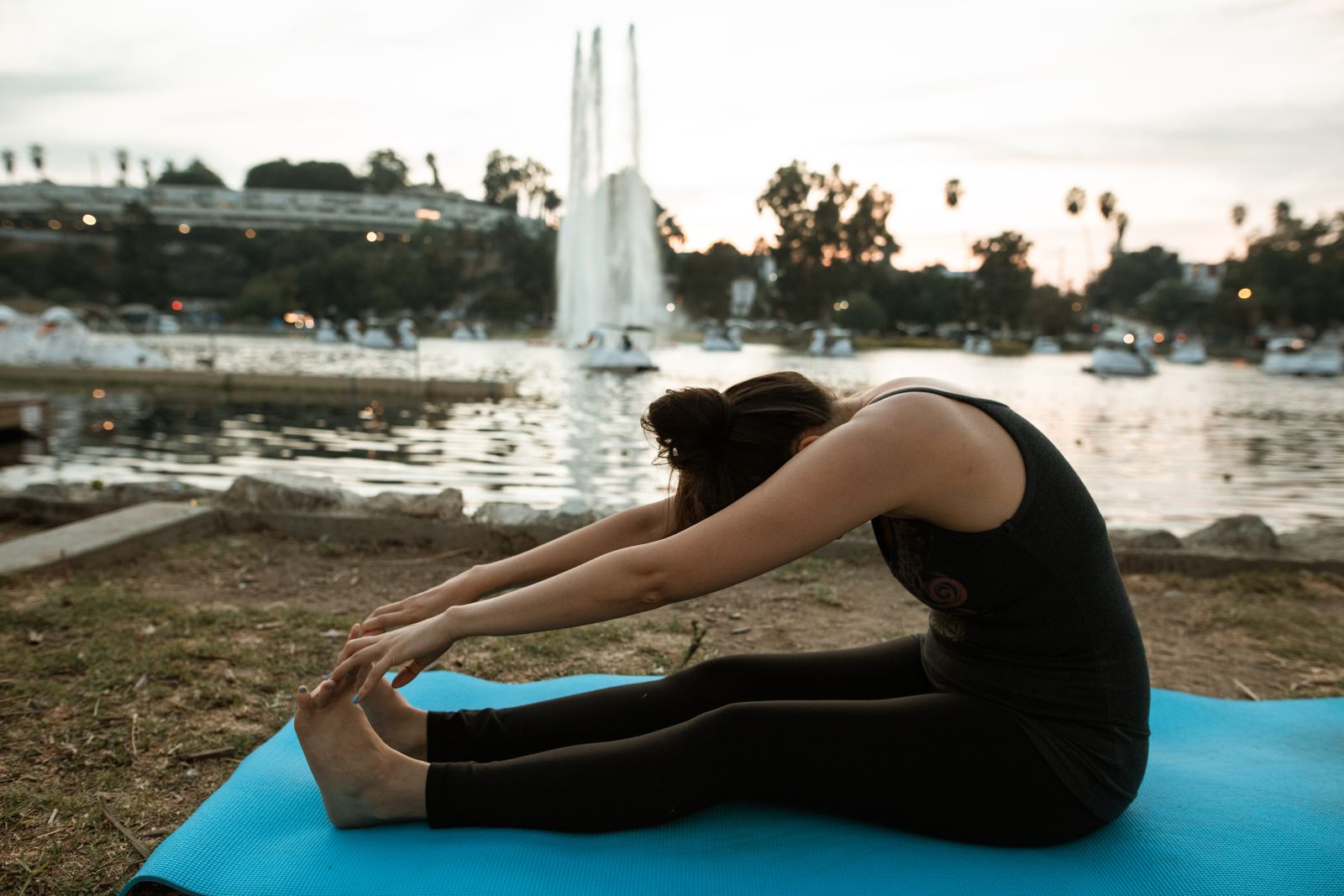
| 5 | Seated forward fold (Paschimottanasana) | 8 breaths | Long spine, fold from the hips | Bend the knees; place a bolster under them |
| 6 | Reclined bound angle (Supta Baddha Konasana) | 2-3 minutes | Let the knees fall open without forcing | Support each knee with a cushion |
| 7 | Legs up the wall (Viparita Karani) | 3-8 minutes | Hips a hand’s width from the wall, chin level | Rest calves on a chair seat instead |
| 8 | Final rest (Savasana) | 3 minutes | Arms slightly away from the body, jaw soft | Place a pillow under the knees |
Who should modify or skip parts of this sequence. If you have glaucoma, uncontrolled high blood pressure, or a doctor has asked you to avoid having your head lower than your heart, skip the standing fold and legs up the wall, or ask your doctor first. If you are pregnant, ask your doctor and a qualified teacher before choosing any of these poses, particularly lying flat on your back for several minutes. Stop any pose that causes sharp pain, tingling, dizziness or chest discomfort.
If you prefer longer, passive holds, restorative yoga and yin yoga suit hot evenings well. In yin especially, summer looseness can tempt you past a comfortable range, so use props and stay well short of your edge.
Does cooling breathwork like Sheetali help, and who should skip it?
Sheetali and Sheetkari are traditional cooling breaths: you inhale through a rolled tongue or through clenched teeth, then exhale slowly through the nose, for about 8 to 10 rounds. Many people find them calming and pleasantly cooling. They do not treat heat illness, and anyone with a cold, cough or breathing condition should skip them or ask a doctor first.
To practise, sit comfortably with a tall spine. For Sheetali, curl the sides of your tongue into a tube if you can, inhale gently through it, close the mouth, and exhale through the nose. If you cannot curl your tongue, use Sheetkari: teeth lightly together, lips apart, inhale through the gaps. Keep the breath smooth, never hold it, and stop if you feel lightheaded.
Avoid mouth-inhaling in dusty or heavily polluted air, and leave these breaths out when you are unwell. Slow alternate-nostril breathing is a gentler alternative. Forceful breaths such as Kapalabhati and Bhastrika are warming, so save them for cooler months, and skip them with any heart, blood pressure or breathing concern.
What should you drink before and after summer yoga?
Start summer yoga reasonably hydrated: roughly 250 to 300 ml of water 30 to 60 minutes before, small sips during, and another 250 to 500 ml afterwards. After a very sweaty session, add a pinch of salt with lemon, or coconut water. Thirst, urine colour and how you feel are better guides than any fixed number.
| Option | When | Roughly how much | Note |
|---|---|---|---|
| Plain water | 30-60 minutes before and through the day | 250-300 ml before; sips during | Room-temperature or cool is easier on the stomach than ice-cold |
| Nimbu pani with a pinch of salt | After a sweaty session | 1 glass (200-250 ml) | Keep sugar low; skip extra salt if you are on a salt-restricted diet |
| Coconut water | After practice | 1 glass (200-250 ml) | Naturally contains potassium and some sodium |
| Chaas (buttermilk) | With or after a meal, not right before practice | 1 glass (about 200 ml) | Light roasted jeera and mint; lactose-sensitive people can skip it |
| Banana or 4-5 soaked almonds | 60-90 minutes before, if you feel faint on an empty stomach | 1 small banana or a few almonds | Keep it light so the stomach is comfortable in folds and twists |
This is general guidance for healthy adults. If you have kidney, heart or blood pressure conditions, take regular medicines, or have been told to limit fluids or salt, follow your doctor’s advice rather than this table. For a plan matched to your health history and food habits, a session with an online nutritionist can set drinking and eating times around your practice.
Troubleshooting: dizziness, slippery mats, afternoon slumps and restless nights
You feel dizzy or get a headache. Stop, sit somewhere cool and shaded, and sip water slowly. If dizziness comes with nausea, confusion, a racing heartbeat, or you stop sweating, treat it as a possible heat illness and get medical help rather than waiting it out.
Your hands slip on the mat. Use a cotton towel over the mat, wipe your palms, and wash the mat regularly. Humid weather can make a grippy mat slick, so shorten holds until you feel secure.
You hit a slump around 3 PM. A vigorous flow adds heat and fatigue. A few minutes of seated alternate-nostril breathing, a short walk in shade or a glass of water usually does more.
Hot nights wreck your sleep. Gentle floor poses before bed, such as reclined bound angle and legs up the wall, can help you unwind. On nights when you cannot settle, a guided yoga nidra session is a calm, no-effort option.
Heat rash or irritated skin. Wear loose, breathable cotton, practise in a ventilated space and rinse with lukewarm water afterwards. Yoga is not a treatment for skin problems; persistent rashes need a doctor.
How often should you practise yoga in summer?
Three to five sessions a week of 20 to 40 minutes suits most healthy adults in summer, with at least one or two fully gentle days. Daily practice is fine if you vary the intensity. Long, vigorous or back-to-back sessions in peak heat are what usually cause trouble, so build rest in rather than pushing through.
A simple week: two moderate flow mornings, one or two cooling evenings, one restorative day and one day off. Our self-care yoga routine shows how to fit that around a busy week without it feeling like a chore.
Adjustments for beginners, older adults, pregnancy and health conditions
Beginners. Start with 15 to 20 minutes in the coolest part of the day: five minutes of easy stretching, ten of simple standing and seated poses, five of rest. Practising at home with a fan or AC on makes this easy, and our guide to yoga at home covers space and props.
Older adults. Use a chair for balance and rise slowly from the floor, because quick position changes can cause lightheadedness in heat.
Pregnancy. Overheating is a concern, so avoid heated rooms and strenuous flows and check with your doctor before starting or changing practice.
Blood pressure, heart, kidney or respiratory conditions, and regular medicines. Some conditions and medicines change how your body handles heat and fluids. Talk to your doctor before taking up new breathwork or inversions, and do not change any medicine on the strength of a yoga routine.
Frequently asked questions about yoga for summer
What is the best yoga pose to cool down in summer?
Legs up the wall (Viparita Karani) is a popular cool-down because it needs no strength and can be held for 3 to 8 minutes. Child’s pose and reclined bound angle are other calming options. If you have glaucoma, uncontrolled high blood pressure or were advised to avoid inversions, ask your doctor first.
Is morning or evening better for yoga in summer?
Early morning, before about 8 AM, is usually best because temperatures are lowest and the air is fresher. After sunset is a good second choice, particularly for restorative practice. Avoid vigorous sessions between 11 AM and 4 PM, and pick whichever slot you can keep up consistently.
Can I do yoga every day in summer?
Yes, if you vary the effort. Alternate moderate sessions of 20 to 40 minutes with gentler or fully restorative days, practise in the cooler hours and hydrate well. Doing the same intense routine daily through peak heat can leave you drained, so listen to how your body feels each morning.
What should I wear for yoga in summer?
Choose loose, breathable cotton or moisture-wicking fabric in light colours. Tight synthetic clothing can trap heat and sweat against the skin and may add to irritation or heat rash. Bring a cotton towel for your mat and wear a cap and sunscreen if you practise outdoors.
When should I stop a summer yoga session?
Stop if you feel dizzy, faint, nauseous, unusually breathless, or have a pounding headache, chest discomfort or confusion. Sit in a cool, shaded spot and sip water slowly. If symptoms do not ease quickly or feel severe, get medical help instead of continuing.
Try it with guidance. Book a session with FitStrot’s online yoga classes, and tell the instructor your usual practice time, how you tolerate heat, and any health conditions so the pacing and poses fit your summer.


