
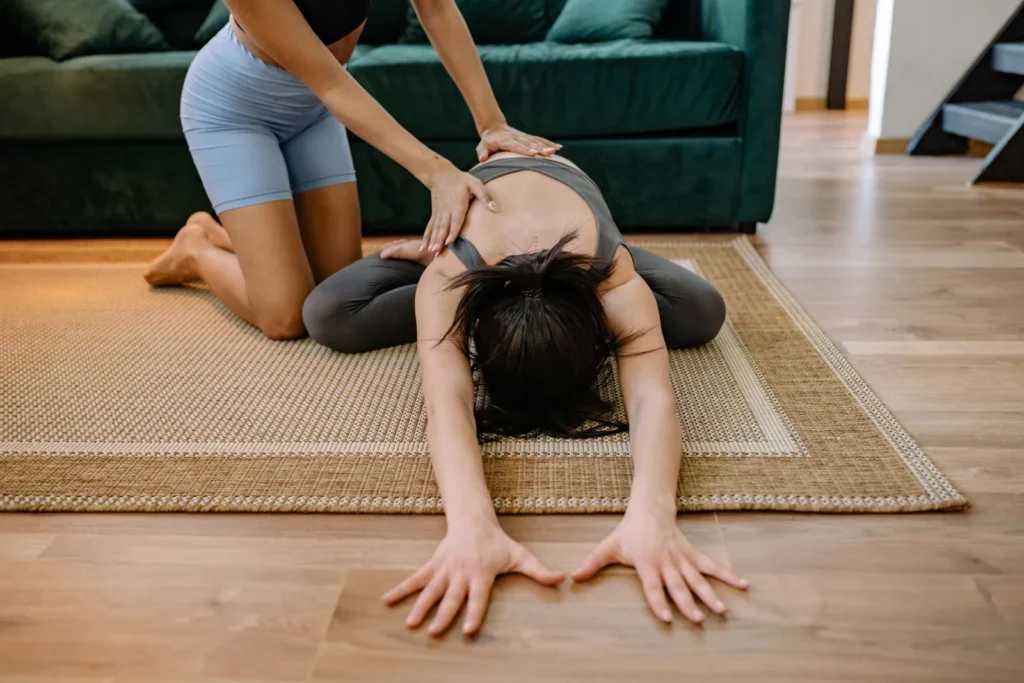
Done gently and with your oncologist’s approval, yoga for cancer patients is a supportive practice: slow movement, steady breathing and proper rest that can make a hard stretch of life feel a little more manageable. It is not a treatment, it does not cure cancer, and it cannot lower the chance of recurrence. This guide covers what gentle practice can realistically help with, which poses and styles suit each stage, who should wait, and when to call your doctor.
See your oncology team before you begin. Your blood counts, surgery sites, bone health, ports, radiation skin and treatment schedule all change what is safe. Ask which movements to avoid, whether any breathing practice is off limits, and which days, such as after infusions, to rest instead. Never skip, delay or replace treatment for any yoga routine, and never change medication because of how you feel after practice.
Can yoga cure cancer?
No. Yoga cannot cure, treat, shrink or prevent cancer, and it cannot stop it coming back. Surgery, chemotherapy, radiation and other treatments prescribed by your oncologist do that work. Yoga is a complementary practice used alongside them, and its value lies in comfort, calm and gentle movement during and after treatment.
That framing matters because the opposite message is everywhere. Forwarded videos in family groups sometimes promise that one breathing routine clears the disease. The real danger is delay: someone trusts the mat and postpones treatment. A good practice sits beside your treatment plan, never in front of it.
Is yoga for cancer patients safe during chemotherapy and radiation?
Gentle, modified yoga is usually considered safe during chemotherapy and radiation, but only after your oncology team has cleared it. Safety depends on your blood counts, surgery sites, bone health, energy that day and any port or irradiated skin. Start with 10 to 15 minutes and stop the moment anything feels wrong.
Specific precautions worth knowing:
- Low blood counts: avoid poses with a fall or bruising risk, and skip crowded studio classes when your infection risk is high. Practising at home or in a small online batch is often easier.
- Radiation sites: keep treated skin away from friction, pressure and tight straps. Skip any pose that rubs or stretches it uncomfortably.
- Ports, lines and incisions: avoid pressing, pulling or leaning on the area. Move only within the range your surgeon has allowed.
- Lymph node removal: avoid heavy weight-bearing through the affected arm or leg, and ask about swelling precautions first.
- Fragile bones: avoid deep twists and forceful folds until your doctor says which movements are fine.
Who should avoid yoga, or wait, for now?
Hold off, or practise only under direct clinical guidance, if you have a fever, unexplained pain, new swelling, breathlessness at rest, dizziness or fresh surgical wounds, or if your doctor has restricted activity. If you have bone metastases or very low blood counts, ask your team exactly which movements are off limits first.
- You have a fever, chills or signs of infection.
- You have new or worsening pain, especially in the bones, back or chest.
- You have sudden swelling in an arm or leg, or a hot, red, tender calf.
- You are breathless at rest, dizzy, faint or unsteady on your feet.
- Your surgical wound is open, leaking or not yet cleared for movement.
What gentle yoga can and cannot help with
This table sets honest expectations. “May help” means some people find relief, not that anyone is guaranteed it.
| Concern | What a gentle practice may offer | What it cannot do | Tell your team if |
|---|---|---|---|
| Fatigue | Short, easy sessions may leave you feeling a little more energised and less stiff | Remove treatment-related tiredness | Tiredness suddenly worsens or you cannot get out of bed |
| Poor sleep | A slow evening wind-down with long exhales may help you settle | Replace sleep advice or medication from your doctor | You sleep very little for several nights |
| Anxiety and low mood | Breath focus and quiet movement can steady a racing mind for a while | Replace counselling, support groups or psychiatric care | Low mood lingers, or you have thoughts of self-harm |
| Tingling or numb hands and feet | Slow seated ankle and wrist movements may feel soothing | Treat nerve damage | Numbness spreads, you drop things or you trip often |
If low mood is a big part of your picture, our page on yoga for depression explains how gentle practice fits alongside professional support.
A gentle 15-minute routine to try once you are cleared
This sequence is deliberately small. Do it on a bed, a firm sofa or a chair, with pillows, a folded dupatta or a bolster for support. Share it with your oncologist or physiotherapist first.
| Step | Time | How to do it | Form cue or when to skip |
|---|---|---|---|
| 1. Settle in | 2 min | Sit supported with one hand on your belly. Breathe naturally and notice the movement. | No counting or holding. Just arrive. |
| 2. Easy breathing | 2 min | Breathe in through the nose for about 4 counts and out gently for about 6. | Stop if you feel light-headed or tight in the chest. |
| 3. Shoulder and neck rolls | 2 min | Roll the shoulders slowly, then turn the head a little side to side. | Skip or shrink after neck, shoulder or chest surgery unless cleared. |
| 4. Seated cat-cow | 2 min | Hands on thighs, gently round and lift the chest with your breath, in a small range. | Keep it pain-free. Related ideas are in yoga for back pain. |
| 5. Shallow seated twist | 1 min per side | Turn only as far as is comfortable, holding the chair back lightly. | Skip after abdominal surgery unless your surgeon agrees. |
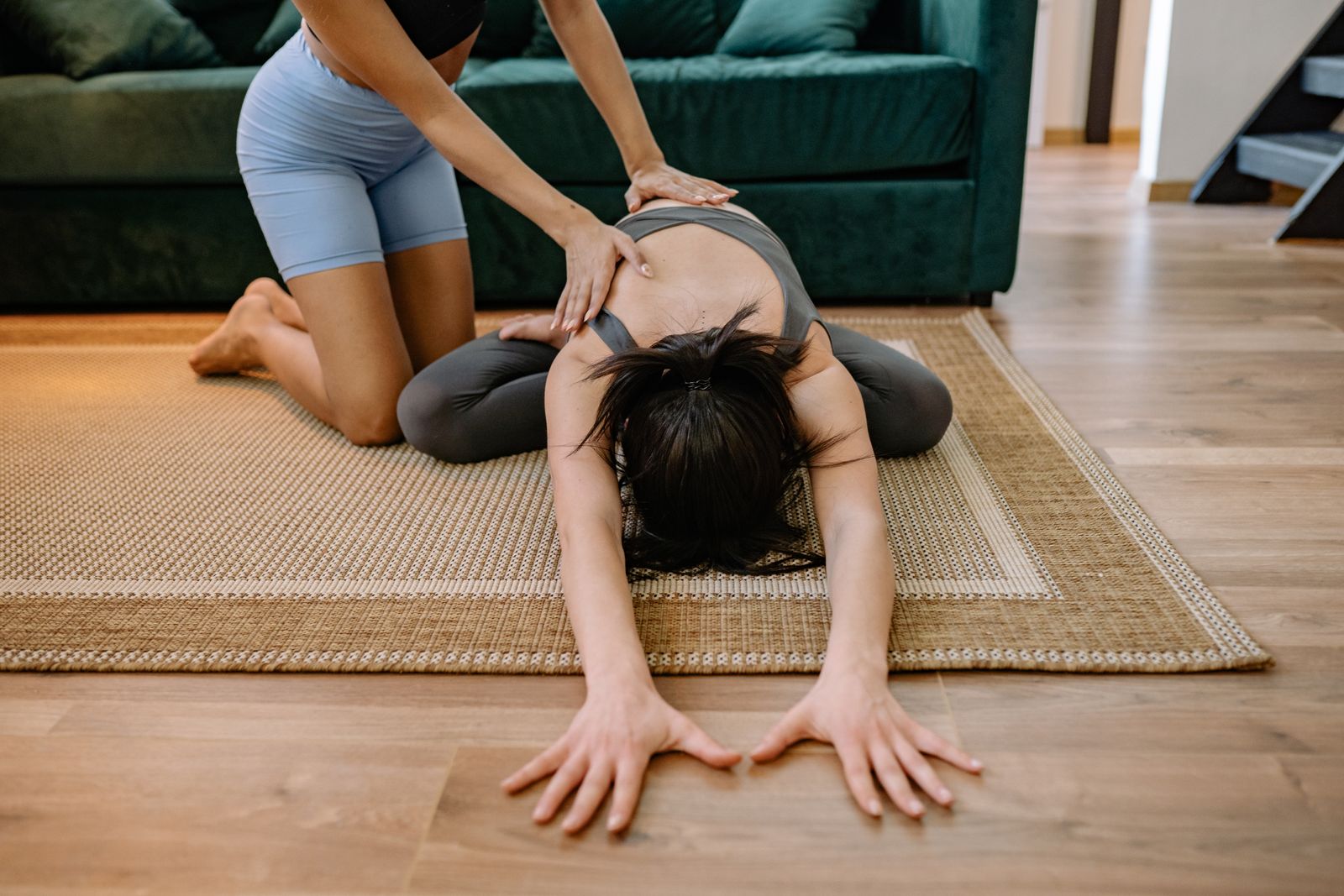
| 6. Supported child’s pose | 2 min | Rest your torso over stacked pillows or a bolster, knees wide, head turned to one side. | Skip with a stoma, port discomfort or abdominal tenderness. |
| 7. Legs on a chair or wall | 3 min | Lie back with calves resting on a chair or against a wall, arms relaxed. | Skip if you have leg swelling or breathlessness lying flat. |
On a low-energy day, do only steps 1 and 2. That still counts, and often it is the most useful part.
Which breathing exercises are safe, and which should you skip?
Slow, natural breathing with a slightly longer exhale is usually the safest choice, for example about 4 counts in and 6 counts out for a few minutes. Skip forceful or breath-holding practices such as kapalabhati, bhastrika and long retention until your doctor approves, as they can cause dizziness and strain.
Soft humming breath (bhramari) is gentle for many people, and simple alternate-nostril breathing with no holding is usually fine. If a technique makes you dizzy, tingly or anxious, drop it and return to easy breathing. The goal is calm, not effort.
Which yoga styles suit which stage?
Chair yoga, restorative yoga and gentle hatha are the styles most often suggested during treatment, because they use slow pacing and props rather than intensity. Heated, fast or power styles are generally avoided until your doctor agrees. Use this as a starting guide and let your care team overrule it.
| Style | During active treatment | After treatment, once cleared | Main caution |
|---|---|---|---|
| Chair yoga | Often a good start | Useful for low-energy days | Choose a stable chair without wheels |
| Restorative | Usually well suited | Good for recovery | Check props for comfort over ports and incisions |
| Gentle hatha | Often suitable if modified | A natural next step | Hold times short, no forcing range |
| Yin | Ask first | May suit some people | Long deep holds can irritate sensitive or irradiated tissue |
| Vinyasa | Generally avoided | Build up slowly over weeks | Pace, fatigue and balance demands |
| Hot or power yoga | Avoid | Only if your doctor agrees | Heat, dehydration and cardiovascular strain |
If you are new to all of this and want the wider picture first, types of yoga explains how the styles differ.
What about yoga for cancer survivors once treatment ends?
Once treatment ends and your doctor agrees, yoga can help you rebuild energy, flexibility and confidence at your own pace. Many survivors begin with 10 to 15 minutes, two or three times a week, and add time slowly over several weeks. Recovery is gradual, and lingering tiredness is common.
Survivorship brings changed body image, stiffness after surgery or radiation, and worry before follow-up scans. Breathing and quiet movement can help some people through those waiting days, alongside counselling. As stamina returns, you can ease into yoga for strength and yoga for stamina, adding load only when each step feels easy. For disturbed sleep, yoga for sleep is a low-effort place to start.
Weight often changes during and after treatment, up or down. Please do not chase weight loss during treatment; unplanned loss needs a conversation with your team and a registered dietitian, not a crash plan. Once you are well and cleared, yoga for weight loss covers gradual habits. Some treatments also affect hormones, thyroid function or sexual health. Our general pages on yoga for thyroid, yoga for PCOS and yoga for erectile dysfunction are written for the general reader, so treat them as background and check with your oncologist before borrowing anything.
Troubleshooting: when yoga does not feel right
Most problems are fixed by doing less, not by pushing through.
- Dizzy when you stand: come up slowly in stages and sit for a minute before standing fully.
- More tired the next day: the session was too long. Halve it next time.
- Pain during a pose: ease out immediately. Pulling is fine only if it is mild and fades; sharp, deep or bone pain is not.
- Emotions come up: this is common. Stop if it is too much and tell your counsellor or someone you trust.
Myth check: what viral yoga and cancer claims get wrong
- “This pranayama kills cancer cells.” Breathing can calm you; it does not destroy tumours or replace treatment.
- “If you do yoga you can skip chemo or radiation.” This is the most harmful myth. Never delay or drop treatment for any practice.
- “Yoga stops recurrence.” It does not. Regular movement and stress care support overall wellbeing, and follow-up with your doctor remains essential.
See your doctor or oncology team promptly if…
Stop practising and contact your team (or seek emergency care) if you notice: chest pain or pressure, severe breathlessness, fainting, a fever, sudden swelling in a limb, new or worsening bone pain, a wound that opens or oozes, bleeding or heavy bruising, or any symptom that frightens you. Do not wait to see whether it passes. Mention any yoga you do at your next appointment.
How should you start, and how often?
Get clearance first, then begin with 10 to 15 minutes, two or three times a week, on days you feel reasonably well. Increase slowly, by a few minutes at a time, only if you recover well the next day. Rest days are part of the plan, not a failure.
- Talk to your team. Ask about restrictions and take a note of the answers.
- Pick a teacher carefully. Ask any instructor, including online ones, about experience with people in cancer care, and tell them your diagnosis, surgery and limits before the first session.
- Follow today’s energy. The same routine may feel easy on Monday and impossible on Thursday. Adjust without guilt.
Questions people ask about yoga for cancer patients
Can yoga cure cancer or stop it coming back?
No. Yoga cannot cure cancer or prevent recurrence, and it should never replace surgery, chemotherapy, radiation or any treatment your oncologist prescribes. It is a complementary practice that may ease stress, stiffness and tiredness, alongside regular medical follow-up and honest conversations with your care team.
Is yoga safe during chemotherapy?
Gentle, modified yoga is usually considered safe during chemotherapy when your oncology team approves it. Precautions depend on blood counts, ports and energy levels. Avoid crowded classes and heated rooms, keep sessions to about 10 to 15 minutes at first, and stop if you feel unwell.
What type of yoga is best for cancer patients?
Chair yoga, restorative yoga and gentle hatha are the styles most often suggested, because they use slow pacing and props instead of intensity. Vigorous, heated or fast-flowing styles are generally avoided during active treatment because of the strain on a body already working hard.
Can cancer patients do yoga every day?
Some can, if energy allows and their team agrees, with short sessions of 10 to 15 minutes focused on easy breathing and restful poses. Many people do better with two or three sessions a week plus rest days. Report any new symptoms to your doctor.
Can I do yoga after cancer surgery?
Often yes, but only once your surgeon clears you, and usually starting with breathing and very small movements. Avoid stretching or loading the surgical area until you are told it is safe. Healing time varies by operation, so follow your surgeon’s advice instead of a general timeline.
Take the next step, gently
If your oncologist has given you the go-ahead, book a trial session with Fitstrot’s online yoga classes, share your diagnosis and limits with the instructor beforehand, and ask for chair or restorative options to begin with.


