

If you are looking for yoga for pcos, here is the honest version: gentle, regular practice can lower stress, improve sleep and mood, and make it easier to keep up the diet and activity changes that actually move PCOS symptoms. It cannot cure polycystic ovary syndrome, dissolve cysts, or replace metformin, hormonal pills or your gynaecologist’s plan. Below you will find the poses worth doing, a 25-minute home routine, a four-week starter plan, what to avoid, and when to see a doctor first.
Does yoga help with PCOS?
Yoga can help with the parts of PCOS that stress, poor sleep and low mood make worse, and it builds a regular movement habit, but it does not cure the condition. Expect small, gradual gains over roughly 8 to 12 weeks of steady practice, alongside medical care, sensible eating and other exercise.
PCOS is driven mainly by hormones and insulin resistance, with genetics playing a big part. Long-running stress keeps cortisol high, disturbs sleep and can make blood sugar harder to manage, which can make irregular periods, cravings and fatigue feel worse. Slow breathing and gentle movement shift the body towards “rest and digest”, which is where yoga earns its place. The same logic is explained in our guide to yoga for hormonal imbalance.
Research on yoga in PCOS is still small and early. Some short trials report better mood, lower stress and more regular cycles, but programmes, sample sizes and results differ a lot, so treat yoga as a supporting habit, not a treatment. Its most dependable benefits are calmer evenings, better sleep and an easier routine.
Myth check: what yoga cannot do for PCOS
- Myth: a pose can dissolve ovarian cysts. The “cysts” in PCOS are small, unreleased follicles, and no posture removes them.
- Myth: yoga lets you stop your medicines. Never stop or change metformin, hormonal pills or any other prescription because yoga feels like it is working. That decision belongs to your doctor.
- Myth: harder yoga works faster. Heated rooms and punishing flows can leave you drained and wired instead of calm.
- Myth: PCOD and PCOS need different yoga. In India the terms are used interchangeably, and the practice below suits both.
Which yoga poses are best for PCOS?
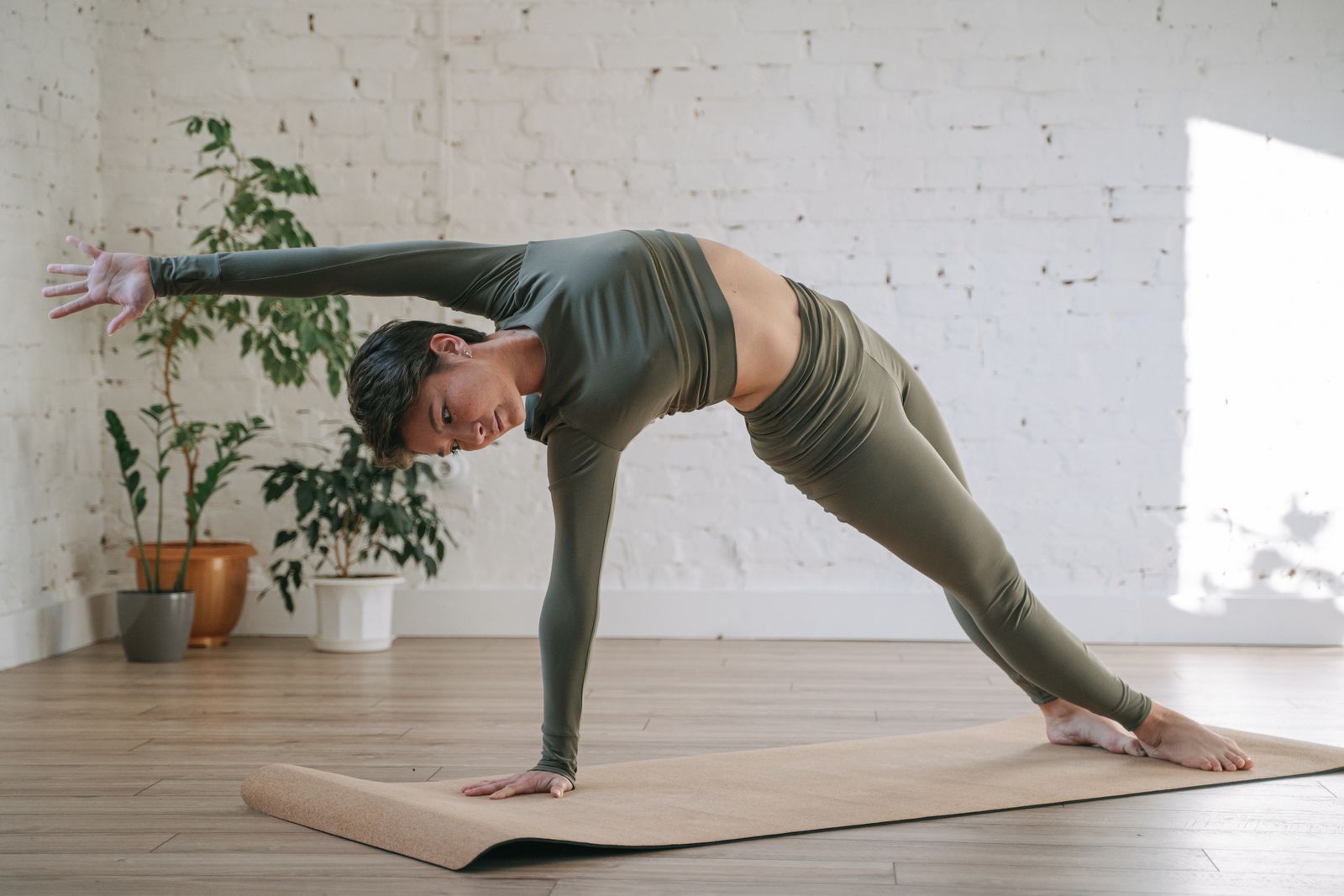
The best yoga poses for PCOS are low-strain ones you can hold calmly: butterfly, garland squat, cobra, bridge, wind-relieving pose, legs up the wall and Shavasana. Hold each for 30 seconds to 2 minutes, breathe slowly, and stop at a mild stretch. They loosen the hips and calm the nervous system; they do not act on the ovaries directly.
These yoga asanas for PCOS are chosen for calm and consistency, not difficulty.
| Pose | Hold | Form cue | Modify or skip if |
|---|---|---|---|
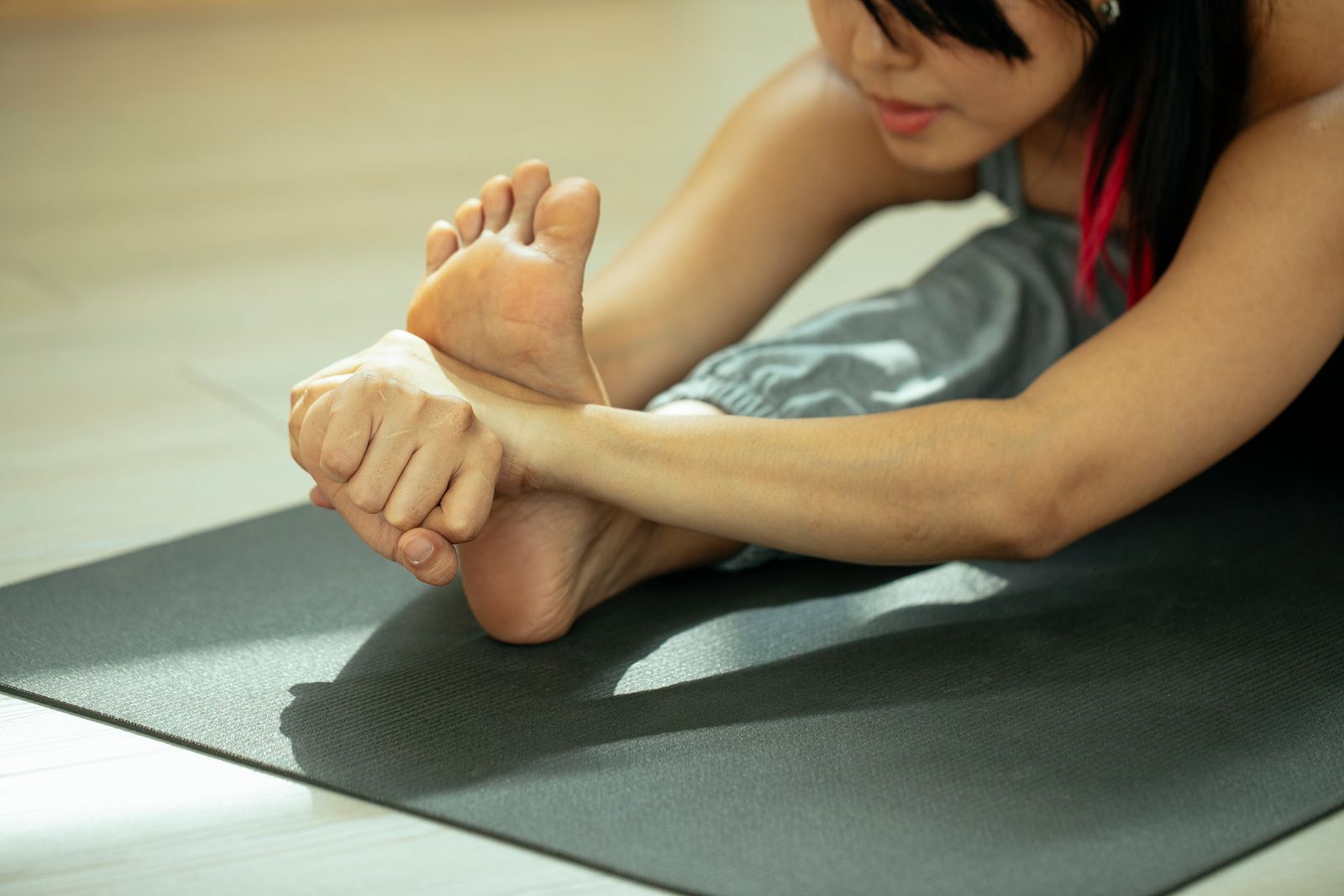
| Baddha Konasana (butterfly) | 1 to 2 min | Sit tall on a folded blanket, soles together, knees relaxed; fold forward only from the hips | Knee or groin pain; sit higher or support the knees with cushions |
| Malasana (garland squat) | 30 to 60 sec, twice | Feet a little wider than hips, heels down or on a rolled mat, chest lifted | Knee pain or pregnancy; sit on a block or low stool |
| Bhujangasana (cobra) | 3 rounds of 15 to 20 sec | Elbows close to the body, shoulders away from the ears, low back long | Back pain or sore wrists; stay lower, on the forearms |
| Setu Bandhasana (bridge) | 3 rounds of 20 to 30 sec | Feet hip-width, press through the heels, keep knees pointing forward | Neck pain; keep the head still and do not turn it |
| Pawanmuktasana (wind-relieving) | 30 sec each side | Hug one knee at a time, breathe into the belly, no pulling on the neck | Recent abdominal surgery or severe bloating pain |
| Viparita Karani (legs up the wall) | 3 to 5 min | Hips a hand-width from the wall, arms relaxed, a folded towel under the pelvis if comfortable | Heavy periods, high blood pressure or glaucoma; ask your doctor first |
| Shavasana (relaxation) | 4 to 5 min | Legs hip-width, palms up, jaw soft, breathe naturally | Rarely a problem; use a pillow under the knees if the low back aches |
Hip openers like butterfly and garland also feature in our guide on yoga for erectile dysfunction.
A 25-minute PCOS yoga at home routine, step by step
You need a mat, a folded blanket and a wall. Practise on an empty stomach, or at least 2 to 3 hours after a full Indian meal. Pick a repeatable time, such as before dinner or bed, and aim for 5 or 6 days a week.
- Settle (3 minutes). Sit cross-legged, one hand on the belly. Breathe in for a count of 4 and out for a count of 6, so the exhale is longer.
- Cat-cow (2 minutes). On hands and knees, move slowly with the breath, one breath per movement.
- Butterfly (3 minutes). Hold for 1 minute, rest, then fold forward gently for another minute.
- Garland squat (2 minutes). Two holds of about 45 seconds, standing up slowly between them.
- Cobra (2 minutes). Three rounds of about 15 seconds, resting on your belly between rounds.
- Bridge (3 minutes). Three rounds of about 25 seconds, lowering slowly one vertebra at a time.
- Wind-relieving pose (2 minutes). About 30 seconds on each side, twice through.
- Legs up the wall (4 minutes). Breathe slowly.
- Shavasana (4 to 5 minutes). Let the body go heavy and stop trying to control the breath.
That adds up to about 25 minutes. If time is short, keep steps 1, 3, 8 and 9 for a 12-minute version.
Breathing for PCOS: what helps and what to avoid
Pranayama for PCOS should calm you, not stimulate you. Bhramari (humming bee breath) for 5 to 10 rounds works well before bed. Anulom Vilom (alternate nostril breathing) for about 5 minutes is gentle if you keep the breath smooth and skip any breath-holding. A long, slow exhale is a safe default.
Be cautious with Kapalabhati and other forceful or breath-holding techniques. Skip them during periods and pregnancy, and ask a doctor first if you have high blood pressure, acidity, a hernia or panic attacks. If breathing practice makes you dizzy or anxious, stop.
Your first four weeks of yoga for PCOS
This plan raises the time gently so practice stays easy. If you are new to the practice, our guides on the benefits of yoga and types of yoga help you understand the options.
| Week | Minutes a day | Days a week | What to do | Check-in |
|---|---|---|---|---|
| 1 | 8 to 10 | 5 | Settle breathing, cat-cow, butterfly, Shavasana | Can you finish without strain? Note your sleep. |
| 2 | 12 to 15 | 5 | Add garland squat and legs up the wall | Note mood in the evening |
| 3 | 18 to 20 | 5 to 6 | Add cobra, bridge and wind-relieving pose | Check for back or neck strain |
| 4 | 25 | 5 to 6 | Full routine, plus 5 minutes of Bhramari | Write down period dates and energy levels |
Track your period start dates in a diary; cycle changes show up over months, and the record helps your doctor.
Choosing a style: weight gain, lean PCOS, high stress or painful periods
Match the intensity to how your body responds, not to what looks impressive.
| Style | Intensity | Best for | Watch out |
|---|---|---|---|
| Restorative or yin | Very low | High stress, poor sleep, painful periods | Burns few calories |
| Hatha | Low | Beginners, building a daily habit | Pick slow classes with clear instructions |
| Gentle vinyasa | Moderate | Weight gain with stable energy | Keep the pace smooth, not rushed |
| Power yoga | Moderate to high | Active people with well-managed symptoms | Limit to 2 or 3 days; stop if you feel wired or wiped out |
| Hot yoga | High | Rarely the first choice | Heat can drain you and cause dizziness; discuss with your doctor first |
If your PCOS comes with weight gain: yoga helps most by making an active routine easier to sustain. A 30-minute gentle session burns only roughly 100 to 150 kcal for a 60 kg adult, and brisk vinyasa or power yoga perhaps 150 to 250, so it will not create a calorie deficit alone. Pair it with brisk walking, about 150 minutes a week, and two days of strength training. Losing even 5 to 10 percent of body weight can help cycles in people who carry extra weight, but that is a goal to discuss with your doctor, not a promise. Our guide to yoga for weight loss covers the calorie side in detail, and a registered dietitian can build the eating plan.
If you are lean with PCOS: skip punishing flows. Too much exercise on too little food can itself disturb periods, so eat enough.
If stress or mood is the main problem: lean on the slow, long-exhale work. Low mood and anxiety are common with PCOS; our guides to yoga for anxiety and yoga for depression go deeper. Yoga is not a substitute for therapy if your mood is persistently low.
If your periods are painful or heavy: favour restorative poses and avoid inversions during your period.
What to avoid or modify
- Inversions during your period. Headstand and shoulder stand are traditionally avoided while bleeding. Legs up the wall is a gentler alternative for most people, but skip it if you bleed heavily.
- Heated rooms and aggressive flows when exhausted or sleeping badly.
- Deep twists and backbends if you have acute pelvic pain, a diagnosed ovarian cyst complication or endometriosis, unless your doctor agrees.
- Strong inversions and intense backbends if your blood pressure is high. Our guide to yoga for high blood pressure lists the usual modifications.
Troubleshooting: when yoga for PCOS does not seem to be working
- No change in periods after 4 weeks. That is normal. Cycle changes, if they come, usually take 8 to 12 weeks or longer, and often need medical treatment alongside. Keep tracking dates.
- You feel tired or wired after practice. The session is probably too intense or too long. Cut it to 15 minutes, drop forceful breathing and extend Shavasana.
- Hip, knee or lower back discomfort. Sit on a folded blanket, put cushions under your knees and shorten the holds. Pain means ease off.
- You keep skipping days. Lower the bar to 10 minutes and fix the time and place. Habit comes before progress.
When to see a doctor or dietitian first
Check with your doctor, gynaecologist or a registered dietitian before starting, or promptly if you notice any of the following:
- No period for 3 months, or cycles that are repeatedly shorter than 21 days or longer than 35 days.
- Very heavy bleeding, such as soaking through a pad every hour for several hours, or severe pelvic pain.
- Rapid weight change, or signs of high blood sugar such as unusual thirst and frequent urination.
- Pregnancy, fertility treatment or trying to conceive, since poses and breathing may need changes.
- Rapid hair thinning, severe acne or worsening unusual hair growth.
Doctors often check thyroid function as part of the PCOS workup. If thyroid is a concern, read our guide on yoga for thyroid alongside your test results. Do not stop or change any medicine because of yoga, and tell your doctor about your routine.
Frequently asked questions about yoga for PCOS
Can yoga cure PCOS?
No. PCOS is a long-term hormonal and metabolic condition, and yoga cannot cure it. A steady practice can support stress control, sleep, mood and routine, and may help cycle regularity when combined with medical care, balanced eating and other exercise. Treat it as a supporting habit, not a replacement for treatment.
Which yoga pose is best for PCOS?
There is no single best pose. Baddha Konasana (butterfly) is a common first choice because it is gentle, easy to hold for 1 to 2 minutes and opens the hips. A short sequence with Shavasana and slow breathing matters more than any one posture.
How long does yoga take to work for PCOS?
You may notice better sleep and calmer evenings within 2 to 4 weeks of practising 5 days a week. Changes in cycle regularity, if they happen, usually take 8 to 12 weeks or longer, and may depend on treatment and diet. Track period dates, and speak to your doctor if nothing changes.
Can yoga help irregular periods in PCOS?
Yoga may help by lowering stress and supporting sleep, both of which affect cycles, but it is not guaranteed. Irregular periods in PCOS usually have hormonal and insulin causes that need medical assessment. Practise calming poses, keep a period diary, and see a doctor if you miss 3 periods in a row.
Is yoga for PCOD different from yoga for PCOS?
The yoga practice is the same. PCOD and PCOS are often used interchangeably in India, and both respond to gentle, regular movement, slow breathing and stress management. What differs is the medical plan, so follow your doctor’s advice on diagnosis, treatment and any restrictions.
Next step: start with a beginner session in Fitstrot’s online yoga classes, tell the trainer you have PCOS, and ask for gentle, hip-opening and restorative sequences you can repeat at home 5 days a week.


