
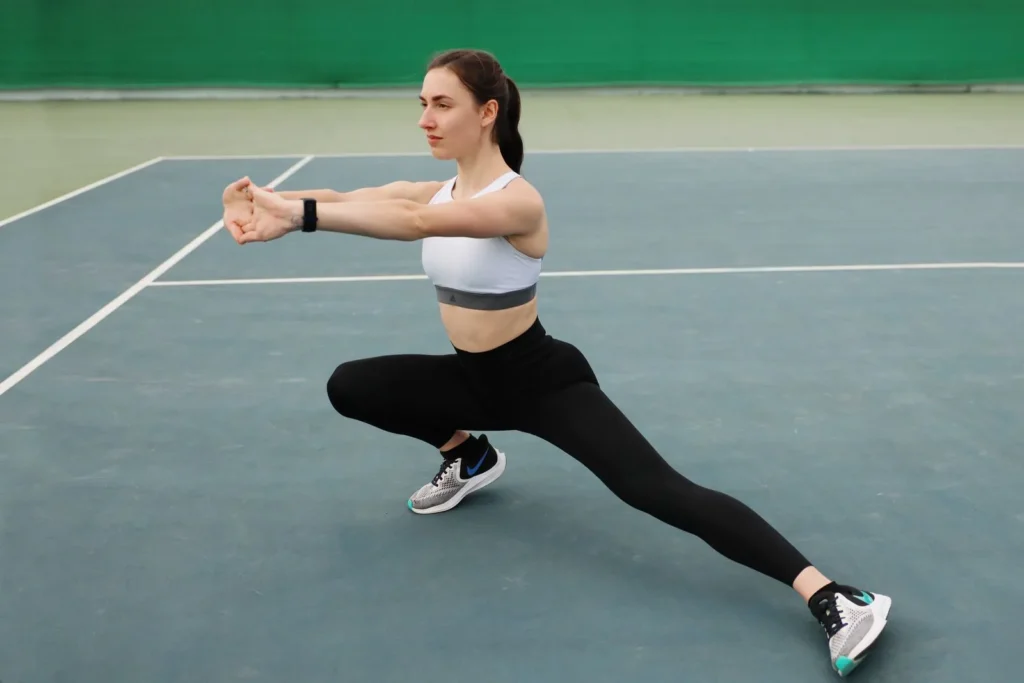
A good zumba warm up and cool down takes about 8 to 10 minutes at each end of class. The warm-up raises your heart rate and loosens your joints with easy marching, step-touches and circles. The cool-down slows the music, brings your pulse down and finishes with 20 to 30 second stretch holds for calves, thighs, hips and shoulders.
Below you get both routines as timed tables, with a cue for every move, plus the mistakes that cause most post-class soreness. Yash Pathak, Fitstrot’s lead Zumba trainer (ZIN Licensed, ACE Certified, Strong Nation Certified), teaches online classes where these two phases are part of the session, not optional extras.
How long should a Zumba warm-up and cool-down be?
A Zumba warm-up should last about 5 to 10 minutes, and the cool-down should last a similar 5 to 10 minutes. In a short 30-minute session you can trim each to 3 to 5 minutes. Cutting them to zero is the mistake, because the first and last minutes are when your body is least forgiving.
Here is a simple way to plan it, based on the class you are doing.
- 30-minute session: 3 to 5 minutes warm-up, 3 to 5 minutes cool-down, about 20 minutes of dancing.
- 45-minute session: 5 to 7 minutes each end, about 31 to 35 minutes of dancing.
- 60-minute session: 8 to 10 minutes each end, about 40 to 44 minutes of dancing.
If you are doing the compact format, our 30-minute Zumba workout shows how the shorter phases fit around the main routine.
The 9-minute warm-up before Zumba, move by move
A Zumba warm-up works best as a ramp. Start with big, slow, low-impact movement, then add arm reach, hip movement and a half-speed version of the rhythms you are about to dance. Keep the choreography simple. The aim is warm muscles and a steady breath, not sweat.
| Move | Duration | Cue |
|---|---|---|
| March in place with natural arm swing | 90 seconds | Tall spine, soft knees, land through the whole foot |
| Step-touch with arm reach | 90 seconds | Reach arms forward and slightly up, keep the movement small |
| Shoulder rolls and arm circles | 60 seconds | Roll backward first, then forward, ribcage stays quiet |
| Hip circles and side-to-side sway | 60 seconds | Knees unlocked, circle slowly, change direction halfway |
| Knee lifts and heel digs, alternating | 90 seconds | Lift only to a comfortable height, no bouncing |
| Ankle rolls and bodyweight half squats | 60 seconds | Knees track over the toes, sit hips back as if onto a chair |
| Half-speed salsa basic or merengue march | 90 seconds | Smaller steps, lighter landings, find the beat |
The total is about 9 minutes. By the last row you should feel warm, breathe a little faster and still be able to hold a conversation. If you are already breathless, you started too fast, so slow the first two rows down next time.
Why these zumba warm up exercises and not toe-touches?
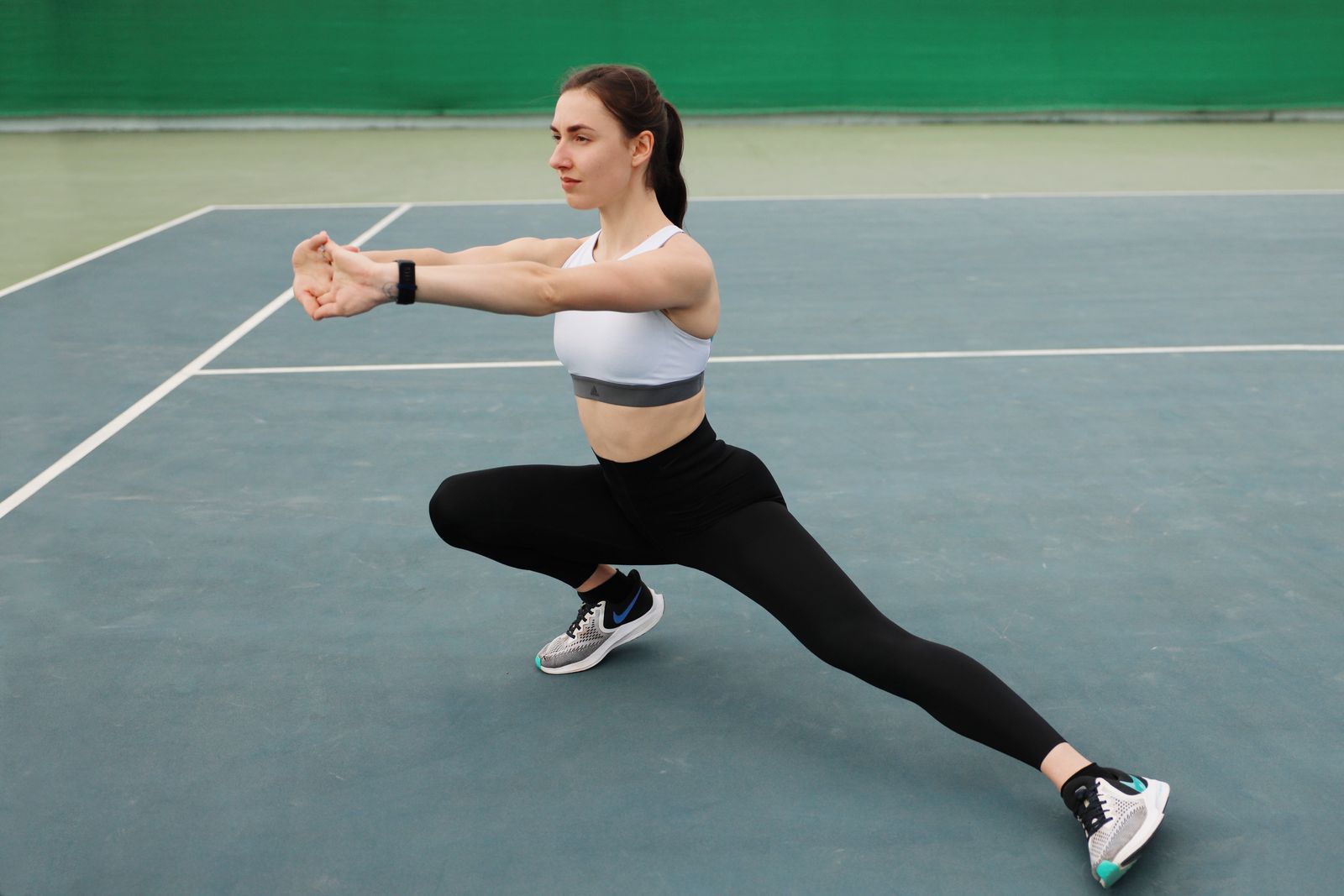
Zumba is rhythmic, so your warm-up should rehearse the same patterns: stepping, weight shifts, hip rotation and arm swings. Dynamic movement does that. Holding long static stretches on cold muscles does not, and it can leave you feeling looser but less able to move quickly. Save the long holds for after class. For a broader list that works before any training session, see our guide to a warm-up before a workout.
Cool down after Zumba: slow the movement first, then stretch
A cool-down after Zumba has two parts: about 3 to 4 minutes of slowing movement so your heart rate drifts down, then 5 to 6 minutes of static stretches held for roughly 20 to 30 seconds each. Do the slowing part first, while your muscles are still warm.
| Move | Duration | Cue |
|---|---|---|
| Slow march with big arm sweeps | 90 seconds | Inhale as arms rise, exhale as they lower |
| Slow step-touch, shaking out arms and legs | 60 seconds | Let shoulders drop and hands go loose |
| Easy walk with deep belly breaths | 60 seconds | Breathe in through the nose for about 4 counts, out for 6 |
Once your breathing is quiet and you can speak in full sentences, move to the floor or a wall for the stretches. For a longer menu of options, our guide to cool-down stretches after a workout goes beyond what a dance class uses.
Zumba cool down stretches: holds, targets and cues
For Zumba cool down stretches, hold each stretch for 20 to 30 seconds per side, breathe slowly, and stop at a mild pull, never pain. Aim for the calves, thighs, hips, glutes, chest and sides of the torso, because those areas do most of the work in a dance class.
| Stretch | Hold | Muscles | Cue |
|---|---|---|---|
| Standing calf stretch against a wall | 20 to 30 seconds per side | Calves | Back heel stays down, back leg straight |
| Standing quad stretch | 20 to 30 seconds per side | Front of thigh | Knees together, hips tucked slightly, hold a wall for balance |
| Seated or standing hamstring stretch | 20 to 30 seconds per side | Back of thigh | Hinge from the hips with a long spine, a soft knee is fine |
| Low lunge hip-flexor stretch | 20 to 30 seconds per side | Front of hip | Squeeze the back glute, lift the chest |
| Figure-four glute stretch (lying or seated) | 30 seconds per side | Glutes, outer hip | Flex the top foot to protect the knee |
| Cross-body shoulder stretch | 20 seconds per side | Back of shoulder | Keep the shoulder down away from the ear |
| Standing side bend, arm overhead | 20 seconds per side | Sides of the torso | Lean sideways, not forward |
| Child’s pose | 30 to 45 seconds | Lower back, hips | Knees wide, forehead down, slow breaths |
If you enjoy a gentler finish, a few minutes of floor stretches borrowed from yoga work well, and our piece on Zumba and yoga together explains how the two styles complement each other. Fitstrot also runs online yoga classes if you want guided stretching.
Myth check: “Dancing already warms me up”
Dancing does warm you up, but only once you are already doing it. The risk is in the first few minutes, when you jump into full-speed hip-hop or reggaeton before your joints and calves have adjusted. A warm-up lets that adjustment happen at low intensity instead of at full intensity.
Three other myths come up often.
- “Stretching before class prevents soreness.” Long static holds before class do not do that. Easy dynamic movement is what you want first.
- “A cool-down removes all soreness.” It does not. It helps you come down gradually and loosens tight areas, but you can still feel sore a day later after a hard or unfamiliar class. That is normal if it is mild and fades in a couple of days.
- “Stretching should hurt to work.” It should not. A mild, steady pull is the target. Sharp or burning pain means ease off.
Why can skipping the cool-down make you dizzy?
Skipping the cool-down can make you dizzy because during hard exercise your leg muscles help pump blood back to your heart. If you stop suddenly and stand still, some blood can pool in your legs for a short time, lowering blood pressure and causing lightheadedness. Walking for 3 to 5 minutes helps prevent that.
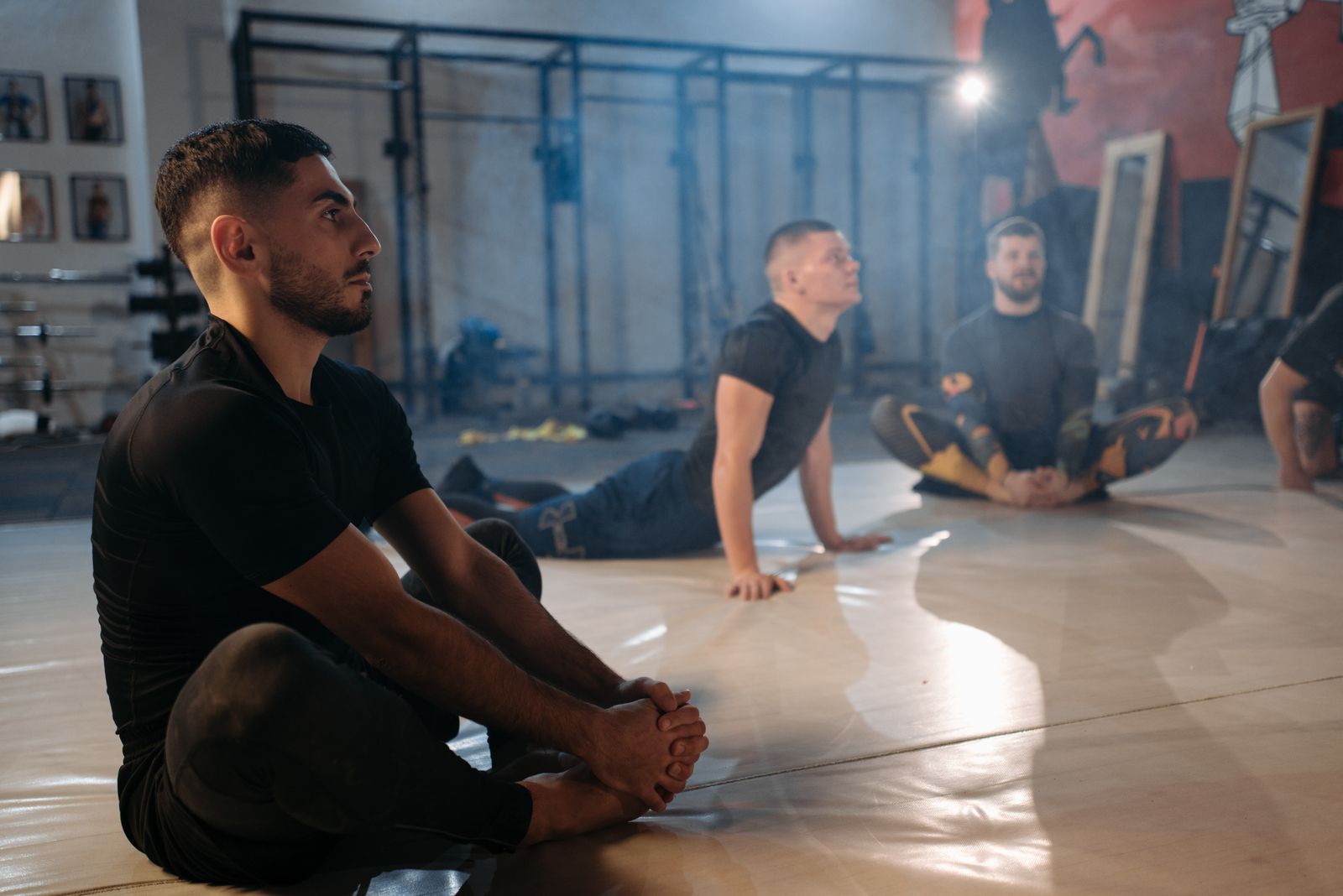
This is more likely after a high-energy class, in warm weather, or if you are dehydrated. Sip water, keep moving gently and sit down if you feel faint. Drinking water steadily through the class matters too.
Mistakes to avoid with Zumba warm-ups and cool-downs
- Starting at full intensity. The first song should be the easiest one, not the hardest.
- Holding long stretches on cold muscles. Move first, hold later.
- Bouncing in a stretch. Bouncing can trigger a protective tightening. Ease in and hold still.
- Stopping dead after the final song. Walk it out for 3 to 5 minutes before you sit or lie down.
- Stretching only your legs. Zumba uses your shoulders, back and sides too, so include them.
- Holding your breath. Breathe out as you deepen a stretch.
- Skipping both when you are late. Join the class on time, or do a short 3-minute warm-up before you step in.
- Dancing in the wrong footwear. Slippery socks or worn-out soles make cold muscles work harder to stay stable.
Our guide to common Zumba mistakes covers the choreography and form errors that sit beyond warm-up and cool-down.
Troubleshooting: what to do when something feels off
- Calves cramp during the stretch. Ease the stretch, bend the knee slightly and breathe. Walk it out and drink water. If cramps keep coming back in class, add an extra minute of ankle rolls and calf raises to your warm-up.
- Knees feel tight in the first song. Lengthen the warm-up by 2 to 3 minutes, keep knees soft and make steps smaller until the joints loosen.
- Lower back tightens afterwards. Spend longer on the hip-flexor lunge, figure-four and child’s pose, and keep your ribcage stacked over your hips while you dance.
- You feel lightheaded when you stop. Keep walking slowly, sip water and sit down only when the feeling passes.
- You feel stiff the next morning. Mild stiffness is common. A gentle 10 minute walk and the same cool-down routine usually helps.
See your doctor if you have chest pain or pressure, dizziness that does not settle within a few minutes of resting, fainting, unusual breathlessness, or sharp joint pain that continues after you stop. These are not things to stretch through.
At home or in a studio: does the routine change?
The routine stays the same, but at home you have to supply the structure that an instructor normally provides. Set a timer for the warm-up, use a wall or sturdy chair for balance and give yourself enough floor space for the lunge and child’s pose. Our guide to Zumba at home covers room setup and a safe floor.
When you follow along with a video, do not skip the last few minutes just because the final song has ended. In an online class the instructor leads the wind-down too, so stay with them until the end.
Who needs a longer warm-up?
Some people should add 2 to 5 minutes to the routine above.
- Beginners. Your joints and balance are still adapting, so stay at the longer end of the range. Our Zumba for beginners guide shows how to build up.
- Early-morning exercisers. Your body is stiffer after sleep, so give the ankles, hips and spine extra time.
- Cold rooms or winter mornings. Muscles feel tighter in the cold, so start slower and keep a light layer on until you are warm.
- Anyone returning after an injury or a long break. Keep the intensity lower and check with your doctor or physiotherapist first.
- Heavier or older participants. Add more time for the knees and ankles and keep landings soft.
Frequently asked questions about Zumba warm-up and cool-down
Is it okay to skip the warm-up if I’m short on time?
It is better not to skip it. Even a 3 to 5 minute warm-up of marching, step-touches and arm circles helps your muscles and joints adjust before the first dance song. If you are short on time, shorten the main workout instead of removing the warm-up.
What happens if I skip the cool-down after Zumba?
Stopping suddenly after hard dancing can leave you lightheaded because blood pools in your legs for a short time. You may also feel tighter and stiffer later. A 3 to 5 minute walk and a few stretches is a small cost to avoid that.
How long should a Zumba warm-up be?
About 5 to 10 minutes for a full class, and 3 to 5 minutes for a shorter 30-minute session. Make it longer if you are a beginner, exercising early in the morning or returning after a break.
Do I need to warm up and cool down for at-home Zumba too?
Yes. Your muscles and heart respond the same way at home as they do in a studio. The routines above work in a small space with no equipment, and a timer helps you stay honest about the minutes.
What stretches should I do during a Zumba cool-down?
Focus on calf, quad, hamstring, hip-flexor, glute, shoulder and side-body stretches, holding each for 20 to 30 seconds per side. These are the areas that work hardest in most Zumba choreography.
Try a class that builds both steps in
Join a live session in FitStrot’s online Zumba classes and follow a full warm-up, dance block and cool-down from start to finish. New to online sessions? Read how online Zumba classes work first.


