
Almost every one of the common zumba mistakes is a habit, not a talent gap: chasing perfect choreography, locking your knees, letting your core switch off, holding your breath, skipping the warm-up, wearing the wrong shoes and going too hard too soon. This guide covers nine of them, what each one looks like in a real class, and the small fix that works from your very next session.
Everything here applies whether you dance in a studio, a society hall or your living room. The form cues follow what is taught in Fitstrot’s live online Zumba classes, led by Yash Pathak, our lead Zumba trainer (ZIN Licensed, ACE Certified, Strong Nation Certified).
What are the most common Zumba mistakes beginners make?
The nine most common zumba mistakes are copying every step perfectly, starting with advanced classes, locking the knees, ignoring the core, holding the breath, skipping the warm-up, wearing running shoes, going full speed from day one, and drinking too little water. Most are fixed with one cue each, such as “soft knees” or “belly in”.
| Mistake | What it looks like | Quick fix |
|---|---|---|
| Chasing perfect steps | Freezing, staring at your feet, stopping when you lose the count | Keep moving to the beat, even with a simplified step |
| Starting too advanced | Sloppy footwork, panic, leaving mid-class | Begin with beginner or low-impact formats |
| Locked knees | Straight, stiff legs on side steps and marches | Keep a soft, slight bend at all times |
| Passive core | Belly pushed forward, lower back arched | Draw the navel gently toward the spine |
| Holding your breath | Tight shoulders, early fatigue, dizziness | Exhale on the big move, breathe steadily |
| No warm-up | Stiff hips and calves in the first song | 5 to 8 minutes of easy movement first |
| Wrong shoes | Sticking, twisting or slipping on pivots | Cross-trainers or dance sneakers |
| Full speed too early | Sore for days, then quitting | Build sessions and intensity over weeks |
| Too little water | Cramps, headache, flat energy by song six | Sip steadily before, during and after |
Myth: you have to get every step right to get a good workout
This tops most lists of zumba beginner mistakes, and it is a myth. Zumba is a rhythm-based cardio session, not a stage rehearsal. A simplified step done on the beat gives you more than a perfect step you stop to think about. Perfectionism shows up as staring at your feet (which drops your chest and strains your neck), stopping the moment you lose a count, or copying arms and legs together on day one.
The fix is a “marching rule”. If you lose the choreography, march or step side to side to the beat until the next familiar move arrives. You stay in rhythm, your heart rate stays up, and you rejoin without drama.
Starting too advanced is its cousin: fast, layered routines before you own the basics lead to sloppy form. Learn the foundations first with our guide to basic Zumba steps, and see Zumba for beginners for how a first month should look.
How do you fix your Zumba form step by step?
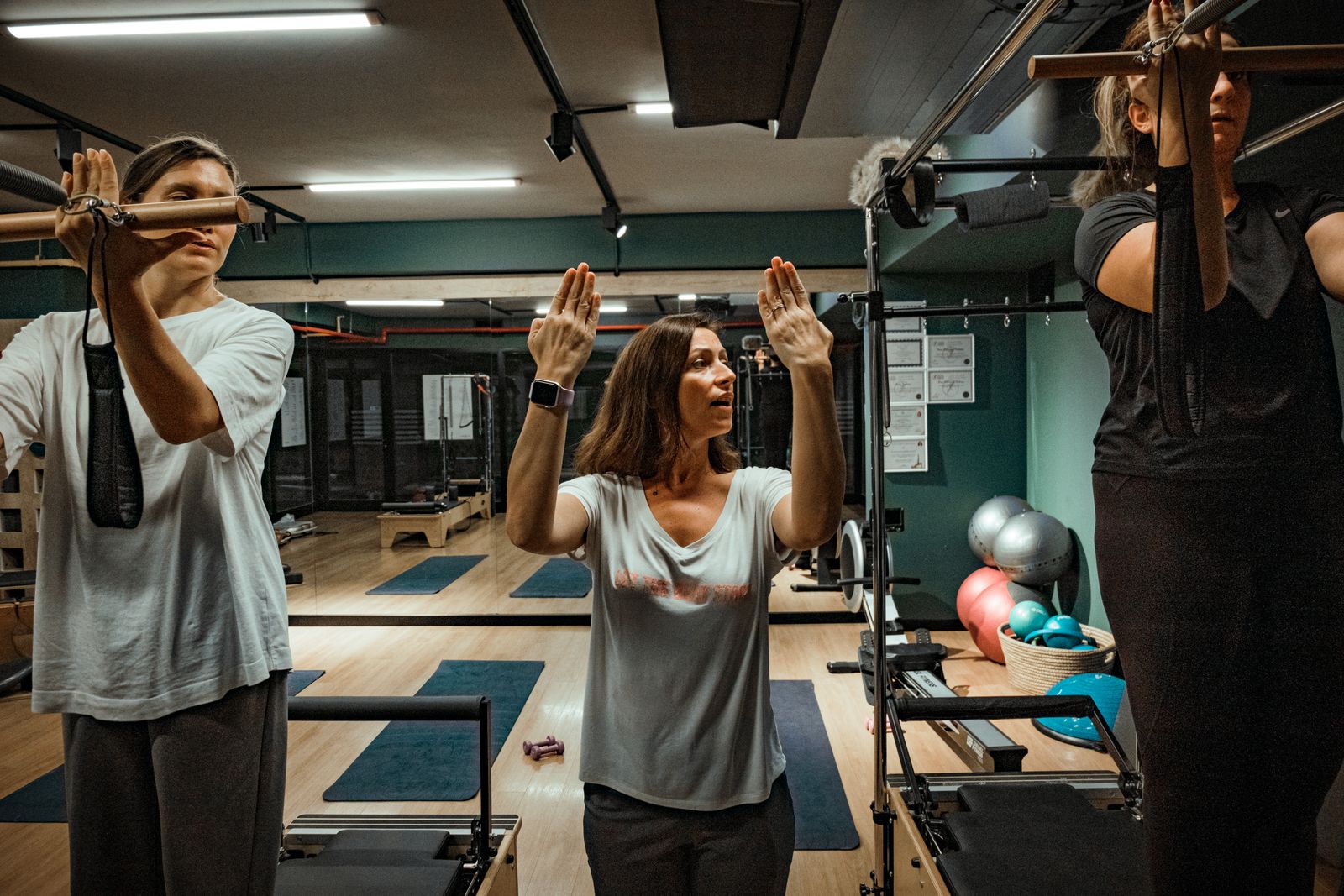
To fix your zumba form, run a five-point check from the ground up: feet flat or lightly pivoting, knees softly bent and tracking over your toes, core gently braced, chest lifted with shoulders relaxed, and breath steady. Check one point per song for the first few classes until all five feel automatic.
- Feet and landing. Land through the ball of the foot and let the heel settle softly. Avoid slapping the whole foot down or landing on your toes with a stiff leg.
- Knees. Keep a slight, constant bend, as if you are about to sit on a high stool. On side steps and marches, never snap the leg straight. Your knee should point the same way as your toes.
- Core. Imagine zipping up tight trousers. The navel moves gently in and up, enough that you can still breathe and talk. If your lower back arches or your belly pushes out on hip moves, your core has switched off.
- Chest and head. Keep your eyes forward or on the mirror, not on the floor. Ribs stacked over hips, shoulders down away from your ears.
- Breath. Breathe in through the nose or mouth freely, and make a soft exhale on the biggest move in each phrase.
Why does holding your breath and locking your knees matter so much?
Locking the knees sends repeated impact straight through the joint instead of letting muscles absorb it, while holding your breath makes your effort feel harder and can cause dizziness. In a 45 to 60 minute class you repeat hundreds of steps, so even a small habit adds up quickly.
Think of soft knees as built-in suspension: a bent knee shares the work with your thighs and glutes and makes pivots smoother. Breath-holding is quieter but just as common. Concentrating on a new step makes many people tense up and stop breathing without noticing. If you catch yourself, count out loud or hum along. It is almost impossible to hold your breath while singing.
Zumba knee, ankle or foot pain: what to check first
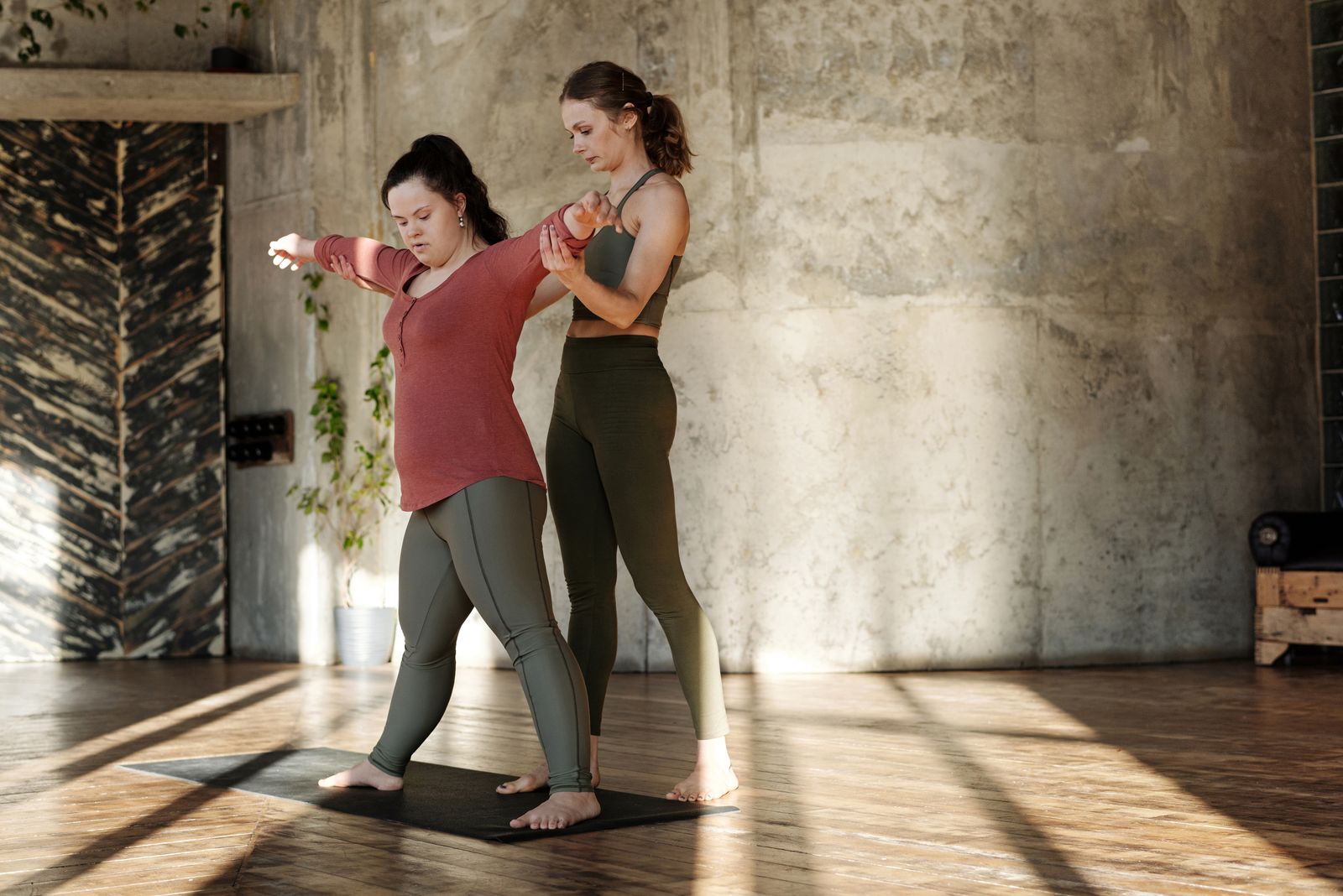
If you get zumba knee pain or foot soreness, check four things before blaming the workout: locked knees, shoes with too much grip or too little cushioning, a hard floor, and too much volume too soon. Most mild, short-lived soreness traces back to one of these and eases within a day or two once corrected.
| What you feel | Likely habit | What to try |
|---|---|---|
| Front-of-knee ache after class | Locked knees or knees caving inward on pivots | Soft knees, point the knee over the toes, shorten the step |
| Sore shins or arches | Hard floor, thin soles, too many high-impact songs | Switch to low-impact versions, add cushioned shoes |
| Lower back tightness | Arched back, passive core | Brace the core lightly, reduce range on hip moves |
| Calf cramps | No warm-up, low water, sudden jump in volume | Warm up calves, sip water, add sessions slowly |
Discomfort that fades quickly is different from pain. Stop the move if pain is sharp, if a joint swells, or if it catches or gives way. If pain in a knee, hip, ankle or back lasts more than a few days, comes back every class, or wakes you at night, please see your doctor or a physiotherapist before you dance again. No cue in an article replaces a proper examination.
Do you really need a warm-up and proper shoes?
Yes. A warm-up of about 5 to 8 minutes raises your heart rate and loosens hips, knees and calves before fast footwork begins, and a cool-down lets your pulse settle. Proper shoes, meaning light cross-trainers or dance sneakers with flexible soles, let your foot pivot instead of sticking to the floor.
Skipping the warm-up is easy when you are running late. If you log in at the last minute, spend two minutes on ankle circles, hip circles, gentle squats and shoulder rolls first. Our guide to the Zumba warm-up and cool-down has a full routine you can copy.
On shoes, the usual error is running shoes. They are built for forward motion, with a grippy sole that resists sideways sliding, so a sole that sticks can twist the knee when you pivot. Dancing barefoot on polished tile gives no cushioning and a slip risk. Pick a light cross-training shoe, and read what to wear for Zumba for clothing and footwear detail.
Pacing and intensity mistakes: a sensible 4-week build
Going full speed from the first week is a classic reason people quit by week three. A steady build works better: start with 2 sessions of 30 to 40 minutes, add a third session and longer classes over about four weeks, and keep at least one rest day between hard sessions while your joints adapt.
| Week | Sessions | Length | Focus cue |
|---|---|---|---|
| 1 | 2 | 30 to 40 min | Move to the beat, march when lost |
| 2 | 2 to 3 | 40 to 45 min | Soft knees, steady breath |
| 3 | 3 | 45 min | Core on, chest lifted |
| 4 | 3 | 45 to 60 min | Add arm movement and full range |
Use the talk test: you should be breathing hard but still able to say a short sentence. If not, drop to the low-impact version. Mild muscle tightness for a day is normal, but joint pain is a signal to lower the volume, not push through. Results depend on consistency, food and sleep, and nobody can promise an outcome from a set number of classes. For realistic expectations, read does Zumba tone your body.
Habits outside the class that quietly spoil your session
Two mistakes happen before you dance: too little water and the wrong pre-class meal. Aim for about 400 to 500 ml of water in the two hours before class, small sips of roughly 150 to 200 ml every 15 to 20 minutes during, and a snack of a banana or a handful of roasted chana about an hour before if you are hungry.
- Heavy meals right before. A plate of parathas or biryani 30 minutes before class often brings cramps and a sluggish feeling. Leave about 2 to 3 hours after a full meal, or have a light snack instead.
- Dancing on an empty stomach. Early-morning dizziness is common if you have had nothing since dinner. A banana or a few soaked almonds can help.
- No recovery meal. Afterwards, protein plus carbs, such as curd with fruit or dal with rice, helps you feel less drained. For personalised guidance, a Fitstrot online nutritionist consultation can map this to your day.
Mistakes by audience: who slips up where
Different people tend to make different zumba mistakes to avoid. Complete beginners over-think steps, returning exercisers jump back to their old intensity, women balancing home and work often skip warm-ups, and online learners struggle with space, screen angle and flooring. Spotting your type tells you which fix to prioritise.
- Beginners and returners: over-thinking, or expecting last year’s stamina. Start at week one of the build above.
- Women with busy schedules: squeezing a class between tasks with no warm-up. Our guide to Zumba for women covers fitting it in around real life.
- Older adults or sore joints: copying high-impact options. A gentler format such as Zumba Gold keeps the fun with lower impact.
- Dancing at home: a crowded room, a laptop too far away, or a slippery floor. Clear about 2 by 2 metres, place the screen at eye level, and use a non-slip mat or shoes.
If you are tempted to add other classes to balance a heavy dance week, online yoga classes can help with mobility and recovery. If you have a specific injury history or want your form corrected one-to-one, 1-on-1 personal training is a better fit than a group screen.
Frequently asked questions
What is the single biggest mistake beginners make in Zumba?
Trying to copy every step perfectly is the most common one. It makes you stop, stare at your feet and lose the beat. Keep moving to the rhythm with a simpler step instead. Steady movement gives you the workout, and accuracy improves naturally over a few weeks.
Why do my knees hurt after Zumba, and is it a form mistake?
Often yes. Locked knees, knees collapsing inward on turns, sticky shoe soles and hard floors are the usual causes. Keep a soft bend, point knees over toes and use low-impact versions. If pain lasts more than a few days or returns every class, see your doctor or a physiotherapist.
Does skipping the warm-up really matter that much?
It does. Cold muscles and joints are asked to pivot and jump straight away, which makes stiffness and strains more likely. Five to eight minutes of easy movement is enough. If you are late, do two minutes of ankle, hip and shoulder circles before you join the class.
How do I know if I am engaging my core properly during Zumba?
Draw your navel gently in and up, as if zipping tight trousers, while still breathing and talking. If your lower back arches or your belly pushes forward on hip moves, the core has switched off. Brace lightly, not rigidly, for the whole song.
Should I slow down if I cannot keep up with the class pace?
Yes. March or step to the beat, use the low-impact option and rejoin when you can. Forcing full speed before you know the moves leads to sloppy form and sore joints. Most people keep up comfortably within three to four weeks of regular classes.
Fix your form with a live class
Pick one mistake from this list, work on it for your next three classes, then move to the next. To have a trainer watch your form live, join Fitstrot’s online Zumba classes and bring this checklist to your first session. For more options, see our page on online Zumba classes.


