
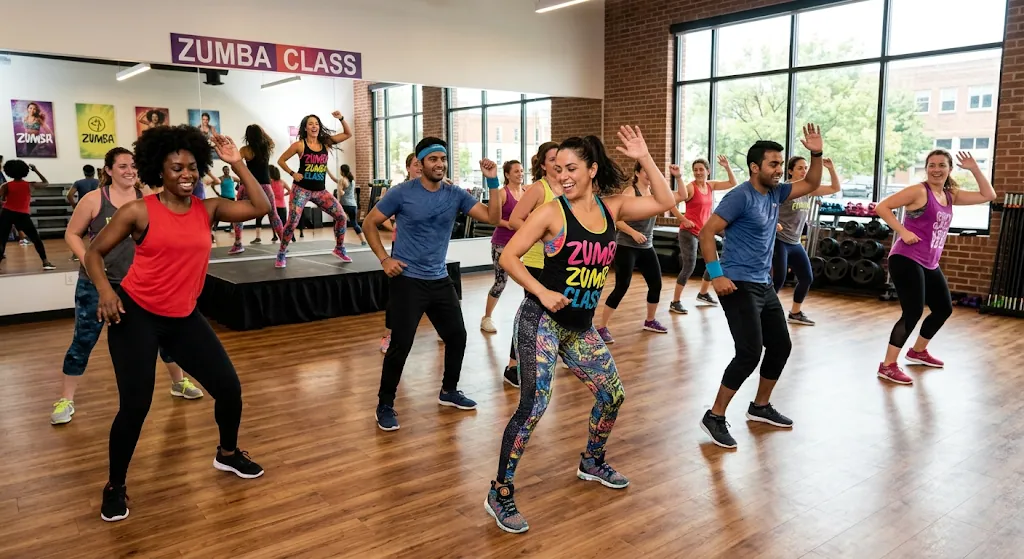
Used properly, zumba for abs and core training works better than most people expect, though not in the way the “melt belly fat” posts promise. Every hip circle, twist, squat and landing makes your trunk muscles brace and stabilise, so a 45-minute class is close to 45 minutes of moving core work. What it cannot do is burn fat from one chosen spot. This guide shows which moves train which muscles, how to feel them, and how to add a short finisher.
Does Zumba work your abs and core?
Yes. In Zumba your core works as a stabiliser: the rectus abdominis, obliques, deep transverse abdominis and lower-back muscles brace through every twist, hip circle, squat and landing. Over a 45 to 60 minute class that builds steady core endurance and tone, though not the heavy loading that grows a large six-pack.
Your core is less a “six-pack” and more a muscular cylinder around your spine. Zumba choreography keeps asking that cylinder to resist, rotate and recover, usually while the beat changes every few seconds.
That is a different job from a crunch, which loads the front abs in one direction while you lie still. A zumba abs workout loads them in several directions while you travel, turn and change level, much closer to how your trunk behaves when you pick up a bag or climb stairs. Many people feel their sides the next morning after a class heavy on reggaeton and salsa.
Zumba core exercises by move: what works and how to feel it
You do not need a special “abs routine” inside a class. You need to know where the core demand sits in the choreography you already do. The table lists common moves, what they train, the cue that makes them count, and an easier option for days when a move is too much.
| Move (rhythm) | Main core work | Form cue | If it feels like too much |
|---|---|---|---|
| Hip circles (reggaeton, salsa) | Obliques, transverse abdominis | Stack ribs over pelvis; move the hips, not the shoulders | Make the circle smaller |
| Shimmy and torso twist (cumbia) | Obliques, rotators | Turn from the ribcage with a tall spine and grounded feet | Dance at half tempo |
| Cross-body step with twist (salsa) | Obliques, deep core, glutes | Twist after the foot lands, not while the knee is bent | Keep the step, drop the twist |
| March with opposite arm (merengue) | Deep core, rectus abdominis | Opposite arm and knee meet; brace lightly before each lift | March slowly with arms at chest |
| Squat with reach or punch | Core as spine stabiliser, plus quads and glutes | Hips back, chest up, breathe out on the reach | Shallower squat |
| Bounce or jump | Whole trunk braces on landing | Land softly with soft knees and ribs down | Swap for a low-impact tap |
| Body roll and chest isolation | Transverse abdominis, spinal control | Start the wave at the pelvis and move slowly | Reduce the range, keep knees soft |
| Side step with oblique reach | Obliques, side-lower back | Reach long to the side, not down toward the floor | Smaller reach, same step |
For the brace itself, think of “zipping up tight trousers” before a hard move: a gentle draw of the lower belly inward, not a hard suck-in. If you cannot breathe while bracing, it is too hard.
For the lower-body side of those squats, our guide to Zumba for toned legs covers it.
Myth check: can Zumba burn belly fat or give you a flat stomach?
No exercise removes fat from one chosen area, so Zumba cannot target belly fat on its own. A class burns about 300 to 500 kcal an hour depending on your body weight and effort, which supports an overall calorie deficit. Visible abs appear only when total body fat is low enough.
Muscle definition and fat cover are two separate questions. Zumba and the finisher below can make the muscle underneath stronger and firmer. Whether you can see it depends on the fat above it, which comes down to your overall food intake, sleep, stress and weekly movement, not to one exercise.
As a rough guide, visible abdominal definition tends to show at around 10 to 15 percent body fat in men and about 18 to 25 percent in women, and it varies by person. Pushing body fat very low is not a healthy target for everyone, and in women it can disturb periods and bone health. A stronger, more capable core is a perfectly good goal on its own.
If fat loss is part of your goal, a modest calorie deficit and sessions you will actually repeat matter most. Our guide to Zumba for weight loss explains how, and a coach on our online weight loss trainer service can set the food side with you. Do not expect a flat stomach in days; visible change usually takes weeks to months.
A 45-minute class, minute by minute: where your core is working
Classes vary by instructor and song list, but most follow a similar arc. Knowing where core demand rises lets you spend attention where it pays off, instead of bracing hard for 45 minutes and tiring out in the middle.
| Minutes | Typical block | Core demand | What to do |
|---|---|---|---|
| 0 to 8 | Warm-up (easy merengue and salsa basics) | Low | Find a tall posture with ribs down; feel the first small twists |
| 8 to 20 | High-energy songs (salsa, cumbia, merengue) | Moderate and steady | Keep a light brace and keep breathing; save your effort |
| 20 to 32 | Reggaeton and hip-heavy block | Moderate to high, rotational | Lead hip circles from the pelvis; this is your best oblique block |
| 32 to 40 | Toning or squat-and-reach segments (when included) | High, stabilising | Slow down, brace a little harder, shorten the squat if your back tires |
| 40 to 45 | Cooldown and stretch | Low | Long exhales, gentle twists, let the trunk release |
No single moment feels like an “ab exercise”, yet the effort adds up, and you build core endurance without counting reps. For what a regular practice gives you beyond the core, see the benefits of Zumba.
Why do I feel Zumba in my lower back or legs, not my abs?
Feeling it in your lower back usually means your ribs are flaring and your lower back is arching while your abs stay switched off. Fix it by tucking the ribs down, keeping knees soft, shortening the move and bracing lightly before each twist. Legs burn because squats and steps are leg-heavy, which is normal.
This is a common complaint, and it is usually form, not fitness. Check these:
- Ribs flared, back arched. Imagine your lower ribs sliding down toward your hips. Your belly should feel gently engaged, not pushed out.
- Moving the shoulders instead of the hips. In hip circles, look at a spot straight ahead and keep your chest quiet. If your shoulders swing, the obliques are not doing the work.
- Locked knees. Straight, stiff legs send impact up into the lower back. Keep a small bend all the time.
- Chasing the speed. At full tempo, momentum does the work. Halve the range and keep the beat, and the core has to do more.
- Holding your breath. Breathe out on the hard part of each move so the brace stays steady.
These are the form points a trained instructor watches for. Fitstrot’s lead Zumba trainer, Yash Pathak, is ZIN Licensed, ACE Certified and Strong Nation Certified, and cueing posture and brace is a normal part of teaching dance fitness safely.
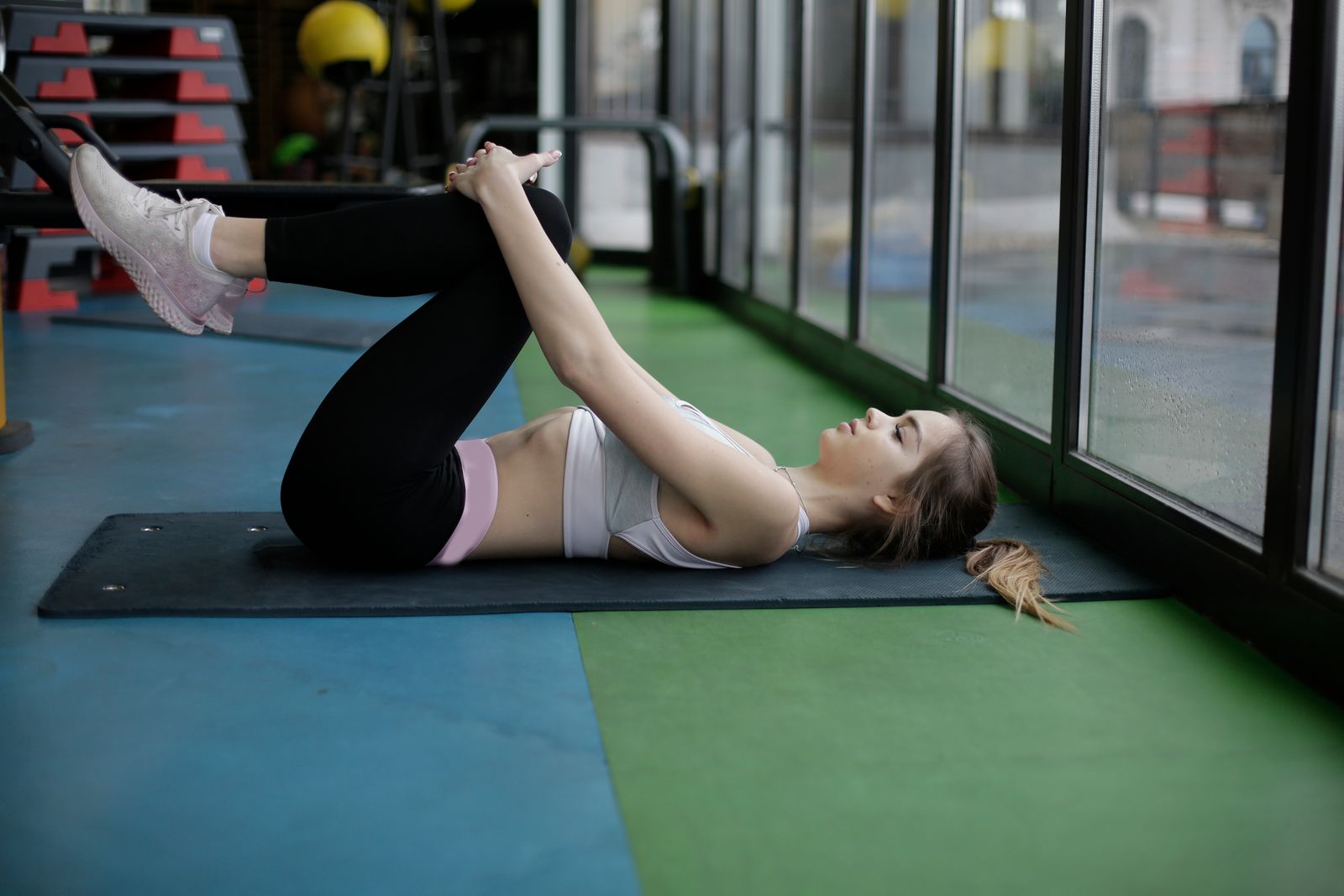
Posture and core strength feed each other. Our guide to Zumba for posture goes deeper on that link.
Is Zumba better than crunches for a stronger core?
Neither is better; they do different jobs. Zumba trains your core dynamically across many directions while burning roughly 300 to 500 kcal an hour. Crunches and planks load the abdominals directly in one position. For most people the best result is Zumba three times a week plus a 10-minute finisher.
Zumba is your endurance and coordination base, and it is easy to repeat because it feels like a party. Crunches and planks give the muscle a more direct, measurable load you can progress by adding seconds or reps. The finisher builds raw strength and makes it easier to hold form late in class. For the whole-body picture, see does Zumba tone your body.
A weekly plan: Zumba plus a 10-minute core finisher
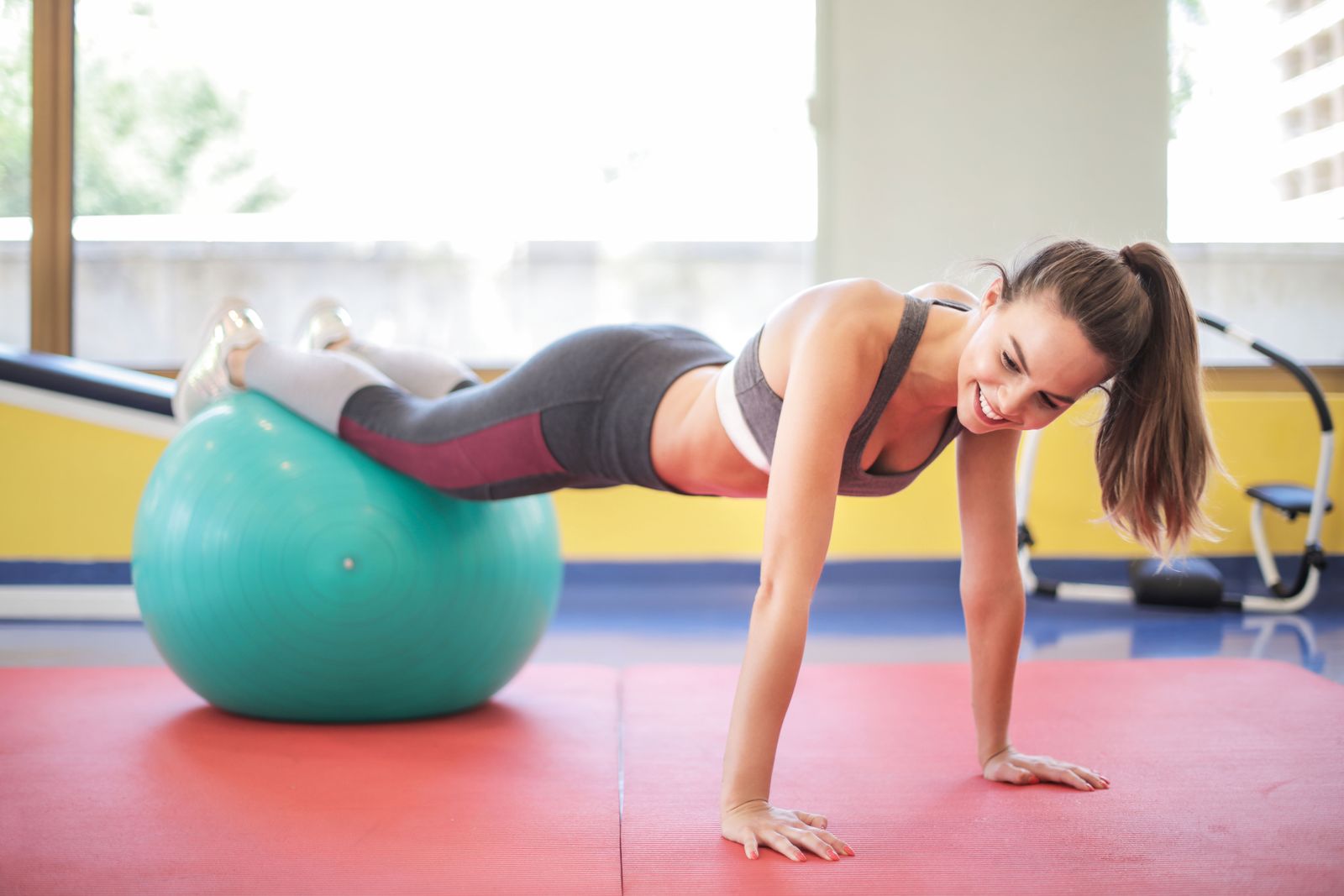
This week is built around three Zumba sessions. Do the finisher right after class, while you are warm. Move slowly, stop a rep or two before form slips, and rest about 30 seconds between sets. Skip any move that causes sharp pain.
| Day | Main session | 10-minute core finisher | Why it is there |
|---|---|---|---|
| Monday | Zumba, 45 to 60 minutes | Dead bug 2 x 8 per side; side plank 2 x 20 seconds per side | Trains the deep core and obliques with a stable spine |
| Tuesday | 30-minute walk or full rest | None | Recovery between sessions |
| Wednesday | Zumba, 45 to 60 minutes | Bird dog 2 x 8 per side; plank 2 x 20 to 30 seconds; glute bridge 2 x 12 | Builds back, front and hip support together |
| Thursday | Gentle yoga or stretching, 30 minutes | Cat-cow and child’s pose to finish | Mobility and calm; easier on the lower back |
| Friday | Zumba, 45 to 60 minutes | Repeat Monday; add a third set if form stays clean | Gentle progression |
| Saturday | Optional strength session | Squats and rows with light weight | Adds the muscle-building side |
| Sunday | Rest | None | Rest days are when you adapt |
Most people notice an easier brace and less tiredness late in class within about 4 to 6 weeks of steady practice. Visible changes are slower. If you want a structured strength day, a trainer on our 1-on-1 personal training service can build it around your Zumba days, and a calm online yoga class makes a good Thursday.
Who should adjust this: beginners, back pain and after pregnancy
Beginners. Start with low-impact versions: no jumps, smaller twists, slower arms. Two classes a week is a fine start; add the third after a few weeks.
Back pain. If you already get lower-back pain, keep hip circles small, avoid deep twisting at speed, and skip any move that creates sharp or radiating pain. Dull muscle tiredness is normal; pain is a signal to stop. See a doctor or physiotherapist if it persists, and get clearance before returning to class.
After pregnancy or surgery. Get your doctor’s clearance first. After a baby, a visible ridge or doming along the middle of the belly during effort is worth mentioning to your doctor before you do twisting or crunch-style work. Our guide to Zumba for women covers pacing across life stages.
Frequently asked questions about zumba for abs and core
How many Zumba classes a week do I need for a stronger core?
Three classes of 45 to 60 minutes a week is a sensible target for most people, with rest or light activity between them. Many notice better stamina and an easier brace within about 4 to 6 weeks. Visible midsection change depends mainly on food, sleep and total body fat.
Can beginners do Zumba for abs and core work?
Yes. Zumba is easy to scale: take out the jumps, shrink the twists and slow the arms, and your core still works with every step. Begin with two classes a week and add a short finisher once the choreography feels familiar. Stop if a move causes sharp pain.
Should I do planks after Zumba?
You can, and a short finisher works well when you are warm. Aim for 2 or 3 sets of 20 to 30 seconds with good form, plus a dead bug or bird dog. Stop when your back sags or your shoulders shrug; short clean sets beat long messy ones.
Can Zumba give me a flat stomach?
Zumba can help by burning roughly 300 to 500 kcal an hour and strengthening the muscles under the fat, but it cannot remove fat from your stomach alone. A flatter-looking midsection comes from a steady calorie deficit, enough protein, sleep and weeks of consistent sessions.
Can I do Zumba for core strength online, without a studio?
Yes. You need about two metres of clear floor, supportive shoes and a screen. Online classes follow the same structure as studio ones, so the core demands in this guide apply. Choose a class level that lets you keep your posture through the whole session.
Start your core work this week
Pick three class slots, add the 10-minute finisher after each, and keep it up for six weeks before judging the results. Join a live session through Fitstrot’s online Zumba classes, or read our guide to online Zumba classes to see how a session works.


